
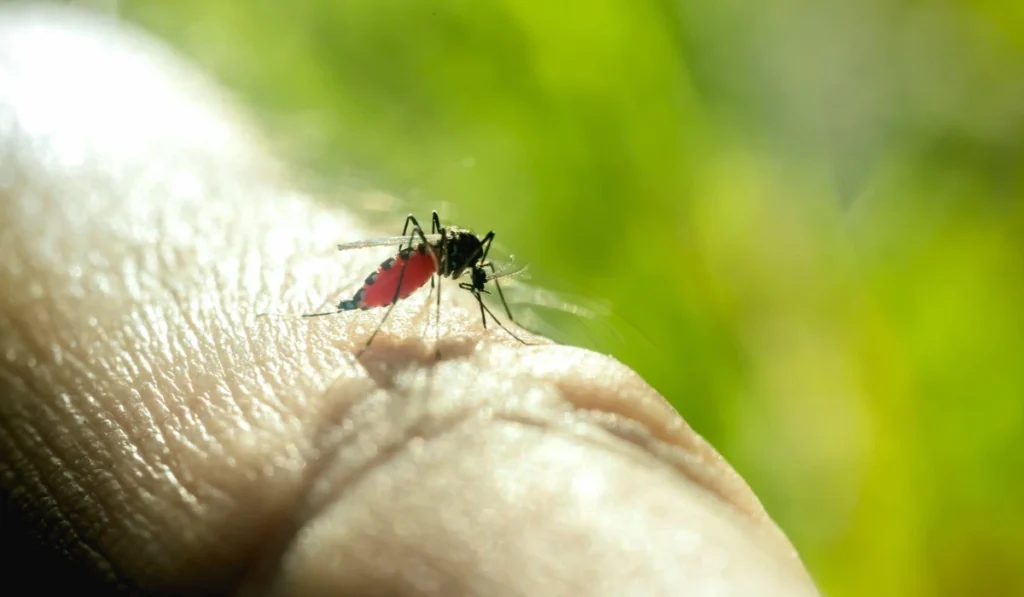
The common types of mosquitoes in North Carolina include Asian tiger mosquitoes, southern house mosquitoes, northern house mosquitoes, and several floodwater species. Each has different markings, biting habits, and breeding preferences. Asian tiger mosquitoes often bite during the day, house mosquitoes are more active after sunset, and floodwater mosquitoes can increase after heavy rainfall. Knowing these differences helps you identify mosquitoes around your home and focus on the conditions that allow them to thrive.
How to Identify the Different Types of Mosquitoes in North Carolina
The easiest way to narrow down mosquito identification is to look at three things: body markings, biting time, and nearby water sources. Asian tiger mosquitoes stand out because of their black-and-white coloring. House mosquitoes have less distinctive brown bodies, making them harder to identify without magnification.
Behavior provides useful clues when appearance isn’t enough. Daytime bites near garden planters may point to Asian tiger mosquitoes, while mosquitoes active around your deck after sunset may belong to the house mosquito group. A noticeable increase following flooding could indicate floodwater species.
Here’s how the common mosquito types compare:
| Mosquito Type | Appearance | Biting Time | Common Breeding Sites |
| Asian tiger mosquito | Black body, white-banded legs, and a white stripe on the back | Daytime, especially morning and late afternoon | Plant saucers, birdbaths, tires, and containers |
| Southern house mosquito | Brown body with subtle markings | Dusk and nighttime | Stagnant water containing organic material |
| Northern house mosquito | Brown body, similar to southern house mosquitoes | Dusk and nighttime | Containers, stagnant pools, and drainage structures |
| Floodwater mosquitoes | Varies by species | Varies by species | Floodplains, temporary pools, and flooded woodland areas |
These characteristics are useful starting points, although some species require expert examination for accurate identification.
Common Mosquito Species Found in North Carolina
North Carolina has more than 60 mosquito species, but a smaller number account for many of the encounters homeowners experience around yards and outdoor living areas.
According to NC State Extension’s mosquito control guidance, mosquito species differ in their breeding habitats and how far they travel from those locations. Those differences affect which prevention methods work best around a home.
Asian Tiger Mosquito (Aedes albopictus)
The Asian tiger mosquito is one of the most recognizable mosquitoes in North Carolina. It has a black body, white bands on its legs, and a narrow white stripe running down the upper back.
Unlike many house mosquitoes, Asian tiger mosquitoes actively bite during daylight hours. They’re common around shaded patios, gardens, and other areas where people spend time outdoors during the day.
These mosquitoes breed in small containers that collect rainwater. Common locations include:
- Flowerpot saucers and outdoor planters
- Birdbaths and discarded tires
- Buckets, watering cans, and outdoor toys
- Containers stored behind sheds and garages
Asian tiger mosquitoes usually stay relatively close to where they develop. Water collecting around your property or a neighboring yard can therefore contribute to persistent daytime bites.
If you regularly encounter mosquitoes while gardening or working outside in the afternoon, inspect small containers before focusing on larger drainage areas.
Southern House Mosquito (Culex quinquefasciatus)
Southern house mosquitoes have brown bodies without the bold white markings of Asian tiger mosquitoes. They’re generally more active around dusk and during nighttime hours.
These mosquitoes develop in stagnant water, particularly water containing decaying organic material. Neglected drainage structures, clogged areas where water accumulates, and containers holding deteriorating water can provide suitable breeding conditions.
Southern house mosquitoes are also associated with West Nile virus transmission. The virus circulates primarily between birds and mosquitoes, and infected mosquitoes can transmit it to people through bites.
Finding southern house mosquitoes doesn’t mean they’re infected. Still, their nighttime activity and preference for stagnant water make drainage maintenance and evening bite protection worthwhile.
Northern House Mosquito (Culex pipiens)
Northern house mosquitoes look similar to southern house mosquitoes. Both have relatively plain brown coloring, use stagnant water for breeding, and commonly feed during evening and nighttime hours.
They belong to the closely related Culex pipiens complex, which can also include hybrids. Distinguishing individual members of this group generally requires more than a casual visual inspection.
Northern house mosquitoes may breed in water-filled containers, drainage structures, and other locations where water remains undisturbed. They are also associated with West Nile virus transmission.
For homeowners, the practical response is largely the same for both house mosquito species: address stagnant water near the property and use mosquito protection when spending time outside after sunset.
Floodwater Mosquitoes
Floodwater mosquitoes include several species that develop in areas periodically covered by rainwater or floodwater. Unlike container-breeding mosquitoes, many lay eggs on damp or temporarily dry ground that later becomes flooded.
When rising water covers the eggs, larvae can hatch and develop in temporary pools. Common habitats include:
- Floodplains and low-lying wooded areas
- Temporary pools following heavy rainfall
- Woodland depressions that periodically flood
- Wetland areas affected by seasonal water levels
Floodwater mosquito populations may increase after major storms. Under suitable conditions, adults can appear around two weeks after flooding.
Some floodwater species also travel farther from their breeding areas than Asian tiger mosquitoes. That explains why a property near a creek, floodplain, or wooded lowland may experience increased mosquito activity despite having few water-filled containers.
Because floodwater mosquitoes include multiple species, their appearance and biting times vary. A recent period of heavy rainfall is often a more useful clue than body markings alone.
Where Do Mosquitoes Breed in North Carolina?
Mosquitoes require water during their early development, but their preferred breeding sites vary. Asian tiger mosquitoes frequently use small containers, house mosquitoes favor stagnant water, and floodwater species depend on temporary flooding.
North Carolina’s warm temperatures and regular rainfall can support all three habitat types. Finding the source matters because removing water from containers won’t necessarily address mosquitoes developing in nearby wetlands or flooded woodland areas.
Standing Water Around Your Home
Small water-holding objects are among the easiest breeding sites to overlook. Plant saucers, birdbaths, buckets, and outdoor toys can retain rainwater long enough for mosquito larvae to develop.
Gutters deserve attention too, especially on two-story homes where leaves and debris can obstruct drainage without being visible from the ground.
Check less obvious places, including:
- Tarps covering grills and patio furniture
- Wheelbarrows left outdoors
- Containers stored beneath decks
- Trash-can lids with recessed surfaces
- Unused planters behind sheds
Mosquitoes develop from eggs into aquatic larvae and pupae before emerging as flying adults. Regularly emptying containers interrupts that development before more biting mosquitoes enter your yard.
Wetlands, Drainage Areas, and Seasonal Flooding
Some breeding habitats are beyond a homeowner’s property. Floodplains, wooded depressions, and temporary pools can support mosquitoes after prolonged rainfall.
Homes near creeks or poorly draining lowlands may experience increased mosquito activity even when residents maintain their own yards. Some floodwater mosquitoes can travel considerable distances from where they emerge.
Drainage problems within residential landscaping can also contribute. Low spots near patios, fence lines, and garden beds may hold rainwater after storms.
Correcting those conditions reduces breeding opportunities on your property, although mosquitoes originating from surrounding habitats may still reach your yard.
Which North Carolina Mosquitoes Can Spread Diseases?
Certain mosquitoes in North Carolina can transmit pathogens that cause human illness. The diseases involved depend on the mosquito species and whether the relevant pathogen is circulating locally.
A mosquito’s ability to transmit a virus doesn’t mean every mosquito of that species is infected. Understanding which groups are associated with particular diseases provides useful context without treating every bite as a serious health threat.
West Nile Virus and House Mosquitoes
West Nile virus is one of the principal mosquito-borne disease concerns in North Carolina. Members of the Culex pipiens complex can transmit the virus after becoming infected through feeding on birds.
According to the North Carolina Department of Health and Human Services’ 2024 mosquito-borne disease surveillance report, the state recorded 27 neuroinvasive West Nile virus cases and three associated deaths in 2024.
Most people infected with West Nile virus develop no symptoms. Others may experience fever, headache, body aches, or fatigue, while a small proportion develop severe neurological illness.
The most useful precautions are preventing bites and reducing mosquito breeding conditions, particularly around areas where house mosquitoes may develop.
Other Mosquito-Borne Diseases in North Carolina
Asian tiger mosquitoes can transmit certain viruses, including dengue and chikungunya, under suitable transmission conditions. Their presence in North Carolina, however, does not establish that these viruses are circulating locally.
North Carolina also monitors La Crosse virus and eastern equine encephalitis, which involve different mosquitoes and transmission cycles.
La Crosse virus infections have historically been more common in western North Carolina. West Nile virus cases have been reported across the state, demonstrating that mosquito-borne disease patterns differ by region and pathogen.
Homeowners don’t need to identify every mosquito species to protect themselves. Reducing bites remains the most practical precaution regardless of which species is present.
How to Reduce Mosquitoes Around Your North Carolina Home
Mosquito prevention works best when you address both the places mosquitoes develop and the areas where adults rest. Removing breeding sites can reduce future populations, while yard maintenance and personal protection help limit encounters with active mosquitoes.
Remove Standing Water and Improve Drainage
Inspect your property each week, especially after rainfall. Empty buckets, planters, and outdoor toys, clean gutters, and make sure rainwater drains away rather than collecting in low spots.
Replace water in birdbaths and outdoor pet bowls regularly. Keep rain barrels covered and check that drainage around patios, walkways, and landscaping beds remains clear.
For water that cannot be emptied or drained, properly selected mosquito larval-control products may help when used according to label directions.
Water-filled containers, clogged gutters, and shaded resting areas are among the conditions that attract mosquitoes to your yard and contribute to continued activity around outdoor living spaces.
Maintain Landscaping and Reduce Mosquito Resting Areas
Adult mosquitoes often rest in shaded, humid places between feeding periods. Dense shrubs, tall grass, and sheltered areas beneath decks can provide cover close to patios and walkways.
Trim overgrown vegetation, remove unnecessary yard debris, and maintain airflow around outdoor seating areas. Focus on thick growth near places where your household spends time outside.
Grass itself isn’t a mosquito breeding site unless water accumulates there. However, mosquitoes in grass and other vegetation may rest in shaded areas during periods when they aren’t actively seeking a blood meal.
Cutting back dense growth can reduce resting opportunities, but removing standing water is still necessary to address mosquito development.
Protect Yourself During Active Biting Hours
Biting times vary by species. Asian tiger mosquitoes are active during daylight hours, while house mosquitoes generally become more active around dusk and nighttime.
Use an EPA-registered mosquito repellent according to its label instructions when spending time outdoors. Long sleeves and pants provide additional protection when practical, and outdoor fans can help make patio seating areas less favorable for flying mosquitoes.
The North Carolina Department of Health and Human Services’ mosquito-bite prevention guidance recommends repellents, protective clothing, and eliminating standing water.
Temperature, humidity, and rainfall all influence when mosquitoes are most active. Evening precautions are useful against house mosquitoes, but daytime-biting species mean protection may also be necessary earlier in the day.
Use Professional Mosquito Control for Persistent Activity
When mosquitoes continue appearing despite regular yard maintenance, breeding sites may be difficult to locate or mosquitoes may be arriving from surrounding properties.
ClearDefense Pest Control uses property inspections, monthly yard treatments, and larval-control methods as part of its mosquito management program. Technicians identify conditions that support mosquito activity and recommend changes homeowners can make between visits.
The company’s mosquito control services include targeted backpack fogging treatments to reduce adult mosquitoes and larval-control methods intended to interrupt development.
These treatments help manage mosquito populations around outdoor living areas. Results depend on breeding conditions, weather, and mosquitoes moving in from nearby locations, so continued water removal remains part of effective control.
Reduce Mosquito Activity Around Your North Carolina Home
The types of mosquitoes in North Carolina differ in how they look, when they bite, and where they develop. Asian tiger mosquitoes often breed in household containers and bite during the day. House mosquitoes prefer stagnant water and become more active after sunset, while floodwater mosquitoes can increase following substantial rainfall.
Identifying likely breeding conditions gives you a better starting point for prevention. Empty water-holding containers, maintain drainage, trim dense vegetation, and use mosquito protection during outdoor activities.
If mosquitoes continue bothering your household despite these efforts, ClearDefense Pest Control offers recurring mosquito treatments designed around conditions on your property. The company’s approach combines inspections, targeted applications, and recommendations for reducing breeding opportunities.
For help with ongoing mosquito activity in Raleigh, Charlotte, or surrounding North Carolina communities, contact ClearDefense Pest Control to request a free quote and discuss a mosquito-control plan for your yard.