
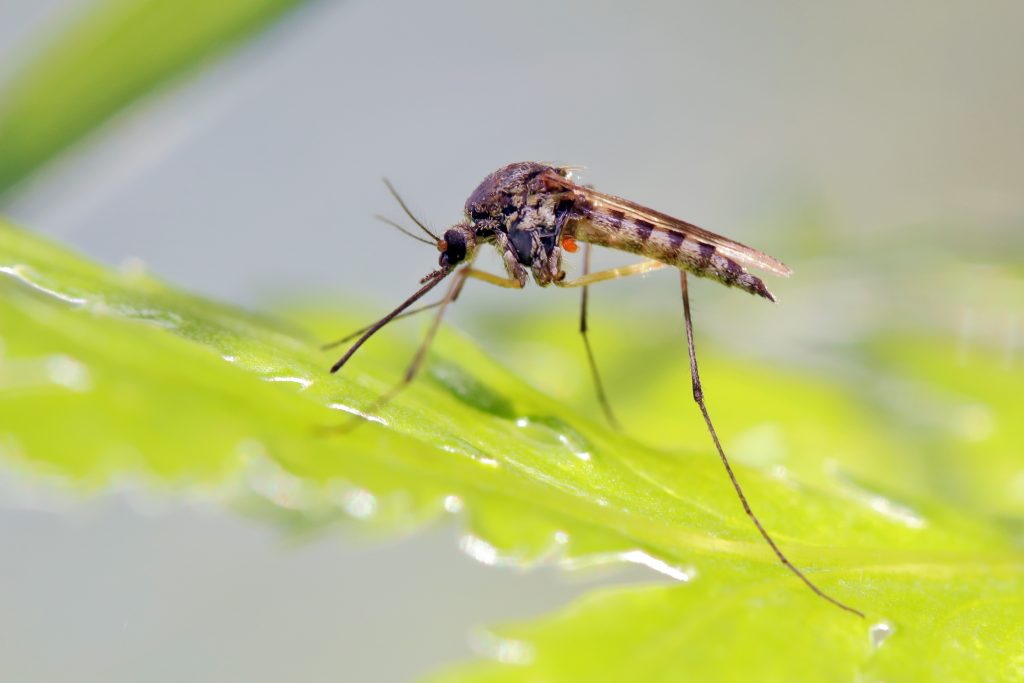
An NC mosquito problem can show up at different times of day because the state has many mosquito species, and they do not all behave the same way. You can expect mosquito activity to rise through the warmer months, especially after rain leaves water around your property. Some mosquitoes bite during the day, others are more active after sunset, and many can develop surprisingly close to the house. This guide explains mosquito season in North Carolina, the species homeowners commonly encounter, disease data, breeding sites, and practical ways to reduce activity.
Which Mosquitoes Are Common Around North Carolina Homes?
North Carolina has much more mosquito diversity than most homeowners ever need to identify. According to NC State Extension, more than 60 mosquito species occur in North Carolina, although an individual county may contain about half that number.
A few species are far more useful for homeowners to know because their habitat and biting times explain much of the mosquito activity around residential yards.
| Mosquito Type | Where You May Find It | Typical Biting Time | Why It Matters |
| Asian tiger mosquito | Small containers, shaded landscaping, residential yards | Daytime | Common statewide in high numbers |
| Eastern treehole mosquito | Tree holes, wooded yards, small containers | Daytime | Found statewide and associated with wooded areas |
| House mosquitoes | Stagnant pools and water-filled containers | Dusk and night | Common statewide and associated with West Nile virus |
| Florida SLE mosquito | Larger stagnant pools with vegetation | Dusk to dawn | More common in southeastern NC but found statewide |
| Unbanded saltmarsh mosquito | Fresh or brackish pools and marsh areas | Sunset to early night | More associated with the Coastal Plain and Piedmont |
Asian Tiger Mosquitoes Around the Yard
Asian tiger mosquitoes are dark mosquitoes with obvious white markings. They often stay close to the ground and do well around homes, gardens, patios, and thick landscaping.
Their daytime biting catches homeowners off guard. You may notice them while pulling weeds, grilling lunch, moving patio furniture, or standing beside shrubs in the afternoon. These daytime biting mosquitoes do not wait for evening before looking for a blood meal.
Their breeding sites are easy to miss because they often use small containers. Rainwater in a planter base, bucket, toy, or hollow piece of outdoor equipment can give them enough water to complete the early stages of their life cycle.
House Mosquitoes After Sunset
House mosquitoes fit the pattern most people picture when they think about mosquito bites. They become more active around dusk and at night and can develop in stagnant water around homes and neighborhoods.
Their habits also matter for public health because some house mosquitoes can transmit West Nile virus. When mosquito activity changes noticeably after sunset, the species involved may be different from the mosquitoes bothering you during the afternoon.
What to Expect During NC Mosquito Season
There is no single calendar for NC mosquito season across the entire state. Spring warmth arrives earlier near the coast than in the mountains, and fall temperatures can stay comfortable for mosquitoes longer in some areas. For most homeowners, activity becomes more noticeable as spring warms up, stays high through hot and humid summer weather, and continues into fall while temperatures remain favorable.
Summer storms can change a yard in only a few days. A thunderstorm may leave water inside a planter saucer, children’s toy, clogged gutter, wheelbarrow, or sagging cover. Warm weather after that rain gives mosquitoes the conditions they need to develop.
In Raleigh and Charlotte, mature landscaping adds another piece to the problem. Trees shade decks and side yards, shrubs stay cooler than open lawn, and irrigation keeps some areas damp between storms. You do not need a pond or creek nearby for mosquitoes in North Carolina to find suitable habitat around a suburban home.
Why Mosquito Activity Changes During the Day
Waiting until sunset does not guarantee a mosquito-free afternoon. Some North Carolina mosquitoes, including Asian tiger mosquitoes, readily bite during daylight hours.
House mosquitoes follow a different schedule and become more active around dusk and during the night. You may get bitten while trimming shrubs at 2 p.m., then notice another wave of mosquitoes when you sit down for dinner outside.
Why Mosquitoes Build Up So Fast Around Your Home
Mosquito populations can change quickly when warm weather and water line up. The mosquito life cycle moves through four stages: egg, larva, pupa, and adult. Mosquito larvae and pupae live in water, which is why even a small pocket of rainwater deserves attention.
The Centers for Disease Control and Prevention (CDC) states that common container-breeding mosquitoes can develop from egg to adult in about 7 to 10 days. Their eggs can also survive drying for up to eight months before water returns.
Picture a plastic toy left beside the patio after a storm. Water settles in a recessed section and remains there through a warm week. By the next weekend, that small spot may have been available for most of a mosquito’s development cycle.
Mosquito Breeding Sites Worth Checking
Standing water does not need to look dirty or neglected to support mosquitoes. Clean rainwater caught in the wrong place can become a mosquito breeding site if it sits long enough.
| Area to Check | What to Look For | What You Can Do |
| Flowerpot saucers | Water sitting beneath pots | Empty excess water after rain or watering |
| Gutters | Leaves or debris slowing drainage | Clear blockages and confirm water flows |
| Children’s toys | Cups, seats, or hollow sections holding rain | Drain them or store them under cover |
| Birdbaths | Water left in place for several days | Empty, clean, and refill regularly |
| Buckets and watering cans | Open containers facing upward | Store them upside down or under cover |
| Tarps and covers | Sagging folds filled with water | Tighten covers and remove pooled water |
| Pool covers | Low areas holding rainfall | Remove collected water |
| Lawn depressions | Puddles remaining after a storm | Improve drainage where practical |
Adult mosquitoes need shelter as well as water. Dense foliage beside patios, walkways, play areas, and side entrances can give them shaded resting places during the hottest part of the day.
You do not need to strip out healthy landscaping. Selective trimming that opens dense areas to more airflow and sunlight can make the spaces closest to your family less favorable to resting mosquitoes.
What North Carolina Mosquito-Borne Disease Data Shows
Most mosquito bites result in an itchy spot and nothing more. Still, several mosquito-borne diseases occur locally in North Carolina, which is why state public health officials track human cases and mosquito activity.
The 2025 North Carolina Endemic Mosquito-Borne Disease Annual Report recorded 11 neuroinvasive West Nile virus cases, 8 La Crosse virus cases, and no human Eastern equine encephalitis cases in 2025.
| Disease Tracked in NC | 2024 Cases | 2025 Cases | Previous 10-Year Average |
| West Nile virus, neuroinvasive disease | 27 | 11 | 8.8 |
| La Crosse virus | 15 | 8 | 12.3 |
| Eastern equine encephalitis | 1 | 0 | 0.6 |
*North Carolina surveillance includes reportable neuroinvasive disease, so these numbers are not a count of every mosquito infection or every person bitten by an infected mosquito.
What the Numbers Mean
West Nile virus has statewide relevance. Mecklenburg and Wake counties have historically recorded the greatest total numbers of reported neuroinvasive West Nile cases, according to the state report, which makes the data especially relevant for Charlotte and Raleigh homeowners.
La Crosse virus follows a different pattern and has been more concentrated in western North Carolina. The difference matters because mosquito-borne disease risk is not identical from one part of the state to another.
You may also see dengue, Zika, chikungunya, or malaria mentioned in general mosquito articles. Those diseases should not be presented as though they are routinely spreading through local North Carolina mosquito populations. State health reporting distinguishes locally transmitted diseases from cases associated with travel.
How to Reduce Mosquito Activity Around Your Home
Start outside the back door after rain and walk the property slowly. Check under the deck, beside the garage, behind shrubs, near outdoor faucets, and anywhere toys or gardening supplies tend to collect.
Empty standing water from containers instead of waiting for it to disappear on its own. For reusable containers, scrub the inside when practical because some mosquito eggs stick to the walls. Keep gutters draining, maintain pools and water features, and store buckets or wheelbarrows so the next storm cannot refill them.
Now look at the places where your family actually spends time. A dense hedge beside the patio or overgrown shrubs along a walkway can stay shaded and humid long after the rest of the yard dries. Trimming those areas can improve airflow without removing the landscaping altogether.
Personal mosquito prevention fills the gap that yard work cannot. Keep window and door screens in good repair, wear clothing that covers more skin when practical, and use an EPA-registered mosquito repellent according to the label when activity is high.
These checks are worth repeating after heavy rain. A yard that looked clear in May may collect new water later in the summer as storms move toys, leaves clog gutters, and outdoor items shift around the property.
When Professional NC Mosquito Control Makes Sense
You can remove a lot of mosquito habitat yourself. The harder problem starts when you have cleared standing water, cleaned the gutters, trimmed heavy vegetation, and still cannot sit outside without repeated mosquito bites. Mosquitoes may also be moving in from nearby yards, wooded edges, drainage areas, or other habitat you cannot control.
Professional NC mosquito control makes more sense at that point because the problem is no longer limited to one forgotten bucket. ClearDefense Pest Control combines recurring treatment with inspection for conditions that help mosquito populations rebuild. Technicians target adult activity and use larval control to address developing mosquitoes before they become biting adults.
If a mosquito problem is keeping you off the patio or returning even after you have handled the obvious breeding sites, contact ClearDefense Pest Control to schedule mosquito control for your property. The goal is practical: reduce mosquito activity around the outdoor spaces you actually want to use.