
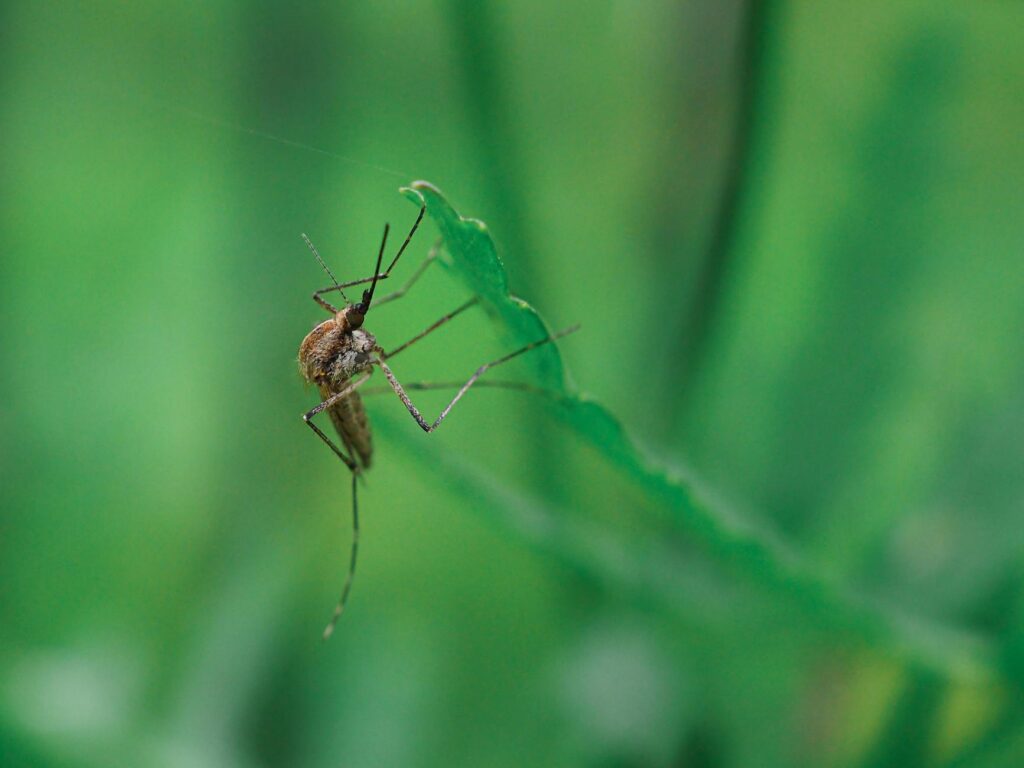
You walk through the yard in the evening and notice mosquitoes rising from the grass near the patio or landscaping beds. A few minutes later, the bites start adding up. Many homeowners ask, “Do Mosquitoes Live in Grass?” because mosquitoes often rest in tall grass and dense vegetation during the day.
This guide explains why mosquitoes gather around grass, the risks they create outdoors, and when it makes sense to contact ClearDefense for recurring mosquito control.
Do Mosquitoes Live in Grass?
Yes, mosquitoes can rest in grass and low vegetation during the day, but they do not breed there. Tall, shaded grass gives adult mosquitoes a cool place to hide between feedings. The real concern for homeowners is what surrounds the grass: any spot where water collects and stays still.
Mosquitoes usually require standing water to complete their life cycle. Your yard August hold more of these small water sources than you realize. Addressing those conditions is the most practical step you can take to reduce mosquito activity around your home.
In the sections ahead, we cover how to identify common breeding spots, the risks mosquitoes can pose, prevention steps you can handle yourself, and how recurring professional treatments from ClearDefense Pest Control work to reduce mosquito populations over time.
How to Identify Mosquitoes Living in Your Grass
Mosquitoes do not actually live in grass the way ants live in a colony. They rest in overgrown vegetation during the day, but they depend on standing water to breed and develop. If your yard feels overrun with mosquitoes, the grass itself is likely providing shelter while nearby water sources supply the breeding habitat.
How to Tell Different Mosquito Types Apart in Grass
While each species differs, female mosquitoes generally deposit eggs on the surface of standing water, singly, in a raft, or attached to vegetation or other structures. A single female can lay 100 to 300 eggs in her lifetime. That output means even a small pocket of still water near your lawn can support a growing population.
You may notice tiny, wriggling larvae in any container or low spot that holds water for more than a few days. Larvae are easier to spot than eggs and confirm that mosquitoes are breeding on your property rather than just passing through.
How to Spot Mosquito Activity Inside Your Home
Overgrown vegetation can provide shelter for mosquitoes and other insects. Tall grass, dense shrubs, and untrimmed ground cover give adults a shaded resting spot during daytime hours. Regular landscape maintenance can help reduce these potential resting and breeding sites around your yard.
Check flower pots and plant containers weekly. If you see mosquito larvae in the water, change it. Loosen soil in flower pots regularly so water penetrates through instead of forming a stagnant pool on the surface where mosquitoes can breed.
Where Mosquito Activity Shows Up Around Your Home
Mosquitoes usually require standing water for breeding. A survey of your yard will help identify which water sources are infested so they can be removed or treated. Look for forgotten items that collect rain, shallow drainage areas, and any spot where water sits undisturbed.
Standing water can serve as a breeding ground even in small volumes. Saucers under planters, clogged downspout outlets, and low areas in the lawn where water pools after rain are common culprits. Removing or draining these sources reduces the habitat mosquitoes need to reproduce.
Exterior Entry Points Mosquitoes Use Around Your Home
Mosquitoes move from yard vegetation toward your home around dusk, seeking hosts nearby. Any gap around doors, windows, or screens gives them access indoors. Keeping vegetation trimmed back from exterior walls reduces the nearby resting cover that brings them close to entry points.
Addressing standing water and overgrown areas together targets both the breeding habitat and the daytime shelter mosquitoes rely on. Without those two conditions, your yard becomes far less attractive to them.
Why Mosquito Problems Develop in Grass
Mosquitoes do not live in grass the way many homeowners assume. Adult mosquitoes August rest in shaded turf during the day, but the real driver behind yard infestations is standing water hidden in and around your lawn. Understanding where that water collects and what else draws mosquitoes close to your home helps you address the root of the problem.
Outdoor Nesting Areas for Mosquitoes Around Your Home
Mosquito larvae live in aquatic habitats and can grow in ponds, bird baths, and any other objects containing standing water. Grass itself is not the breeding site. The trouble starts with containers, low spots, and yard features that hold even a small amount of non-moving water after rain or irrigation.
According to the EPA, different species prefer various standing water sources for egg-laying. Permanent bodies of water, like ponds and streams, often contain predators that control larvae. The more problematic breeding sites include clogged ditches, temporary pools, and marshy areas at the edges of your lawn.
Food and Shelter That Attract Mosquitoes Around Your Home
Debris such as grass clippings and compost can trap moisture near your lawn. Keeping the yard free of biological waste removes shelter where adult mosquitoes rest and helps reduce standing water that supports breeding. Thick turf also provides shade where adults rest between feeding, keeping them close to you throughout the day.
Bird baths, fountains, wading pools, rain barrels, and potted plant trays all serve as potential mosquito habitats. Emptying and changing the water in these features at least once a week helps destroy those breeding grounds.
How Mosquitoes Move Around Your Home
Adult mosquitoes can travel considerable distances from their breeding sites. A neighbor’s neglected rain gutter or an unmaintained ditch down the street can send mosquitoes into your yard, regardless of how well you maintain your own property.
This flight range means a yard-only approach has limits. According to Purdue Extension, removing breeding sites where known populations originate is the best long-term control practice.
Trails and Entry Points Mosquitoes Use in Grass
Mosquitoes follow moisture and shade across a yard. Rain gutters, old tires, buckets, plastic covers, and toys scattered across the lawn all collect water and create a new habitat close to your home. Drain temporary pools of water or fill them with dirt to remove those landing spots.
Larvicides target mosquito larvae in breeding habitats before they mature into adults. ClearDefense uses a larvicide with an insect growth regulator that prevents the growth and reproductive cycle of mosquitoes in your yard, and is spread by mosquitoes themselves, so there is no need to locate every pocket of standing water.
Risks From Mosquitoes in Your Grass
Mosquitoes that rest in grass and breed nearby are more than a nuisance. They can carry diseases, and homeowners can take steps to prevent bites to reduce that risk. Understanding what these pests bring to your yard helps you decide how seriously to treat the problem.
Health Risks Linked to Mosquitoes in Grass
The main concern with mosquitoes in your yard is disease transmission. Certain species, particularly Culex mosquitoes, are the primary disease-carrying pests of concern to public health officials, according to Texas A&M AgriLife Extension. These mosquitoes prefer stagnant water with high bacteria content, and urban breeding sites can be difficult to predict or control.
West Nile virus (WNV) is one disease linked to mosquito bites. However, according to Kansas State University Extension, not all bites result in WNV transmission, and most people who are infected show no signs of the disease. Still, prevention matters. Reducing standing water around your home, using repellents, and wearing protective clothing when outdoors all help decrease your chances of getting bitten.
Property Damage From Mosquitoes in Grass
Mosquitoes do not cause structural or property damage. They do not chew wood, stain surfaces, or burrow into materials the way some pests do. The risk they pose is entirely tied to bites and the diseases those bites August carry. Your lawn, siding, and foundation are not at risk from these pests.
Food Areas and Mosquito Activity in Your Home
Mosquitoes do not contaminate food or invade pantries. Their presence becomes a problem when you spend time outdoors. Patios, decks, and any area near tall grass or standing water can put you in close contact with these pests. Take extra precautions during outdoor meals or gatherings, when exposure to bites increases.
When to Look Closer at Mosquito Activity in Grass
Any site that accumulates standing water should be inspected for possible mosquito breeding. If disease-transmitting mosquitoes are suspected, you can submit larvae to specialists for species identification. Note any sites that are breeding mosquitoes and schedule follow-up control efforts.
When disease-transmitting mosquitoes are confirmed, you should consider removing the breeding sites. You can also contact your local mosquito abatement or vector control district for assistance managing these pests. Staying ahead of breeding conditions around your yard is the most practical step you can take.
Professional Pest Control for Mosquitoes in Grass
Yes, mosquitoes do rest in grass and other low vegetation during the day. But the key to reducing their numbers around your yard is not just about the grass itself. It is about removing the conditions that let mosquitoes breed nearby.
How to Reduce Attractants for Mosquitoes in Grass
According to Purdue Extension, the most practical way to control mosquitoes around your home is to prevent them from breeding. That means eliminating or altering the sites where standing water collects in your yard.
Check flower pots and plant containers weekly. Loosen the soil in potted plants regularly so water soaks through instead of pooling on the surface. Stagnant water on the soil surface can become a breeding site.
These small steps reduce the number of mosquitoes that rest in your grass, shrubs, and landscaping throughout the day. Fewer breeding opportunities mean fewer adults hovering around your property.
Why Mosquito Control in Grass Starts With Inspection
A good mosquito plan starts with knowing where water collects. ClearDefense technicians walk your property and identify areas that may contribute to a mosquito problem. Overgrown landscaping, containers, and compacted soil in planting beds can all hold enough water to support larvae.
Our technicians communicate what they find, so you know which conditions on your property need attention. In many cases, addressing these areas does not require additional product. It just takes awareness and a few adjustments to how your yard is maintained.
What to Expect During Professional Mosquito Treatment
ClearDefense Pest Control uses backpack fogging to reduce the adult mosquito population resting in your grass and vegetation. Each application takes roughly twenty minutes, though larger yards may require more time.
We also apply a larvicide that contains an insect growth regulator.
Monthly fogging adds a barrier that discourages mosquitoes from neighboring properties from gaining a foothold on yours. Each round reduces the mosquito population further, and the results hold up after rainfall.
What to Expect From a Mosquito Control Plan
ClearDefense provides recurring mosquito service, not one-time visits. With each application, the number of mosquitoes on your property decreases. Over time, monthly treatments paired with breeding-site reduction can lower the overall population.
Every visit includes a Defense Report documenting every product used and every finding. If mosquitoes return between visits, our re-treat guarantee means we come back to re-treat.
Your technician will continue to flag conditions that attract mosquitoes, from pooling water in plant containers to compacted soil that does not drain. Ongoing inspection is part of every recurring plan, keeping your yard less inviting to mosquitoes season after season.
Bottom Line on Mosquitoes in Your Grass
Mosquitoes do not live in grass the way they live in standing water, but tall grass and yard debris give adults a convenient place to rest between feeding. The real concern is nearby breeding habitat. Removing conditions that hold still water and keeping vegetation trimmed are the most practical steps you can take. For ongoing yard protection, monthly fogging treatments paired with larvicide application can reduce mosquito numbers over time. ClearDefense Pest Control offers recurring mosquito reduction services with a re-treat guarantee, so contact the team to request a quote for your property.
Frequently Asked Questions About Mosquitoes in Grass
Why do I see so many mosquitoes in my yard?
Mosquitoes are drawn to properties that offer both resting spots and breeding opportunities. Overgrown vegetation provides shade where adults rest during the day. If any area of your yard collects standing water, it can become a breeding site. Addressing both factors helps lower the number of mosquitoes you encounter.
Can mowing the lawn help reduce mosquitoes?
Keeping grass trimmed removes shaded resting areas that adult mosquitoes favor. Mowing alone will not stop breeding, but it reduces the places where mosquitoes wait between blood meals. Pair regular mowing with removing any objects that hold water for a more complete approach.
How long does a mosquito treatment last?
ClearDefense mosquito treatments hold up after rainfall and are applied on a monthly schedule. Each visit takes roughly twenty minutes, though yard size can affect timing. The recurring service is designed to reduce mosquito populations over multiple applications.
Do I still need to remove standing water if I have professional treatments?
Yes. Professional fogging and larvicide work together to lower mosquito activity, but reducing breeding sites on your property supports those efforts. Inspect your yard regularly for any containers or low spots that collect water. Removing those sources limits where mosquitoes can develop in the first place.