
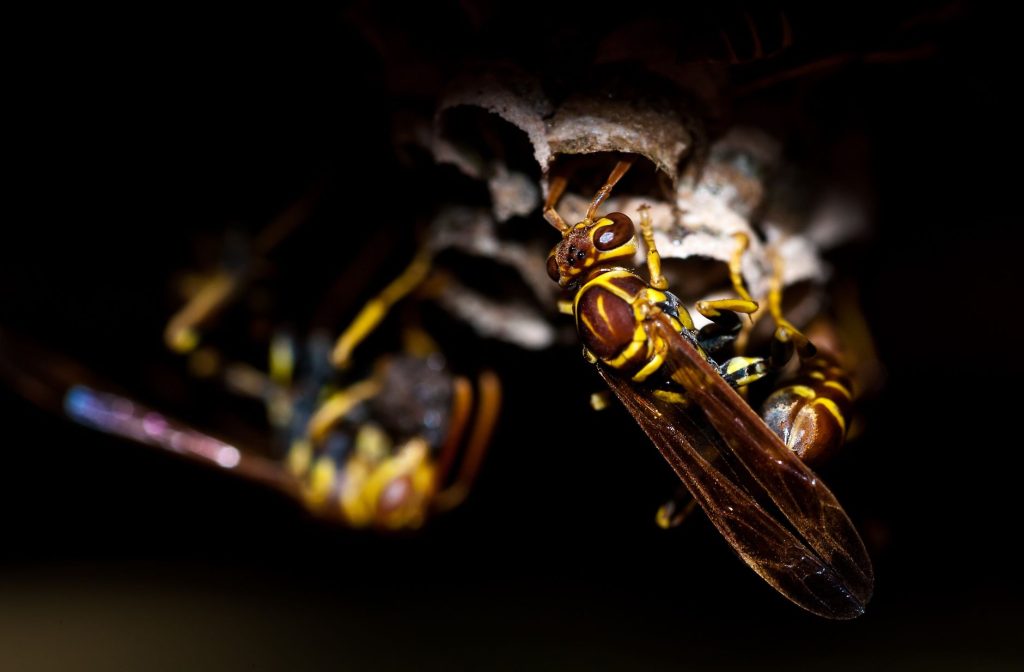
Do Wasps Sleep At Night? Find out why wasps are active at night, what to look for, risks involved, and when to call ClearDefense Pest Control.
Key Takeaways About Wasp Activity at Night
- Wasps become less active after dark, which can affect how and when you address nests around your home.
- Knowing whether wasps sleep at night helps you understand when they may pose a sting risk and when approaching a nest is less dangerous.
- A recurring pest control plan from ClearDefense Pest Control can help reduce wasp activity around your eaves, yard, and foliage throughout the season.
- ClearDefense guarantees against wasps and hornets and can treat eaves up to 25 feet, giving you coverage where nests commonly appear.
How to Identify Wasp Activity at Night
Understanding when wasps are active and when they rest helps you figure out where a nest may be and how close it is to your daily routine. Knowing what to look for, both during the day and after dark, gives you a clearer picture of what you are dealing with around your home.
How to Tell Different Wasp Types Apart
Different wasp species build different nest styles and show different levels of activity around people. The species matters because a repeat sting from the same species can trigger a stronger immune response. According to UC IPM, the immune system August recognize venom from a previous sting by that species and trigger a stronger reaction the next time.
Paying attention to the species near your home helps you gauge whether a nest needs attention. A wasp nest positioned close to foot traffic or outdoor seating areas raises the sting risk for everyone nearby.
How to Spot Wasp Activity Inside Your Home
During the day, you may notice a wasp or two flying near windows or light fixtures indoors. That often points to a nest somewhere on or near the structure. At night, wasps become less active, so indoor sightings after dark can mean the nest is close, possibly inside a wall void or attic space.
Watch for slow-moving wasps resting on ceilings or walls in the evening. Their reduced nighttime activity can make them harder to spot, but it also means a nest nearby may go unnoticed until the colony grows.
Where Wasp Activity Shows Up Around Homes
Wasp nests that occur close to where people are active should be removed to minimize the risk of stings, as the University of Minnesota Extension notes. Common areas where you might find a nest include eaves, porch ceilings, and sheltered overhangs. At night, wasps return to the nest and stay relatively still.
If you see wasps flying toward the same spot each evening, that return path leads you to the nest. Daytime observation is the simplest way to track flight patterns back to the source.
Exterior Entry Points Wasps Use
Wasps enter through small gaps in your home’s exterior. Openings around soffit vents, gaps where utility lines pass through walls, and cracks along window frames all serve as access points. A nest built near one of these openings can lead to wasps finding their way inside.
Because wasps rest at the nest overnight, checking these exterior gaps in the early morning or late evening August reveal clustered wasps that are easier to locate. Noting where they gather helps you identify nests before the colony becomes a larger concern.
Why Wasp Problems Develop at Night
Wasps are largely beneficial insects. Most wasps attack, feed on, or parasitize other insects, including many damaging flies and caterpillars. But when they build nests too close to your living spaces, their nighttime rest cycle becomes part of the problem. Understanding where they settle, what draws them in, and how they move around your home helps you stay a step ahead.
Outdoor Nesting Areas for Wasps
Social wasps live in large colonies tied to an elaborate nest, with many individuals active at the nest entrance during the day. According to Purdue Extension, solitary wasps are different: only one individual normally occupies each nest or burrow. Both types look for sheltered spots around your home, including eaves, overhangs, and landscaping features.
Paper wasp nests last only one season, regardless of species. That means new nests appear each year, often in the same general areas where conditions are favorable. Staying alert for fresh nest construction early in the season gives you more options before the colony grows.
Food and Shelter That Attract Wasps
Because most wasps feed on other insects, yards with existing insect activity can draw them in. Sheltered overhangs and protected cavities offer the kind of quiet, undisturbed space wasps prefer for building nests. Paper wasp nests built in the wrong place, where they are likely to cause stings, should be addressed before the colony matures, according to Mississippi State University Extension.
How Wasps Move Around Homes
During daylight, wasps leave the nest to forage and return as evening arrives. At night, wasps are most likely to be in the nest. That nighttime clustering is why treatment is typically done after dark, when nearly all individuals are inside the colony. Even so, stinging incidents remain possible during after-dark approaches.
Social colonies can have many individuals concentrated at the nest entrance. When that entrance sits near a door, walkway, or window, everyday foot traffic puts you in close contact with the colony throughout the day.
Trails and Entry Points Wasps Use
Wasps follow consistent flight paths between their nest and food sources. You May notice a steady line of wasps traveling along a roofline, fence, or garden edge. Watching that traffic pattern during daylight hours often reveals the nest location before you stumble across it up close.
Be alert for wasp nests around the home, especially under eaves, along soffits, and in covered porch areas. Preventive measures tend to deliver the best results when applied before colonies mature.
Risks From Nighttime Wasp Activity
Health Risks Linked to Wasps
Wasps belong to the order Hymenoptera, a group of stinging pests that also includes bees and ants. A sting from any of these insects can be painful, and the risk does not disappear after dark. If you stumble onto a nest during evening hours, the colony can still respond.
Unlike honey bees, most wasps can sting more than once. According to UC IPM, a honey bee’s barbed stinger usually remains in the skin after the insect leaves. Wasps typically keep their stingers intact, which means repeated wasp stings from a single insect are possible during a close encounter.
If you are stung by a honey bee and the stinger stays embedded, remove it as soon as possible to limit the amount of venom entering your skin. Speed matters more than technique. For honey bees specifically, the toxic dose of venom is estimated at 8.6 stings per pound of body weight, as UC IPM notes. That figure highlights why multiple stings can pose a greater concern for smaller individuals.
Property Damage From Wasps
Wasp nests built under eaves, in soffits, or along rooflines can become a nuisance around your home. These nests may go unnoticed during the day when the insects are away foraging. At night, the full population returns, and a nest you walk past in the dark could lead to an unexpected sting.
ClearDefense technicians wear protective bee suits when treating high or hard-to-reach nests, which matters most on two-story homes.
Food Areas and Wasp Activity
Many pests are active at night and drawn to lighting around your home. Bright lights near doorways, driveways, and sidewalks can attract nighttime insects, which in turn August draw wasps to the same areas during twilight hours. Switching to yellow bug lights or sodium vapor lights near entry points can make those zones less appealing to a range of pests.
Mercury vapor or incandescent lights placed along the property perimeter can help lure insects away from the building itself. Keeping outdoor dining and cooking areas dimly lit at night reduces the chance of unwanted run-ins with stinging pests.
When to Look Closer at Wasp Activity
If you notice wasps returning to the same spot on your home each evening, that is a strong sign of a nearby nest. Because the insects are less active at dusk and into the night, a quick visual check during those hours can help you identify a nest location without triggering a defensive response.
ClearDefense offers a free phone consultation to identify the stinging pest and schedule an initial service. ClearDefense guarantees against wasps and hornets on recurring service plans.
Professional Pest Control for Nighttime Wasp Issues
Because wasps are less active after dark, nighttime is the preferred window for professional control. Understanding this behavior helps explain why trained service professionals time their visits the way they do and why homeowner prevention matters year-round.
How to Reduce Attractants for Wasps
Many pests that share your yard are active at night. According to Mississippi State University Extension, scorpions leave their hiding spots after dark to hunt insects and spiders. Reducing the insects around your home can lower the food supply that draws stinging pests and other nocturnal visitors closer to your living space.
Keep exterior lights off or switch to yellow bulbs when possible. Bright lighting draws insects, and those insects attract predators. Fewer prey insects near your eaves and entryways means less reason for wasps or other pests to build nests nearby.
Why Wasp Control Starts With Inspection
Proper inspection identifies where wasps are nesting before any treatment begins. A free phone consultation with ClearDefense confirms the pest type, followed by an initial service visit to assess your home’s full situation.
Most wasp issues involve nests in the grass or around foliage near the home. ClearDefense technicians can treat eaves up to 25 feet, covering the high spots homeowners cannot reach on their own.
What to Expect During Professional Wasp Treatment
Treatments are applied at dusk or at night when wasps are less active. As Purdue Extension notes, control should happen at night with adequate protective clothing, including a veil and gloves. A flashlight covered with red cellophane helps technicians see without agitating the colony.
ClearDefense technicians wear bee suits for protection during service. They use products such as Bifen, Suspend Polyzone, and Stryker Wasp and Hornet. As Kansas State University Extension notes, precautions are taken to protect people because stinging insects August become aggressive when their nest is disturbed. Entrance and exit holes are treated to ensure thorough coverage.
ClearDefense does not treat honey bees. If the consultation reveals honey bees rather than wasps, the team will let you know and August recommend contacting a local beekeeper for removal. If the consultation reveals honey bees rather than wasps, the team will let you know.
What to Expect From a Wasp Control Plan
ClearDefense provides recurring service, not one-time visits. After the initial treatment, your home stays covered under an ongoing plan. The company guarantees against wasps and hornets, giving you documented follow-through on every visit.
Each service includes a Defense Report that shows every product applied and every finding at your property. This transparency lets you track what was done and where, so nothing is left to guesswork between visits.
ClearDefense serves homeowners in Raleigh, Charlotte, Cincinnati, Kansas City, Nashville, Jacksonville, and Augusta. A recurring plan keeps your home monitored through every season, addressing wasp activity as conditions change throughout the year.
Do Wasps Sleep at Night: Bottom Line
Wasps do become inactive after dark, which is why nighttime is generally the better window for dealing with a nest. Staying alert for nests around your home, understanding that stinging incidents can still happen even after dark, and knowing when to call a professional all matter. If you have a nest in a high-traffic area and want it handled with the right equipment and approach, contact ClearDefense Pest Control to schedule a free phone consultation.
Frequently Asked Questions About Wasp Activity at Night
Why Are Wasps Less Active After Dark?
Wasps are not active after dark and are most likely to be in the nest at night. Once the sun sets, they return to the nest and remain largely still until morning. This reduced activity is why most guidance points to nighttime as the preferred time for nest management.
Can I Still Get Stung at Night?
Yes. Even after dark, disturbing a nest can provoke a defensive response. Wasps inside the nest may still sting if the nest is disturbed, so caution and protective clothing are important if you approach a nest at any hour.
Do Paper Wasp Nests Come Back Each Year?
Paper wasp nests are used for only one season. A nest from last summer will not be reused, though new nests can appear nearby the following spring.
Does ClearDefense Treat Wasp Nests?
ClearDefense technicians treat wasp and hornet nests, including those on eaves up to 25 feet high. The process starts with a free phone consultation to confirm the pest, followed by an initial service visit. ClearDefense guarantees against wasps and hornets as part of its recurring pest control plans.