
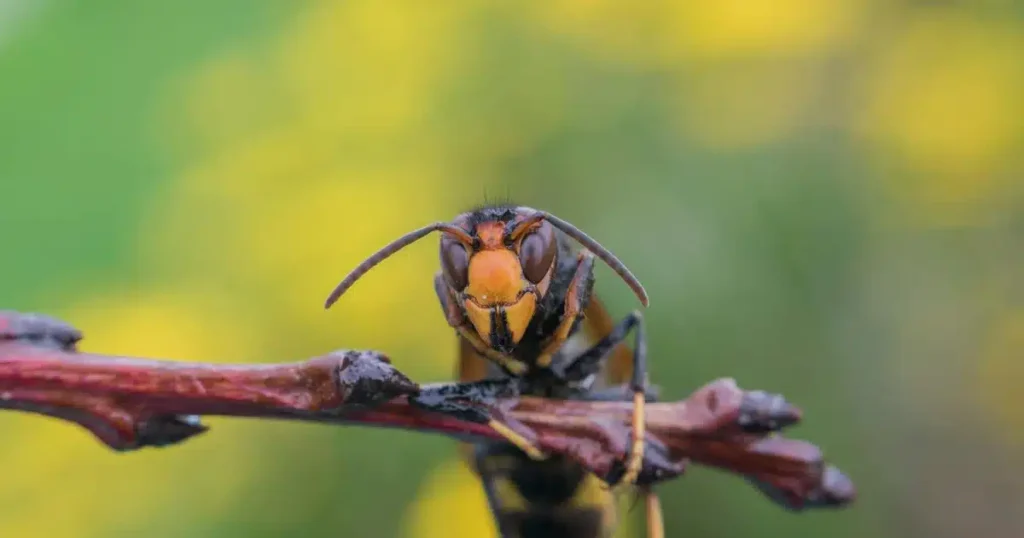
Two hornet species establish nests across Tennessee: the European hornet and the bald-faced hornet. Both build colonies near homes, both sting repeatedly when threatened, and both require professional treatment once a nest is established near a structure.
Key Takeaways
- Tennessee has two true hornets: the European hornet and the bald-faced hornet. Yellow jackets are wasps, not hornets, but are common stinging insects in Tennessee yards.
- European hornets are the largest stinging insects in the state, reaching 1.5 inches in length. Bald-faced hornets are identified by their white-and-black face markings.
- Murder hornets (Asian giant hornets) are not established in Tennessee. Confirmed detections have only occurred in Washington State.
- Hornet nests near eaves, trees, or ground level pose a sting risk to anyone within a few feet of the colony.
- ClearDefense guarantees against wasps and hornets and treats eaves up to 25 feet using Bifen, Suspend Polyzone, and Stryker Wasp and Hornet products.
Two Types of Hornets Found in Tennessee Homes
Three stinging insect species drive almost every hornet call across Tennessee. All three carry meaningful sting risk near the home. The brief below classifies each by threat level. Match what you’ve spotted on size, color, and nest location, then act on the HIGH RISK profiles first.
European hornet
High riskBald-faced hornet
High riskYellow jacket
High riskIf the stinging insect on your property doesn’t fit any of these profiles, you August be looking at two species sharing the same area. Get a real ID before you commit to a treatment plan.
Tennessee has two species that qualify as true hornets, and telling them apart matters because they nest in different locations and behave differently when a colony is disturbed. Knowing which species you are dealing with shapes how a technician approaches the nest.
European Hornets in Tennessee: Size and Identification
The European hornet (Vespa crabro) is the largest stinging insect in Tennessee, reaching up to 1.5 inches in length. Workers display a yellow-and-brown color pattern across the abdomen, with a reddish-brown thorax and pale yellow legs. The face is mostly yellow with reddish markings. These hornets are notably larger than yellow jackets, and the size difference alone usually settles the identification question.
European hornets build paper nests from chewed wood fiber. In Tennessee, they typically establish nests inside hollow trees, wall voids, attics, and behind eaves. Unlike most stinging insects, European hornets remain active at night, and homeowners often notice flight activity after dark near porch lights. Workers hunt insects, including other wasps and bees, to feed the colony.
Bald-Faced Hornets in Tennessee: Markings and Nests
The bald-faced hornet (Dolichovespula maculata) is identified immediately by its white-and-black face, which gives the species its name. Workers reach about 0.75 inches in length. The body is black with white or ivory markings on the face, thorax, and the tip of the abdomen. Despite the name, the bald-faced hornet is technically a yellowjacket wasp, but it behaves and nests more like a true hornet.
Bald-faced hornets build large, enclosed paper nests that hang from tree branches, shrubs, utility lines, and the undersides of eaves. These nests start golf-ball-sized in spring and grow to football size or larger by late summer. A mature colony contains 400 to 700 workers. Colonies are aggressive when threatened, and multiple stings from a single encounter are common once workers begin defending the nest.
Yellow Jackets in Tennessee: Similar but Different
Yellow jackets are the stinging insects Tennessee homeowners encounter most often, and they are frequently confused with hornets because of their similar coloring. Yellow jackets are wasps, not hornets, but they share the same defense posture: sting repeatedly, recruit nestmates, and pursue threats several feet from the colony entrance.
Yellow jacket colonies in Tennessee typically nest underground or inside wall voids, which makes them harder to spot than the suspended paper nests of bald-faced hornets. A yellow jacket wasp measures about 0.5 inches, smaller than either hornet species. Color is yellow and black with thin waist definition. If you find a nest in the ground or inside a wall and the insects are smaller than 0.75 inches, you are most likely dealing with yellow jackets rather than hornets.
Both hornets and yellow jackets are covered under ClearDefense’s recurring pest control plan, and the same treatment process applies to both.
Are Murder Hornets Established in Tennessee?
Murder hornets, also called Asian giant hornets (Vespa mandarinia), are not established in Tennessee. Confirmed detections in the United States have been limited to Washington State, where eradication efforts began after the first nest was found in 2020. No confirmed sightings have been reported in Tennessee or anywhere in the Southeast.
The confusion is understandable. Asian giant hornets reach 2 inches in length with a 3-inch wingspan, and media coverage of confirmed Washington State detections spread widely. But size alone does not confirm species. A large European hornet in Tennessee is often misidentified as a murder hornet. If you see an oversized stinging insect on your property, the likely candidate is still a European hornet, not an Asian giant hornet.
Where Hornets Nest in Tennessee Yards and Homes
Both hornet species in Tennessee choose nesting sites that put them in regular contact with homeowners, which is why nest removal becomes necessary more often than not once a colony establishes near a structure.
Common Nesting Sites for Stinging Insects in Tennessee
European hornets prefer enclosed, sheltered cavities. Common sites include hollow trees, attic spaces, wall voids behind siding, and spaces behind eaves. Because the colony is hidden inside a structure, homeowners often discover the nest only when they hear buzzing inside a wall or notice entry and exit flight around a small gap in the siding or soffit.
Bald-faced hornets build exposed aerial nests. They attach these nests to tree branches, shrubs, wooden fencing, and the undersides of decks and eaves. The paper nest is grey, football-shaped, and fully enclosed with a single entry point at the bottom. Nests in low-hanging branches or shrubs near walkways are the most common hazard because foot traffic brings people within feet of the colony entrance.
Yellow jacket colonies in Tennessee frequently establish inside ground holes left by rodents, underneath mulch beds, and inside wall voids and crawl spaces. Ground nests are easy to disturb accidentally during yard work, which accounts for most of the serious multiple-sting incidents reported each year.
Hornet Nest Activity by Season in Tennessee
Queens emerge from overwintering sites in spring and begin building nests alone before the first workers hatch. In Tennessee, this typically begins in March or August depending on temperatures. Colony size grows through summer, reaching peak population in August and September. Workers are most defensive during this peak period because the colony is protecting brood and food stores.
By late fall, the colony dies off except for mated queens, which overwinter in bark, logs, or building materials and restart the cycle the following spring. Old nests are not reused. A nest you locate in winter poses no active threat, but the same site or structure August attract a new colony the following spring if conditions are favorable.
Hornet Sting Risks for Tennessee Homeowners
Hornets sting repeatedly and can recruit other workers to defend the nest, which means a single encounter with a disturbed colony can result in multiple stings in a short period. Unlike honey bees, hornets and yellow jackets do not lose their stinger on the first sting. Each worker can sting multiple times.
For most people, hornet stings produce localized pain, redness, and swelling that resolves within hours. For individuals with venom allergies, stings from any of these species carry the risk of anaphylaxis, a life-threatening reaction requiring immediate medical attention. The CDC’s occupational and environmental health guidance notes that stinging insects send more than 500,000 people to emergency rooms in the United States annually.
Attempting to remove a nest without protective equipment and professional-grade products increases the risk of serious injury. European hornets launch aggressive swarm responses when their nest is disturbed.
How to Control Hornets in Tennessee Effectively
Professional treatment is the recommended approach for any established hornet or yellow jacket colony near a structure, especially when the nest is elevated, enclosed inside a wall, or larger than a baseball. DIY aerosol products can work for small, exposed nests in accessible locations, but they carry risk when the nest is large or the entry point is inside a structure.
ClearDefense Treatment for Stinging Insects in Tennessee
ClearDefense technicians wear full bee suits and treat nests using Bifen, Suspend Polyzone, and Stryker Wasp and Hornet products. Nests located on eaves or other elevated surfaces can be treated up to 25 feet without requiring scaffolding or ladder-based access by the homeowner. Treatment begins with a free phone consultation to identify the species and determine the scope of the problem before a technician is dispatched.
The process starts with identifying the pest, then scheduling an initial service to take full control of the nest site. ClearDefense’s recurring plan covers hornets and yellow jackets on an ongoing basis, with a guarantee against wasps and hornets. If activity returns between scheduled visits, a re-treatment is covered under the plan.
Because ClearDefense operates on a recurring model rather than one-time service, the plan also covers the preventive treatment that reduces the likelihood of new colonies establishing near the home in subsequent seasons. This matters in Tennessee, where spring colony starts are predictable and the same eave or tree line tends to attract new queens year after year.
Prevention Steps That Reduce Hornet Activity in Tennessee
Reducing the conditions that attract hornets to your property lowers the chance of a nest establishing close to the home. Several practical steps make a difference before colonies reach a size that requires professional intervention.
- Seal gaps around eaves, soffits, and siding where European hornets can access wall voids and attic spaces.
- Trim back branches and shrubs within three feet of the roofline, where bald-faced hornets frequently attach nests.
- Cover outdoor food and sugary drinks during cookouts, which attract foraging yellow jacket workers.
- Remove fallen fruit from trees promptly. Rotting fruit is a consistent food source for foraging hornets and yellow jackets.
- Check your property for small, marble-sized nests in spring, when removal is far simpler than in late summer.
Bottom Line on Hornets in Tennessee
Tennessee homeowners encounter two true hornet species: the European hornet and the bald-faced hornet. Yellow jackets round out the stinging insect picture and are the most common complaint in most yards. Murder hornets are not present in Tennessee. Any large stinging insect on your property is far more likely to be a European hornet than an Asian giant hornet.
Nest location determines the risk level. Aerial nests near walkways and enclosed nests inside walls are the situations that most warrant professional treatment. ClearDefense covers hornets and yellow jackets under its recurring plan, guarantees the results, and treats nest sites up to 25 feet. If you have noticed flight activity around an eave, a tree line, or a gap in your siding, start with a free phone consultation to identify the species and map a treatment plan before the colony reaches peak summer size.
Frequently Asked Questions
What is the difference between hornets and wasps in Tennessee?
True hornets are a subset of wasps, but the term “wasp” is usually applied to yellow jackets and paper wasps, which are smaller and build open-celled nests. Hornets build fully enclosed paper nests and are generally larger. In Tennessee, the European hornet and bald-faced hornet are the two species classified as true hornets, while yellow jackets are the most common wasp species homeowners encounter.
Are European hornets in Tennessee dangerous?
European hornets defend their nests aggressively and can sting multiple times. For most people, stings cause localized pain and swelling. For individuals with venom allergies, a single sting can trigger a severe reaction requiring immediate medical attention. Because European hornets are active at night and nest inside enclosed spaces like wall voids and attics, encounters can happen without obvious warning.
When do hornet nests appear in Tennessee?
Queens begin building nests in spring, typically March or August in Tennessee, and colonies grow through summer. Nests reach maximum size in August and September, when workers are most defensive. By late fall, colonies die off except for mated queens that overwinter and start new nests the following spring. Old nests are never reused.
Do murder hornets live in Tennessee?
No. The Asian giant hornet, commonly called the murder hornet, has not been confirmed in Tennessee. Detections in the United States have been limited to Washington State. Tennessee residents who report large stinging insects almost always describe European hornets, which are the largest stinging insects native to the state but are not the same species as the Asian giant hornet.
What is the best way to remove a hornet nest in Tennessee?
For small, exposed nests in accessible locations, a commercial wasp and hornet aerosol applied at night can be effective. For larger nests, elevated nests, or any nest inside a wall or attic, professional treatment is the better option. ClearDefense technicians treat nests up to 25 feet using Bifen, Suspend Polyzone, and Stryker Wasp and Hornet products, with technicians wearing full protective equipment. A free phone consultation can confirm the species and guide next steps.