
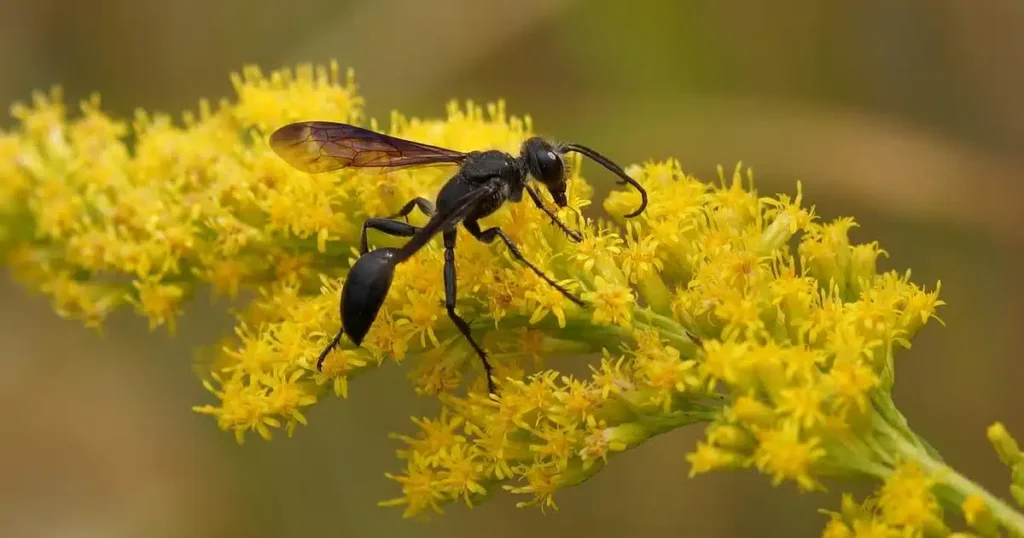
Wasps in Florida include paper wasps, yellow jackets, and cicada killers. Learn which species sting, where they nest, and when to call for help.
Key Takeaways
- Florida hosts several social and solitary wasp species. Paper wasps and yellow jackets are the most aggressive and most likely to sting people near your home.
- Yellow jackets nest underground or inside wall voids. Paper wasps build open, papery nests under eaves, tree branches, and porch ceilings.
- Mud daubers and cicada killer wasps rarely sting. They hunt spiders and cicadas, not people.
- Colony size peaks in late summer and early fall. This is when yellow jackets become most aggressive near food sources.
- Professional pest control is the right call for any nest inside or attached to your home. DIY nest removal carries a real sting risk.
What Wasps in Florida Actually Pose a Risk
Not all Florida wasps are a threat to your household. The stinging insects most likely to cause a problem around a suburban home fall into two categories: social wasps, which defend a shared colony, and solitary wasps, which rarely sting unless physically handled. Knowing the difference shapes every decision you make about treatment.
Social wasps, including paper wasps and yellow jackets, build colonies with hundreds or thousands of workers. Disturb the nest and every worker responds. Solitary wasps, like mud daubers and cicada killers, operate alone. They sting to paralyze prey, not to defend territory. Painful stings from solitary wasps are uncommon.
Common Wasps in Florida You Will Find Near Your Home
Five stinging insect species drive almost every wasp call across Florida. Three carry meaningful sting risk near the home. The brief below classifies each by threat level. Match what you’ve spotted on size, color, and where the nest sits, then act on the HIGH RISK profiles first.
Yellow jacket
High riskBald-faced hornet
High riskPaper wasp
High riskMud dauber
Low riskCicada killer
Low riskIf the wasp on your property doesn’t fit any of these profiles, you may be looking at two species sharing the same eaves. Get a real ID before you commit to a treatment plan.
Paper Wasps in Florida: Nests, Behavior, and Sting Risk
Paper wasps are the most common stinging insects a Florida homeowner will encounter. Two species are most prevalent here: Polistes exclamans, the Texas paper wasp, and Polistes carolina, the red wasps. Both build small, open-celled nests that look like an inverted honeycomb. A paper wasp nest grows to roughly 200 workers by late summer.
These social wasps prefer sheltered spots with reliable heat. You will find paper wasp nests under roof eaves, inside attic vents, along tree branches, and beneath deck rails. The nest material is chewed wood pulp mixed with saliva, which gives it the dry, papery look.
Paper wasps are not aggressive by nature, but they will sting repeatedly if you come within a few feet of the nest. Unlike bees, wasps can sting multiple times without losing their stinger. Keep small children and pets at a careful distance from any active paper wasp nest you find attached to your home.
Yellow Jackets in Florida: Underground Nests and Aggressive Behavior
Yellow jackets are the most aggressive species you will find in Florida. They build large underground nest colonies and inside wall voids, where the protected structure lets the colony grow well past 5,000 workers by early fall. The distinctive yellow markings on a black body make them easy to identify in the field, though they are often confused with bees at first glance.
Yellow jacket colonies peak in late summer when workers swarm food sources, including outdoor furniture, open trash containers, and anything sugary left outside. Stepping near an underground nest entrance sends workers out in seconds. A yellowjacket nest disturbed near a deck or lawn is a genuine hazard for your family.
Because yellow jackets nest underground and inside wall voids, locating and treating the colony is harder than it looks. Spraying the entrance with a store-bought product rarely reaches the full nest. Professional treatment targets the nest directly, which is what controls the colony.
Bald-Faced Hornets in Florida: Large Colonies, Visible Paper Nests
Bald-faced hornets build the large, football-shaped paper nests you may spot hanging in trees or attached to your eaves. Despite being called hornets, they are technically a yellow jacket species. They are identified by black bodies with white facial markings rather than yellow markings. Colonies reach several hundred workers and turn aggressive when disturbed.
The nest is built fresh each season. Workers chew wood fibers into a paper envelope that insulates the colony from Florida’s heat. Bald-faced hornets prey on other insects, including flies and caterpillars, but their defensive behavior near a nest close to your home makes them a pest control priority.
Mud Dauber Wasps in Florida: Solitary, Predatory, Rarely Aggressive
Mud daubers are solitary wasps that build small clay tube nests on exterior walls, under porch ceilings, and inside garages. Two common Florida species are the black and yellow mud dauber and the blue mud dauber, which has a metallic blue sheen and long legs. Both are easy to identify by the cylindrical mud tubes they construct.
Mud dauber wasps provision each tube with paralyzed spiders as a food source for their larvae. They do not build colonies and rarely sting humans. If you find mud tubes on your porch wall, the wasps inside are likely pupating and the adult that built them may already be gone. Scraping the tubes off the surface is a reasonable option for most homeowners.
Cicada Killer Wasps in Florida: Large but Low Sting Risk
Cicada killer wasps alarm homeowners because of their size, but they are solitary and rarely sting people. These are large, ground-nesting insects with reddish-brown bodies and yellow markings. The great golden digger wasp is a related species you may see in Florida yards. Both dig tunnels in bare or sandy soil to lay eggs.
The female cicada killer hunts, stings, and paralyzes a cicada, then carries the paralyzed cicada underground to provision her nest. Males patrol territory and August dive toward people, but males cannot sting. Cicada killer wasps are solitary and will not mount a group defense. They belong in the low-priority category unless the population has grown large enough to damage your lawn.
Why Florida’s Humidity Fuels Wasp Activity Near Homes
Florida’s humid climate extends the active season for most wasp species well beyond what homeowners in cooler parts of the country experience. In northern states, colonies collapse in winter. In Florida, colonies in sheltered spots, like wall voids and attic vents, can persist into the cooler parts of late fall and start rebuilding earlier in the spring.
The combination of abundant insect prey, year-round foliage providing nesting sites, and warm temperatures means Florida wasps have a longer window to build large colonies. A paper wasp nest that might top 100 workers in September in Ohio can reach 200 or more in Jacksonville or South Florida before the first cool snap slows activity.
Pheromone trails from a prior season’s nest also draw new queens back to the same locations each spring. If you had a nest under your eave last year, the odds of a new one in the same spot the following spring are high.
When to Handle Florida Wasps Yourself vs. Call Pest Control
The size of the nest and its location determine whether this is a DIY job or a professional one. A single mud dauber tube on an exterior wall is a reasonable homeowner task. Scrape it off and seal the area. A paper wasp nest the size of a golf ball under a seldom-used deck rail may also fall within range, provided you can treat it from several feet away at night, when wasps are least active.
Call professional pest control for any of the following situations: a yellow jacket nest underground near foot traffic, a nest inside wall voids or attic vents, any nest larger than a softball, bald-faced hornets on or attached to the house, or any situation involving allergic reactions to wasp stings. These are not manageable with a store-bought aerosol and a ladder.
ClearDefense technicians wear full bee suits and carry professional-grade products, including Bifen, Suspend Polyzone, and Stryker Wasp and Hornet. Eaves up to 25 feet can be treated directly. ClearDefense guarantees against wasps and hornets as part of a recurring pest control plan, so if activity returns between scheduled services, a technician comes back at no additional charge.
Steps to Reduce Wasp Activity in Florida Around Your Home
Prevention reduces how often nests become a problem on your property. Wasps return to the same structures year after year because the location offers shelter, heat, and nearby food sources. Removing those conditions before spring colony-building begins keeps new queens from settling.
- Seal gaps around attic vents, eaves, and soffits before spring to remove nesting entry points.
- Remove food sources: keep trash cans sealed and clean up fallen fruit from trees.
- Clear dense ground-level vegetation where yellow jackets and other insects establish underground nest colonies.
- Keep outdoor furniture clean and free of sugary drink spills during late summer and early fall.
- Inspect your eaves, porch ceiling, and deck frame monthly during spring and early summer. Catching a nest when it has fewer than 20 workers is a different problem than finding one with 300.
Bottom Line on Wasps in Florida Homes and Yards
Florida wasps range from the solitary and low-risk mud daubers and cicada killers to the highly defensive yellow jackets and bald-faced hornets. Paper wasps sit in the middle: common, capable of a painful sting, and prone to building nests in exactly the spots where your household lives. Knowing which species you are dealing with tells you how fast to act and whether to act yourself.
For nests inside the structure, inside wall voids, near high-traffic areas, or involving aggressive species, professional pest control is the right call. ClearDefense serves Jacksonville and surrounding Florida communities with recurring plans that include wasp and hornet coverage. Contact ClearDefense to schedule a consultation and get a quote for your home.
Frequently Asked Questions
How do I know if I have paper wasps or yellow jackets in Florida?
Paper wasps build open, honeycomb-style nests above ground under eaves or on tree branches. Yellow jackets nest underground or inside wall voids, and their entry point is often a small hole in the soil or a gap in your siding. Yellow jackets are also stockier than paper wasps, with a more pronounced yellow and black banding pattern. If you find the nest above ground and can see individual cells, it is almost certainly a paper wasp nest.
Are cicada killer wasps in Florida dangerous to people?
Cicada killer wasps look intimidating because of their size, but they are solitary and rarely sting people. Males patrol and posture but cannot sting. Females can sting if directly handled but will not mount a group defense the way social wasps do. Most cicada killer activity around a yard does not require treatment unless the population is large enough to damage lawn areas with their tunneling.
When is wasp season in Florida?
Wasp colonies begin building in early spring when queens emerge from overwintering sites and start laying eggs. Colony size peaks in late summer and early fall, which is also when yellow jackets become most aggressive. Florida’s warm climate means wasps remain active longer than in northern states, and sheltered colonies inside wall voids or attic vents can persist into late fall.
Can I remove a wasp nest myself in Florida?
Small, accessible nests with fewer than 20 workers can sometimes be managed by a homeowner using a targeted aerosol applied at night. However, nests inside wall voids, underground colonies, or any nest larger than a softball should be handled by a licensed professional. Yellow jackets in particular can sting multiple times and will respond to any disturbance near the nest entrance in large numbers.