
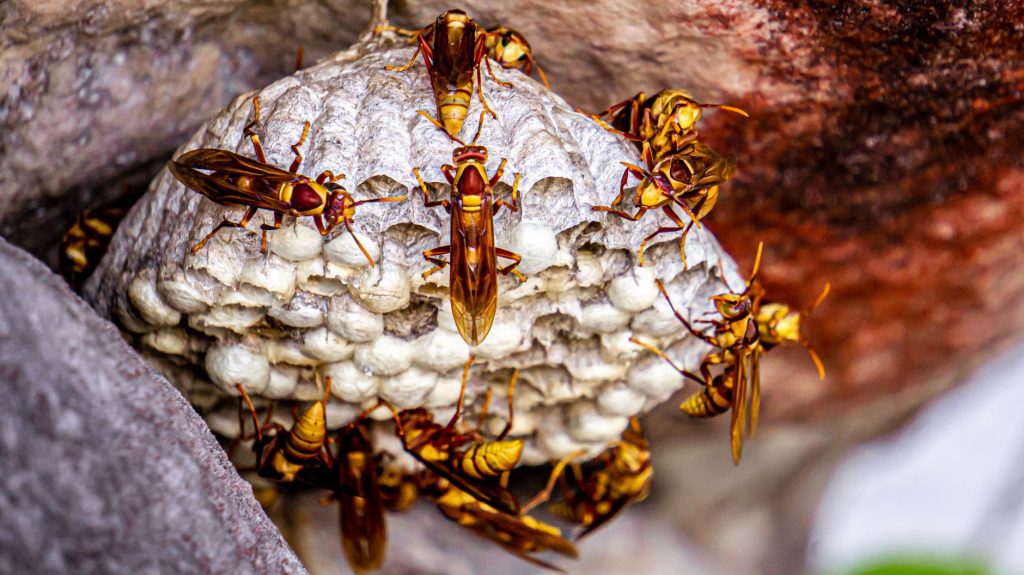
Wasp activity can create costly problems. Learn what to look for, the wasp lifespan, why it matters, and when to call ClearDefense Pest Control.
Key Takeaways About Wasp Lifespan
- Most wasp colonies last only one season, with queens being the only members that can survive into the following year.
- Understanding the wasp life cycle helps you recognize when colonies are growing and when new queens and males appear in late summer.
- Wasp nests near your home deserve attention, and ClearDefense guarantees against wasps and hornets through recurring service.
How to Identify Wasps
Understanding wasp lifespan starts with recognizing the nest cycle. Social wasp colonies are annual, meaning each colony exists for one season only, and a nest is used only during the season it is built. Knowing where you are in that cycle helps you read the signs around your home.
How to Tell Wasp Types Apart
Social wasps live in populous colonies built around a paper nest. Each colony has an egg-laying queen and many sterile female workers. A single paper wasp queen, or several queens together, August start a new nest. When a group of females starts one, a dominant queen takes over egg-laying while the others maintain the nest and are later joined by newly produced workers.
The queen emerges in late winter to early spring to feed and start a new nest. That early activity is your first clue that a colony is forming nearby. Bumble bees, by contrast, are social and nest in the ground, making their activity easier to distinguish from paper wasps overhead.
How to Spot Wasp Activity Inside Your Home
Because social wasp colonies are seasonal, indoor activity usually tracks the nest-building timeline. You August notice a lone queen inside your home during late winter or early spring as she searches for a sheltered spot to start a new nest. A single wasp indoors during that window often signals nest construction has begun close by.
Later in the season, multiple workers entering a room can point to an active colony nearby. A paper nest August be attached to a sheltered surface just outside, with workers slipping through gaps. According to Purdue Extension, each colony is tied to a single seasonal nest, so the presence of workers indoors usually traces back to one nearby structure.
Where Wasp Activity Shows Up Around Homes
Paper nests are the clearest marker of an active colony. Look for the characteristic papery structure in sheltered spots around eaves, overhangs, and porch ceilings. Because each nest lasts only one season, an old gray nest with no movement is likely from a previous year and no longer active.
Bumble bees nest in the ground and can become aggressive when that nest is threatened. Ground-level buzzing near landscaped beds or turf is a different sign to watch for. Yellowjacket nests also deserve caution. As the University of Georgia pest guide notes, a mistake during yellowjacket nest treatment can result in hospitalization or death from excessive stings.
Exterior Entry Points Wasp Lifespan Use
Queens returning in late winter to early spring look for protected spaces to start a new nest. Any gap along your roofline, soffit, or fascia can serve as an entry point. Because ClearDefense technicians can treat eaves up to 25 feet, these high-up spots are still reachable during a recurring service visit.
Ground-nesting species use different access points entirely. Open patches of soil, gaps along walkways, or edges of mulch beds can host underground colonies. Paying attention to steady insect traffic flowing toward a single spot on the ground helps you locate a nest before it grows through the season.
Why Wasp Problems Develop
Understanding wasp lifespan starts with knowing how colonies grow, what keeps them going, and why they end up near your home. A colony stays active through warmer months, and workers spend that time building, foraging, and protecting the nest. The conditions around your house can make the difference between a nest that forms nearby and one that settles elsewhere.
Outdoor Nesting Areas for Wasps
Wasps build nests in sheltered outdoor spots close to food and water. Eaves, overhangs, and areas up to 25 feet high on your home can become nesting sites. Workers handle construction and maintenance of colonial structures, care for eggs and immatures, and feed nest mates, including the queen. According to UC IPM, these duties keep workers busy throughout the colony’s active season.
The colony remains active until freezing temperatures arrive. Once temps drop into the mid-to-upper 20s °F, the old queen and workers die off. A single queen August survive the winter to start a new colony the following year.
Food and Shelter That Attract Wasps
Wasps forage for food constantly to sustain the colony. Workers collect food and bring it back to share with the queen and developing young. Any reliable food source near your home, such as uncovered meals on a patio or sugary spills, gives foragers a reason to stay close.
Shelter matters just as much. Covered spots that block wind and rain give wasps a stable place to raise brood. The longer a food source remains available nearby, the more established a nest can become before cold weather ends the cycle.
How Wasps Move Around Homes
Workers range outward from the nest each day, searching for food and water. According to Kansas State University Extension, the colony dies out each winter, with a single queen surviving. That queen overwinters in a protected spot and can emerge the next spring right near your home if she finds a suitable gap or void.
This yearly cycle means new nests can appear in different locations each season. A spot that was clear last year August host a growing colony this year if conditions are right.
Trails and Entry Points Wasps Use
Wasps follow direct flight paths between the nest and food sources. You August notice the same route being used repeatedly as workers travel back and forth. Gaps around eaves, soffits, and roofline joints give wasps access to sheltered voids where nests can grow out of sight.
Keeping these entry points sealed reduces the chance that a queen or active colony settles inside a wall or attic space. Because the nest stays active until freezing temperatures hit, an unnoticed entry point can host a colony for months.
Risks From Wasps
Understanding wasp lifespan helps you anticipate when and where problems August develop around your home. As different wasp types progress through their life stages, the risks they pose shift from structural concerns to nuisance issues near living spaces.
Health Risks Linked to Wasps
As a wasp colony grows through the season, nest activity increases around your home’s exterior. Mud daubers, for example, build 4- to 6-inch vertical mud tubes on protected walls, according to the University of Georgia pest guide. These structures can appear near doorways, porches, and eaves where foot traffic is highest, raising the chance of unexpected encounters.
Property Damage From Wasps
Some wasp-related damage comes not from the wasps themselves but from closely related wood-boring species that share similar life cycles. Cedar boards are particularly susceptible to extensive damage by carpenter bees, as the University of Georgia pest guide notes. Homeowners with cedar trim, siding, or decking should watch for signs of boring activity during warmer months.
Once eggs hatch, larvae can tunnel into fungus-predigested wood parallel with the grain. This tunneling weakens boards from the inside out, and the damage August go unnoticed until it becomes widespread.
Food Areas and Wasp Lifespan Activity
Mud dauber tubes sometimes appear in sheltered spots near outdoor kitchens, grills, or covered dining areas. Each tube houses individual larvae along with spider prey that the adult wasp has collected. These mud structures can be unsettling near spaces where you prepare or serve food, even though the tubes are mostly inactive once sealed.
When to Look Closer at Wasp Lifespan Activity
Timing matters. Eggs from certain wood-boring species hatch in 3 to 4 weeks, and the larvae that emerge begin tunneling immediately. Checking exposed wood and sheltered walls before that window closes gives you a better chance of spotting new nests or boring activity early.
Recurring inspection helps you stay ahead of these cycles rather than reacting after damage has already started. Look for fresh mud tubes on walls, new bore holes in cedar or other soft wood, and increased wasp traffic near your roofline or eaves.
Professional Pest Control for Wasps
Understanding wasp lifespan helps you time prevention and treatment correctly. Different species follow different seasonal patterns, and knowing when colonies are active, dormant, or sheltering makes a real difference in how you approach control around your home.
How to Reduce Attractants for Wasps
Because wasp lifespan varies by species, prevention should account for the full calendar. Paper wasp queens overwinter in groups, sometimes sheltering indoors. According to the University of Minnesota Extension, if you see them inside during colder months, they are not coming from an active nest but from a shelter. You can physically remove them or capture and release them outdoors.
Reducing sheltering spots around your home is a practical step. Seal gaps along eaves, soffits, and entry points where overwintering queens might gather. ClearDefense does not treat honey bees, as they are protected. If honey bees are involved, proper identification matters before any action is taken.
Some species have a very short active window. Cicada killers, for example, are active for only about two to three weeks per year and are not aggressive. Because of that brief lifespan of activity, removing attractants and sealing potential nesting areas before those weeks arrive can help you avoid problems altogether.
Why Wasp Control Starts With Inspection
ClearDefense begins with a free phone consultation to identify the pest. This step matters because wasp lifespan and behavior differ between species. Yellowjacket queens live through winter by themselves, while paper wasp queens shelter in groups. Misidentifying the species can lead to the wrong approach at the wrong time.
Inspection also determines where activity is concentrated. Our technicians look at eaves, foliage near the home, and ground-level areas where wasps commonly nest. ClearDefense can treat eaves up to 25 feet if needed, so even hard-to-reach spots are covered during the initial assessment.
What to Expect During Professional Wasp Treatment
After identification, ClearDefense schedules an initial service. A pest technician arrives equipped to take full control of the situation. Our technicians wear bee suits for protection and use products such as Bifen, Suspend Polyzone, and Stryker Wasp and Hornet to treat active nesting areas.
The most common issues involve wasps in the grass or around foliage near the home. Treatment is targeted to the nest location and species. ClearDefense does not offer one-time service for general pest control. Instead, recurring visits help address wasp activity throughout the season as lifespan cycles bring new generations.
Keep in mind that honey bees require a different path. According to the University of Georgia pest guide, in Georgia, a person licensed in Honey Bee Removal and Control must be contacted through the Georgia Department of Agriculture. ClearDefense will help you determine whether you are dealing with wasps or honey bees during the consultation.
What to Expect From a Wasp Control Plan
ClearDefense provides a recurring pest control plan that accounts for wasp lifespan patterns across seasons. Each visit includes a documented Defense Report showing every product used and every finding. This gives you a clear record of what was treated and what was observed.
Recurring service is especially useful because wasp colonies follow seasonal cycles. New queens August emerge and seek nesting sites around your home as temperatures warm. A prevention-first approach, grounded in IPM methodology, addresses conditions that draw wasps before colonies become established.
ClearDefense guarantees against wasps and hornets as part of its ongoing service. If activity returns between visits, you have coverage. That consistency matters more than any single treatment when you are managing pests whose lifespan and nesting habits shift throughout the year.
Bottom Line on Wasp Lifespan
Understanding wasp lifespan helps you anticipate when nests grow, when they pose the greatest concern, and when they naturally wind down. Most social wasp colonies follow a single-season cycle, with workers living weeks to months while queens carry the colony’s future into the next year. If you notice nest activity around your home, ClearDefense Pest Control can identify the species and take full control of the situation through a recurring service plan backed by our wasp and hornet guarantee.
Frequently Asked Questions
Do All Wasps Live the Same Amount of Time?
No. Worker wasps typically live a shorter span than queens. Solitary species like cicada killers August be active for only a few weeks per year. Social species such as paper wasps and yellowjackets have workers that live through the warm months, while queens can survive into the following spring.
What Happens to a Wasp Nest in Winter?
In most cases, the colony does not survive freezing temperatures. Workers and the old queen die off, and the nest is not reused the following year. Only newly produced queens seek shelter to overwinter, then start fresh colonies in spring.
Are Some Wasps More Dangerous Than Others?
Yes. Yellowjackets can be particularly risky because disturbing a nest August result in multiple stings. Mud daubers, by contrast, are solitary and far less likely to sting. Proper identification matters before any treatment is attempted.
How Does ClearDefense Handle Wasp Problems?
A technician in protective gear then treats the area, reaching eaves up to 25 feet when needed. We use products like Bifen, Suspend Polyzone, and Stryker Wasp and Hornet. Our recurring service includes a guarantee against wasps and hornets. Note that we do not treat honey bees, as they are protected.