
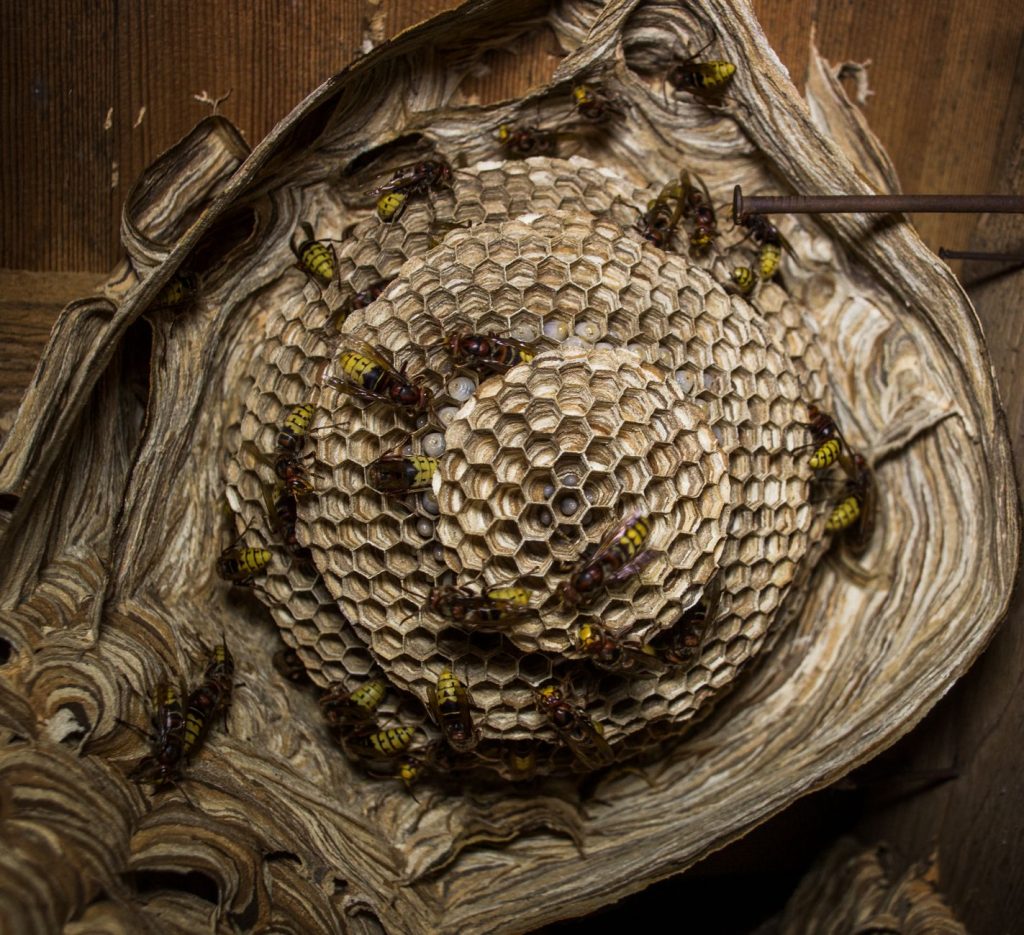
A paper wasp nest under eaves can cause costly problems when early signs are missed. Learn the signs, risks, and when to call ClearDefense Pest Control.
Key Takeaways
- Paper wasps build open, exposed nest combs that often appear under eaves and in outbuildings, making these spots worth checking each month around your home.
- Several stinging species, including paper wasps, yellow jackets, and hornets, may nest on or near your house. Correct identification matters because nest location, colony size, and behavior differ by species.
- Paper wasps, yellow jackets, and bumble bees can sting more than once, so disturbing a nest without proper protection and knowledge can lead to multiple stings.
- ClearDefense technicians can treat eaves up to 25 feet and provide a guarantee against wasps and hornets through recurring service.
How to Identify a Paper Wasp Nest Under Your Eaves
Knowing what to look for helps you catch a paper wasp nest under eaves before the colony grows through summer. Several species build nests in these sheltered spots, and each one looks different. Below is a breakdown of nest types, indoor warning signs, common outdoor locations, and the entry points wasps favor most.
How to Tell Different Paper Wasp Nests Apart
Not every papery nest belongs to the same species. Nests may be aerial or terrestrial, depending in part upon the species. Some species August construct both types. Understanding which species you are dealing with narrows down the right response.
Baldfaced hornets, a black and white species related to yellowjackets, build large, grayish, pear-shaped nests typically suspended in trees or on the sides of buildings. According to Purdue Extension, a thick paper envelope encloses two or four horizontally arranged combs inside. Open-comb paper wasps, by contrast, build smaller, uncovered nests with visible cells. Regardless of species, paper wasp nests last only one season.
Several yellowjacket species build subterranean nests in areas such as creek banks, lawns, and garden beds. The term “hornet” generally applies to species that nest above ground, while “yellowjacket” describes those that nest underground. All of these species are social, living in colonies of hundreds to thousands of individuals.
How to Spot Paper Wasp Activity Inside Your Home
You may notice wasps flying near windows or ceiling light fixtures on the upper floors of your home. This often means a nest is attached just outside, close to a gap in the eave line. Steady wasp traffic at the same interior spot, especially during warmer months, is a strong clue.
Colonies are founded in the spring by a single queen that mated the previous fall and overwintered as an adult. Early-season activity can look minor, just one or two wasps. As the colony grows, indoor sightings become harder to miss.
Where Paper Wasp Activity Shows Up Around Homes
Most species are relatively unaggressive, but according to UC IPM, they can be a problem when they nest over doorways or in other areas of human activity such as fruit trees. Eaves offer the overhead shelter that many species prefer for aerial nests.
Look along the soffit line, porch ceilings, and the undersides of second-story overhangs. These protected areas keep nests dry and partially hidden, which is why a paper wasp nest under eaves can go unnoticed until the colony is well established.
Exterior Entry Points Paper Wasps Use
Gaps where the soffit meets the fascia board are a common access point. Wasps also move through openings around exterior light fixtures, vents, and corners where trim boards join. Any small gap along the roofline can serve as a runway between the nest and the rest of your home.
Watching wasp flight paths during daylight hours is the fastest way to pinpoint the nest. Follow the insects back to the eave, and you will usually find the nest tucked in a sheltered corner or hanging from the underside of an overhang.
Why Paper Wasp Problems Develop Under Eaves
Outdoor Nesting Areas for Paper Wasps
Paper wasps form small colonies around a single, exposed nest comb. According to Purdue Extension, that comb is typically suspended from eaves or in outbuildings. These sheltered overhangs give colonies protection from rain and direct sun, making the underside of your roofline a preferred building site.
Social wasp colonies are annual, meaning they exist for one season only, and a nest is used only during the season it is built. The presence of a colony one season does not mean a colony will return to the same spot the following year.
Food and Shelter That Attract Paper Wasps
Paper wasps are beneficial caterpillar predators. Yards with garden beds, shrubs, or trees that host caterpillars can draw foraging workers closer to the home. Once workers discover a protected overhang nearby, the queen August start a new nest comb there.
A colony consists of an egg-laying queen and many sterile female workers. As workers build out the comb through the warmer months, the colony grows and activity around eaves becomes more noticeable.
How Paper Wasps Move Around Homes
Paper wasp colonies can appear on more than one part of a home. Eaves on different sides, porch ceilings, and attached outbuildings all offer the sheltered geometry these wasps prefer. Multiple small colonies may develop across the same structure during a single season.
When colonies build near doorways, walkways, or windows, this often creates unexpected encounters with people. According to Purdue Extension, those encounters can lead to an increase in stings.
Trails and Entry Points Paper Wasps Use
Paper wasps are relatively nonaggressive compared to other social wasps, but colonies that sit directly above high-traffic areas still pose a stinging concern. Workers fly in and out of the nest throughout the day, crossing paths with anyone passing below.
When colonies establish inside a structural void rather than on an exposed surface, reaching them becomes harder. Special application equipment is often needed to contact the colony deep within a void. For such difficult situations, the services of a professional should be obtained.
Risks From Paper Wasp Nest Under Eaves
Paper wasps typically attach nests by a pedicel to the protected underside of overhanging structures, including the eaves of houses. That placement puts people in close contact with the colony every time they step outside, open a window, or work on exterior maintenance.
Health Risks Linked to Paper Wasp Stings
The primary concern with any social wasp nest near your home is the probability of stings. When a colony sits right above a doorway or porch, routine foot traffic can agitate the wasps. According to the University of Georgia pest guide, a mistake during nest treatment can result in hospitalization or even death from excessive stings.
Vibrations from a closing door or a ladder propped against the fascia can be enough to trigger a defensive response. The closer the nest is to daily activity, the higher the chance of repeated encounters.
Property Damage From Paper Wasp Nests
Some social wasp pests nest inside wall cavities, and colonies can grow large. According to Purdue Extension, colonies are often located far from the entrance hole, deep into the structure. A nest that appears small from the outside August extend well beyond what you can see, complicating any attempt to address it on your own.
How Paper Wasps Affect Outdoor Eating Areas
Social wasps capture insects such as flies, caterpillars, and beetle larvae, so they are considered beneficial in many settings. However, as Purdue Extension notes, destruction of colonies is warranted when they are located in or around areas of human activity where stings can occur. Patios, grills, and dining areas beneath eaves put your household in repeated close contact with foraging wasps.
When to Take a Closer Look at Wasp Activity
Small, early-season colonies may seem manageable. But above-ground and structural colonies are best handled by professional pest control operators, according to Purdue Extension. Attempting removal without proper knowledge of social wasp behavior raises the stakes.
If you notice wasps entering a gap in your siding or soffit, the colony may already extend inside the wall. Monitoring early and recognizing when a nest has grown beyond a simple DIY fix can help you avoid a painful or dangerous encounter.
Professional Pest Control for Paper Wasps Under Eaves
Paper wasps prefer enclosed, protected areas for nesting, and eaves are one of their top choices. During warmer months, you may spot their gray, inverted-umbrella-shaped nests tucked under the roofline. Not every nest needs treatment, but when one is close to your front door, patio, or windows, it deserves attention.
How to Reduce Attractants for Paper Wasps
According to the Mississippi State University Extension, paper wasps prefer to build nests in enclosed, protected areas, such as the eaves of buildings, and station guards around the nest entrance. Reducing sheltered gaps along your roofline can make these spots less inviting.
Seal cracks and openings where eave panels meet siding or fascia boards. Screen off open soffits and vents. By limiting access to protected cavities, you lower the odds of a new nest forming in the same location next season.
Why Control Starts With a Professional Inspection
Before any treatment, a proper inspection matters. Guinea wasps, for example, are often mistaken for yellowjackets. Yellowjackets are yellow and black and build their nests in the ground, which calls for a different approach. Correct identification helps determine the right response.
ClearDefense starts with a free phone consultation to identify the pest. From there, a technician can inspect the nest location, confirm the species, and assess proximity to high-traffic areas of your home. According to UC IPM, paper wasp nests should not require treatment unless they are near people.
What to Expect During Professional Treatment
When a nest is close enough to pose a concern, ClearDefense sends a technician equipped with a bee suit for protection. The team uses products such as Bifen, Suspend Polyzone, or Stryker Wasp and Hornet to treat the nest on contact. Technicians can treat eaves up to 25 feet high if needed.
If you spot paper wasp queens indoors during cooler months, they are not coming from an active nest. They are sheltering. You can physically remove them or capture and release them outdoors. Paper wasp queens live in groups through the winter rather than alone like yellowjacket queens.
What to Expect From a Paper Wasp Control Plan
ClearDefense provides recurring pest control rather than one-time treatments. This matters for wasps because new queens August return to the same sheltered eave areas in the following seasons. A recurring plan keeps your home monitored throughout the year.
Every visit includes a Defense Report that documents every product used and every finding. ClearDefense also guarantees against wasps and hornets, so if activity returns between scheduled visits, a technician comes back to address it.
Keep in mind that ClearDefense does not treat honey bees. If your inspection reveals honey bees rather than paper wasps, the team will let you know so you can contact a local beekeeper or bee removal specialist.
Dealing With Paper Wasps Under Eaves: Bottom Line
A paper wasp nest under eaves is a seasonal structure that will not carry over into the next year. Small nests spotted early may seem manageable, but above-ground colonies near living spaces are best handled by a professional pest control operator with the protective gear and experience for the job. ClearDefense Pest Control guarantees against wasps and hornets on recurring service plans, so reach out to request a quote and get the situation handled the right way.
Frequently Asked Questions
Will a Paper Wasp Nest Come Back Next Year?
Paper wasp nests last only one season. Queens overwinter in sheltered spots, sometimes indoors, but they do not reuse last year’s nest. If you find slow-moving wasps inside during winter, they are sheltering rather than building a colony. You can physically remove or capture them at that point.
Can I Remove the Nest Myself?
Above-ground nests attached to eaves or other structural areas are best left to a professional. A misstep during treatment of a social wasp colony can lead to a serious stinging incident. ClearDefense technicians wear bee suits and can treat eaves up to 25 feet high when needed.
How Does ClearDefense Handle Wasp Nests?
A technician is scheduled for an initial service visit to address the nest directly. Because ClearDefense offers recurring plans rather than one-time treatments, your home stays covered through the warmer months when new nests may appear.
What About Honey Bee Nests Under Eaves?
If a colony near your eaves turns out to be honey bees rather than paper wasps, a licensed bee removal specialist is the right contact. Your ClearDefense technician can help confirm the identification during the consultation.