
If you live in Augusta, GA, you have likely seen a wasp or hornet flying around your home, especially during the warmer months. From Evans to Grovetown, these stinging insects are common near patios, garages, and rooflines where they can build nests and stay protected.
At first glance, it can be hard to tell the difference between a wasp and a hornet. Both belong to the Hymenoptera family, can sting, and play a role in the ecosystem as pollinators. Still, their behavior, nesting habits, and risk levels differ.
Knowing the difference helps you respond the right way. Whether you are dealing with a wasp nest near your eaves or a hornet nest in a tree, proper identification is the first step toward effective pest control.
Key Takeaways
- Wasps and hornets differ in size, coloration, and nesting habits
- Hornets are a type of wasp, but tend to be larger and more defensive
- Proper identification helps avoid unnecessary risk and infestation issues
- Professional pest control services handle stinging insects safely and effectively
Wasp vs Hornet Key Differences
Understanding the key differences helps you identify what you are dealing with before taking action. While both are social insects, their behavior and nesting patterns vary in ways that matter for Augusta homeowners.
Size and Body Structure
A hornet is generally larger than a typical wasp. Hornets have thicker bodies and a more robust thorax, while most wasp species have slender bodies with narrow waists.
Paper wasps, for example, have long legs and a more delicate shape. In contrast, a hornet such as the European hornet has a heavier build and appears more solid when flying.
Coloration and Markings
Coloration is another way to tell them apart. Many wasp species have bright yellow and black stripes, while hornets often appear reddish-brown with muted yellow markings.
The bald-faced hornet stands out with black stripes and white markings on its face. This contrast helps distinguish it from common wasp species found around homes in Augusta.
Nesting Habits
Nesting habits are one of the most important differences. Wasps often build paper nests under eaves, decks, or porch ceilings.
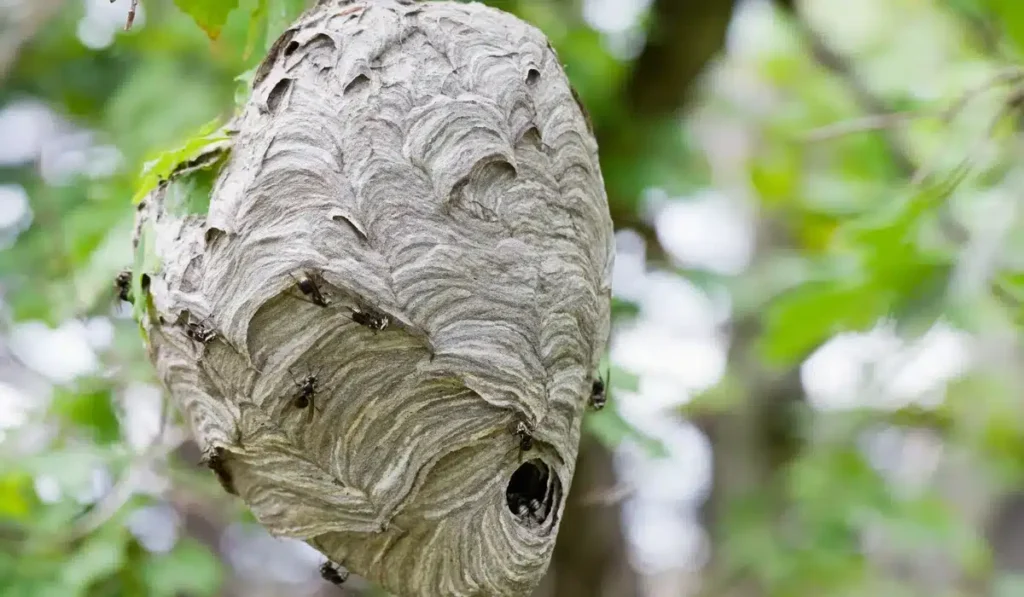
Hornets tend to build larger, enclosed structures. A hornet nest is usually found in trees, shrubs, or sometimes attached to homes. Some yellow jackets, which are a type of wasp, even nest underground or inside wall voids.
Behavior and Aggression
Wasps sting when provoked, but hornets are more defensive of their nests. A hornet sting can be more painful due to its size and the amount of venom delivered.
Both use pheromones to signal danger to other members of the colony. This means that disturbing one can quickly attract more stinging insects to the area.
How to Tell Them Apart Around Your Home
Telling a wasp from a hornet around your property in Augusta often comes down to careful observation. Pest control professionals rely on visible cues and behavior patterns rather than guesswork.
Nest Appearance
A wasp nest is usually smaller and open, especially with paper wasps. You can often see the hexagonal cells and even larvae inside.
A hornet nest is enclosed and football-shaped. It is made of layered paper material and often hangs from tree branches or is tucked into sheltered spaces.
Location of the Nest
Location is a strong clue. Wasps commonly build nests under eaves, railings, and outdoor structures close to human activity.
Hornets prefer elevated or more secluded spots. You may find a hornet nest in a tree or high on your home. Yellow jackets, on the other hand, may nest underground or inside wall voids.
Flight Patterns and Activity
Wasps tend to move in a more scattered pattern as they search for food, such as sugary substances or insects like grasshoppers.
Hornets often patrol a specific area near their nest. If you notice repeated movement in the same spot, you may be dealing with a hornet colony.
Reaction to Human Activity
Wasps are often drawn to picnics, trash bins, and outdoor meals. They search for sugary substances and protein sources.
Hornets are less interested in food scraps but more focused on protecting their nest. If you get too close, they react quickly and may swarm.
Why the Difference Matters for Augusta Homeowners
Knowing whether you are dealing with a wasp or a hornet is not just about identification. It directly affects how the problem should be handled.
Risk of Stings
Wasps sting and can do so multiple times. Their stingers are designed for repeated use, which increases the risk during an encounter.
A hornet sting is often more intense due to the insect’s size. For families with children or pets, understanding this difference helps reduce the chance of injury.
Nest Location and Accessibility
Wasp nests are often easier to spot and access. They are commonly found under eaves or attached to outdoor structures.
Hornet nests are usually higher or more hidden. This makes removal more complex and increases the need for professional pest control service.
Impact on Your Property
A growing infestation can affect how you use your outdoor space. Wasps near patios or grills can make gatherings uncomfortable.
Hornets nesting near entry points or trees can limit access to parts of your yard. In commercial properties, this can impact customers and employees.
Proper Treatment Approach
Different stinging insects require different treatment strategies. Pest control professionals assess the type of wasp or hornet, the size of the colony, and the nesting habits before starting.
They also consider nearby pollinators, such as honeybees and bumblebees, which should not be disturbed. This targeted approach protects your home while maintaining balance in the ecosystem.
Schedule a Stinging Insect Inspection in Augusta, GA
If you are seeing increased wasp or hornet activity around your Augusta property, it is time to take a closer look. Identifying the insect is only the first step.
A professional pest control service evaluates the full situation, including nesting sites, colony size, and risk factors. Whether it is a wasp nest under your eaves or a hornet nest in a tree, the right approach depends on accurate identification.
ClearDefense Pest Control provides residential pest control and commercial pest control services designed to handle stinging insects safely. Treatments are applied with precision based on pest behavior, helping reduce activity and prevent future nests.
If you suspect a wasp or hornet infestation, do not wait for the problem to grow. Contact us today to schedule your inspection and take control of your property.
FAQs
What is the main difference between a wasp and a hornet?
A hornet is a type of wasp, but it is larger, thicker-bodied, and more defensive. Wasps usually have narrow waists and build smaller, open nests, while hornets build larger, enclosed nests and react more aggressively when disturbed.
Are hornets more dangerous than wasps?
Hornets are generally considered more dangerous because of their size and defensive behavior. A hornet sting can be more painful, and they are more likely to swarm if their nest is threatened.
Should you call pest control for wasps or hornets?
Yes, especially if the nest is active or located near your home or business. Professional pest control services can safely identify the insect, remove the nest, and prevent future infestations without putting you at risk.