
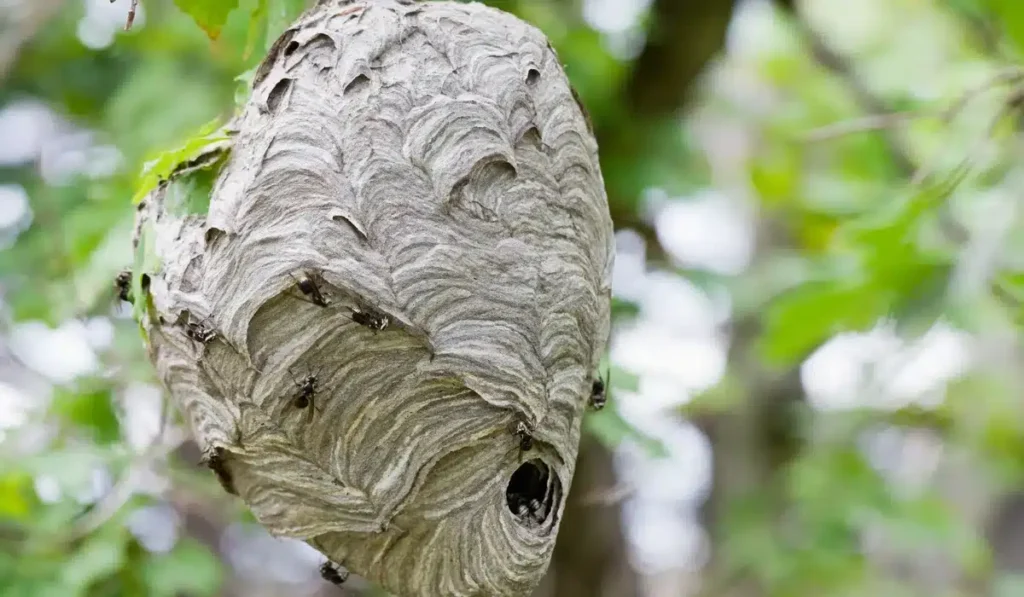
Seeing a hornet nest hanging from a tree or tucked under your eaves can stop you in your tracks. In Raleigh, stinging insects can stay active for much of the year, with many nests appearing in late spring and growing through late summer.
If you’re a homeowner, tenant, or property manager, you may be asking one simple question: What should you do now? Acting too quickly can lead to painful wasp stings. Ignoring the problem can allow the colony to grow larger this season and may increase the chance of new nests forming nearby next year.
Here’s what to do right away, how to identify the type of wasp, and when to call for professional nest removal or trusted pest control in Raleigh.
Key Takeaways
- Keep your distance from any hornet nests or wasp nests and avoid DIY wasp spray.
- Identify the type of wasp by nest shape, location, and behavior.
- Call a pest control company if the nest is large, active, or near high-traffic areas.
- Professional pest management addresses the active nest and, with ongoing service and our re-treat guarantee, helps keep wasps and hornets under control.
What to Do Right Now Near the Nest
If you’ve found a hornet nest or other wasp nests on your property, focus on safety first.
Keep Your Distance
Do not approach the nest. Bald-faced hornets and other stinging insects defend their nesting site aggressively. Worker wasps may swarm when they sense a threat, especially while defending their nest.
Stay at least 10 to 15 feet away. Keep children, pets, and customers clear of the area. If the nest is under eaves or near overhangs, avoid using that doorway until a pest control professional removes the nest.
Do Not Spray It Yourself
It can be tempting to grab a can of wasp spray from the store. However, most sprays require you to stand closer than is safe. If you miss the opening, you may trigger defensive behavior, increasing the risk of wasp stings.
A pest control company uses professional-grade products and protective gear. DIY spraying may leave behind old nests or scent cues, and wasp queens may build a new nest in the same sheltered areas the following year.
Mark the Area and Reduce Activity
If the nest is near a walkway or loading area, place a temporary barrier or sign. Commercial property owners should notify staff to limit traffic near the nesting site.
Lower noise and vibrations near the nest to reduce the risk of disturbing worker wasps.
How to Tell What You’re Dealing With
Not every hornet nest belongs to true hornets. Several wasp species in Raleigh build paper nests that look similar.
Look at the Nest Shape
Bald-faced hornets build large, round paper nests that hang from trees or rooflines. These paper nests are fully enclosed, with a small entrance hole.
Paper wasp nests, on the other hand, look like open honeycomb structures. You can see the individual cells and sometimes the larvae inside. These are often found under eaves or in sheltered areas.
Check the Location
Yellow jackets often build nests in wall voids or underground. If you see wasps entering a small crack in siding, you may not be dealing with hornets at all.
Mud daubers build narrow, tube-shaped nests and are less aggressive. Honey bees build wax honeycomb structures and are important for pollination. If you suspect honey bees, contact a beekeeping professional instead of attempting removal.
Watch Their Behavior
Bald-faced hornets are larger and black with white markings. Yellow jackets are smaller and bright yellow and black. You can often identify the type of wasp by watching its size, color, and behavior near the nesting site.
In late summer, activity increases as colonies reach peak size. Many homeowners first notice a growing wasp problem during late summer.
When It’s Time to Call for Removal
Some situations require professional pest management right away.
The Nest Is Large or Active
If you see constant activity or a steady flow of worker wasps entering and leaving, the colony is well established. A large infestation increases the chance of accidental disturbance and stings.
Professional pest control provides safe nest removal and offers a re-treat guarantee if wasps or hornets return.
The Nest Is Near Doors or High-Traffic Areas
Nests under eaves near entry doors, patios, or business entrances pose a higher risk. The closer the nesting site is to daily activity, the more urgent the issue becomes.
Overhangs and rooflines are common areas for wasps to build nests. If people must pass close to the nest, schedule removal right away.
You’ve Seen Nests Return Before
If you have noticed old nests from previous seasons, your home may offer sheltered areas that attract wasp queens looking for protected nesting sites.
Removing old nests alone does not prevent future issues. A pest control company can inspect the structure and recommend preventive pest management steps to reduce the risk of repeat infestation.
Schedule a Raleigh Hornet Nest Inspection
If you’ve found a hornet nest near your Raleigh home or business, professional help makes removal safer and more effective. At ClearDefense Pest Control, we treat bald-faced hornets, yellow jackets, and other wasp species, including nests under eaves, along overhangs, and around your property.
With professional nest removal and an ongoing treatment plan, you’re covered by a re-treat guarantee if wasps or hornets return.
Contact us today to schedule your Raleigh hornet nest inspection.
FAQs
Are bald-faced hornets dangerous?
Yes. Bald-faced hornets are aggressive stinging insects and will defend their nesting site. Getting too close can result in multiple stings from wasps.
Do old nests attract new nests?
Old nests do not get reused, but they can signal a good nesting site. Wasp queens may return to the same area to build nests the following year.
Can I remove a hornet nest myself?
DIY removal is risky, especially in late summer when colonies are large. Professional pest control provides safer nest removal and can help reduce the likelihood of injury or recurring wasp problems.