
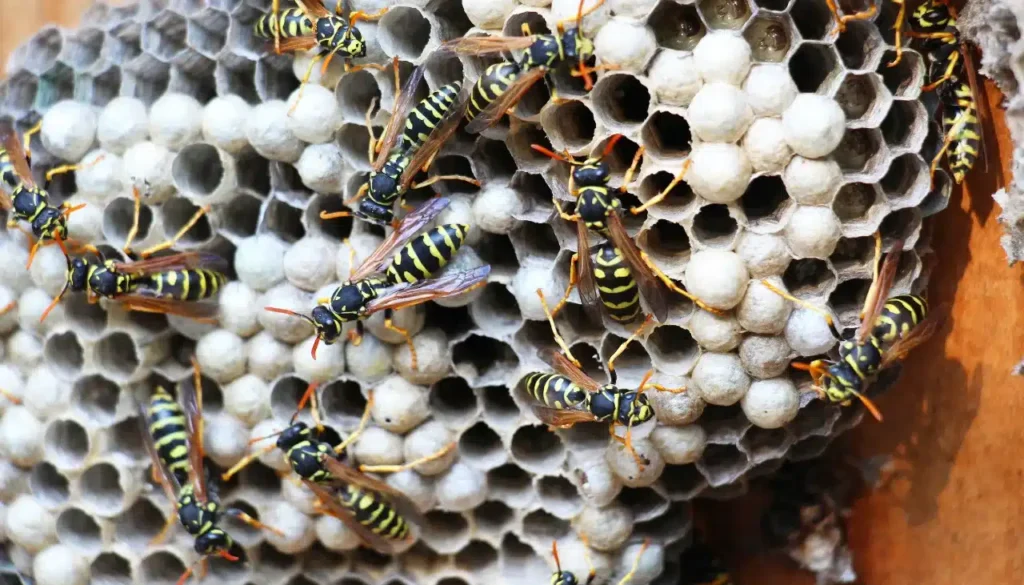
Have you ever looked up at your porch and seen a small, gray wasp nest stuck to the ceiling? If you live in Raleigh, this is common. Many homeowners see paper wasps build nests on their homes every spring and summer.
Paper wasps are stinging insects that like warm weather. Raleigh’s long summers and mild winters make it easy for them to survive and return. Once they find a good spot, they often come back year after year.
Knowing why paper wasps choose your house can help you stop the problem before it grows into a larger infestation.
Key Takeaways
- Paper wasps build nests on Raleigh homes because they find shelter, warmth, and food nearby.
- They often return to the same overhangs, porches, and protected spaces each year.
- Early action and professional pest control reduce repeat nesting and lower your risk of stings.
Why Paper Wasps Keep Building Nests on Homes
Paper wasps build nests on homes because houses offer shelter, warmth, and food nearby. Our North Carolina climate makes it even easier for them to survive and start a new nest each year.
They Come Back to Places That Worked Before
A queen paper wasp will overwinter in protected areas like soffits, attic corners, or wall voids. When spring arrives, she looks for a safe place to start building.
If your home worked well before, she may choose it again. Unlike a hornet nest that hangs high from a tree branch or inside hollow trees, a paper wasp nest is usually attached under overhangs or porch ceilings.
Raleigh Weather Helps Them Survive
Raleigh has early springs and warm falls. That gives paper wasps more time to build nests and raise larvae.
Other stinging pests, like yellowjackets or the bald-faced hornet, also thrive here. A bald-faced hornet nest may hang from trees, while a European hornet nest is often found in hollow trees or tree cavities. With good weather and safe shelter, these hornet species and wasps continue to return each year.
The European hornet is the only true hornet commonly found in the United States. While it prefers wooded areas, homes can still attract it.
Your Yard Provides Food
Paper wasps hunt insects to feed their larvae. If your yard has shrubs, trees, or outdoor lights that attract bugs, you are providing steady food sources.
Homes near wooded areas in Raleigh may see multiple types of hornet and wasp activity. You could even spot yellowjackets building a nest nearby. Easy access to food makes your house an ideal place to build nests.
The Spots on Raleigh Homes They Prefer
Paper wasps look for areas that are high, dry, and protected from wind and rain.
Roof Overhangs and Eaves
Overhangs are one of the most common nesting spots. These areas remain shaded and are rarely disturbed.
Unlike a large hornet or bald-faced hornet nest, which is fully covered, paper wasps create open, papery nests with visible cells. These nests attach firmly to wood or siding.
Porches and Ceilings
Porches are another favorite. The flat surface gives the wasps a strong place to attach their nest. As the colony grows and more larvae hatch, you may see more activity around doors and windows. This is when many property owners realize they have a problem.
Gaps and Wall Voids
Some stinging insects use wall voids for protection. Yellowjackets are well known for this.
If you are unsure whether you have paper wasps, yellowjackets, or a European hornet, it helps to contact a pest control company for proper identification. Different types of hornets and wasps require different treatment methods.
What to Do Next to Prevent New Nests
Stopping a new nest early is much easier than dealing with a large colony later.
Remove Small Nests Quickly
In early spring, a nest may be very small. With the help of professionals, removing it early can prevent a bigger issue. Once the nest has adult workers protecting it, hornet nest removal or wasp nest removal becomes dangerous.
Trying to knock down an active nest can lead to painful stings.
Seal Cracks and Openings
Close gaps around soffits, siding, and vents. This helps stop queens from finding places to overwinter.
Sealing entry points also helps prevent other pests from moving in.
Reduce Attractants
Keep trash sealed tightly. Clean up outdoor food and drinks. Limit standing water around your home. If you see a honeybee colony, contact a beekeeper instead of trying to remove it. Honeybee populations are protected and play an important role in nature.
Work With a Pest Control Company
The best way to prevent repeat nesting is ongoing pest control. ClearDefense Pest Control provides professional wasp and hornet services in Raleigh.
Technicians treat common nesting areas like eaves, foliage, and overhangs. Treatments are applied with precision using environmentally responsible products. These products target stinging pests while minimizing impact on non-target insects like the honeybee.
Routine pest control helps reduce the chance of another infestation forming next season.
Schedule a Raleigh Paper Wasp Inspection
If paper wasps keep returning to your home, it may be time for a professional inspection. A trained technician can check for nests, look inside wall voids, and find conditions that attract wasps.
ClearDefense Pest Control provides expert pest control services for wasps, hornets, and yellowjackets in Raleigh. Technicians can treat nests up to 25 feet high and offer safe removal when needed. Every service includes a re-treat guarantee. If stinging pests return, additional service is provided.
Contact us to schedule your Raleigh paper wasp inspection and protect your home from repeat nesting.
FAQs
What is the difference between a paper wasp nest and a hornet nest?
A paper wasp nest is open and shaped like an umbrella. A hornet nest, such as a bald-faced hornet nest, is round and fully enclosed. Proper identification helps determine the right treatment plan.
Are paper wasps aggressive like yellowjackets?
Paper wasps are usually less aggressive than yellowjackets. However, they will defend their nest if they feel threatened.
Should I try hornet nest removal myself?
Removing an active nest can be dangerous. Professional pest control provides safe removal and helps prevent the problem from returning.