
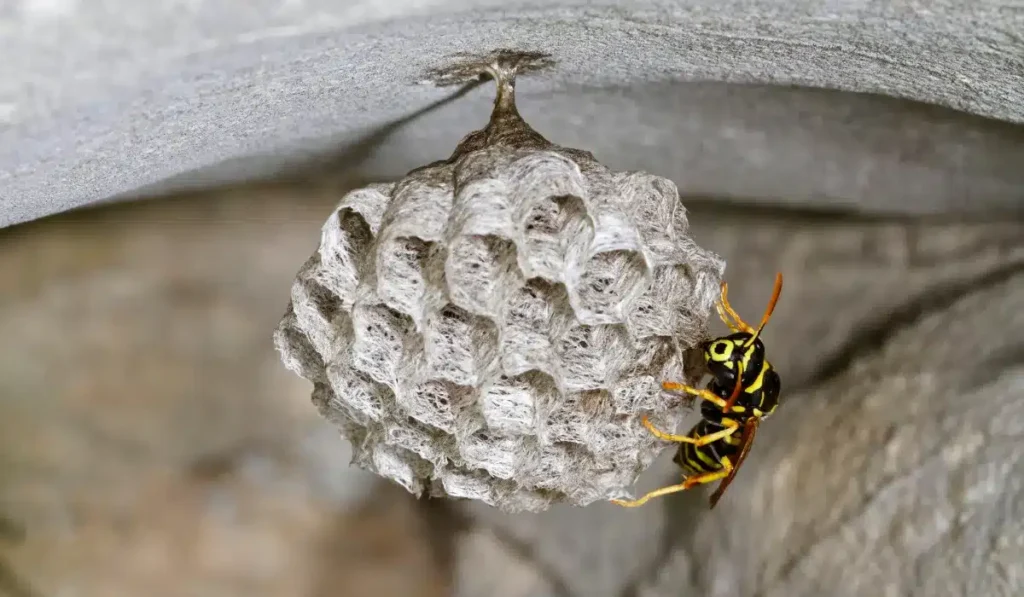
In Raleigh, paper wasp nests are common during the warmer months. From North Hills to Cary, these stinging insects often nest under rooflines, on porches, and in shaded outdoor areas where they stay undisturbed.
Paper wasps are less aggressive than yellowjackets or hornets, but they will defend their nest when threatened.
Learning how to identify paper wasp nests, where they build, and how to confirm activity helps you decide your next step. Pest control services handle nest removal and help reduce future wasp problems.
Key Takeaways
- Paper wasp nests have an open, umbrella shape with visible cells and larvae.
- Common nesting sites include eaves of houses, overhangs, and sheltered areas.
- Active nests show steady movement and feeding behavior throughout the day.
- Pest control focuses on safe nest removal and preventing new nests.
How to Identify a Paper Wasp Nest
Paper wasp nests are easy to recognize once you know what to look for. Among the different types of wasp nests, they differ from hornet nests and yellowjacket nests in both shape and placement.
Umbrella-Shaped Structure
Paper wasp nests have an umbrella shape with open cells underneath. Unlike hornet nests, which are enclosed, these nests leave the comb exposed.
In Raleigh neighborhoods, you will often see them attached to house eaves or overhangs, making them visible from below.
Visible Hexagonal Cells and Larvae
You can see the hexagonal pattern from below. Inside each cell, paper wasp queens lay eggs that develop into larvae, which worker wasps feed with caterpillars and other food.
Slender Bodies With Long Legs
Paper wasps have long, slender bodies with legs that hang during flight. Their yellow markings can look like those of other stinging insects, but their overall shape is less compact.
You may see their antennae moving as they inspect surfaces and look for nesting sites.
Smaller Colony Size Compared to Hornets
Paper wasp colonies are smaller than hornet nests or large yellowjacket nests, often with a few dozen wasps.
Even with smaller colonies, these social insects will defend their nest, and their stinger can cause pain if disturbed.
Where to Look Around Your Home
Paper wasps prefer sheltered areas that protect their nests from weather and predators, often using parts of your home for support.
Knowing where to look helps you find new nests early and avoid larger problems.
Eaves and Roof Overhangs
Eaves of houses and roof overhangs are common nesting sites because they provide shelter.
You may notice small paper wasp nests forming in early spring as paper wasp queens lay eggs and start new nests.
Porch Ceilings and Outdoor Structures
Porch ceilings, decks, and pergolas are also frequent nesting areas. These areas increase the chance of wasp stings because people use them often.
Food from grills or outdoor dining areas can attract wasps, especially later in the season.
Tree Branches and Nearby Vegetation
Paper wasps sometimes build nests on tree branches or shrubs near your home, especially near wooded areas.
You may also notice hornets building nests in nearby trees or mud daubers building smaller nests on surfaces.
Hidden Areas and Wall Voids
Although paper wasps prefer open spaces, they may start new nests in hidden areas like wall voids or behind siding.
Professional pest control technicians inspect these hidden areas to help prevent future nests.
How to Confirm It’s an Active Nest
Not every paper wasp nest is active. Watching wasp activity helps you decide if wasp control is needed.
Regular Wasp Movement
An active nest will often show consistent movement throughout the day as wasps fly in and out to gather food.
Presence of Larvae and Feeding Behavior
Active nests contain visible larvae inside the cells, and worker wasps regularly bring back caterpillars and other food sources.
Defensive Behavior Near the Nest
If wasps begin hovering around you or reacting to you, you are likely near an active nest and should keep your distance.
Seasonal Timing and Overwintering Patterns
Paper wasp queens overwinter in protected areas and begin building new nests in early spring.
By summer, colonies are typically more active, while nests found in winter are often inactive.
Schedule a Paper Wasp Nest Inspection in Raleigh
If you have identified paper wasp nests around your property, the next step is choosing how to handle the problem. A quick visual check helps, but a professional inspection gives a clearer picture of the problem.
Pest control professionals evaluate nesting sites, identify the specific wasp species, and confirm if you have paper wasps, yellowjackets, or hornets. Each needs a different removal method and control plan.
ClearDefense Pest Control uses treatments based on pest behavior and lifecycle. Technicians can treat eaves up to 25 feet high and inspect hidden areas, like wall voids and sheltered spaces where nests may form.
If you are seeing increased wasp activity around your Raleigh home, act now to avoid bigger problems.
Contact us to schedule your inspection and address paper wasp nests before they become a bigger problem.
FAQs
What is the difference between paper wasps and yellowjackets?
Paper wasps have open, umbrella-shaped nests and slender bodies with long legs. Yellowjackets are more aggressive, build enclosed nests, and often nest underground or in wall voids. Both are stinging insects, but yellowjackets are more likely to swarm and attack.
Are paper wasp nests dangerous?
Paper wasp nests can be dangerous near entryways or outdoor areas. While they are less aggressive than hornets, they will defend their nest and can cause painful stings if disturbed.
Should you remove a paper wasp nest yourself?
Do not attempt nest removal on your own. Even small nests can trigger defensive behavior. Pest control professionals remove nests and help reduce the chance of new nests forming.