
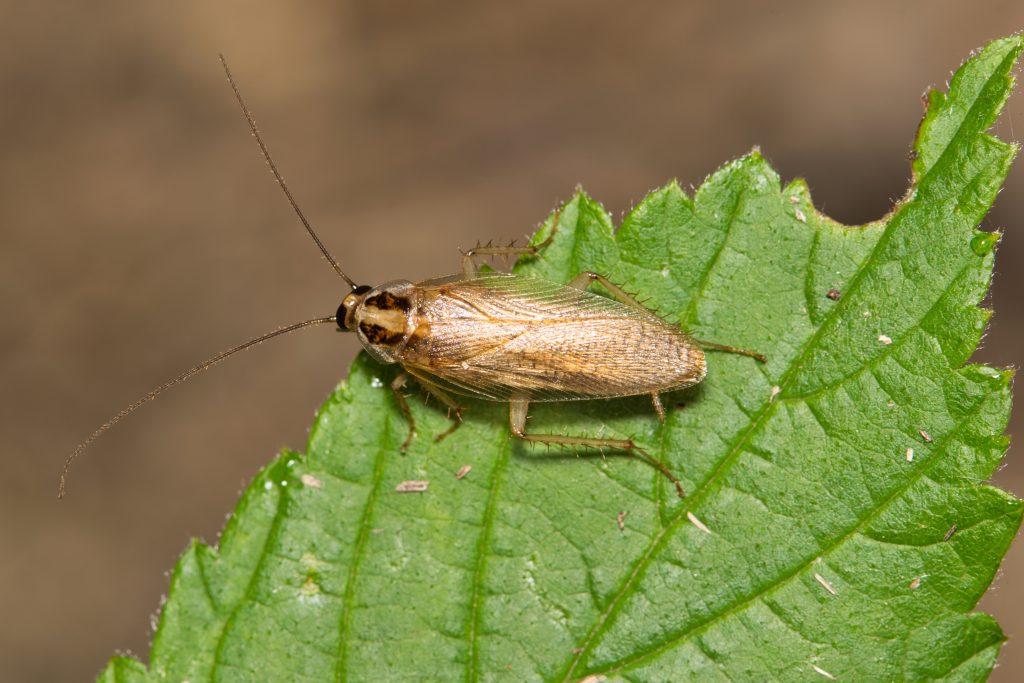
You turn on the kitchen light late at night and spot a small tan roach slipping beside the dishwasher. A second later, it disappears into a cabinet gap. If you are dealing with a German cockroach in South Carolina, that sighting is more likely tied to an indoor population than a roach that wandered in from the yard.
German cockroaches are small indoor pests that stay close to food, water, warmth, and narrow hiding spaces. You will learn how to identify them, tell them apart from other cockroaches in South Carolina, understand how an infestation starts, recognize signs around your home, and know what to do when the activity does not stop.
How to Identify a German Cockroach in South Carolina
Three cockroach species get mistaken for each other in South Carolina homes, and the comparison table below breaks down how to tell them apart on size, color, stripe pattern, and flight behavior. Match what’s running across your kitchen counter, then check the notes for what that species actually means for your home.
German cockroach
High riskAsian cockroach
Low riskAmerican cockroach often called palmetto bug
Low riskIf the roach you’re seeing doesn’t match one of these profiles cleanly, or if you’re finding nymphs and adults together around the same appliance, that pattern is worth a real inspection before you commit to a treatment plan.
German cockroach identification starts with size and markings. Adults are generally about half an inch long, with a tan to light-brown body and two dark parallel stripes directly behind the head. They have wings, but you are far more likely to see one sprint into a crack than fly across the kitchen.
Young German cockroaches, called nymphs, are smaller and darker. They do not yet have fully developed adult wings. Seeing both nymphs and adults around the same refrigerator, sink, cabinet, or dishwasher can indicate that more than one life stage is living inside the home.
| Feature | German Cockroach | Asian Cockroach | American Cockroach |
| Adult size | About 1/2 to 5/8 inch | About 1/2 inch | Often around 1 1/2 inches or longer |
| Color | Tan to light brown | Tan to light brown | Reddish brown |
| Two dark stripes behind head | Yes | Yes | No |
| Flight behavior | Usually runs | Strong flyer | Can fly or glide |
| Typical habitat | Kitchens, bathrooms, and other indoor spaces | Lawns, mulch, and leaf litter | Drains, garages, crawl spaces, and damp utility areas |
| Indoor breeding | Common | Uncommon | Possible |
German Cockroach vs. Asian Cockroach
A German cockroach vs. Asian cockroach comparison is especially useful in South Carolina because the two insects look remarkably similar. The University of Florida IFAS Extension reports that Asian cockroaches occur in South Carolina, live mainly outdoors in shaded mulch and plant litter, and fly readily.
Watch the insect before it disappears. A small striped roach flying from landscaping or toward a porch light fits Asian cockroach behavior. Small striped roaches repeatedly running around your stove, dishwasher, cabinets, or sink are more consistent with German cockroaches.
German Cockroach vs. Palmetto Bug
“Palmetto bug” is a common Southern term for several larger cockroaches. Around South Carolina homes, people often use it for the large reddish-brown American cockroach.
The size difference is substantial. A German cockroach is roughly half an inch long, while an American cockroach can grow beyond an inch and a half. One large roach near a garage, crawl space, drain, or exterior doorway is a different pest situation from several small German roaches living around kitchen appliances.
Why German Cockroach Infestations Can Grow Quickly
The German cockroach life cycle helps explain why a small indoor problem can become harder to control if it goes unnoticed. A female carries her egg case until shortly before the young hatch, keeping the developing German cockroach eggs with her through most of the incubation period.
NC State Extension reports an average of about 40 eggs in one case. A female may produce five to eight egg cases during her lifetime, for roughly 200 to 250 eggs. Under favorable indoor conditions, development from egg to adult can take approximately 70 to 100 days.
| German Cockroach Life Cycle Detail | Typical Figure |
| Mean eggs per egg case | About 40 |
| Egg cases per female | About 5 to 8 |
| Approximate lifetime egg production | About 200 to 250 |
| Egg-case incubation | About 20 to 30 days |
| Nymph development | About 40 to 60 days |
| Egg to adult | About 70 to 100 days under favorable conditions |
Those statistics explain why repeated activity deserves attention, but one sighting does not prove that hundreds of cockroaches are hiding in your walls. Nymphs, egg cases, German cockroach droppings, and repeated sightings in several nearby areas provide stronger evidence of an established German cockroach infestation.
A kitchen can supply nearly everything these roaches need within a few feet. The compressor behind a refrigerator provides warmth, a slow plumbing leak provides moisture, and grease beside the stove or crumbs under a cabinet provide food. The roaches can meet their needs without spending much time in the open.
How German Cockroaches Get Into South Carolina Homes
German cockroaches usually do not begin in the flower beds outside your house. Unlike several larger South Carolina roaches, this species is closely associated with buildings and frequently reaches a new home inside something people carry through the door.
A grocery carton, delivery, moving box, used microwave, refrigerator, or secondhand piece of furniture can conceal an adult or nymph. Tight seams, motor housings, hinges, and joints provide enough room for a small cockroach to travel unnoticed.
Attached housing gives German cockroaches another route. In apartments, condos, and townhomes, they can move through gaps around pipes, utility penetrations, and shared wall spaces. You may see activity even when nothing unusual has recently been brought into your home.
Can a Clean Home Get German Cockroaches?
German cockroaches can hitchhike into a well-kept house, so finding them does not tell you how carefully someone cleans.
Sanitation becomes much more important after they arrive. Grease, crumbs, pet food, leaking plumbing, standing water, and excess cardboard give cockroaches more opportunities to feed and hide. Removing those resources makes the home less favorable and helps other German cockroach control measures work more effectively.
Where German Cockroaches Hide and Signs to Watch For
If you want to know where German cockroaches hide, start where food, moisture, heat, and shelter come together. Shine a flashlight along the refrigerator, stove, and dishwasher. Check beneath the kitchen sink, around plumbing openings, behind drawer tracks, along cabinet hinges, and inside narrow spaces where cabinets meet the wall.
Kitchens are common hiding areas, but they are not the only places worth checking. Cockroaches in bathrooms may gather beneath vanities, around plumbing, or near other damp protected spaces. Laundry areas and warm appliances can also support activity when moisture and shelter are nearby.
What German Cockroach Droppings and Other Signs Look Like
German cockroach droppings often appear as tiny dark specks or pepper-like marks. Look along cabinet corners, drawer edges, appliance gaps, and other places where the insects can move while remaining close to shelter.
Egg cases, shed skins, and small dark nymphs add more context. Pay attention to patterns instead of one isolated clue. Seeing small roaches beside the dishwasher several nights in one week tells you more than finding one unidentified roach next to an exterior door.
| What You Notice | What It May Suggest |
| Small tan roaches near kitchen appliances | Check nearby cracks, cabinet gaps, and appliance cavities |
| Adults and nymphs in the same area | Multiple life stages may be present |
| Fine dark or pepper-like spotting | Cockroaches may repeatedly use that area |
| Egg cases | Reproduction has occurred nearby |
| Shed skins | Nymphs have been developing in the area |
| Repeated nighttime activity | A nearby hiding area may be supporting the population |
Sticky monitoring traps can help show where activity is concentrated. Place them along edges and near suspected hiding areas instead of leaving them in the middle of an open floor. The pattern can show whether most activity is limited to one appliance or extends into several sections of the kitchen.
Can a German Cockroach Infestation Affect Your Health?
An established German cockroach infestation creates more than an unpleasant sight. These insects move through garbage, food waste, dirty water, and other areas where microorganisms may be present, then travel across cabinets and food-preparation spaces.
Cockroach allergens are another concern for some households. The U.S. Environmental Protection Agency states that proteins in cockroach feces and saliva can cause allergic reactions or trigger asthma symptoms in sensitive people. Droppings and body material can also add cockroach allergens to indoor dust.
You can reduce food residue and surface contamination while the infestation is being addressed. Wash dishes, wipe counters, store food in closed containers, remove trash regularly, and clean grease from cooking areas. These steps support German cockroach control, but they cannot reach insects living inside appliance cavities, cabinet joints, or other hidden spaces.
How to Get Rid of German Cockroaches in South Carolina
If you are trying to figure out how to get rid of German cockroaches, focus on the conditions that support the infestation as well as the insects you can see. Clean beneath appliances, vacuum crumbs from cabinet edges, repair dripping plumbing, keep pantry food sealed, and avoid leaving dirty dishes or pet food out overnight.
Do not overlook objects that can carry German roaches from one room to another. A toaster, microwave, cardboard box, or small appliance taken from an active kitchen can move hidden insects into a garage, bedroom, or storage area. Keep suspect items contained until you know whether cockroaches are hiding inside.
Why German Cockroach Treatment Takes a Different Approach
German cockroach treatment has to reach insects that spend most of their time out of sight. Killing a roach running across the counter does not address nymphs behind the refrigerator, adults inside cabinet seams, or new young developing from egg cases.
Professional cockroach control may include inspection, monitoring, targeted bait placement, growth regulation, sanitation recommendations, and follow-up. Each part addresses a different piece of the infestation instead of relying on one broad application.
Getting German Cockroaches Out of Your Home
Correct identification gives you a much better starting point. A half-inch striped roach reproducing around kitchen appliances calls for a different response from a large outdoor cockroach that entered through a garage or drain. Addressing food, moisture, hiding areas, and the German cockroach life cycle together gives you a clearer path forward.
ClearDefense Pest Control uses a treatment process designed around German cockroach behavior and reproduction. The service can include targeted treatment, an insect growth regulator, homeowner preparation, and follow-up to see how the infestation responds. That process is especially useful when cockroaches keep returning after cleaning or when adults, nymphs, droppings, or egg cases point to an established indoor population.
If German cockroaches continue appearing around your sink, stove, dishwasher, or cabinets, contact ClearDefense Pest Control for cockroach control. A professional inspection can locate the active hiding areas and help address the population without treating every cockroach problem the same way.