
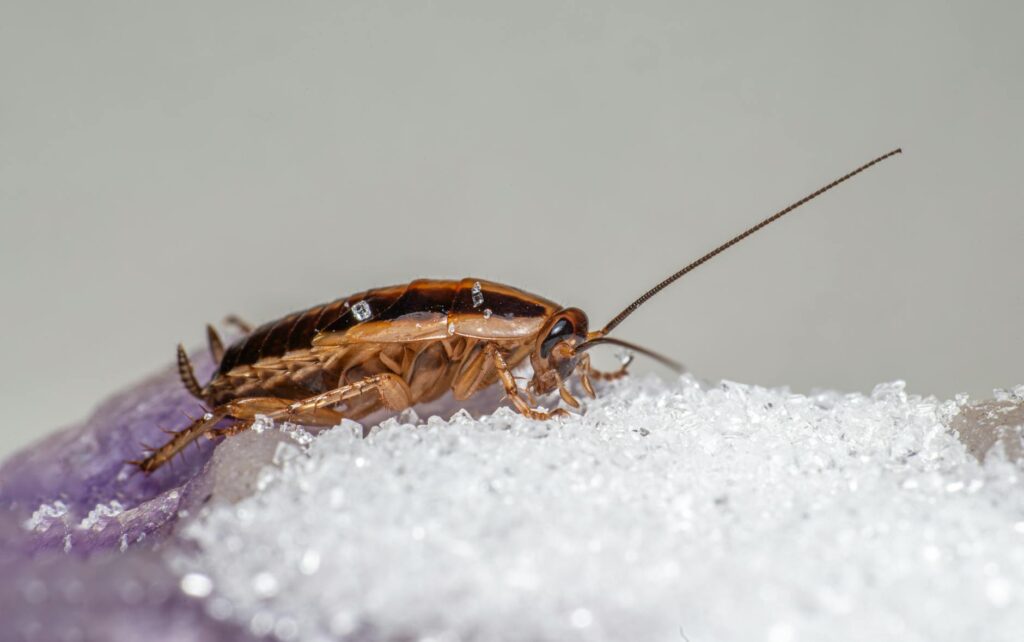
You turn on the kitchen light late at night and catch something moving near the sink or along the baseboards. A cockroach slips behind the stove before you can get a better look. That fast movement may seem minor, but it often points to a larger problem. One of the most common signs of hidden cockroach infestation is seeing roaches appear briefly in dark, damp areas where they can stay out of sight.
During the day, cockroaches usually hide behind cabinets, under appliances, inside wall voids, and around plumbing lines. Once they settle indoors, infestations can grow quickly because these pests stay active at night and reproduce in hidden areas.
This guide breaks down the warning signs homeowners should watch for, the risks cockroaches create, and the most effective ways to control the infestation before it spreads further through the home.
Key Takeaways About Hidden Cockroach Infestations
- Cockroaches are nocturnal and tend to stay out of sight, so the first signs of a hidden cockroach infestation are often indirect: droppings, shed skins, and egg cases found in out-of-the-way spots around your home.
- A cockroach problem can affect your household’s health. These pests spread disease-causing organisms across countertops and food, and their shed skins and fecal matter can trigger breathing problems for people with asthma or respiratory conditions.
- Good sanitation, sealing entry points, and inspecting items like bags and boxes before bringing them inside all help reduce the chance of a cockroach infestation taking hold.
- For larger or more complex cockroach problems, professional pest control services with recurring treatment are often needed to bring activity under control.
How to Identify Signs Of Hidden Cockroach Infestation
Cockroaches are nocturnal and spend most of their time out of sight. That means a problem can grow for weeks before you notice anything obvious. Learning what to look for and where to look helps you catch activity before the population builds.
How to Tell Cockroach Species Apart
One of the most common indicators is droppings. Cockroach droppings appear as pepper-like specks in areas of current or former activity. These tiny dark spots can look similar to ground black pepper scattered across a surface.
Egg cases are a reliable sign of ongoing cockroach activity. Cockroaches often leave egg cases in protected spaces or dark and moist areas.
How to Spot Hidden Cockroach Activity Inside Your Home
Start your inspection in the kitchen and anywhere food is stored. Inspect shelf edges, inside cabinet corners, and behind items that sit undisturbed. Pepper-like droppings in these zones point to regular roach traffic.
Check for egg cases under furniture, in appliance motors, in boxes, and in other items brought into a building. Pull out your refrigerator and check the motor housing. Do the same with any large appliance that generates warmth.
Where Hidden Cockroach Activity Shows Up Around Homes
Droppings may also appear in less obvious rooms. Check bathrooms, utility closets, and laundry areas. Any surface near moisture and warmth can collect those pepper-like specks over time.
Boxes stored in garages, attics, or closets deserve attention too. Egg cases can be found glued inside boxes and other stored items. Inspect items before moving them to a new room in your home.
Exterior Entry Points Cockroaches Use to Get Inside
Pay attention to your garage door seal. If it has gaps, roaches can slip underneath. Make sure your garage door seal is secure and has no obvious gaps.
Openings in exterior walls and foundation lines also deserve a close look. Covers on vents and drains can help reduce the pathways roaches use to move between the outside and your living space. Sealing these entry points is a practical step you can take on your own.
Why Hidden Cockroach Problems Develop
Cockroaches are built to stay out of sight. They spend daylight hours tucked into warm, dark, moist spots and emerge only at night to feed. That nocturnal pattern means a growing population can go unnoticed for weeks. Understanding where they nest, what draws them in, and how they travel through your home helps you catch the problem sooner.
Outdoor Nesting Areas for Cockroaches
Cockroaches often shelter in areas just outside or beneath your home. They hide during the day in cracks, water meter boxes, sewers, and crawl spaces. These warm, damp environments give them protection from light and temperature swings. Because many of these spots are rarely inspected, populations can build before any signs appear indoors.
Food and Shelter That Attract Cockroaches
Cockroaches prefer tight spaces where surfaces press against them on both sides. An adult German cockroach can squeeze into a crack as narrow as 1/16 inch, and younger roaches fit into even smaller gaps. That preference for narrow harborages makes cabinets, baseboards, corners, and spaces under sinks and appliances prime hiding spots.
Brownbanded cockroaches choose a different shelter than most species. They tend to hide in electrical appliances, behind artwork on walls, within hollow furniture legs, and in accumulated clutter, often away from typical food preparation areas.
How Cockroaches Move Around Homes
Once cockroaches settle into a harborage, they fan out at night along baseboards, cabinet interiors, and corners. You May notice signs of their travel before you ever spot a live roach. Those signs can include dark spots or smears from fecal matter, cast skins, and egg cases left near the routes they use most.
Because treatments do not reach cockroaches still inside egg cases, populations can persist even when adults are reduced. Coverage of every hiding area matters more than treating only visible surfaces.
Trails and Entry Points Cockroaches Use
Cracks and gaps along your home’s exterior walls and foundation give cockroaches a direct path inside. Caulking the spaces and cracks where cockroaches hide, especially where their numbers are highest, helps limit movement between outdoor harborages and indoor living areas.
Vents, drains, and gaps around your garage door seal are additional pathways worth checking. Reducing access to these routes makes it harder for cockroaches to establish themselves in the hidden crevices they prefer.
Risks From a Hidden Cockroach Infestation
A cockroach problem you cannot see can still affect your household. The health risks tied to hidden roach activity go beyond a simple nuisance. Allergens, contaminated surfaces, and hard-to-reach gathering spots all compound the longer an infestation stays undetected.
Health Risks Linked to Hidden Cockroach Infestations
Cockroach allergens may be a hidden cause of asthma and other atopic diseases. These allergens build up wherever roaches congregate, often in areas homeowners rarely inspect. The longer the population goes unnoticed, the more allergen material accumulates in your living space.
Children face particular concern. Cockroach infestations are attributed to asthma triggers and allergens that cause respiratory attacks in children. A study on American cockroaches showed that more than 50% of asthmatic subjects in cockroach-infested areas may have positive skin reactions to this allergen.
When vacuuming during a cleanout, use a HEPA or other filter that screens allergens to prevent those particles from becoming airborne. This step matters in sensitive environments and in homes where family members have respiratory conditions.
Property Damage From Cockroach Infestations
Roaches have a habit of consuming rotting, bacteria-ridden biological matter. They spread disease-causing organisms around homes over countertops, kitchen tables, and on left-out and stored foods. Diseases you might contract include Dysentery, Typhoid Fever, Cholera, Salmonellosis, Gastroenteritis, Leprosy, and Plague.
If you have asthma or any respiratory problem, cockroaches might make you sick in a different way. They release particulates into the air through shed skins and dirt-like fecal matter that often trigger breathing problems. This problem compounds itself and grows worse the larger an infestation becomes.
Cockroach Activity in Food Preparation Areas
Cockroaches congregate in distinct areas in response to aggregating odors in their feces. These gathering spots often develop near food preparation and storage zones, which means contamination can spread across surfaces you use daily. Locating those fecal deposits can help pinpoint hidden populations before they grow.
When to Take a Closer Look at Cockroach Activity
Sticky traps placed at junctions of floors and walls can detect infestations. According to UC IPM, cockroaches are often caught within the first 24 hours of placing a trap. If traps turn up activity, it is worth investigating further rather than assuming the problem is minor.
Professional Pest Control for Hidden Cockroach Infestations
When you spot signs of hidden cockroach infestation, the next question is what to do about it. Good sanitation and sealing entry points are the foundation of any lasting solution. But for serious or complex problems, professional pest control is often the right move.
How to Reduce Attractants for Cockroaches
Sanitation and exclusion are important for cockroach control. Wash dishes daily and never leave food out on counters or tables. Vacuum floors each week and clean behind large appliances like stoves. Limit eating to the kitchen and dining areas.
Remove water sources by fixing leaking pipes, faucets, and hoses. Keep gutters and downspouts clear so water does not pool around your foundation. Take garbage out of your home daily and store it in containers with locking lids. Make sure your garage door seal has no gaps.
Seal openings in your home’s exterior walls and foundation, and place covers on vents and drains. good sanitation and exclusion are important because treatment products alone will not solve cockroach problems.
Why Cockroach Control Starts With an Inspection
An inspection helps determine the scope of the problem. Roach activity can be tucked away in areas you rarely check. Professional pest control service professionals know where to look and how to assess what they find.
ClearDefense provides a documented Defense Report after every visit. That report details every product applied and every finding, so you know exactly what was discovered and what was done about it.
What to Expect During Professional Cockroach Treatment
For serious indoor infestations and other large or complex cockroach problems, professional pest control services are often required. American, Brown Banded, and Australian cockroaches respond to most granular treatments applied by a service professional.
German roaches require a different approach. An insect growth regulator (IGR) is used to slow the rate of reproduction. The initial service includes a two-week follow-up. If the technician determines a fourth-week follow-up is needed, it is provided at no additional cost. After that, quarterly service takes effect.
What to Expect From a Cockroach Control Plan
ClearDefense focuses on recurring pest control, not one-time visits. A quarterly service plan keeps your home covered over time. Each visit builds on the last, with a fresh Defense Report documenting findings and products used.
Prevention stays at the center of the plan. Your ongoing role matters too: keeping up with sanitation and exclusion between visits supports the work your service professional does on-site. Treatment products on their own will not resolve a cockroach problem, so a combined approach gives your home a stronger line of defense.
Dealing With Hidden Cockroach Infestations: Bottom Line
Catching signs of hidden cockroach infestation early gives you the best chance to address the problem before it grows. Droppings, cast skins, egg cases, and roaches spotted during daylight all point to activity worth investigating. Good sanitation, sealing entry points, and reducing moisture go a long way toward making your home less inviting. When the evidence adds up, recurring professional service is often the next step. ClearDefense Pest Control offers recurring plans with documented Defense Reports, so reach out for a quote if you need a hand.
Frequently Asked Questions
What are the first clues of a hidden roach problem?
Dark spots or smears in tucked-away areas, shed skins, and egg cases are often the earliest indicators. You may also notice droppings or cast skins accumulating in spaces where roaches gather. Spotting even one live roach during the day can suggest a larger population hiding nearby.
Where should I look for evidence?
Focus on warm, dark, moist spots. Check under sinks, behind large appliances, inside cabinets, and along baseboards. Some species prefer areas away from the kitchen, so look near electronics, behind wall art, and inside stored boxes as well.
Can clean homes still get cockroaches?
Yes. Roaches can arrive in bags, boxes, or luggage. Excellent sanitation helps reduce what attracts them, but it does not guarantee they will stay away. Washing dishes daily, vacuuming floors, limiting where you eat, and fixing leaky plumbing all lower the odds.
When is it time to call a professional?
If you are finding droppings, egg cases, or live roaches in multiple rooms, the problem may be beyond what household steps can handle. A recurring pest control plan targets the places roaches hide and keeps pressure on the population over time, which is important because cockroach egg cases can survive many common treatments.