

You turn on the kitchen light and catch a roach slipping behind the stove. Or you find a large reddish-brown one just inside the garage after a humid evening. When you are trying to make sense of a cockroach in SC, its size, location, and behavior give you the best clues about what is happening.
Several cockroaches in South Carolina spend much of their lives outdoors, while others readily settle near food and water inside a house. This guide covers the common species, signs that point to an indoor infestation, practical cockroach prevention steps, and when professional control makes sense.
Common Types of Cockroach in SC Homes
Six cockroach species account for nearly every SC home call, and the article draws one clear line between them: German cockroaches are the only species that requires a more intensive treatment approach, while the rest are covered under ClearDefense’s regular pest coverage. Match what you found on size, color, and location below before deciding whether you’re dealing with a stray visitor or an established indoor population.
American cockroach
Low riskSmokybrown cockroach
Low riskAsian cockroach
Low riskGerman cockroach
High riskBrown-banded cockroach
Low riskOriental cockroach
Low riskIf a roach doesn’t line up cleanly with one of these profiles, or you’re finding nymphs and egg cases indoors, get a real identification before choosing a treatment plan.
The place where you find a roach can narrow down the possibilities quickly. A large insect near a crawl space opening tells a different story from several small tan roaches appearing around the dishwasher.
Among the types of cockroaches in South Carolina, homeowners are most likely to need to distinguish American, smokybrown, Asian, German, brown-banded, and Oriental cockroaches. Color helps, but size, flight behavior, and location are usually more useful than color alone.
| Cockroach | What You May Notice | Where You May Find It |
| American cockroach | Large, reddish brown, with a pale marking behind the head | Crawl spaces, drains, garages, utility rooms, and damp areas |
| Smokybrown cockroach | Large with an even dark reddish-brown or mahogany color | Trees, mulch, gutters, sheds, attics, and shaded areas |
| Asian cockroach | Small and tan with two dark stripes behind the head | Grass, leaf litter, mulch, porches, and areas near outdoor lights |
| German cockroach | Small and light brown with two dark stripes behind the head | Kitchens, bathrooms, cabinets, appliances, and plumbing areas |
| Brown-banded cockroach | Small and brown with lighter bands across its body | Cabinets, closets, furniture, and warmer rooms |
| Oriental cockroach | Dark brown to nearly black with a broad body | Crawl spaces, drains, damp basements, and exterior debris |
American and Smokybrown Cockroaches
If the roach looks unusually large, American and smokybrown cockroaches are two likely possibilities. You may find either species in a garage, crawl space, shed, attic, or another protected area where moisture is available.
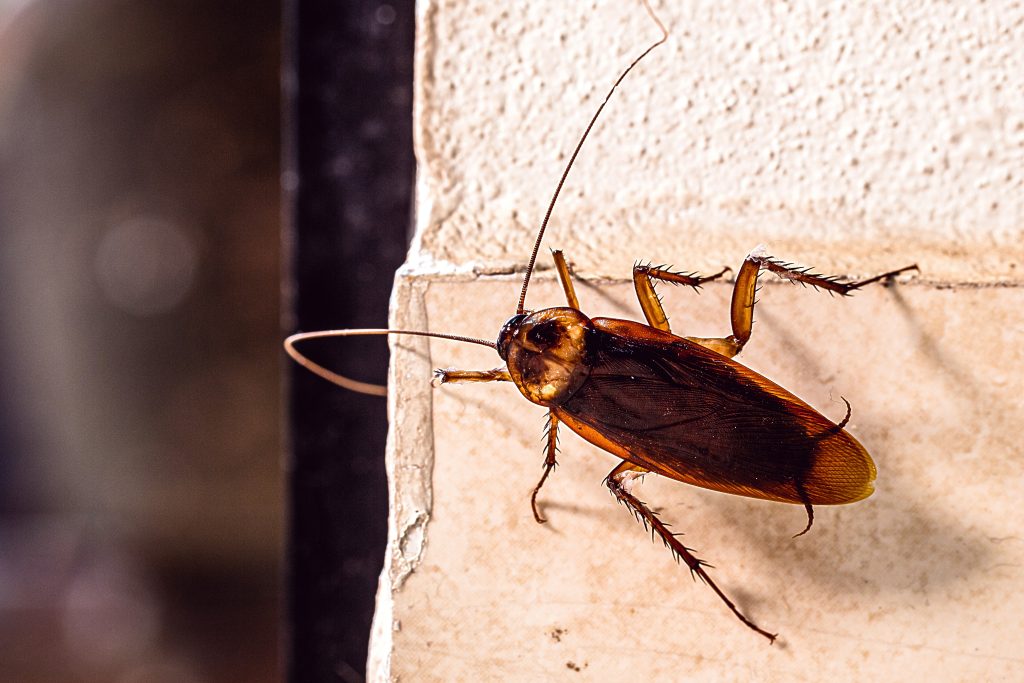
American cockroaches can reach about 1 ½ inches long. The South Carolina Encyclopedia reports that a female can produce roughly 150 offspring during her lifetime.
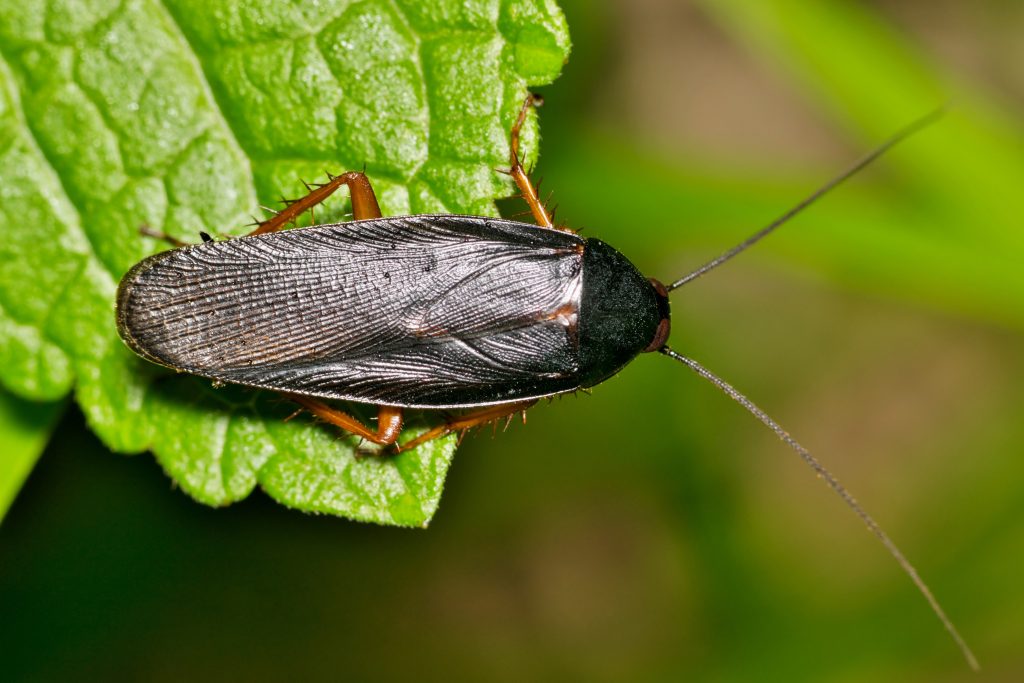
Smokybrown cockroaches spend much of their time in outdoor shelter. Damp mulch, tree cavities, gutters, and shaded areas around your home can give them places to hide, so a large roach indoors does not always mean the population began in the kitchen.
Asian and German Cockroaches
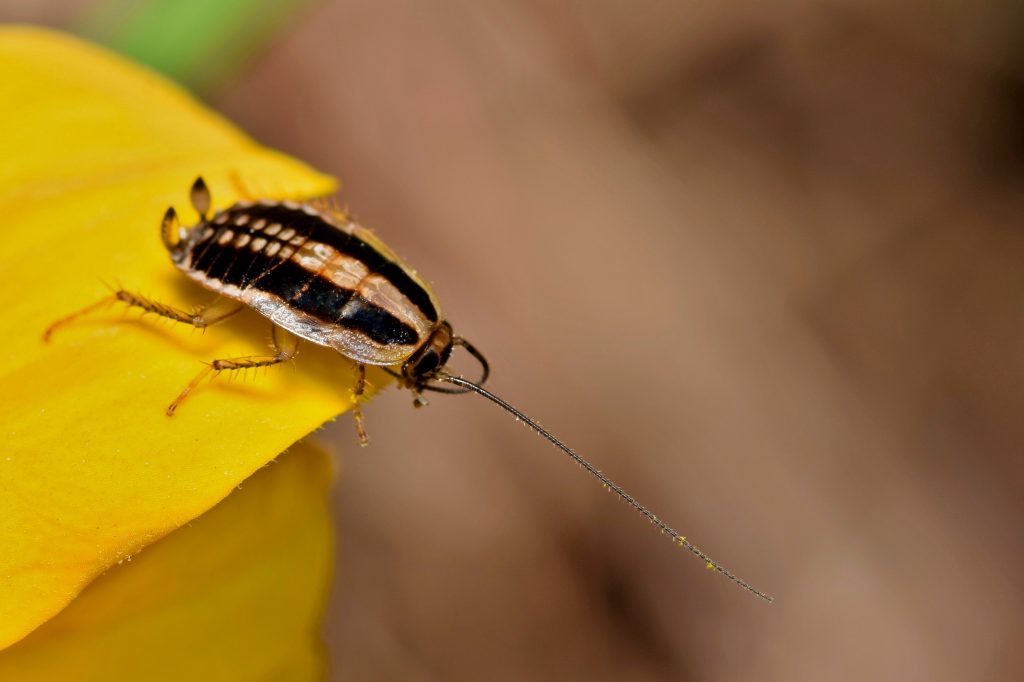
Asian and German cockroaches are much smaller and can look almost identical at first glance. Both are tan with two darker stripes behind the head, which makes behavior especially helpful for identification.
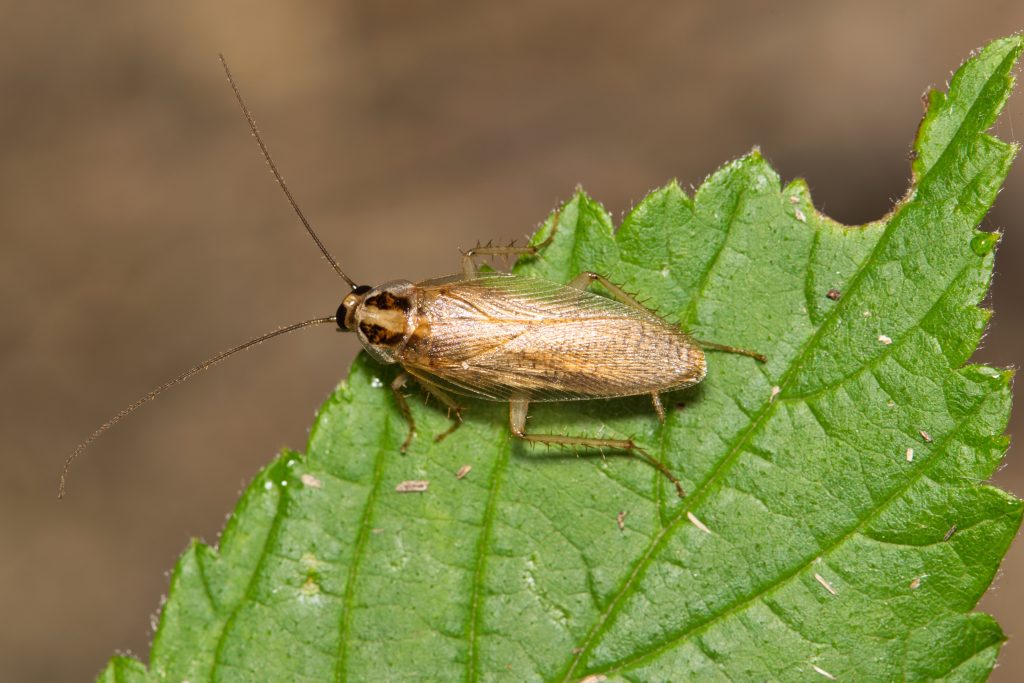
Asian cockroaches live mainly outdoors, fly readily, and often show up around porch lights or bright windows after dark. German cockroaches are closely associated with indoor kitchens, bathrooms, cabinets, and appliances where food and moisture remain available.
Is a Palmetto Bug the Same as a Cockroach?
Yes. A palmetto bug is a cockroach, not a separate insect. In South Carolina, the nickname usually refers to larger roaches, particularly American and smokybrown cockroaches. You may hear “palmetto bug” more often when someone finds one on a porch, in a garage, or near landscaping.
The familiar palmetto bug vs. cockroach distinction is therefore more about local language than biology. What helps you understand the problem is the insect’s size, where you found it, whether it flies, and how often it appears.
One large roach near an exterior door may have moved inside from mulch, a crawl space, or another damp hiding place. Several small roaches showing up beneath appliances over multiple nights point toward a very different kind of activity.
Why Roaches in South Carolina Show Up Around Homes
A clean kitchen can still have a roach problem. Roaches in South Carolina also look for water, protected hiding places, warmth, and openings that give them access to a structure.
Instead of searching only for crumbs, walk through the area where you saw the insect and look at the conditions nearby. The source may be beneath a sink, outside the garage, or along the foundation rather than where the roach happened to cross the floor.
Water Can Be the Bigger Attraction
Check beneath sinks after the cabinet has been closed for several hours. A slow plumbing leak or condensation around a pipe can leave enough moisture to make that space useful to cockroaches.
Outside, inspect the first few feet around the house. Wet leaves beneath a deck, heavy mulch against the foundation, clogged gutters, and shaded crawl spaces can all provide sheltered areas for outdoor species.
Garages deserve attention as well. A worn bottom seal may leave a long opening between outdoor habitat and a dry, protected interior space.
Food and Hiding Places Add to the Problem
A roach does not need an uncovered dinner plate. Grease beside the stove, crumbs beneath the refrigerator, pet food around a bowl, and residue inside a trash cabinet can provide enough food to keep indoor activity going.
Cardboard boxes and stored clutter create narrow spaces where roaches can remain hidden during the day. Pantries, utility rooms, garages, and cabinets that stay closed for long periods are useful places to inspect.
| What Attracts Roaches | Where to Look | What You Can Do |
| Water | Sinks, plumbing, crawl spaces, gutters | Repair leaks and correct drainage problems |
| Food residue | Stove sides, appliance gaps, pantry shelves, pet areas | Clean spills, crumbs, and grease |
| Outdoor shelter | Leaf litter, mulch, dense plants | Clear excess debris near the house |
| Openings | Door seals, utility lines, vents, siding gaps | Close visible gaps where practical |
| Clutter | Garages, storage rooms, pantries | Remove unnecessary cardboard and stored material |
What Are the Signs of a Cockroach Infestation?
Seeing one large cockroach in SC near the garage does not provide enough evidence to call it an infestation. Large outdoor species sometimes move indoors while traveling between sheltered areas.
Repeated activity changes the situation. If small cockroaches keep appearing around the same sink, cabinet, refrigerator, or dishwasher, they may be living nearby rather than wandering in from outside.
Cockroach Infestation Signs to Watch
Young roaches, called nymphs, are one of the more useful signs of a cockroach infestation because they show that adults have reproduced somewhere in the area. Egg cases provide another clue, especially when you find them close to cabinets, appliances, or plumbing.
Look for dark droppings and shed skins in protected spaces. Cabinet hinges, appliance edges, pipe openings, and the backs of lower cabinets can reveal activity that is easy to miss during normal cleaning.
| What You Notice | What It Tells You |
| One large roach near a garage or exterior door | Start by checking outdoor shelter and nearby entry points |
| Large roaches appearing repeatedly | Inspect crawl spaces, gutters, drains, garages, and exterior hiding areas |
| Small tan roaches around appliances | Look closely for indoor harborages around food and water |
| Nymphs | Reproduction has occurred somewhere nearby |
| Egg cases | Adults have been active long enough to reproduce |
| Droppings or shed skins in one area | A hiding place may be close to that location |
Why Indoor Cockroaches Can Affect Sensitive People
When cockroaches live indoors, droppings and shed material can collect in places you rarely see. That exposure is especially relevant for people with allergies or asthma.
The U.S. Environmental Protection Agency states that cockroach droppings and body parts can trigger asthma. It also identifies proteins in cockroach feces and saliva as potential causes of allergic reactions and asthma symptoms in some people.
A single roach on the garage floor does not create the same exposure as an indoor population that continues reproducing. Health concerns become more relevant when cockroaches remain active inside occupied areas over time.
How to Improve Cockroach Prevention Around Your Home
Effective cockroach prevention is less about one dramatic fix and more about taking away the conditions roaches keep using. Water, food, hiding places, and entry points are good places to focus your attention.
Work from the kitchen and bathrooms toward the exterior. That gives you a practical way to check both indoor resources and the routes outdoor roaches may be using.
Start With Kitchens and Damp Rooms
Wipe grease from the sides of the stove and clean beneath large appliances when you can reach them. Keep pantry food closed, empty trash regularly, and clean around pet bowls after feeding.
Next, inspect plumbing and other moisture sources. Fix dripping faucets, damp cabinet floors, leaking hoses, and condensation problems instead of allowing those areas to remain wet overnight.
Check the First Few Feet Around the House
Pull wet leaves away from exterior walls and avoid letting mulch build up heavily against the foundation. Keep gutters moving water away from the structure rather than allowing moisture and debris to collect near the roofline.
Inspect the bottom of the garage door, weather stripping, utility penetrations, vents, and obvious exterior gaps. If you repeatedly find a cockroach in SC near the same part of the house, that location can help you narrow down how the insects are getting inside.
Exterior lighting can explain certain sightings too. Small flying roaches gathering around a bright doorway at night may be coming from nearby grass or landscaping rather than an indoor population.
Choosing the Right Cockroach Control for Your South Carolina Home
Good cockroach control begins with knowing which roach you have and where it is living. Large outdoor species, flying Asian cockroaches, and German cockroaches around kitchen appliances behave differently, so effective treatment should focus on the habitat and conditions supporting the species you are actually seeing.
ClearDefense Pest Control includes non-German cockroaches in its regular pest coverage, while German cockroaches require a more intensive treatment approach. Technicians base applications on pest behavior, habitat, and life cycle, using environmentally responsible products with targeted placement.
If you continue finding a cockroach in SC, notice nymphs or egg cases, or cannot tell whether the activity starts indoors or outside, contact ClearDefense Pest Control. Correct identification gives the technician a clearer target, and that means the service can address the conditions supporting the roaches instead of focusing only on the insect you happened to see.