
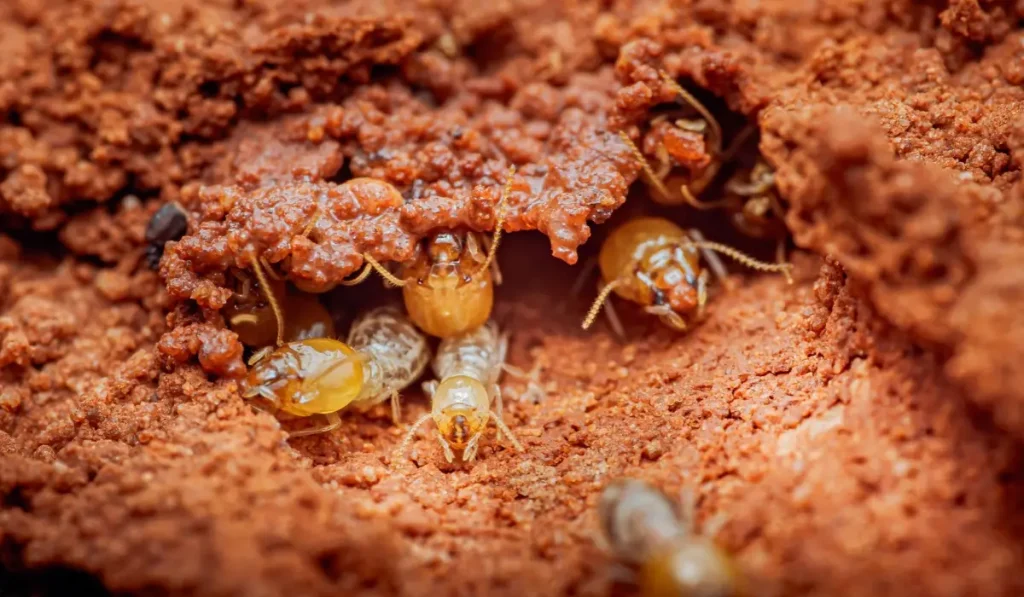
Found tiny white insects inside a piece of wood or dark, winged bugs near your windows? If you’re asking what do termites look like in North Carolina, check their color, wings, and body shape. Worker termites are pale and wingless, soldiers have large heads with prominent jaws, and reproductive termites have dark bodies and four similarly sized wings. Knowing these differences can help you identify suspicious insects, but mud tubes, discarded wings, and wood damage are often the first signs of subterranean termites around North Carolina homes.
What Do Termites Look Like in North Carolina?
Eastern subterranean termites (Reticulitermes flavipes) are among the most common termites homeowners encounter in North Carolina. According to NC State Extension’s research on eastern subterranean termites, they occur throughout the state’s 100 counties, including areas around Raleigh and Charlotte.
A termite’s appearance depends on its job within the colony. Workers gather food, soldiers defend the colony, and reproductive termites leave to establish new colonies. Knowing which features belong to each group makes identification easier.
Worker Termites: Pale Bodies Without Wings
Worker termites have soft, creamy-white bodies, six legs, and straight antennae. They don’t have wings, and their pale coloring sometimes leads homeowners to mistake them for white ants.
Workers collect food, maintain tunnels, and care for other colony members. They also do most of the feeding that damages wood, although they usually remain hidden underground or inside wooden structures.
You might find workers when damaged trim is removed or a piece of infested wood is opened. Seeing pale insects moving through soil-lined tunnels is a reason to investigate further.
Soldier Termites: Enlarged Heads and Strong Jaws
Soldier termites have pale bodies and noticeably darker, enlarged heads. Their prominent jaws, called mandibles, help them defend the colony against ants and other threats.
Unlike workers, soldiers don’t gather food independently. Workers feed them, which explains why you often find both groups together inside termite galleries or mud tubes.
Winged Termite Swarmers: Dark Bodies and Equal-Sized Wings
Termite swarmers are reproductive adults that leave mature colonies to find mates and establish new ones. Eastern subterranean termite swarmers typically have dark brown to black bodies, making them look different from pale workers.
They have two pairs of translucent wings that are approximately equal in length and extend beyond their bodies. After swarming, they shed those wings.
If you find a group of dark, winged insects near an interior window, look for loose wings along the sill. Even if the insects disappear, the discarded wings can help a professional identify what was present.
What Do Termite Eggs and Nymphs Look Like?
Termite eggs are tiny and pale, while young termites have soft, light-colored bodies. Both remain within protected colony areas, so homeowners rarely find them during everyday activities.
Recognizing workers, soldiers, and swarmers is more useful for identifying suspected termite activity. Those are the forms you’re more likely to encounter when wood is exposed or a colony swarms.
How to Tell Subterranean Termites From Flying Ants
Termite swarmers and flying ants are easy to confuse. Both can appear around windows, exterior walls, and outdoor lights during warm weather, and both have wings and six legs.
The easiest way to tell them apart is to examine their antennae, waist, and wings.
| Feature | Termite Swarmer | Flying Ant |
| Antennae | Straight and bead-like | Bent or elbowed |
| Waist | Broad, without a sharp constriction | Narrow and pinched |
| Wings | Four wings of approximately equal length | Front wings larger than hind wings |
| Body | Often dark brown or black | Color varies by ant species |
Which Features Should You Check First?
Start with the waist and antennae. A termite swarmer has a relatively straight body outline and bead-like antennae. A flying ant has a noticeably pinched waist and bent antennae.
Next, compare the wings if they’re still attached. Termites have similarly sized front and rear wings, while ants have larger front wings.
These differences are especially useful when identifying winged forms of common ant species in North Carolina. If the insect is too small to examine clearly, photograph it or save a specimen for identification.
Signs of a Termite Infestation in North Carolina Homes
You may find evidence of subterranean termites without seeing the insects themselves. They usually travel through soil, wood, or protected tunnels rather than across exposed floors.
Check foundations, crawl spaces, wooden supports, and interior windowsills for the following signs.
Mud Tubes Along Foundations and Crawl Spaces
Mud tubes look like narrow, dirt-colored lines running across concrete, masonry, or wooden surfaces. Subterranean termites build them from soil and other materials to maintain moisture and protect themselves as they travel.
Look along foundation walls, crawl space piers, and places where wooden framing meets concrete. Tubes may also run behind siding or through narrow structural gaps.
Finding one doesn’t establish whether termites are still active. Photograph the tube and its location so an inspector can examine the evidence alongside the home’s treatment history.
Discarded Wings Near Windows and Doors
Reproductive termites shed their wings after swarming. Homeowners sometimes discover small piles of translucent wings on windowsills, near doorframes, or beneath indoor light fixtures.
Several wings of similar size in one location can point toward termite activity. Indoor accumulations are particularly concerning when insects appear to be emerging from walls, floors, or other structural openings.
Finding wings outdoors has a different meaning. A nearby colony may have produced swarmers without entering your home.
Hollow-Sounding Wood and Damaged Framing
Subterranean termites tunnel through wood while feeding, often leaving a thin outer surface intact. A piece of trim may look normal even though galleries have formed underneath.
Affected wood can sound hollow when tapped or feel soft when gently probed. Exposed galleries may also contain soil or mud-like material.
Other problems, including moisture damage, can create similar symptoms. A professional can examine the wood and surrounding evidence before recommending treatment.
Termite Frass and Droppings
Termite frass is waste produced by termites, but different species leave different evidence. Small, uniform pellets commonly associated with termite droppings are characteristic of drywood termites.
North Carolina’s common subterranean termites are more closely associated with mud tubes and soil-lined galleries. You may find muddy material inside damaged wood rather than piles of distinct dry pellets.
Don’t identify a termite species from loose debris alone. Its shape, location, and relationship to nearby wood damage all matter.
When Do Termites Swarm in North Carolina?
Termite swarming season in North Carolina varies with the species and weather. Eastern subterranean termites commonly swarm from late winter into spring, while other subterranean species can swarm later in the year.
Warm, breezy days following rainfall often favor swarming. Reproductive termites leave established colonies, fly to new locations, and attempt to establish colonies after finding mates.
Does an Outdoor Swarm Mean Your Home Has Termites?
Not necessarily. Winged termites emerging from an outdoor stump, fallen wood, or another nearby location may come from a colony that hasn’t infested the house.
Indoor swarmers are more concerning, particularly when they emerge from flooring, walls, or structural gaps. That pattern can indicate a colony operating within or beneath the building.
If you notice a swarm indoors, record where it occurred and keep a specimen if possible. Those details can help an inspector focus on the affected area.
Why Termite Damage Can Go Unnoticed for Years
Subterranean termites feed within wood and use concealed passageways to reach food. They don’t need to cross open flooring or remain visible along walls, so their activity can continue without attracting attention.
In a North Carolina home with a crawl space, feeding may occur around floor joists, support framing, or other wooden components beneath the living area. In homes built on slabs, termites may reach vulnerable wood through gaps and concealed structural routes.
How Long Does Termite Damage Take to Develop?
NC State Extension reports that serious structural damage typically develops after approximately three to eight years of sustained subterranean termite feeding. This is a general estimate, not a reliable way to determine the age of an individual infestation.
Damage depends on colony activity, available wood, and environmental conditions. A small exposed gallery doesn’t reveal how far termites have traveled inside a structure.
That’s why a house can have termite activity without obvious symptoms. Waiting for sagging floors or visibly weakened framing means relying on signs that may appear only after significant damage has developed.
What Attracts Subterranean Termites to North Carolina Homes?
Subterranean termites need moisture and access to cellulose, the material found in wood and other plant-based products. Damp soil near a foundation and wooden components touching the ground can make it easier for them to reach a structure.
Two conditions deserve particular attention: persistent moisture and wood-to-soil contact.
Moisture Around Foundations and Crawl Spaces
Leaking pipes, clogged gutters, poor drainage, and damp crawl spaces can create conditions that favor subterranean termites.
For example, a downspout emptying beside a Raleigh home’s foundation can keep nearby soil wet. In a Charlotte home with a crawl space, leaking plumbing or condensation may create moisture problems around wooden supports.
The EPA’s guidance on identifying and controlling termites recommends addressing moisture problems and maintaining the property to reduce conditions that support termite activity.
Repair leaks, keep gutters clear, and direct downspout discharge away from the foundation. These maintenance steps reduce moisture problems while making the property less favorable to subterranean termites.
Wood-to-Soil Contact Around the House
Termites feed on cellulose, so wooden materials in direct contact with soil can provide accessible food.
Check deck supports, landscaping timbers, stored lumber, and construction debris near the foundation. Soil or mulch piled against wooden siding can also provide concealed access routes.
Removing unnecessary wood debris, correcting drainage problems, and limiting direct wood-to-soil contact are practical parts of termite prevention. These measures reduce favorable conditions but don’t replace professional termite protection.
What Should You Do if You Find Termites in Your Home?
If you find suspicious insects, mud tubes, or damaged wood, document what you’ve discovered before disturbing the area.
Photograph the insects and the surrounding material. Record whether you found them near a window, foundation wall, crawl space, or wooden support.
Avoid assuming a household spray will resolve the problem. Eliminating termites that are visible on the surface doesn’t necessarily affect the colony supplying them.
What Happens During a ClearDefense Termite Inspection?
ClearDefense technicians examine areas where subterranean termites commonly travel and feed. According to the company’s published termite control process, inspections include slab edges, foundation walls, crawl spaces, and accessible lower framing.
Technicians look for mud tubes, damaged wood, discarded wings, and moisture near plumbing openings or foundation joints. These findings help identify areas that require attention.
ClearDefense also provides digital service reports that document work performed and relevant station information. Homeowners can refer to those records when reviewing service history or discussing future visits.
How Does ClearDefense Treat Subterranean Termites?
ClearDefense’s termite control service uses the Trelona Advanced Termite Bait System. Technicians install bait stations in the soil around the home’s foundation, with spacing described on the company’s service page as approximately 10 to 20 feet.
Foraging termites encounter the stations and feed on the bait. Termites can share food within the colony, allowing the treatment to affect termites beyond those found at a single station.
Because bait-based termite control depends on termite foraging and feeding, results aren’t immediate. Monitoring helps technicians assess activity and maintain the system.
What Happens After Treatment?
ClearDefense describes a follow-up visit after 30 days, quarterly service visits, and annual station checks as part of its published termite program.
Technicians use these visits to review station conditions and document service activity. The applicable treatment plan and follow-up arrangements should be confirmed when scheduling.
Ongoing monitoring matters because removing visible termites doesn’t establish that an entire colony has been controlled.
How Often Should North Carolina Homes Be Inspected?
NC State Extension recommends having homes professionally inspected for termites every year, even when homeowners haven’t seen visible signs.
Its guidance on monitoring and managing eastern subterranean termites also emphasizes maintaining inspection records. Those records help establish what was previously observed, particularly when suspicious activity appears later.
If you find indoor swarmers, new mud tubes, or damaged wood between scheduled inspections, arrange an evaluation rather than waiting for the next annual check.
Protect Your North Carolina Home From Hidden Termites
Knowing what termites look like in North Carolina helps you recognize pale workers, soldiers with enlarged heads, and dark, winged swarmers. Mud tubes, discarded wings, and internal wood damage can provide evidence even when the insects are out of sight.
Correcting moisture problems and reducing wood-to-soil contact can make your property less favorable to termites. Professional inspections add another layer of protection by checking areas where activity may otherwise go unnoticed.
For homeowners in Raleigh, Charlotte, and surrounding communities, ClearDefense Pest Control offers termite control services that include inspection, bait stations, and follow-up monitoring. Contact ClearDefense to request a free quote and discuss the next steps for your home.
Frequently Asked Questions About Termites in North Carolina
What Color Are Termites in North Carolina?
Worker termites are creamy-white, while soldiers have pale bodies with darker heads. Eastern subterranean termite swarmers typically have dark brown to black bodies. These differences reflect the termites’ roles within the colony, so color alone isn’t enough to identify an insect accurately.
What Do Flying Termites Look Like in North Carolina?
Flying termites have dark bodies, straight antennae, broad waists, and four wings of approximately equal length. Their wings extend beyond the abdomen and are shed after swarming. Flying ants look similar but have pinched waists, elbowed antennae, and larger front wings.
Does Seeing One Termite Mean You Have an Infestation?
A single swarmer outdoors doesn’t confirm that your home is infested. It may have come from a nearby colony. However, finding workers inside structural wood, mud tubes along the foundation, or swarmers emerging indoors warrants professional inspection.
Can You Have Termites Without Seeing Them?
Yes. Subterranean termites spend much of their time underground, inside wooden structures, or within protected tunnels. Their feeding can continue without obvious surface damage. Annual inspections help identify evidence in accessible areas that homeowners may not notice during daily activities.
What Time of Year Are Termites Most Active in North Carolina?
Subterranean termite colonies can remain active whenever conditions support feeding and movement. Their swarmers are most noticeable during seasonal reproductive flights. Eastern subterranean termites commonly swarm from late winter into spring, while other species may swarm later in the year.