

You notice tiny ants moving beside the kitchen sink, a large black ant crossing the porch, or a reddish mound taking shape near the edge of your lawn. Those sightings can point to very different ant species in North Carolina, each with its own nesting habits, behavior, and reason for showing up around your property.
You do not need to identify every ant found in the state. This guide focuses on seven common ants in North Carolina that homeowners are more likely to encounter: odorous house ant, carpenter ants, imported fire ants, Argentine ants, pavement ants , acrobat ants, and Asian needle ants. You will learn what they look like, where they tend to nest, which species can sting or affect wood, and what to check when an ant problem keeps returning.
Common Ant Species in North Carolina
North Carolina supports far more ant diversity than you will ever see around one house. A peer-reviewed statewide inventory documented 192 species in North Carolina. Researchers recorded 164 species in the Piedmont Plateau, 153 in the Coastal Plain, and 113 in the Appalachian Mountain region.
For homeowners, a much shorter list matters most. These types of ants in North Carolina regularly turn up around kitchens, foundations, pavement, damp wood, lawns, and landscape beds.
| Ant | What You May Notice | Common Location | Main Concern |
| Odorous house ant | Tiny brown or black ants in trails | Kitchens, bathrooms, mulch, wall spaces | Persistent indoor activity |
| Carpenter ant | Large dark ants of different sizes | Damp wood, porches, crawl spaces, trees | Wood excavation |
| Imported fire ant | Reddish ants around a soil mound | Lawns and open landscaped areas | Painful stings |
| Argentine ant | Long trails of small brown ants | Foundations, mulch, kitchens | Large ant colonies |
| Pavement ant | Small dark ants near concrete cracks | Sidewalks, slabs, patios | Indoor foraging |
| Acrobat ant | Small ant that raises its abdomen | Moist wood, trees, wall spaces | Indoor nesting |
| Asian needle ant | Dark body with orange-brown legs | Mulch, logs, shaded yards | Sting risk |
Odorous House Ants
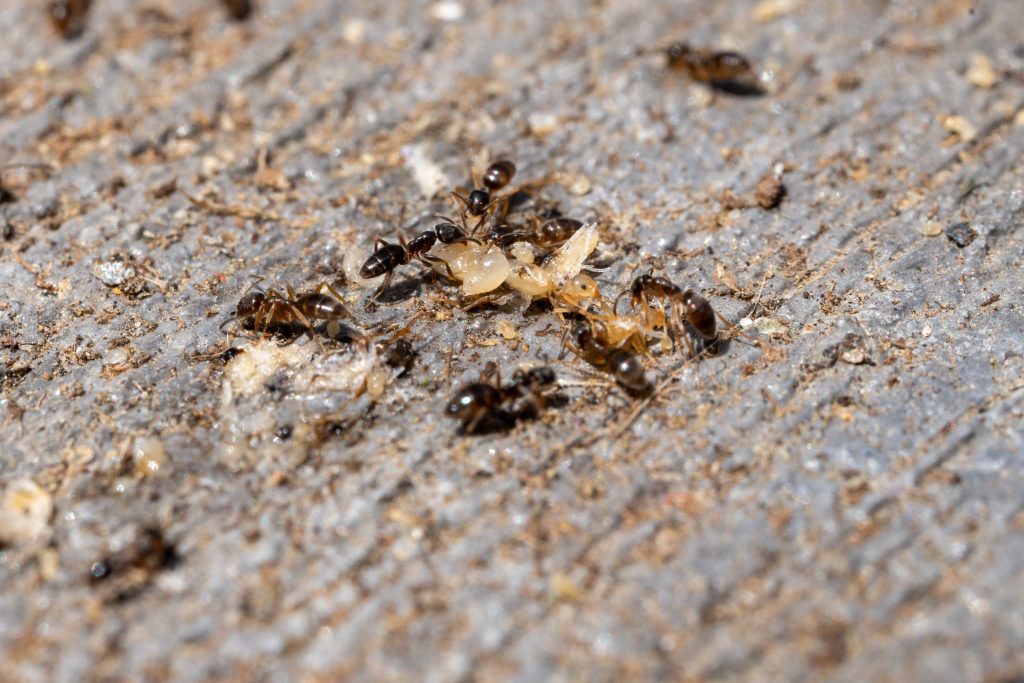
You may find odorous house ants following the edge of a counter, baseboard, or backsplash. Workers are about 1/8 inch long and range from brown to almost black.
They often forage for sweet foods and water indoors, then disappear into wall spaces, flooring gaps, or openings around windows. Outside, colonies can occupy protected spots beneath mulch, stones, logs, and other landscape material. Crushing a worker produces the unusual odor that gave this ant its name.
Carpenter Ants
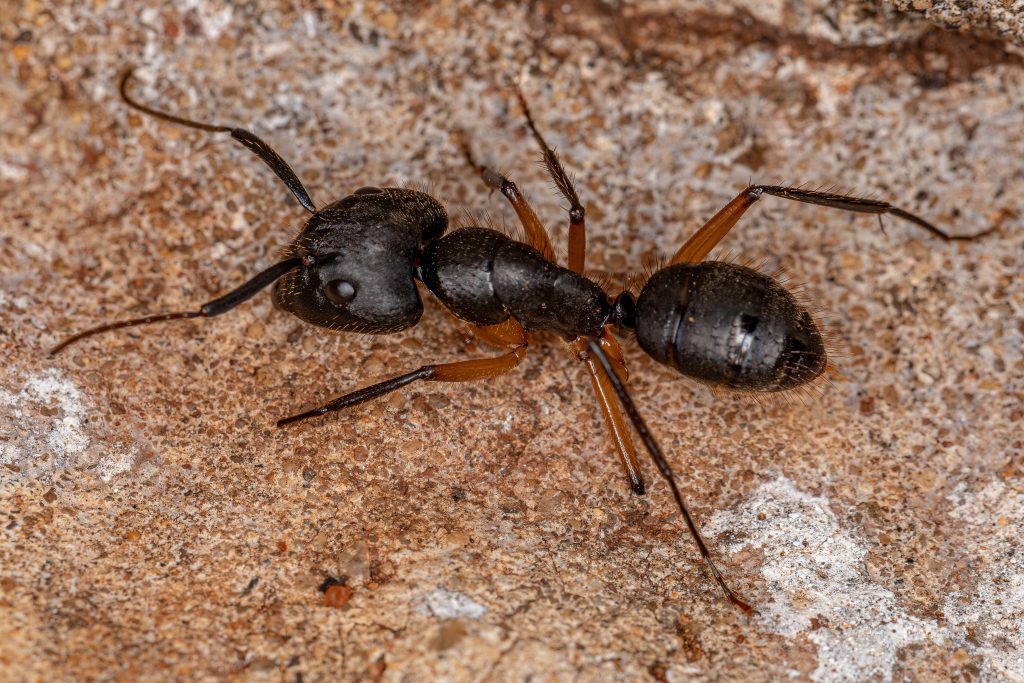
Carpenter ants look large compared with most household ants. Workers can measure roughly 1/4 to 5/8 inch, and several sizes may appear within one colony.
Repeated sightings near a damp porch, crawl space, window frame, tree, or roofline are worth investigating. Carpenter ants remove wood to create nesting galleries rather than eating the wood itself. Activity becomes more concerning when ants repeatedly enter softened or moisture-damaged material.
Imported Fire Ants

A mound in an open lawn may be your first sign of imported fire ants. Workers are reddish brown and can vary noticeably in size.
Do not disturb a suspected mound to confirm the identification. Large numbers of workers can rush to the surface and sting when the colony is disturbed. Mounds beside patios, play areas, sidewalks, and pet areas deserve particular attention because accidental contact is more likely there.
Argentine Ants

Argentine ants are small brown ants that can create long, busy trails along foundations, exterior walls, mulch beds, plumbing routes, and kitchen surfaces.
Their colonies can contain multiple queens and connect with nearby nests. That helps explain why an Argentine ant infestation may extend well beyond the single trail you can see. Removing workers from one surface does little to reveal how far the colony network reaches.
Pavement Ants
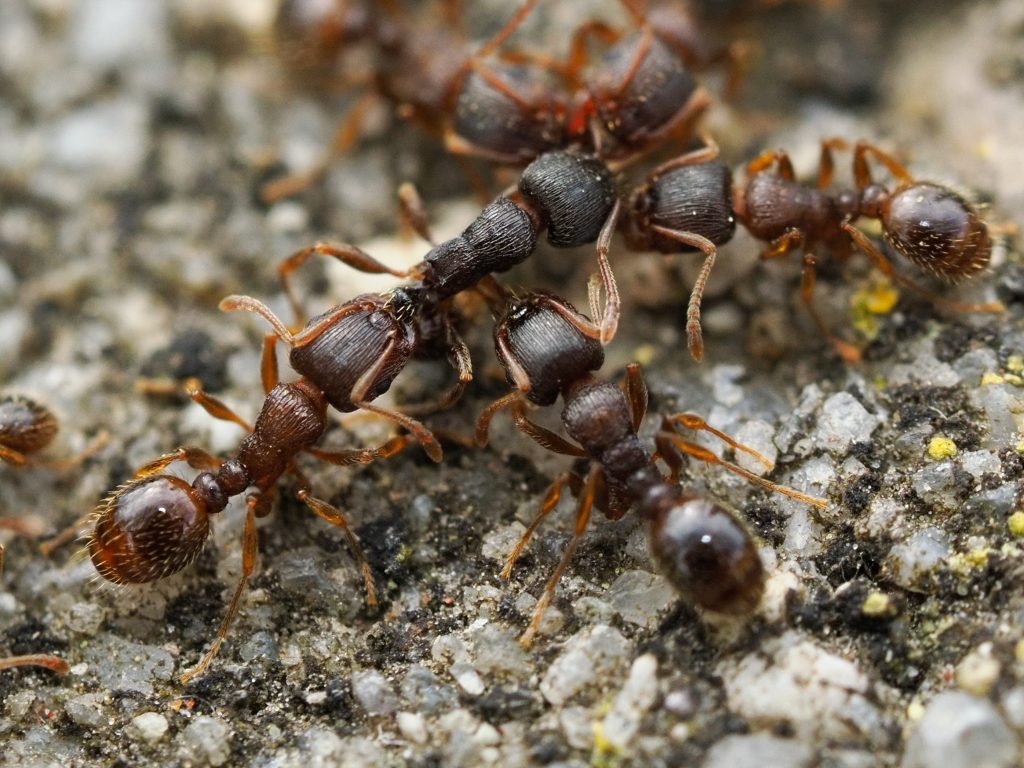
Pavement ants often nest beneath driveways, patios, sidewalk cracks, slabs, and foundation edges. A small pile of soil pushed through a crack can reveal where workers are coming from.
Acrobat Ants
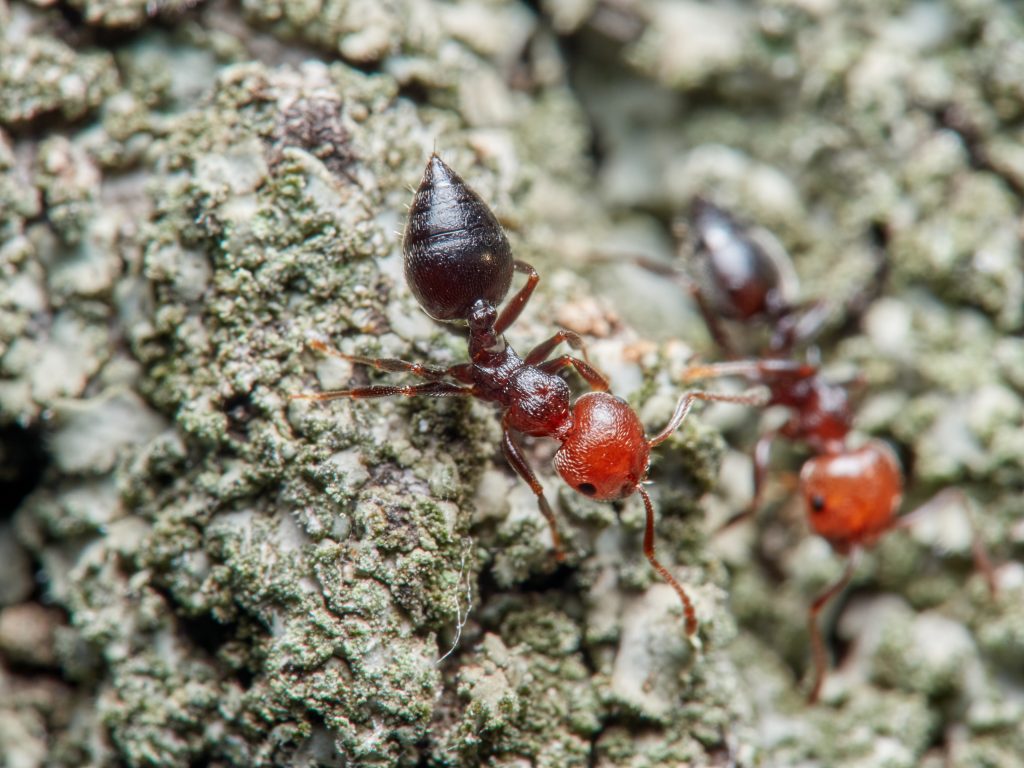
Acrobat ants provide a different clue. They can raise the rear of the body when disturbed, and the abdomen has a heart-like shape when viewed from above. You may encounter them around trees, old wood, wall spaces, and damp building materials.
Asian Needle Ants
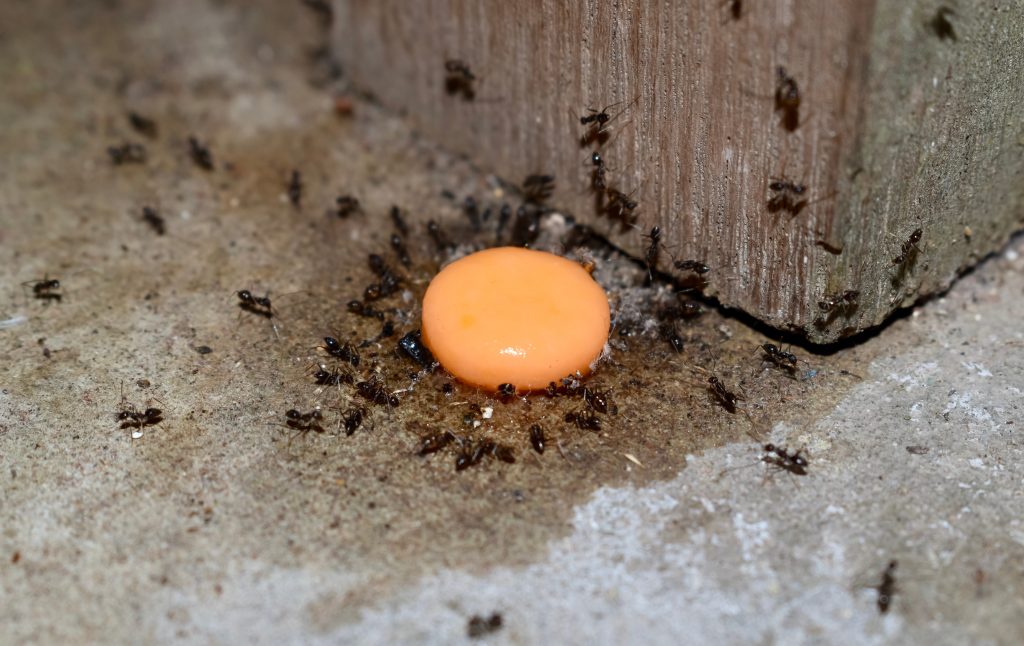
You may spot an Asian needle ant moving alone through mulch or beneath shaded ground cover rather than following a heavy ant trail. It has a dark, shiny body with orange-brown legs and measures about 1/5 inch.
NC State Extension reports that this invasive ant is now found in most of North Carolina’s 100 counties. It can sting when threatened and can compete with native ant species.
How to Identify Ants Around Your North Carolina Home
Good ant identification starts with the activity around the insect. Look at size, movement, nesting location, and the surface the ants are using before trying to distinguish tiny body features.
Watch the ants briefly if you can do so safely. A worker entering damp wood tells you something different from ants disappearing beneath concrete or marching toward a kitchen cabinet.
| What You See | What It May Point To |
| Tiny dark ants moving across a counter | Odorous house ants or another small household species |
| Large black ants near damp wood | Carpenter ants |
| Reddish ants around a lawn mound | Imported fire ants |
| Long trails of small brown ants | Argentine ants |
| Small ants entering cracks beside concrete | Pavement ants |
| Ants raising the rear of the body | Acrobat ants |
| Dark ants with orange-brown legs moving alone | Asian needle ants |
Look at More Than Color
Several ant species in North Carolina are brown, dark brown, or black. Size and behavior can narrow the possibilities much faster.
Carpenter ants are noticeably larger than odorous house ants. Argentine ants tend to create busy trails, while Asian needle ants may appear alone. Pavement ants stay closely associated with hard surfaces, and fire ants lead you back to outdoor soil colonies.
Follow the Route
Ants in the house do not always have an indoor nest. Workers can enter through foundation gaps, plumbing openings, window frames, utility penetrations, and spaces beneath doors.
Following a safe trail in both directions can help you determine whether the ants are coming from a mulch bed, slab, wall space, or another location. That information is often more useful than identifying the exact shade of the ant.
Which North Carolina Ants Need More Attention?
Many common ant species in North Carolina are nuisance pests. They become frustrating when workers repeatedly reach countertops, pantries, bathrooms, and other areas where you do not want them.
Fire ants, carpenter ants, and Asian needle ants create different concerns. Fire ants and Asian needle ants can sting, while carpenter ant colonies can enlarge galleries inside wood.
Fire Ants Are Established Across Much of North Carolina
Imported fire ants have lived in the state for decades. The North Carolina Department of Agriculture and Consumer Services reports that they were first identified in Brunswick County in 1957.
Their range has grown substantially. As of 2026, portions or all of 81 of North Carolina’s 100 counties are considered generally infested with one or more imported fire ant forms. A mound in a frequently used part of your yard should be handled without deliberately disturbing the colony.
Carpenter Ant Activity Can Reveal Trouble Around Wood
One carpenter ant crossing a floor does not tell you where it came from. Repeated traffic around the same wooden area gives you much better information.
Check nearby trim, framing, windows, and other wood for moisture staining or soft material. A water problem can create suitable nesting conditions, so finding the source of dampness may be part of solving the carpenter ant problem.
Why Ants Keep Showing Up Around Your Home
Ant colonies need food, water, shelter, and somewhere suitable to nest. A clean home can still provide one or more of those resources.
Crumbs beneath an appliance, pet food, a slow plumbing leak, damp mulch, stacked firewood, or a small foundation gap can be enough to keep workers coming back. The exact attraction depends on the species and where its colony is located.
Food and Moisture Create Repeat Stops
Ants can find residue that is easy for you to miss, especially beneath appliances, around trash containers, and along pantry edges. Water may come from a leaking pipe, condensation, damp crawl space, or wet building material.
Correcting those conditions removes resources that support repeated activity. It can also make ant control more effective because workers have fewer competing food and water sources around the property.
Landscaping Can Put Nests Close to the House
Mulch, stones, leaf litter, old stumps, firewood, and dense vegetation create protected spaces only a few feet from exterior walls.
From there, worker ants can reach the structure through foundation cracks, utility gaps, doors, windows, and branches touching the house. A colony can stay outside while its workers become a regular indoor problem.
| Condition Around Your Home | What You Can Change |
| Crumbs and food residue | Clean beneath appliances and along pantry edges |
| Pet food left out | Remove leftovers and clean around bowls |
| Plumbing leaks | Repair leaks and dry nearby materials |
| Heavy mulch against the house | Pull mulch away from the structure |
| Firewood against exterior walls | Store it farther from the home |
| Shrubs touching siding | Trim vegetation back |
| Visible exterior gaps | Seal suitable openings once active routes are located |
When Basic Ant Prevention Stops Working
Cleaning food residue, repairing leaks, and reducing easy entry points can help when a few foraging ants find a convenient resource. An ant infestation that returns to the same areas needs a closer look.
Pay attention to patterns. A trail that appears every morning, ants emerging from several rooms, or workers repeatedly entering the same section of wood can indicate an established colony nearby.
The Species Changes the Control Strategy
Ant control is more effective when it accounts for the species and nesting location. Pavement ants beneath a slab do not behave like carpenter ants in damp wood, and a large Argentine ant colony network presents a different problem from a single outdoor nest.
Professional pest control can be useful when you cannot identify the ants, cannot locate their source, or continue seeing activity after correcting obvious food, moisture, and entry problems. The inspection should focus on where workers travel, where colonies can nest, and what conditions around the property support them.
Protect Your Home From North Carolina Ants
Learning the common ant species in North Carolina gives you a better starting point when activity appears around your home. Size, trails, nesting location, moisture, pavement, and soil mounds can help you separate a minor foraging issue from a problem that needs closer attention.
If ants keep returning, ClearDefense Pest Control can identify the species, inspect likely nesting and entry areas, and target treatment to the way that ant behaves. ClearDefense uses environmentally responsible products and materials applied with pinpoint precision based on pest behavior, habitat, and life cycle.
For recurring ants around a North Carolina home, contact ClearDefense Pest Control for an inspection and ant control plan. Finding the nesting area and the conditions supporting the colony can be more effective than repeatedly cleaning up the ants you see.