

Seeing a wasp in NC is common during the warmer months, but repeated traffic to one location can mean a nest is close by. The next step is figuring out what you are looking at. North Carolina has social wasps that defend colonies and solitary wasps that spend most of their time hunting other insects.
This guide covers the types of wasps in North Carolina you are most likely to notice around a home, where they build nests, when activity increases, and which situations deserve more caution.
Common Types of Wasp in NC
Color is only one clue when you are trying to identify a wasp. Body shape, nest design, flight pattern, and the place the insect keeps returning to often tell you much more.
| Wasp | What You May See | Common Nest Location | What Stands Out |
| Paper wasp | Slender body with long legs hanging during flight | Eaves, porch ceilings, railings, and overhangs | Builds an exposed paper comb with visible cells |
| Yellowjacket | Compact yellow and black body | Ground cavities, wall voids, attics, and old stumps | Workers repeatedly use one small entrance leading to a hidden colony |
| Bald-faced hornet | Mostly black body with white markings | Trees, shrubs, and sheltered exterior areas | Builds a gray enclosed paper nest above ground |
| European hornet | Large body with reddish-brown and yellow coloring | Hollow trees, sheds, attics, and wall cavities | Often nests inside a protected cavity |
| Mud dauber | Very narrow waist with a dark or metallic body | Garages, sheds, walls, and porches | Builds hard mud tubes or clustered mud cells |
| Cicada killer | Large dark body with yellow markings | Sunny, well-drained soil | Flies low over lawns and digs individual burrows |
Paper Wasps
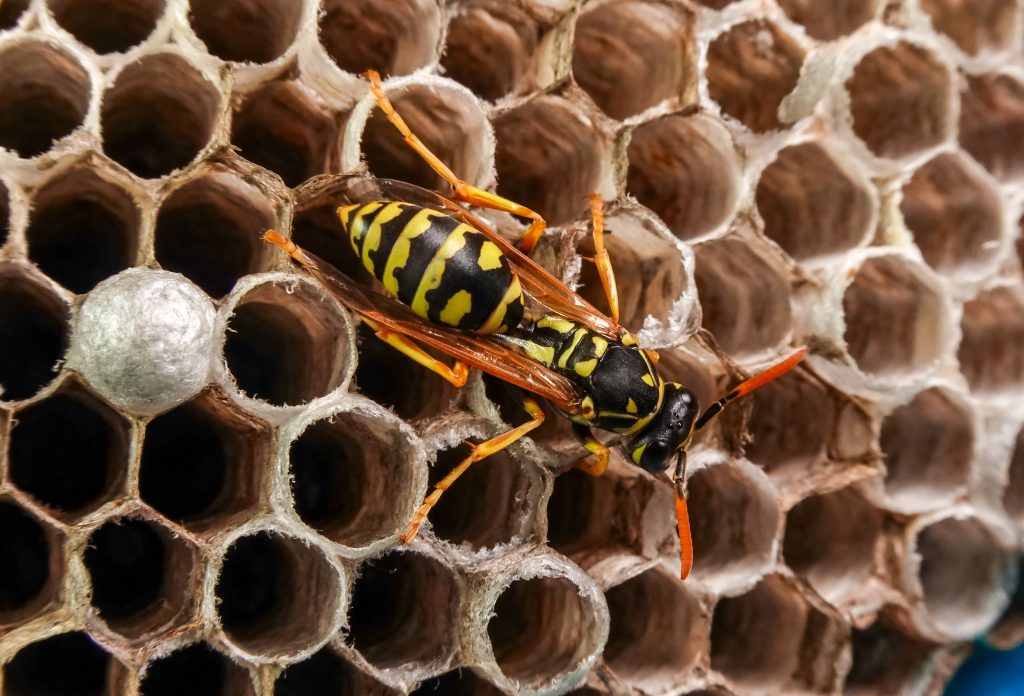
Paper wasps often settle on parts of a house that provide shelter from direct rain and sun. You may find an open comb beneath an eave, porch ceiling, or deck railing, with adult wasps sitting directly on the exposed cells. These wasps hunt caterpillars and other small insects, so they also have a useful role around gardens and landscaping.
Yellowjackets
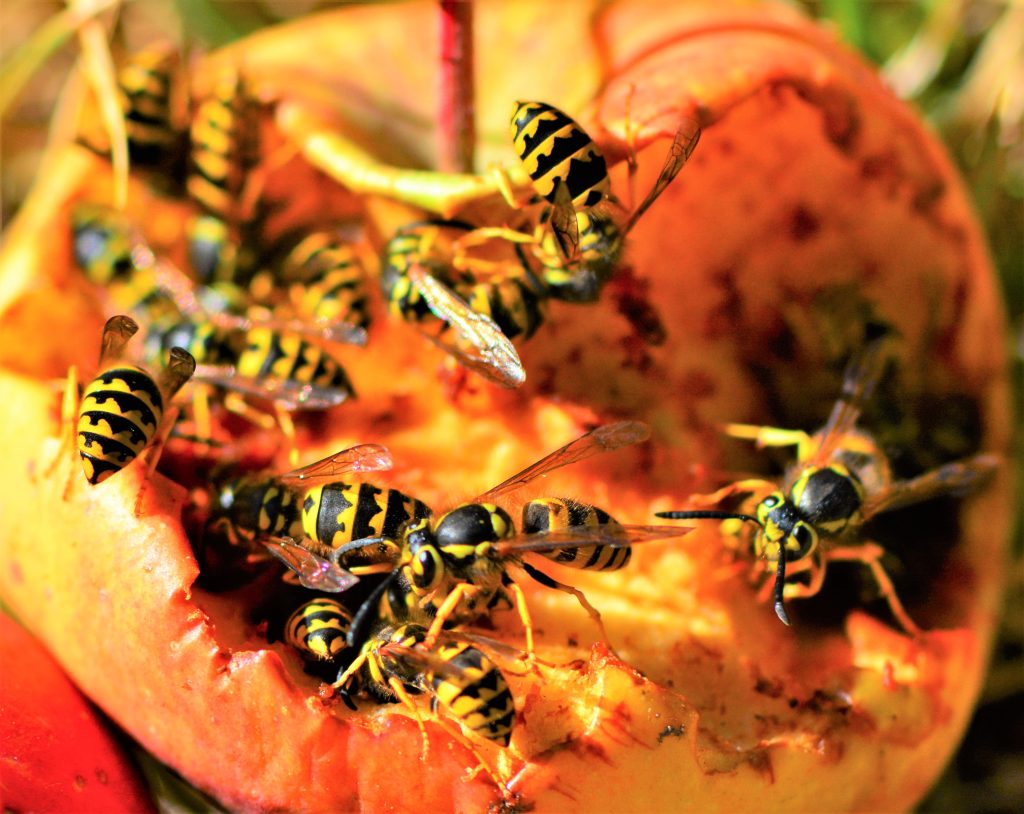
Yellowjackets are easier to overlook early in the season because their nests may be hidden underground or inside a structural cavity. A lawn nest can look like nothing more than a small hole until you notice steady traffic moving in and out.
According to NC State Extension, a yellowjacket colony may contain 600 to 800 workers by fall. That figure helps explain why yellowjackets become some of the most noticeable common wasps in North Carolina late in the season.
Bald-Faced Hornets

Bald-faced hornets build one of the easiest nests to recognize. Their gray enclosed nests often hang from trees or shrubs and can become quite noticeable as the colony grows. The adults are mostly black with clear white markings.
European Hornets
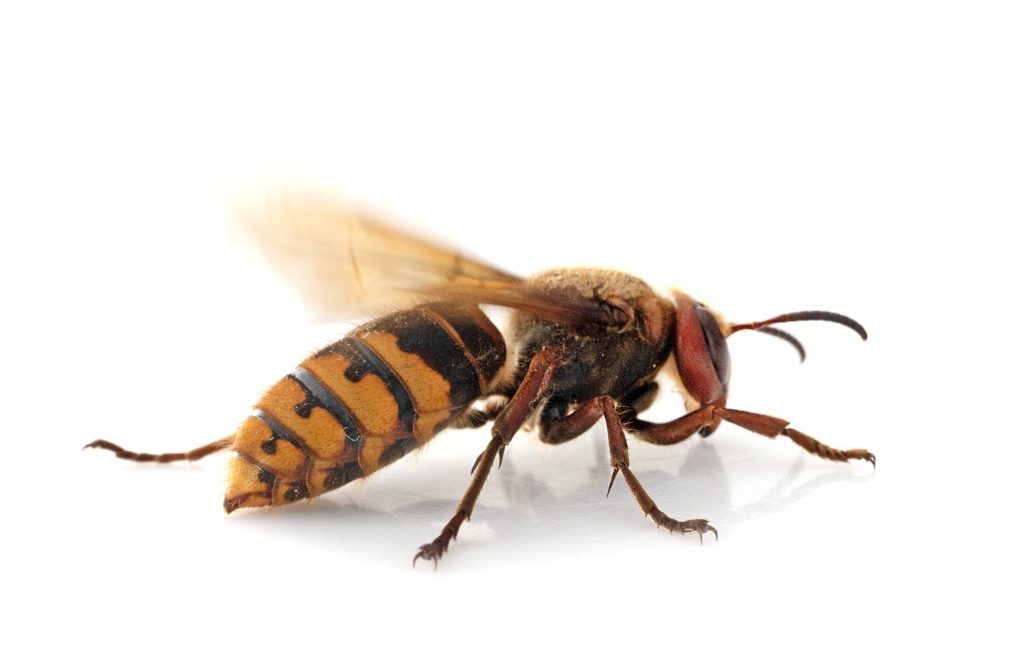
European hornets usually stay less visible because they prefer cavities. Hollow trees are natural nesting sites, but sheds, attics, and wall spaces can provide similar protection around suburban homes.
Repeated traffic can reveal a concealed colony. If large wasps keep entering the same gap near a soffit, siding seam, or attic opening, watch the area from a distance instead of trying to close the opening while activity continues.
Mud Daubers

Mud daubers live alone rather than in large social colonies. A female builds mud cells on garages, sheds, porch areas, and other sheltered surfaces, then stocks those cells with spiders for her young.
Cicada Killers
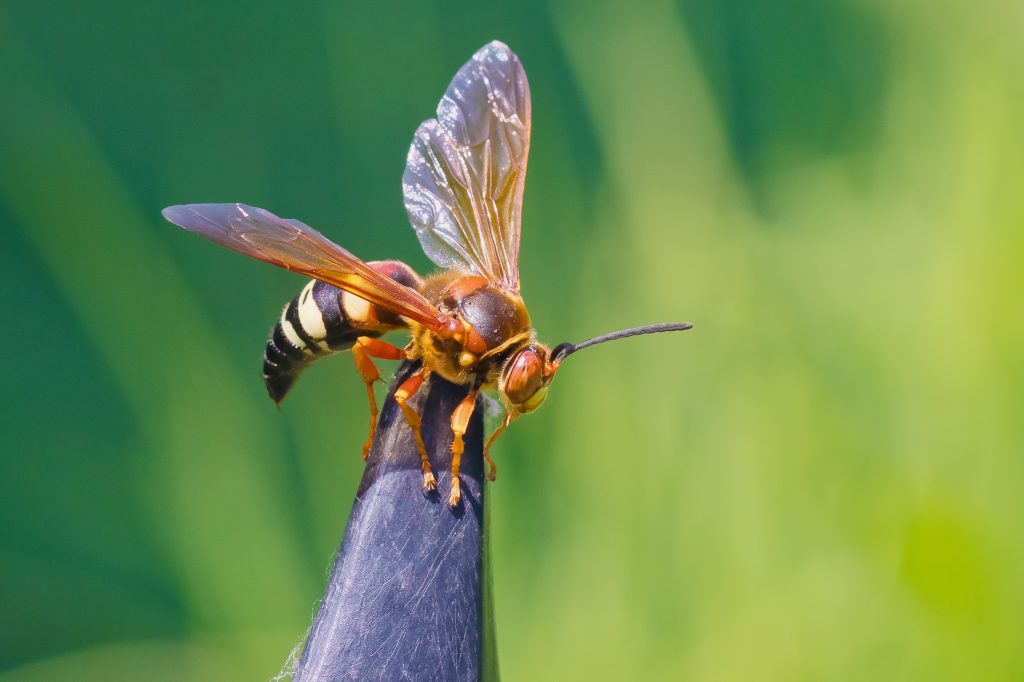
Cicada killers are much larger and often get attention simply because of their size. They dig burrows in sunny soil and may fly close to the ground over lawns during summer.
NC State Extension’s turf pest guide identifies cicada killers as the largest solitary wasps in the state, at about 1 to 2 inches long. A female may collect 100 or more cicadas during her lifetime. Females can sting if handled, but they do not defend a worker colony, and males do not have stingers.
Where Wasps in North Carolina Build Nests
A single wasp crossing your yard does not reveal much. Repeated movement does. If several insects keep disappearing into the same hole, roof gap, paper structure, or patch of soil, you have a better clue about where the activity starts.
Around communities, wasps in North Carolina often choose protected rooflines, mature trees, open soil, landscaping, sheds, and cavities around homes.
| Location | Wasps You May Find | Sign to Watch For |
| Under an eave or porch roof | Paper wasps | Open comb with adults resting on visible cells |
| Small opening in a lawn or landscape bed | Yellowjackets | Several workers using the same entrance |
| Sunny bare or thin soil | Cicada killers | Loose soil and individual burrow openings |
| Tree or large shrub | Bald-faced hornets | Gray enclosed nest hanging from a branch |
| Siding, soffit, or attic opening | Yellowjackets or European hornets | Steady traffic through one narrow gap |
| Garage or shed wall | Mud daubers | Dry mud tubes attached directly to the surface |
A nest near patio stairs, a front door, children’s play equipment, or another busy part of the property creates more opportunities for accidental contact. A nest far from normal activity may never become part of your daily routine.
Ground nests deserve special attention because they are easy to miss. Mowing, edging, gardening, or digging can bring you close to an active yellowjacket colony before you realize the opening is there.
If wasps are entering a wall or roof gap, do not plug the opening while the colony is active. The nest should be addressed before exterior repairs close off the route the insects are using.
When North Carolina Wasps Are Most Active
Spring usually begins with relatively little wasp activity. Queens of social species start new colonies, and early nests contain far fewer insects than they will later in the year. This is when you might spot a small paper comb under an eave with only one or two adults nearby.
Activity picks up during summer. Social colonies gain workers, while solitary species become more visible around lawns and landscaping. You are also spending more time outside mowing, grilling, gardening, or sitting on the deck, which makes encounters more noticeable.
Why Late Summer Brings More Yellowjackets
Yellowjacket colonies are much larger late in the season. Workers also spend more time searching for food, which brings them near open trash, outdoor meals, ripe fruit, and sweet drinks.
That activity can make a wasp in NC seem like a sudden late-summer problem even when the colony has occupied the same location for weeks. The nest did not necessarily appear overnight. You may simply be noticing it once worker traffic becomes heavy.
Late summer is also when an unnoticed underground nest becomes easier to disturb. A busy entrance hidden in grass can sit directly in the path of a mower, pet, or person working in the yard.
What Happens During Winter
Cold weather brings annual social colonies to an end. Workers die, while reproductive females that will become next year’s queens look for protected places to spend the winter.
The old yellowjacket colony does not restart inside the same nest in spring. New queens build new colonies and choose their own nesting sites, which is why activity can show up in a completely different part of the property the following year.
How Much of a Sting Risk Do Wasps Pose?
The largest wasp is not always the one that creates the greatest concern. Colony behavior gives you a better clue. Yellowjackets, paper wasps, bald-faced hornets, and European hornets live socially, so several workers may respond when a nest is disturbed.
Mud daubers and cicada killers do not have large worker colonies defending a shared nest. They can still cause concern when they are close to people, but their behavior is different from an active yellowjacket colony in a lawn or wall.
| Situation | Concern | Why |
| Yellowjackets entering the ground beside a walkway | High | The colony is hidden where someone may approach it accidentally |
| Wasps using a gap in siding or a soffit | High | The opening may lead to a concealed colony |
| Paper wasp nest over a frequently used doorway | Moderate to high | People regularly pass close to the nest |
| Aerial nest far from normal household activity | Varies | Routine contact may be limited |
| Cicada killers in an unused lawn area | Usually lower | They do not defend a worker colony |
| Mud dauber nests on a detached shed | Usually lower | Each female nests independently |
Social wasps can sting repeatedly. For most people, a sting causes pain, redness, itching, or swelling near the site. A severe allergic reaction is different and requires immediate medical care.
For national context, the Centers for Disease Control and Prevention (CDC) recorded 788 deaths from hornet, wasp, and bee stings in the United States from 2011 through 2021, an average of 72 per year. That number combines three groups of stinging insects nationwide and is not a North Carolina wasp statistic.
What Should You Do About a Wasp Nest?
Start by watching where the insects are going from a safe distance. You do not need to approach the nest to learn whether you are seeing one passing insect or steady traffic from an active colony.
Some solitary species can be left alone when their burrows or mud nests are well away from people. The decision changes when a social colony sits beside a doorway, patio, walkway, play area, or another place your household uses every day.
When Monitoring May Be Enough
A few cicada killers nesting in an unused part of the lawn can look dramatic without disrupting how you use the yard. Mud daubers on a detached shed may create a similar situation, especially when nobody needs to work close to the nests.
You may also see wasps visiting flowers, shrubs, or trees without finding a nest nearby. Those insects may simply be looking for prey, nectar, or other food.
Keep an eye on the area if activity increases. A new nest near a doorway or repeated traffic into a structural opening deserves a different response from occasional foraging.
When Professional Wasp Control Makes More Sense
Underground yellowjacket colonies, active nests inside walls, and nests above busy outdoor spaces are harder to deal with safely. You may not be able to see the full colony, and getting close enough to investigate can put you directly in the insects’ normal flight path.
Avoid flooding, burning, striking, or sealing an active nest. Those actions can disturb social wasps without reaching the source of the problem.
After active nesting has been addressed, repair appropriate exterior gaps, keep outdoor trash covered, and clean up sugary food or drink spills. These small changes can make the immediate area around the home less attractive to foraging wasps.
Choosing Wasp Control in North Carolina
You do not need the same response for every wasp. A mud dauber on a shed wall, a cicada killer burrow at the edge of the yard, and a yellowjacket colony beside your patio are three very different situations. Effective wasp control in North Carolina starts with identifying the species, finding the nest, and deciding whether its location creates a real risk around your home.
Professional service makes the most sense when the nest is underground, hidden inside the structure, difficult to reach, or close to areas your family uses often. ClearDefense Pest Control provides service for wasps, hornets, and yellowjackets and uses targeted products and materials based on pest behavior, nesting location, and conditions around the property.
If you keep seeing a wasp in NC return to the same spot around your home, contact ClearDefense Pest Control for professional wasp control. A trained technician can identify what is nesting there and recommend the right next step for the situation.