

You finish mowing beside the tree line, walk inside, and notice a tiny dark spot moving across your sock. Or you check the dog after an evening in the backyard and find a tick tucked near the collar. Several human-biting species live in North Carolina, and you can encounter them in an ordinary residential yard. Common ticks NC homeowners encounter include the lone star ticks, American dog ticks, and blacklegged ticks.
Ticks in North Carolina are most often associated with wooded edges, leaf litter, tall grass, brush, and other shaded areas close to the ground. This guide covers the species you are most likely to hear about, when tick activity increases, what current North Carolina disease data shows, how to prevent tick bites, and what to do if you find one attached.
Common Ticks NC Homeowners May Encounter
Three tick species drive most homeowner encounters across North Carolina: lone star ticks, American dog ticks, and blacklegged ticks. Each carries a different disease association and a slightly different look. The brief below breaks down what to check for if you or a pet picks one up outside.
Lone star tick
High riskAmerican dog tick
High riskBlacklegged tick deer tick
High riskFinding a tick after a single hike is different from repeatedly finding them in the same part of the yard or on the dog after short trips outside. That pattern points to a hotspot worth having inspected.
North Carolina has around 25 recorded tick species, though only a smaller group regularly causes problems for people. According to NC State University, lone star ticks, American dog ticks, and blacklegged ticks are among the species residents should recognize.
These common ticks in North Carolina differ in appearance, season, and disease associations. That makes identification useful, especially if you find a tick after spending time outside.
| Tick | What You May Notice | Typical Activity | Why It Matters |
| Lone star tick | Adult female has one pale spot on its back | Spring through summer | Associated with ehrlichiosis; bites are also linked with alpha-gal syndrome |
| American dog tick | Brown body with pale or gray markings | Spring through summer | Can transmit bacteria associated with Rocky Mountain spotted fever |
| Blacklegged tick | Dark legs; adult female has a darker upper body and reddish lower body | Spring through fall, with adult activity possible during cooler weather | Main Lyme disease vector in the eastern United States |
Lone Star Ticks
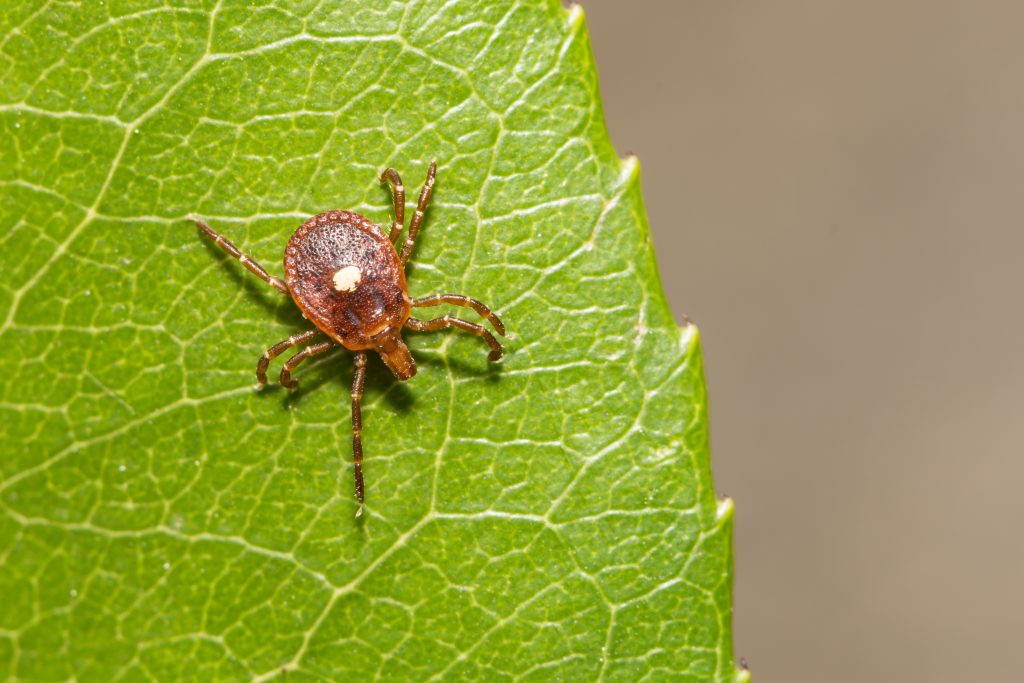
You can pick up a lone star tick while walking through brush, clearing weeds beside a fence, or moving through vegetation along a wooded lot. Adult females have a white spot in the center of the back. Nymphs are much smaller and lack that obvious marker.
Lone star ticks actively move toward hosts instead of waiting in one place indefinitely. They are associated with ehrlichiosis, and bites from this species have also been linked with alpha-gal syndrome in some people.
American Dog Ticks
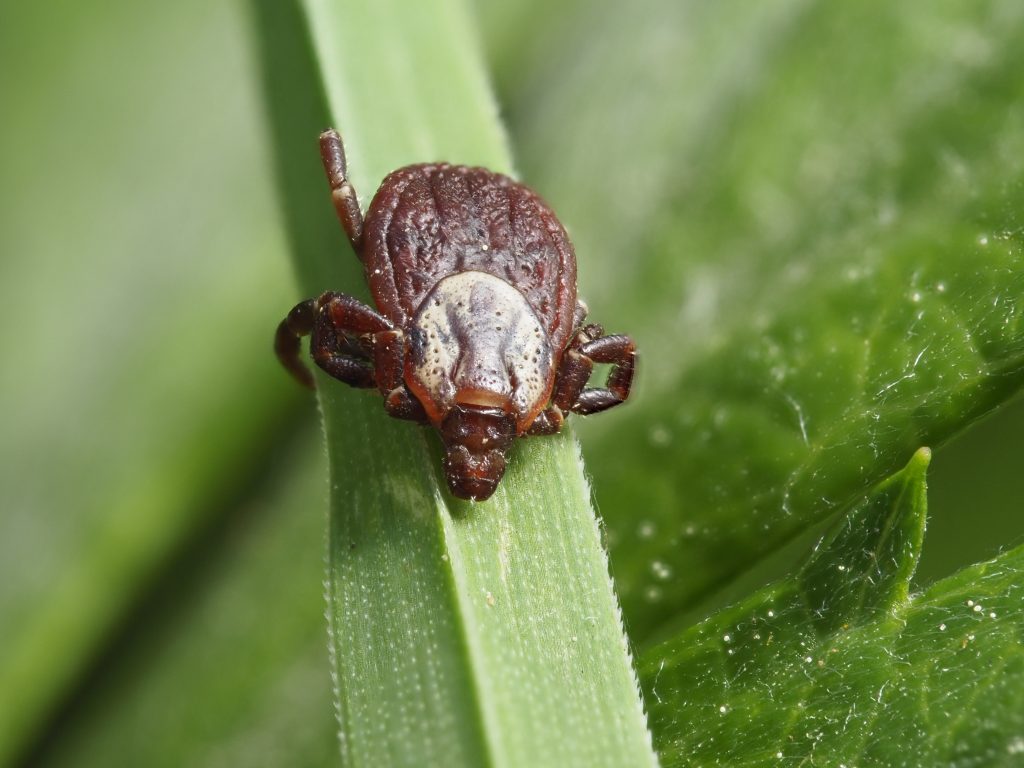
American dog ticks often wait on grass and low vegetation until a person or animal brushes past. Their name makes them sound like a pet-only problem, but these ticks readily bite people too.
This species can transmit bacteria associated with Rocky Mountain spotted fever. The disease name can be misleading for North Carolina homeowners because spotted fever illnesses occur throughout the Southeast.
Blacklegged Ticks

The blacklegged tick, also called the deer tick, is the primary Lyme disease vector in the eastern United States. It can also transmit pathogens associated with anaplasmosis and babesiosis.
Lyme disease in North Carolina is reported most heavily in the western part of the state, particularly the northwest. Locally acquired cases also occur elsewhere, so geography changes the level of risk rather than removing it entirely.
You may also hear about the brown dog tick and Gulf Coast tick when reading about types of ticks in North Carolina. They receive less attention in general homeowner guides than the three species above, but both are relevant to tick awareness and control.
Ticks in NC: What State Disease Data Shows
Tickborne diseases are tracked through the state’s public health surveillance system. In its 2024 annual report, the North Carolina Department of Health and Human Services recorded 734 confirmed and probable cases across five reportable tickborne diseases.
That total is a count of reported cases among North Carolina residents. It is not a count of tick bites, and it does not mean every tick carries a pathogen.
| Tickborne Disease | 2023 Cases | 2024 Cases | Change |
| Ehrlichiosis | 115 | 278 | +163 |
| Lyme disease | 233 | 247 | +14 |
| Spotted fever rickettsiosis | 229 | 195 | -34 |
| Anaplasmosis | 8 | 13 | +5 |
| Babesiosis | 3 | 1 | -2 |
Ehrlichiosis Had the Highest Reported Total
North Carolina recorded 278 confirmed and probable ehrlichiosis cases in 2024, the highest total among the five diseases in the report. That was a substantial increase from 115 cases in 2023.
State health officials noted that an updated surveillance definition and enhanced surveillance efforts likely contributed to the higher number. The figures should not be read as evidence that transmission simply doubled in one year.
Lyme Disease Is Concentrated More Heavily in Western NC
The state reported 247 Lyme disease cases in 2024. Based on available travel and exposure information, about 75% were considered most likely acquired within North Carolina.
Yancey, Mitchell, Madison, Alleghany, and Ashe counties recorded some of the highest incidence rates. Spotted fever rickettsiosis followed a broader statewide pattern, with 195 reported cases in 2024.
When Is Tick Season in North Carolina?
There is no single day when tick season in North Carolina starts or stops. Different species and life stages respond to temperature and humidity in different ways.
Lone star ticks and American dog ticks are especially active during spring and summer. Blacklegged ticks have a longer activity window, with younger stages active during warmer months and adults capable of remaining active into cooler weather.
That means the tick season NC homeowners experience can stretch well beyond the hottest weeks of summer. A warm spring day, mild fall afternoon, or sheltered area along a wooded property line can still provide suitable conditions.
Tick Activity Changes From One Part of the Yard to Another
Walk from the sunny center of a lawn toward a shaded fence where oak leaves have collected beneath shrubs. The temperature drops, the soil stays damp longer, and low vegetation becomes thicker. Those small changes create better conditions for ticks.
Ticks lose moisture easily. Leaf litter, tall grass, brush, mulch, and dense plants give them cover close to the soil. A neat front lawn can therefore have much less activity than a shaded side yard only a few feet away.
Pets Often Visit the Highest-Risk Areas
Dogs tend to follow fence lines, push their noses under shrubs, and wander through the strip of vegetation between a lawn and the woods. Those routes overlap with places where ticks can wait for a host.
Check pets after time outside, particularly around the ears, neck, legs, toes, and deep in the coat. A regular tick check can catch a crawling or attached tick before the pet settles onto a rug, bed, or sofa.
How Can You Prevent Ticks Around Your Home?
Tick prevention starts with the places your family actually uses. Focus first on patios, play areas, dog runs, pathways, and the edges where maintained lawn meets heavier vegetation.
You do not need to remove every shrub. The goal is to reduce thick, humid cover near places where people and pets repeatedly pass.
| Area Around Your Home | What You Can Do | Why It Helps |
| Lawn edges | Trim grass and clear heavy leaf litter | Reduces shaded cover close to walking areas |
| Wooded borders | Cut brush back from the lawn | Adds distance between common tick habitat and activity areas |
| Play areas | Keep equipment away from dense vegetation when practical | Reduces repeated contact with brush and leaves |
| Dog routes | Maintain clear paths and inspect pets afterward | Makes ticks easier to find before pets return indoors |
| Landscape beds | Remove excess leaves and thin dense ground-level growth | Reduces humid shelter near the soil |
| Clothing and skin | Perform a tick check after yard work | Helps find ticks before or soon after attachment |
How to Prevent Ticks From Reaching Your Skin
Wear long pants when working in tall grass, brush, or wooded edges. Light-colored clothing can make a crawling tick easier to notice. An EPA-registered repellent can also reduce tick bites when used according to its label.
When you come inside, check behind your knees, around your waist, under your arms, near the hairline, and behind your ears. Check children and pets after they spend time in the same areas.
These habits matter even if you already use tick treatment for your yard. Yard care changes habitat, while personal checks address ticks you may have picked up somewhere else.
How Do You Remove an Attached Tick?
You notice a small bump while showering, look closer, and see legs. If the tick is attached, remove it instead of waiting for it to fall off.
The Centers for Disease Control and Prevention (CDC) recommends clean, fine-tipped tweezers. Grip the tick close to the skin and pull upward with steady, even pressure. Clean your hands and the bite area afterward.
Skip Petroleum Jelly, Heat, and Nail Polish
Home remedies are not a better shortcut. Petroleum jelly, nail polish, and heat are not recommended methods for removing an attached tick.
Check the rest of your body after removing one. Finding a tick does not mean you have contracted a tickborne illness, but symptoms after tick bites deserve attention. If you develop a fever, rash, or other illness in the following days or weeks, tell your health care provider about the bite and where you may have picked up the tick.
When Professional Tick Control Makes Sense
One tick after a hike is different from repeatedly finding ticks in your yard, on the dog after short backyard trips, or on clothing after mowing the same part of the property. Repeated activity can point to specific conditions around the home that are giving ticks reliable shelter.
ClearDefense Pest Control starts tick control by determining whether activity is indoors, outdoors, or both, then inspecting the yard for likely hotspots. For outdoor problems, treatment can be directed toward areas where ticks are concentrated rather than treating the property as though every section has the same level of activity.
If North Carolina ticks keep turning up around your home, contact ClearDefense Pest Control. We can inspect the property and recommend a targeted tick control plan based on what the technician finds.