
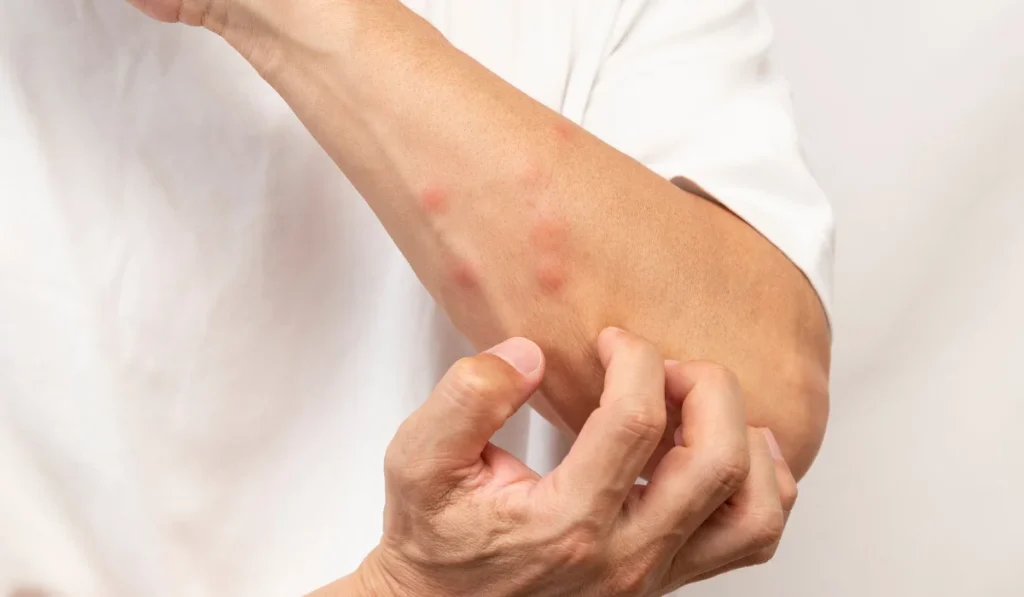
Insect bites are easier to narrow down when you consider four clues together: what the mark looks like, where it appears, when symptoms start, and what you were doing before you noticed it. Mosquitoes often leave itchy bumps on exposed skin, fleas favor the lower legs, chiggers cluster around areas where clothing fits tightly, and fire ant or wasp stings usually hurt right away.
Most bites cause temporary itching or soreness. Ticks and mosquitoes can carry disease, while fire ants, wasps, hornets, and yellowjackets can cause serious allergic reactions in sensitive people. Matching the bite pattern with activity around your home can also help you find the pest source before more bites occur.
Key Takeaways
- A bite’s appearance is only one clue. Body location, symptom timing, recent outdoor activity, and pest evidence around the property are often more useful for identification.
- Ticks and mosquitoes present the main disease concerns covered here. Fire ants, wasps, hornets, and yellowjackets pose a different risk because their venom can trigger severe allergic reactions.
- Repeat bites usually call for a closer look at the property. Standing water, overgrown vegetation, flea activity, ant colonies, and active nests can keep exposing people until the source is addressed.
How to Identify Common North Carolina Insect Bites
Start with the pattern rather than a single red spot. Look at whether the marks are scattered or grouped, whether they itch or hurt, and whether they appeared immediately or several hours later.
Then think about where you were. Yard work, walking through tall grass, sitting on a patio, handling stored items, and spending time near pets all point toward different pests.
| Pest | What You May See | Common Body Location | Typical Timing | Strongest Clue |
| Mosquitoes | Puffy red or pink bumps that itch; some become firmer later | Exposed arms, legs, feet, neck, and face | A bump may appear within minutes; firmer itching can develop later | Outdoor exposure near standing water, shade, or dense vegetation |
| Chiggers | Small, intensely itchy red bumps; some reactions blister | Ankles, sock lines, waist, behind knees, and other areas under snug clothing | Itching often starts several hours after exposure | Recent contact with tall grass, weeds, brush, or leaf litter |
| Fleas | Small raised red bumps, sometimes grouped | Ankles and lower legs are common | Symptoms may start soon after feeding; new bites continue while fleas remain active | Pets scratching or flea activity around pet resting areas |
| Ticks | An attached tick, a small red spot after removal, or little visible reaction | Scalp, waist, groin, armpits, behind knees, and other protected areas | The bite may go unnoticed; illness symptoms can appear later | Recent exposure to woods, brush, or tall grass |
| Spiders | Redness, swelling, soreness, or a raised spot | Anywhere a spider becomes trapped against the skin | Varies | Seeing the spider provides much stronger evidence than the mark alone |
| Fire Ants | Immediate burning and red bumps followed by possible white pustules | Feet, ankles, legs, or hands | Pain begins quickly; pustules may form within a day or two | Several stings after disturbing a mound |
| Wasps, Hornets, and Yellowjackets | Sharp pain with redness and swelling | Any exposed skin | Usually immediate | A sting near a nest, roofline, shrub, lawn opening, or repeated flight path |
Mosquito Bites and Flea Bites
Mosquito bites are often scattered across skin that was exposed outdoors. The Centers for Disease Control and Prevention (CDC) notes that some people develop a puffy reddish bump within minutes, while a harder itchy bump can form later. Bites that regularly appear after evenings on a deck, around landscaping, or in a shady backyard make mosquitoes a reasonable suspect.
Flea bites tend to show up lower on the body. Small itchy bumps around the ankles or lower legs, especially when a dog or cat is also scratching, justify checking pet bedding, carpet edges, upholstered furniture, and other places pets rest.
Chigger Bites and Tick Bites
Chigger bites commonly become intensely itchy after someone has been in grass, weeds, brush, or leaf litter. The marks often collect around sock lines, waistbands, behind the knees, or other places where clothing presses against the skin.
Tick bites can be harder to notice at first. After working near a wooded edge or walking through tall vegetation, check protected areas such as the scalp, waist, groin, armpits, and behind the knees. Finding an attached tick is much stronger evidence than trying to identify a small red spot later.
Spider Bites, Fire Ant Stings, and Stinging Insects
Many unexplained sores are blamed on spiders even when no spider was seen. A spider becomes a more credible explanation when symptoms started after reaching into firewood, stored boxes, shoes, or another sheltered place where one could have become trapped against the skin.
Fire ants, wasps, hornets, and yellowjackets usually leave less doubt because the sting hurts almost immediately. Fire ants often sting several times after a mound is disturbed. Wasps and yellowjackets may sting when someone gets too close to a nest around an eave, shrub, tree, wall opening, or hole in the ground.
Which Bites and Stings Carry Health Risks in North Carolina?
Ticks and mosquitoes deserve the most attention for disease transmission in North Carolina. The North Carolina Department of Health and Human Services reported more than 1,100 tick- and mosquito-borne illnesses in the state during 2025, and most reported tick-borne illness occurs from May through September.
North Carolina tracks Lyme disease, spotted fever rickettsiosis, ehrlichiosis, and other tick-borne illnesses. Mosquito-borne risks include West Nile virus statewide, Eastern equine encephalitis more often in eastern North Carolina, and La Crosse encephalitis more often in the western part of the state.
| Pest | Main Health Concern | Symptoms That Deserve Attention |
| Ticks | Lyme disease, spotted fever rickettsiosis, ehrlichiosis, and other tick-borne illnesses | Fever, headache, rash, muscle aches, or flu-like symptoms after exposure |
| Mosquitoes | West Nile virus and other mosquito-borne illnesses; skin infection after scratching | Fever or unexplained illness; worsening warmth, redness, pain, or swelling |
| Fire Ants | Venom allergy | Widespread hives, major swelling, breathing trouble, dizziness, or other whole-body symptoms |
| Wasps, Hornets, and Yellowjackets | Venom allergy and anaphylaxis | Facial or throat swelling, trouble breathing, faintness, or rapidly spreading symptoms |
| Chiggers | Severe itching and secondary skin infection | Increasing pain, warmth, drainage, or spreading redness |
| Fleas | Repeated irritation and secondary infection | Continued bites, worsening skin irritation, or signs of infection |
| Spiders | Usually a local reaction; some bites can cause broader symptoms | Severe pain, muscle cramping, worsening wound, or illness |
Allergic Reactions to Fire Ants and Stinging Insects
Fire ants, wasps, hornets, and yellowjackets inject venom rather than simply feeding on blood. Most people develop pain and swelling near the sting site, but a person with a venom allergy can react throughout the body.
The CDC’s guidance on stinging insects identifies trouble breathing and other signs of anaphylaxis as reasons to seek emergency care. Fire ant stings can also develop a distinctive white pustule after the initial burning and redness.
When to See a Doctor for an Insect Bite or Sting
Most common bug bites can be monitored when symptoms stay limited to mild itching, tenderness, or swelling around the bite. The symptoms beyond the bite site are what deserve closer attention.
Get emergency medical help if a bite or sting is followed by trouble breathing, swelling of the tongue or throat, fainting, severe chest symptoms, or a rapidly developing reaction elsewhere on the body. Those signs can indicate a serious allergic response.
When a Bite May Be Infected
Contact a healthcare provider if redness continues to expand, the area becomes hot or increasingly painful, or drainage develops. Scratching an itchy bite can damage the skin and create an opening for infection.
A wound that keeps worsening should also be evaluated rather than assumed to be a spider bite. Several skin conditions can resemble an insect or spider bite.
What to Do After Finding a Tick
Remove an attached tick as soon as you find it. Use fine-tipped tweezers to grasp the tick close to the skin, then pull upward using steady pressure.
Watch for fever, headache, rash, body aches, or flu-like symptoms afterward. If they develop following known or suspected tick exposure, tell your healthcare provider about the exposure when you call.
What Bite Patterns Can Reveal About Pests Around Your Home
A bite becomes more useful for pest identification when the same situation keeps producing it. Someone who gets bitten only while sitting on the patio has a different problem from someone who develops ankle bites while inside the house.
Match the location of the exposure with signs around the property. That gives you a much better starting point than the skin reaction alone.
| Pattern You Notice | Possible Pest Source | Where to Check |
| Bites whenever you sit outside | Mosquito breeding or resting sites | Gutters, birdbaths, buckets, plant saucers, toys, pool covers, and shaded plants |
| Itchy bumps after walking through the yard | Chiggers or ticks | Tall grass, weeds, brush, leaf litter, pine straw, and wooded edges |
| New ankle bites indoors | Fleas | Pet beds, rugs, carpet edges, upholstered furniture, and pet resting areas |
| Painful pustules after yard work | Fire ants | Lawn mounds, landscape beds, pavement edges, and sunny open ground |
| Sudden stings while mowing | Yellowjackets | Ground openings, old burrows, tree roots, and shrub bases |
| Wasps repeatedly returning to one spot | Wasp or hornet nest | Eaves, soffits, porch ceilings, decks, shrubs, and trees |
| Suspected bites after moving stored items | Spiders | Garages, sheds, boxes, firewood, crawl spaces, and quiet storage areas |
Mosquitoes Around Patios and Landscaping
Mosquitoes don’t need a pond or large puddle to develop near a home. Buckets, plant saucers, toys, birdbaths, clogged gutters, and other containers can hold enough rainwater to create breeding sites.
Adult mosquitoes also use cool, shaded vegetation as resting areas. When biting pressure stays concentrated around one part of the yard, check nearby water sources and dense plants before assuming the mosquitoes are coming from farther away.
Ticks and Chiggers Along Property Edges
Ticks and chiggers are more closely associated with vegetation than with the center of a closely maintained lawn. Tall weeds, brush, leaf litter, and wooded borders create more opportunities for contact.
That distinction is useful in North Carolina neighborhoods where a mowed backyard meets woods, a drainage area, a greenway, or an undeveloped lot. Bites that follow time along those borders provide another clue about where to focus prevention.
Fleas, Fire Ants, and Active Nests
Repeated flea bites indoors point toward an active source rather than one isolated encounter. Pet resting areas deserve attention because fleas can keep developing in the surrounding environment even when adult fleas are difficult to spot.
Fire ants and stinging insects often leave clearer property clues. A fresh mound, yellowjackets disappearing into the same lawn opening, or wasps following one flight path to the roofline tells you where the problem is concentrated.
How to Prevent Repeat Insect Bites in North Carolina
Personal protection can reduce the chance of being bitten outdoors. Use an EPA-registered repellent according to its label, wear appropriate clothing in brushy areas, and check yourself for ticks after working or spending time near tall vegetation.
Around the home, prevention works best when it matches the pest. Mosquitoes need water, ticks and chiggers favor vegetation, fleas depend on animal hosts and protected resting areas, and stinging insects need suitable nest sites.
Reduce Mosquito, Tick, and Chigger Habitat
Empty outdoor containers that collect rainwater at least once a week and keep gutters draining properly. Check plant saucers, toys, buckets, birdbaths, tarps, and other objects that can quietly hold water after a storm.
Keep frequently used sections of the yard trimmed and reduce heavy brush, weeds, and leaf buildup along walking areas. After spending time near wooded or overgrown edges, check both people and pets for ticks.
Watch for Flea and Nest Activity
With fleas, check more than the pet. Bedding, carpeting, rugs, upholstered furniture, and favorite resting places can all be part of an infestation.
For fire ants, hornets, wasps, and yellowjackets, watch from a safe distance for repeated activity. Insects consistently entering one eave, shrub, tree cavity, or opening in the ground often lead directly to the nest.
Stop Repeat Bites by Controlling the Pest Source
An isolated bite may never reveal exactly what caused it. Fresh bites that keep appearing under the same circumstances give you more to work with. Mosquitoes near a patio, fleas around pet areas, fire ants in the lawn, or wasps using the same roofline can keep exposing your household while that source remains active.
ClearDefense Pest Control treats pest problems based on where activity is occurring and how the pest behaves around the property. Whole-property coverage can address common biting and stinging pests such as mosquitoes, fleas, ticks, spiders, fire ants, wasps, hornets, and yellowjackets, while follow-up service helps address covered activity that returns.
If bites or stings keep showing up around your North Carolina home, treating the skin only handles what already happened. Contact ClearDefense Pest Control for a free quote to have the property checked for the pest activity behind the problem and reduce the conditions that keep bringing it back.
Frequently Asked Questions
How can I tell what bug bit me?
Start with four clues: appearance, body location, timing, and what you were doing before the bite appeared. Bumps around a sock line after walking through vegetation suggest a different pest than immediate pain near a fire ant mound or repeated ankle bites inside a home. The skin mark alone rarely gives a certain answer.
What bug bites appear in clusters?
Fleas and chiggers can both produce grouped bites. Flea bites commonly affect the ankles and lower legs, while chigger bites often collect around sock lines, waistbands, and other places where clothing fits tightly. Where you were before the itching started can help separate the two.
When should I worry about an insect bite?
Get emergency help for trouble breathing, swelling of the tongue or throat, fainting, or a rapidly spreading allergic reaction. Contact a healthcare provider for worsening pain, heat, drainage, or spreading redness. Fever, rash, headache, or body aches after possible tick exposure also deserve medical attention.
Which insect bites are most concerning in North Carolina?
Tick and mosquito bites deserve the most attention for disease transmission. North Carolina reports illnesses carried by both pests. Fire ants, wasps, hornets, and yellowjackets present a different concern because their venom can cause a serious allergic reaction in sensitive people.