
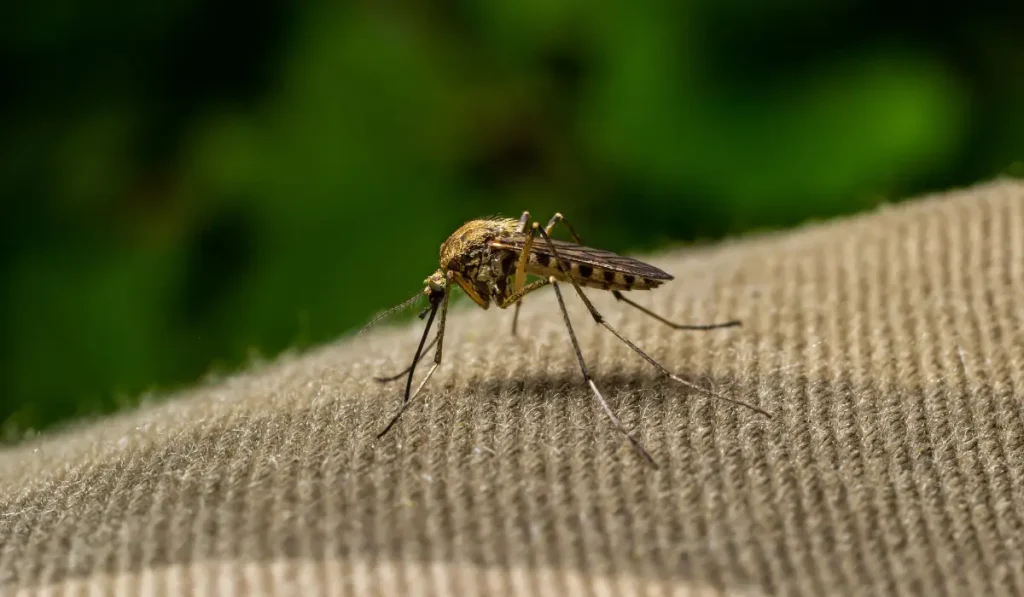
Mosquitoes in South Carolina can stay active through much of the warm season, and many of the ones bothering you outside may be developing surprisingly close to your house. Standing water in gutters, planters, toys, bird baths, or other backyard containers can produce another round of mosquitoes before homeowners realize there’s a problem.
Knowing when mosquito season peaks, which mosquitoes commonly show up around homes, why some people get more mosquito bites, and where to look for breeding sites makes mosquito prevention much more practical. For homeowners dealing with mosquitoes in South Carolina, the most useful approach combines backyard cleanup, proven repellents, and professional treatment when mosquito pressure remains high.
When Does Mosquito Season Start and End in South Carolina?
There’s no exact statewide opening and closing date for mosquito season in South Carolina. Mosquito activity usually increases as spring temperatures warm, remains strong through the hot and humid summer, and can continue into fall when temperatures stay mild.
Rainfall matters just as much as temperature. An afternoon storm can refill flower pot saucers, toys, clogged gutters, buckets, and other small containers. Several wet weeks can create far more breeding habitat than a dry stretch in the middle of summer.
The South Carolina Department of Public Health reports that at least 61 mosquito species occur in the state. The agency also notes that major rainfall events such as hurricanes and tropical storms can cause mosquito populations to rise in the weeks after flooding.
What Weather Keeps Mosquitoes Active?
| Condition | What Happens Around the Home |
| Warmer spring temperatures | Adult mosquito activity increases |
| Summer heat and humidity | Mosquito development can happen quickly |
| Frequent rainfall | Containers and low areas repeatedly collect water |
| Tropical storms | Temporary mosquito habitat becomes more abundant |
| Warm fall weather | Mosquito activity may continue later in the year |
Homeowners should pay more attention to recent weather than to a fixed date on the calendar. If September or October stays warm and wet, backyard mosquitoes can remain active even though summer has officially ended.
Which Mosquitoes Are Common Around South Carolina Homes?
South Carolina supports many mosquito species, but only a portion regularly cause problems around houses. The Asian tiger mosquito is especially relevant because it thrives in residential neighborhoods and readily uses small containers for breeding.
You can recognize an Asian tiger mosquito by its dark body and bright white markings. It’s also a daytime biter. That makes it easy to encounter while gardening, walking the dog, grilling, or watching children play outside.
Why Are Asian Tiger Mosquitoes So Common in Backyards?
Clemson Cooperative Extension identifies the Asian tiger mosquito as the most common daytime-biting mosquito in the Carolinas. Unlike species closely associated with swamps or other large natural wetlands, Asian tiger mosquitoes readily use artificial containers around homes.
Rain gutters, tires, flower pots, bird baths, tarps, barrels, cans, and garden containers can all become mosquito breeding sites when they hold water. The amount doesn’t have to look impressive. A container that seems almost empty can still provide enough water for mosquito larvae.
These mosquitoes also tend to remain relatively close to the places where they develop. Repeated biting around one section of the patio or garden is a good reason to inspect nearby containers, landscaping, and drainage areas before assuming the mosquitoes are coming from a distant pond.
Why Do Some People Get Bitten More Than Others?
Mosquitoes don’t choose people at random. They locate potential hosts using several cues, including carbon dioxide from breathing, body warmth, moisture, and odors produced by the skin.
Those signals differ from person to person. Someone doing yard work may be breathing harder, producing more heat, and sweating more than a person sitting nearby. That can make the active person easier for mosquitoes to locate.
Does Blood Type Determine Who Gets Mosquito Bites?
Blood type gets plenty of attention, but it doesn’t fully explain why one person seems covered in bites while another is barely touched. Skin odor and the mixture of compounds naturally produced on the body also affect mosquito attraction.
Individual differences can remain fairly consistent. That’s why the same family member may repeatedly complain that mosquitoes always find them first.
Only female mosquitoes take blood meals. They use nutrients from blood to produce eggs. Male mosquitoes feed on plant sugars instead, so they aren’t responsible for the itchy bites around your ankles and arms.
What Diseases Can South Carolina Mosquitoes Carry, and How Long Do They Live?
Most mosquito bites are irritating rather than dangerous. Certain mosquito species can transmit disease, however, which is why controlling mosquito populations and preventing bites are both worth the effort.
West Nile virus is the most common mosquito-borne disease concern for people in South Carolina. Other mosquito-borne illnesses associated with the state include Eastern equine encephalitis, La Crosse encephalitis, and Saint Louis encephalitis. Mosquitoes can also spread heartworm to dogs and cats.
Does Having More Mosquitoes Mean Disease Risk Is High?
A burst of nuisance mosquitoes after heavy rain doesn’t mean the same percentage of mosquitoes is carrying a pathogen. Disease risk depends on which mosquito species are present, whether a disease is circulating locally, and several environmental conditions. The practical response for homeowners remains straightforward: prevent bites and reduce places mosquitoes can reproduce.
How Long Do Mosquitoes Live?
There’s no universal mosquito lifespan. Species, weather, predators, food availability, and temperature all affect how long an adult survives. Adult females of some backyard species may live for several weeks under favorable conditions.
Their development from egg to flying adult can happen much faster. The Centers for Disease Control and Prevention (CDC) reports that the group of container-breeding mosquitoes that includes Asian tiger mosquitoes can develop from egg to adult in about 7 to 10 days.
Mosquito eggs from these species can also survive dry conditions for up to eight months. An empty container is therefore not always harmless once it dries. Eggs attached inside can remain until rain, irrigation, or another water source covers them again.
Where Do Backyard Mosquitoes Breed, and Which DIY Repellents Work?
Many mosquito problems start with standing water that homeowners walk past every day. A large pond is easy to notice. A few ounces of rainwater sitting behind the garage or under a planter can be much easier to overlook.
Inspect the property after rain, paying particular attention to items that rarely get moved. Finding and eliminating these backyard mosquito breeding sites interrupts the life cycle before mosquito larvae become biting adults.
Where Should You Look for Standing Water?
| Backyard Area | What to Check |
| Gutters | Leaves or debris blocking drainage |
| Flower pot saucers | Water trapped beneath planters |
| Bird baths | Water that has been sitting for several days |
| Children’s toys | Recesses, buckets, or toy vehicles holding rain |
| Watering cans | Containers left upright outdoors |
| Grill covers | Sagging folds that collect water |
| Tarps | Low spots where rain pools |
| Trash can lids | Recessed areas holding rainwater |
| Wheelbarrows | Water sitting in the tray |
| Tires | Water hidden inside the tire cavity |
| Pet bowls | Water that isn’t refreshed regularly |
Dump water when you find it. When practical, scrub the inside of containers before putting them back into use because mosquito eggs can adhere to the surface. Store unused buckets, wheelbarrows, and similar items so they can’t refill during the next storm.
Adult mosquitoes need attention too. Thick shrubs, groundcover, and other shaded vegetation give mosquitoes cooler places to rest during hot weather. Trimming dense growth around patios, walkways, and children’s play areas can reduce some of those protected resting spots.
Which DIY Mosquito Repellents Work?
A mosquito repellent protects you from bites. It doesn’t stop larvae from developing in a forgotten bucket across the yard, so personal protection works best alongside standing-water removal.
For exposed skin, look for an EPA-registered mosquito repellent containing an established active ingredient such as DEET, picaridin, oil of lemon eucalyptus or PMD, or IR3535. Follow the label carefully, particularly when choosing a product for children.
Outdoor fans can also help around a small patio or seating area because moving air makes it more difficult for mosquitoes to reach and land on people. Citronella candles provide more limited protection in the immediate area around the candle. Homemade essential-oil mixtures are harder to depend on because their ingredients, concentrations, and duration of protection vary.
When Does Professional Mosquito Control Make Sense?
Good mosquito control starts with the yard. Emptying standing water, correcting drainage trouble, clearing clogged gutters, and using an effective mosquito repellent can noticeably reduce mosquito problems around many homes. Those steps become less effective when adult mosquitoes are resting throughout thick vegetation, breeding sources are hard to locate, or new mosquitoes keep moving onto the property from nearby areas.
Professional mosquito treatment addresses those gaps. ClearDefense Pest Control technicians inspect the property for conditions that encourage mosquito activity and target the shady foliage and resting areas adult mosquitoes use. Recurring mosquito yard treatment also incorporates larval control to interfere with mosquito development, helping address both the adults already present and the next generation developing around the property.
A professional mosquito barrier treatment doesn’t replace good backyard habits. It works alongside them by covering areas that homeowners can’t realistically manage with repellent and a weekly bucket check. If mosquitoes still make the patio, garden, or play area difficult to use after you have removed obvious breeding sources, contact ClearDefense Pest Control for a free quote and find out whether recurring mosquito control is the right fit for your home.