
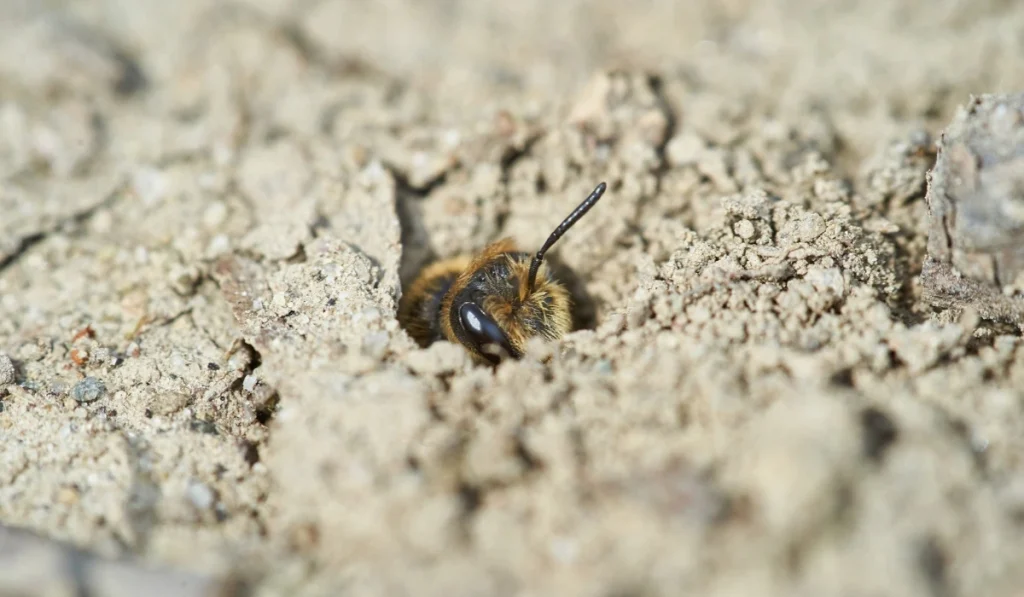
Those small dirt mounds appearing across your lawn each spring may be ground bee nests. Most ground bees in North Carolina are solitary pollinators that dig individual burrows, rarely sting, and cause little lawn damage. The concern is that ground-nesting yellow jackets also use underground openings, and disturbing their colonies can lead to multiple stings. Here’s how to recognize the differences, understand what’s attracting insects to your lawn, and decide whether you need professional pest control.
What Are Ground Bees in North Carolina?
Ground bees are bees that nest beneath the soil instead of building aboveground hives. The name covers several groups of native bees, including mining bees, sweat bees, and cellophane bees.
According to NC State Extension’s research on ground-nesting bees, North Carolina has approximately 560 native bee species, and about 70% nest underground. That’s nearly 400 species that depend on soil for nesting.
Most are solitary. Each female prepares her own burrow, stores pollen and nectar for her offspring, and lays eggs in underground chambers. As these bees visit flowers to gather food, they also pollinate plants in gardens and surrounding landscapes.
Why Do Ground Bees Look Like They’re Swarming?
Seeing dozens of bees hovering over one patch of grass can be unsettling, especially when they fly close to your feet. With many solitary species, however, you’re watching individual bees gathering around separate nests.
These clusters are called nesting aggregations. Several females choose the same location because the soil suits their nesting needs, while males patrol the area searching for mates.
The activity can look intense without posing much danger. Solitary bees don’t defend a large shared colony the way yellow jackets do.
Common Types of Ground Bees in North Carolina
The easiest way to narrow down which bee you’re seeing is to consider its appearance, where it enters the soil, and the time of year. Several native bee groups use underground nests, but their habits aren’t identical.
Mining Bees
Mining bees are among the first ground-nesting bees homeowners notice in spring. Many belong to the genus Andrena and have small, hairy bodies that appear brown, gray, or nearly black.
Females excavate individual tunnels, leaving loose dirt around each entrance. In a sunny area with thin grass, dozens of these openings may appear within a relatively small space.
Male mining bees often patrol just above the soil while looking for females. Males cannot sting, and females generally sting only when handled or trapped.
Sweat Bees
Sweat bees are small native bees that range from dark brown or black to metallic green. Many nest in soil, although their social behavior varies by species.
Some live alone, while others share nesting responsibilities. Certain sweat bees also collect moisture and salts from human perspiration, which explains why they occasionally land on people doing yard work.
A sweat bee sitting on exposed skin generally isn’t trying to sting. Most stings occur when the insect is squeezed or trapped against the body. These encounters are easier to manage when you understand why sweat bees are attracted to perspiration.
Cellophane Bees
Cellophane bees, including species in the genus Colletes, dig burrows and line their nesting chambers with a protective, cellophane-like substance.
Some species gather in large nesting aggregations, creating numerous holes across exposed soil. Their activity varies by species, with certain groups appearing in spring and others in fall.
Like mining bees, they collect pollen and nectar for their offspring. Their presence in a lawn generally calls for observation rather than removal.
Bumble Bees
Bumble bees sometimes nest underground, but their behavior differs from that of solitary mining bees. They live in colonies and often occupy existing cavities instead of excavating rows of individual burrows.
Their large, rounded bodies and dense hair help distinguish them from smaller ground-nesting species. Bumble bees usually ignore people while visiting flowers, but workers can defend an occupied nest.
If larger bees repeatedly disappear into one underground opening, leave the area undisturbed until the nest is identified.
Ground Bees vs. Yellow Jackets: How to Tell the Difference
A hole in your lawn doesn’t identify the insect living beneath it. Pay attention to the insects’ appearance and how they move around the entrance.
Solitary bees often use separate burrows clustered across a patch of soil. Yellow jackets are social wasps, so many workers may travel through a single entrance leading to a shared underground colony.
Appearance and Nesting Behavior
Most mining bees have hairy bodies with relatively subdued coloring. Yellow jackets have smoother bodies, narrow waists, and sharply defined yellow-and-black markings.
These differences are useful, but appearance alone isn’t always enough. From several feet away, small flying insects can be difficult to identify.
A combination of visible markings, season, and entrance activity provides better clues.
| Feature | Solitary Ground Bees | Ground-Nesting Yellow Jackets |
| Appearance | Often hairy; brown, black, gray, or metallic | Smoother bodies with distinct yellow-and-black markings |
| Nest structure | Individual tunnels, sometimes clustered together | Shared underground colony |
| Entrance activity | Bees move among separate holes | Workers repeatedly use one entrance |
| Common activity period | Many mining bees are prominent in spring | Colonies grow through summer and become more noticeable in late summer and fall |
| Nest defense | Usually little defensive behavior | Workers may aggressively defend the colony |
| Sting risk | Generally low | Higher when the nest is disturbed |
| Best response | Usually leave undisturbed | Arrange professional assessment when the nest creates a safety hazard |
These clues aren’t definitive. Bumble bees also form underground colonies, and other insects use openings in the soil. Avoid approaching a nest solely to confirm which species lives there.
Why Yellow Jacket Nests Are More Dangerous
Yellow jackets can defend their colonies in large numbers when an entrance is disturbed.
According to NC State Extension’s guide to yellow jackets, eastern yellow jacket colonies that aren’t parasitized by other yellow jackets can reach approximately 3,000 workers. These wasps can sting repeatedly, and numerous workers may leave the nest in response to a disturbance.
The entrance may look like an ordinary hole at the edge of a lawn, beneath landscape timbers, or near a garden bed. Its size offers little indication of the colony below.
A steady stream of yellow jackets entering an underground nest is a reason to keep your distance. Don’t test the insects’ response by standing over the opening or disturbing the surrounding soil.
Why Do Ground Bees Appear in North Carolina Lawns?
Ground-nesting bees choose sites where they can dig and where soil conditions support their developing offspring. Sunny, exposed patches often provide suitable access.
Thin grass, bare garden borders, and open soil along slopes can attract nesting females. This is why one section of your lawn may contain numerous burrows while nearby areas with thick turf remain untouched.
Why Small Dirt Mounds Appear Each Spring
As seasonal activity begins, female bees excavate tunnels and push displaced soil to the surface. Each opening may have a small ring or mound of loose dirt around it.
According to NC State Extension’s ground-nesting bee identification resource, mining bees in the genus Andrena reach peak adult activity between March and May. Other ground-nesting bee species have different seasonal patterns.
For homeowners in Raleigh and Charlotte, these nests can become noticeable while mowing resumes, garden beds are prepared, and spring grass growth reveals bare patches.
The holes may seem to appear overnight because several bees become active during the same seasonal period.
Why Bees Return to the Same Yard
Ground bees can return to favorable nesting locations in successive years. If a sunny patch remains exposed and the soil continues to suit their needs, new generations may establish burrows nearby.
For many spring species, the adults are visible for only a short part of the year. Their offspring continue developing below ground after the adults disappear.
That seasonal cycle explains why a nesting patch can seem deserted by early summer yet show activity again the following spring.
Are Ground Bees Dangerous to People, Pets, or Lawns?
Most solitary ground bees pose little risk during ordinary yard activities. Their attention is on mating, collecting food, and preparing nests, rather than protecting a shared colony.
Male mining bees cannot sting. Females can sting when trapped or handled, so children and pets should avoid digging into occupied nesting areas.
The risks change when insects are defending a communal nest. That distinction makes identification more useful than judging danger by the number of insects alone.
Do Ground Bees Damage Your Lawn?
Small bee burrows generally cause little damage to established turf. Loose dirt around the entrances may look untidy, but the bees often selected an area where grass coverage was already sparse.
A patch with numerous holes doesn’t automatically indicate damaged roots or a spreading lawn problem. Examine the condition of the grass separately from the insect activity.
Improving turf coverage can address the exposed soil that attracts many nesting species while making the lawn more usable.
When Does Sting Risk Become a Concern?
A nest becomes more concerning when it belongs to defensive insects or sits directly in an area people use every day.
Yellow jackets can react to mowing, trimming, footsteps, or other disturbances close to their nest. Pets may also encounter them while sniffing near shrubs or digging around soil openings.
If you suspect a yellow jacket nest, keep people and pets away. Anyone who develops difficulty breathing, throat swelling, faintness, or other signs of a severe allergic reaction after a sting needs immediate emergency medical attention.
How to Discourage Ground Bees Without Harming Pollinators
For solitary ground bees, removal often isn’t necessary. Their nesting activity is seasonal, and leaving them undisturbed preserves native pollinators.
If bees repeatedly occupy a high-traffic part of your yard, focus on changing the conditions that make it attractive for nesting. Lawn maintenance and temporary avoidance are better starting points than treating unidentified insects.
Improve Bare or Thinning Grass
Many ground-nesting bees need accessible soil for excavation. Establishing thicker turf reduces the exposed ground available in areas where you would rather discourage nesting.
Look for lawn maintenance problems contributing to thin coverage. Depending on your grass type and site conditions, improvements may include correcting mowing practices or renovating bare areas during the proper growing season.
North Carolina lawns contain both cool-season and warm-season grasses, so renovation timing matters. Schedule disruptive soil work after active nesting has ended.
Give Active Nesting Areas Some Space
A small aggregation of mining bees in a quiet corner of the lawn rarely calls for immediate action.
Keep children and pets away from the openings while adults are active. Where practical, avoid digging, heavy foot traffic, or lawn renovation directly over the burrows.
Visible activity from many spring species lasts only several weeks, although individual species follow different schedules. The developing offspring may remain underground long after the adults stop flying.
Skip Unproven Home Remedies
Pouring vinegar, household mixtures, or excessive water into nesting holes can disturb beneficial bees without improving the conditions that attracted them.
The risk is greater when you’re dealing with unidentified insects. A treatment aimed at a presumed bee burrow could disturb an underground yellow jacket colony instead.
Don’t flood, burn, dig out, or seal an active nest when its occupants are uncertain. The safer choice is to identify the insect before considering treatment.
When to Call a Professional for Ground-Nesting Insects
An unfamiliar nest near a patio, driveway, entrance, or children’s play area deserves attention when the insects appear defensive or repeatedly use one opening.
You don’t need to wait for someone to get stung. If steady wasp traffic makes it difficult to use part of your yard, arrange an assessment rather than trying to expose the nest yourself.
Signs That Wasp Control May Be Necessary
The most useful warning signs involve where the insects are nesting and how they behave around the entrance:
- Many yellow-and-black wasps repeatedly enter and leave one opening.
- Insects become defensive when someone approaches the nesting area.
- Activity is concentrated beside a walkway, play area, patio, or frequently mowed section of lawn.
- Wasps disappear beneath landscape timbers, along retaining walls, or into gaps beside garden beds.
Observe from a safe distance. You don’t need to get close enough to locate the entire colony or count the insects.
How ClearDefense Handles Ground-Nesting Wasps
ClearDefense Pest Control begins with a free phone consultation to help identify the concern. When service is appropriate, a technician visits the property to assess the insect activity and nesting location.
The company provides control services for yellow jackets, wasps, and hornets. Technicians use protective equipment for stinging-insect work and select targeted treatments based on the pest’s behavior, habitat, and life cycle.
Identification matters because a temporary mining bee aggregation shouldn’t automatically receive the same response as a defensive yellow jacket colony. The treatment decision should reflect the insect present and the risk it creates around your home.
Keep Your North Carolina Lawn Safe Without Unnecessary Treatment
A patch of ground bees in spring often needs little more than space and time. Mining bees and other solitary species provide pollination benefits, and their burrows usually cause minimal lawn damage. Bare soil can be addressed through appropriate turf maintenance once nesting activity ends.
Ground-nesting yellow jackets require a different response, particularly when their entrance lies near a walkway, patio, or play area. If you notice repeated traffic through one opening or defensive behavior, keep your distance and arrange professional identification.
ClearDefense Pest Control serves homeowners in North Carolina, including the Raleigh and Charlotte areas. If an underground nest is interfering with the safe use of your yard, contact ClearDefense Pest Control to discuss the activity and request professional assistance.