
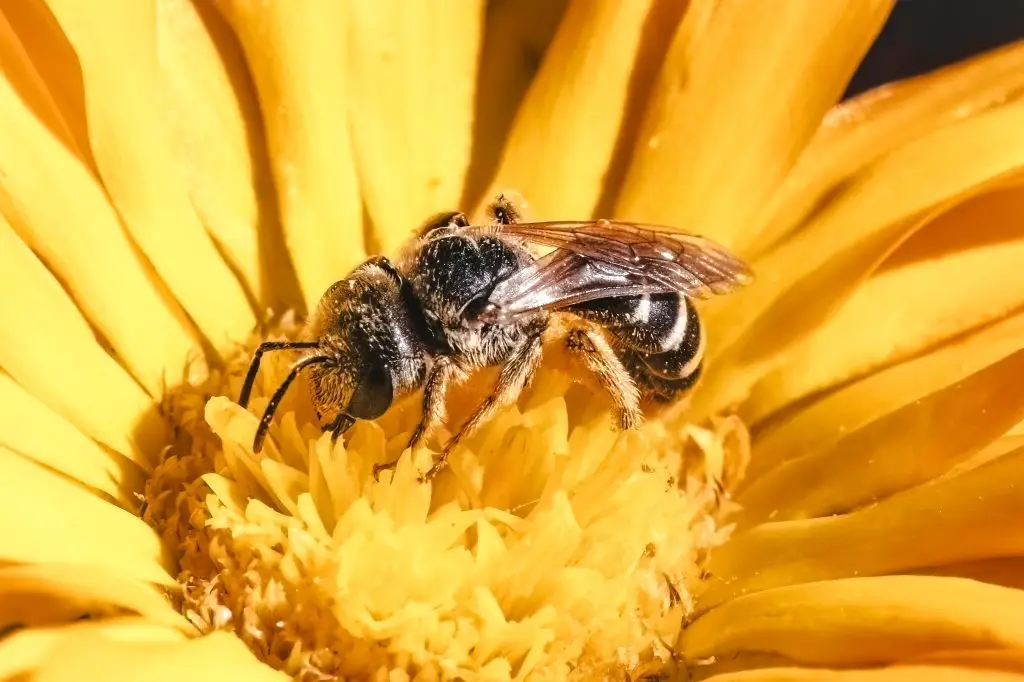
You have just finished mowing the lawn when a tiny bee starts circling your arm. It lands on a damp patch of skin, flies away, and returns a moment later. That sweat bee is interested in the moisture and salt left behind by perspiration.
Some sweat bees collect dissolved salts from human sweat. They are not feeding on blood, and most are not behaving aggressively. A sting is more likely when the bee becomes trapped under clothing or gets pressed against the skin.
Knowing what attracts sweat bees helps you respond without overreacting. It also makes it easier to separate an occasional visitor from a ground nest that sits too close to a doorway, patio, or play area.
Why Are Sweat Bees Attracted to Sweat?
Perspiration contains water, sodium, and other dissolved substances. Certain sweat bees land on exposed skin to drink that moisture and collect the salt. Hot weather, exercise, gardening, and yard work make these encounters more common because more sweat is available.
A bee may return after you wave it away if your skin is still damp. Wiping your arm or neck with a clean towel removes the attraction. That usually works better than swatting, which can trap the bee against your body and lead to a sweat bee sting.
Not every sweat bee pays attention to people. The name describes a large group of small bees with different habits. Many spend their time moving between flowers and may never land on a person.
What Happens When a Sweat Bee Lands?
The bee usually walks across the skin and drinks small amounts of moisture with its mouthparts. It may stay for only a few seconds before leaving.
Give it room to fly away. If it settles near a collar, sleeve, watchband, or bend in your knee, use a slow brushing motion before clothing or movement pins it in place.
How to Identify a Sweat Bee
A green sweat bee is easy to notice because its body can shine in shades of green, blue, bronze, or purple. Other sweat bees are brown or black, and some have pale bands across the abdomen.
Most are smaller and slimmer than honey bees. Their size and quick movement can make them look like tiny wasps or flies. Color helps, but behavior and location are often more useful.
| Identification Clue | Typical Sweat Bee Trait | Why It Is Not Conclusive |
| Size | Small and slender | Several flies and wasps are also small |
| Color | Green, blue-green, bronze, brown, or black | Not every metallic green bee is easy to identify in motion |
| Location | Flowers, bare soil, or sweaty skin | Other insects visit the same places |
| Movement | Short flights close to flowers or soil | Hover flies can move in a similar way |
| Pollen | Some females carry pollen on the hind legs | Pollen may be hard to see from a safe distance |
| Nest entrance | Small opening in exposed ground | Yellow jackets and other insects also nest in soil |
The University of Florida IFAS Extension describes them as a varied group of metallic and nonmetallic bees. Most have slender bodies, many nest below ground, and their nesting habits range from solitary to cooperative.
Sweat Bee, Hover Fly, or Yellow Jacket?
Hover flies often resemble small bees, but they cannot sting. They may hang nearly motionless in the air before darting in another direction. Their large eyes can help with identification when the insect stays still long enough to see.
Yellow jackets need more caution. They usually have smooth yellow and black bodies and may investigate outdoor food, trash, or open drinks. They can defend a nest in large numbers, especially when the nest sits underground or inside a wall.
| Insect | Useful Visual Clue | Common Behavior | Sting Risk |
| Sweat bee | Small and sometimes metallic | Visits flowers, soil, or sweaty skin | Usually low unless pressed or handled |
| Hover fly | Large eyes and hovering flight | Visits flowers and may land nearby | None |
| Honey bee | Hairy amber and brown body | Moves steadily among flowers | Can sting when threatened |
| Yellow jacket | Smooth yellow and black body | Visits food and defends nests | Higher near an active nest |
| Paper wasp | Long legs and narrow waist | Builds open nests under protected surfaces | Higher close to the nest |
Do Sweat Bees Sting or Bite?
Sweat bees sting rather than bite. Only females have a functional stinger, and most do not use it unless they are squeezed, handled, or caught against the body.
A bee sitting openly on your arm will often leave without a problem. One caught between your fingers, trapped in a sleeve, or pressed behind a knee has fewer ways to escape. That is when a defensive sting becomes more likely.
The Penn State Extension guide to stinging insects explains that sweat bees may approach people in hot weather to drink perspiration. It also notes that a sweat bee sting is generally mild and often occurs when the insect becomes trapped in a crease of the body.
What to Do After a Sweat Bee Sting
Move away from the area and wash the sting site with soap and water. Apply a cool compress if the area feels sore or swollen. Avoid scratching irritated skin.
Call emergency services if the person has trouble breathing, facial or throat swelling, widespread hives, faintness, or another sign of a serious allergic reaction. Even a mild stinging insect can cause a severe response in someone with an allergy.
Where Do Sweat Bees Nest?
Many sweat bees build nests in the ground. A female digs a narrow tunnel and creates small chambers where her young develop. She places pollen and nectar inside each chamber as a food supply.
Bare soil, sunny slopes, garden edges, and thin patches of grass can provide suitable nesting sites. The opening may be no wider than a pencil, so homeowners often notice low-flying bees before they see the holes.
Several openings in one part of the yard do not always belong to a single colony. Some sweat bees live alone. Others share an entrance or nest near members of the same species without behaving like yellow jackets.
When Does a Ground Nest Become a Problem?
A few ground-nesting bees in a quiet garden bed may cause little concern. Activity near a front step, patio, pool gate, or play area creates more opportunity for accidental contact.
Watch how the insects respond when people walk nearby. Sweat bees usually continue their normal activity, while defensive wasps may rush from an opening when the soil is disturbed.
| What You See | Likely Concern Level | Best Response |
| One or two bees visiting flowers | Low | Leave them alone |
| A bee landing on sweaty skin | Low | Wipe the skin and avoid swatting |
| Scattered holes in an unused garden bed | Usually low | Monitor the area |
| Many insects using one opening | Uncertain | Keep away and request identification |
| Nesting beside a door or play area | Moderate | Restrict access and arrange an assessment |
| Insects rushing out after a disturbance | Higher | Leave the area and contact a professional |
Are Sweat Bees Helpful?
Sweat bees collect nectar and pollen from flowers. As they move between blooms, pollen sticks to their bodies and reaches other plants. This makes them useful pollinators in home gardens, landscaped areas, and natural spaces.
Their small bodies allow them to visit flowers that may receive less attention from larger bees. They may work among herbs, vegetables, ornamentals, and wildflowers without being noticed.
The USDA Forest Service reports that the United States has more than 4,000 native bee species. Metallic green sweat bees are among the native bees that collect pollen and nectar from flowers.
Their value does not mean every nest should be ignored. Bees working flowers in a back garden are different from repeated activity beside a busy entrance. The response should fit the location and the level of contact with people.
How to Keep Sweat Bees Away
Homeowners searching for how to keep sweat bees away usually need relief from repeated landings rather than full removal. Start by wiping perspiration from exposed skin during yard work or outdoor exercise. Changing a damp shirt can also reduce return visits.
Wear lightweight sleeves, pants, and gloves when working near flowers or ground activity. Check loose clothing before pressing it against your body if a bee has been circling nearby.
Cover outdoor drinks and wipe up sweet spills. Those steps are more likely to discourage yellow jackets, but they also reduce confusion about which stinging insect is visiting the patio.
Avoid pouring household mixtures into a ground opening. You may be dealing with a useful pollinator, and an unidentified nest can react in an unexpected way. Mark the spot and keep children and pets away until the insect is identified.
How to Get Rid of Sweat Bees Safely
The phrase how to get rid of sweat bees can lead homeowners toward treatments they may not need. An occasional bee on your skin or a few bees visiting flowers does not call for control.
Removal becomes more reasonable when nesting activity interferes with the safe use of a doorway, walkway, patio, or play area. Repeated stings, concentrated traffic through one opening, or a household member with a serious sting allergy can also justify professional help.
Do not block an active hole or seal an opening while insects are entering and leaving. That can fail to address the nest and may force stinging insects toward another route.
Know What Is Flying Around Your Home
A sweat bee collecting salt from your skin calls for a different response than yellow jackets defending a nest. ClearDefense Pest Control begins by identifying the insect, locating the source of the activity, and judging how closely it overlaps with people.
When treatment is appropriate, ClearDefense uses environmentally responsible products and methods based on pest behavior, habitat, and life cycle. For recurring stings, concentrated nesting near a busy part of the property, or an insect you cannot identify safely, contact ClearDefense Pest Control to request an assessment.