
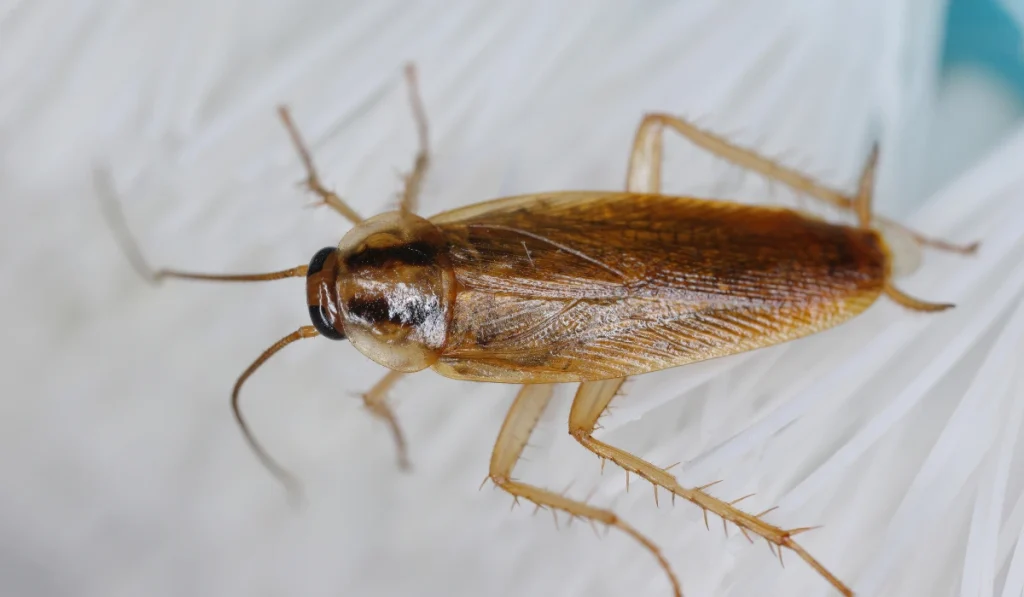
A small tan roach darts behind the refrigerator when the kitchen light comes on. In a North Carolina home, it’s easy to assume it’s one of the larger outdoor roaches that occasionally finds its way inside. German cockroaches are different. They live and reproduce indoors, often within a few feet of the food, water, and appliances your family uses every day.
A German cockroach infestation can also stay hidden longer than homeowners expect. These insects squeeze into cabinet seams, appliance gaps, plumbing openings, and other narrow spaces where a quick spray can’t reach the whole population. By the time you see adults and young roaches in the same room, breeding may already be taking place nearby.
Getting rid of German cockroaches takes more than killing the insects that cross the floor. Successful German cockroach control combines accurate identification, baiting, sanitation, moisture reduction, reproductive control, and follow-up treatment focused on the areas where the roaches are actually living.
Key Takeaways
- German cockroaches are small, tan indoor roaches with two dark stripes behind the head. Unlike many larger roaches found around North Carolina homes, they can live and reproduce entirely indoors.
- Their reproduction rate makes early action worthwhile. One female can produce several egg cases and roughly 200 to 250 eggs during her lifetime under favorable conditions.
- Sprays and bug bombs often miss hidden harborages and may scatter surviving roaches. Targeted baiting, sanitation, reproductive control, monitoring, and professional treatment provide a more complete approach.
Why German Cockroaches Are a Problem in North Carolina Homes
German cockroaches are among the most troublesome indoor roaches because their lifestyle fits houses unusually well. Larger cockroach species often live outdoors and wander inside through doors, drains, garages, or gaps in the exterior. German cockroaches are much more closely associated with buildings. A climate-controlled kitchen can give them steady warmth, shelter, food, and water through every season.
They can arrive in a clean home, too. Groceries, cardboard packaging, deliveries, furniture, and used appliances can carry roaches indoors. In apartments, townhomes, and other connected housing, they may also move through openings around plumbing or shared walls. Good housekeeping helps with control, but the presence of German roaches doesn’t automatically mean someone has neglected the home.
Why Their Size Works in Their Favor
An adult German cockroach is only about half an inch long. That small body lets it fit into places homeowners rarely inspect during routine cleaning, including the narrow edge of a cabinet, the gap behind a backsplash, or the space around a pipe entering the wall.
Those protected areas are known as harborages. Roaches may leave them at night to feed and then return before morning. Seeing one on a countertop tells you where a roach traveled. It doesn’t necessarily tell you where the larger population is hiding.
How to Identify German Cockroaches and Find Where They Hide
German cockroach identification is easier once you know the two features that matter most: size and markings. Adults are usually about half an inch long and range from tan to light brown. Two dark, parallel stripes run along the area directly behind the head.
Young German cockroaches, called nymphs, are smaller and usually darker. Adults have wings, although they tend to run when disturbed rather than take flight. Finding several sizes in the same part of the house is more concerning than finding a single unidentified roach because it can indicate that the insects are reproducing indoors.
According to NC State Extension’s German cockroach biology guide, adults measure about 13 to 16 millimeters long. The same resource identifies the two dark stripes behind the head as a key feature and notes that crowded infestations may become active during daylight hours.
| Identification Feature | What to Look For |
| Adult size | Roughly 1/2 inch |
| Color | Tan to light brown |
| Main marking | Two dark parallel stripes behind the head |
| Young roaches | Smaller and generally darker than adults |
| Movement | Fast running toward cracks and protected spaces |
| Strong infestation clue | Adults and young roaches appearing in the same area |
Where German Cockroaches Hide in Kitchens
If you’re wondering where German cockroaches hide, start with the warm, tight spaces around kitchen appliances. The area behind a refrigerator can provide heat from the motor, darkness, crumbs, and moisture within a small space. Dishwashers, stoves, cabinet hinges, pantry corners, and the cabinet beneath the sink can offer similar conditions.
Small countertop appliances shouldn’t be overlooked. Coffee makers and other equipment can provide warmth close to food residue or water. German cockroaches prefer narrow spaces where their bodies stay in contact with surrounding surfaces, so a tight cabinet seam can be more attractive than an open shelf.
Where German Cockroaches Hide in Bathrooms
Bathrooms contain less food, but they offer moisture and plenty of protected gaps. German cockroaches may shelter beneath vanities, inside cabinet corners, around supply lines, or near openings where plumbing enters the wall.
A dripping pipe or recurring condensation makes these areas more useful to roaches. Repairing the moisture problem removes one resource, but it won’t eliminate an established population living elsewhere in the structure.
How Fast German Cockroaches Reproduce
The German cockroach life cycle helps explain why infestations can grow before a homeowner realizes how many insects are present. A female carries an egg case until shortly before the young hatch, giving the developing eggs protection while she moves through indoor harborages.
NC State Extension reports that a German cockroach egg case contains about 40 eggs on average. Females can produce roughly five to eight egg cases during their lives, totaling about 200 to 250 eggs. Under favorable indoor conditions, development can take about 70 to 100 days from egg to reproductive adult.
| German Cockroach Reproduction Fact | Reported Figure |
| Average eggs per egg case | About 40 |
| Egg cases per female | About 5 to 8 |
| Eggs during a female’s lifetime | Roughly 200 to 250 |
| Development under favorable conditions | About 70 to 100 days |
Why Roaches Can Reappear After You Kill the Adults
Imagine seeing four adult roaches near the dishwasher and spraying all four. The visible activity may stop that night, but young roaches, egg-carrying females, and other adults can still be tucked into nearby harborages. When another group begins moving or hatches, it looks as though the original German cockroach treatment suddenly stopped working.
Indoor temperatures help keep that cycle moving. Unlike an outdoor pest exposed to North Carolina’s changing weather, German cockroaches inside a heated and cooled home experience relatively steady conditions throughout the year.
Health Risks From a German Cockroach Infestation
German cockroaches leave fecal material, saliva, shed skins, and body fragments where they live and travel. Over time, some of that material can become part of household dust. A larger infestation produces more debris, especially around long-established kitchen and bathroom harborages.
The U.S. Environmental Protection Agency’s guidance on asthma triggers states that proteins in cockroach feces and saliva can cause allergic reactions or trigger asthma symptoms in sensitive people. Cockroach droppings and body parts can also trigger or worsen asthma symptoms.
Cockroach Allergens Are the Better-Supported Health Concern
Cockroaches can move between drains, waste, food residue, and preparation surfaces, so they may mechanically carry microorganisms. That doesn’t mean every German cockroach sighting should be tied to a dramatic list of diseases. Cockroach allergens and their connection to asthma are among the better-established indoor health concerns.
After an infestation is controlled, cleaning accessible droppings, shed material, and dead insects helps remove residue already present in the home. Controlling the population prevents new debris from continually accumulating.
Why DIY German Cockroach Treatment Often Fails
Aerosol cockroach spray gives an immediate result when it hits an exposed insect. German cockroach control becomes harder when most of the population is inside cabinet gaps, appliance voids, and plumbing spaces where the spray never reaches.
Some sprays can also repel German cockroaches and move surviving insects away from the treated area. That can scatter activity into other cabinets, rooms, or wall spaces. Applying spray near German cockroach bait may also discourage roaches from feeding where the bait has been placed.
NC State Extension’s German cockroach management guidance warns that sprays and aerosols can provide temporary knockdown while repelling and dispersing cockroaches. The guidance also advises against spraying around bait placements because repelled roaches may avoid the bait.
Bug Bombs Do Not Match German Cockroach Behavior
Bug bombs, also called total-release foggers, spread treatment through open air. German cockroaches spend most of their time in narrow, protected spaces. Those are very different environments.
A fog can fill the middle of a kitchen without penetrating deeply into the cabinet seam or appliance gap where the roaches are resting. This mismatch is one reason bug bombs are a poor fit for German cockroach infestations.
Sanitation Helps Baiting Work Better
Cleaning is useful for a different reason. Grease behind the stove, dirty dishes, crumbs beneath appliances, open pet food, trash, and leaking water give cockroaches alternatives to the bait placed for them.
Wash dishes promptly, store food in closed containers, clean grease and crumbs from hard-to-reach kitchen areas, remove trash regularly, and repair plumbing leaks. These steps make the home less supportive of cockroach activity and reduce competition with bait. Sanitation alone won’t clear an established infestation, but it makes the rest of the control program work better.
What Actually Gets Rid of German Cockroaches
German cockroach bait works best near the places where roaches already hide and travel. Instead of putting one large amount in the middle of a cabinet, treatment can be divided among active areas near appliance gaps, cabinet seams, plumbing, and other protected locations.
Monitoring helps guide those placements. Sticky traps near likely harborages can reveal where activity is concentrated and whether the German cockroach infestation is shrinking after treatment.
Reproduction Has to Be Part of the Plan
Bait removes feeding roaches, but German cockroach treatment also has to account for the next generation. An insect growth regulator can interfere with normal development and reproduction, helping prevent immature roaches from simply replacing the adults that were removed.
This is also why follow-up service has value. A technician can inspect the original harborages again, check whether bait has been consumed, look for young roaches, and adjust the treatment based on what remains active instead of repeating the exact same application.
When Professional German Cockroach Control Makes Sense
Repeated sightings of adults and nymphs, roaches appearing in several rooms, or activity that returns after DIY treatment all point toward an established population. Professional German cockroach pest control gives the problem a coordinated approach: inspection, targeted bait placement, reproductive control, sanitation guidance, monitoring, and follow-up.
That combination addresses more than the insect running across the kitchen. It focuses on the hidden harborages and life cycle that allow the infestation to keep rebuilding.
Get German Cockroaches Under Control With ClearDefense Pest Control
German cockroaches are particularly difficult indoor pests because they can hide close to food and water, produce several generations inside the home, and avoid treatments that never reach their harborages. Spraying each roach you see may reduce activity for a night. Resolving the infestation takes a plan that addresses where the roaches live and how the population replaces itself.
ClearDefense Pest Control uses targeted treatment based on pest behavior, hiding areas, and life cycle. For German cockroaches, professional service can combine careful inspection, baiting, reproductive control, sanitation recommendations, monitoring, and follow-up so the treatment is aimed at the population rather than individual sightings.
If small tan roaches keep appearing in your North Carolina home, contact ClearDefense Pest Control to schedule service. A technician can determine where the activity is concentrated and build the German cockroach control plan around what is actually happening inside your home.
Frequently Asked Questions
Does seeing one German cockroach mean there are more?
One sighting doesn’t tell you the exact size of a population. German cockroaches are social insects that gather in protected harborages, however, so finding one indoors deserves attention. Seeing nymphs, multiple sizes, fecal spotting, egg cases, or repeated nighttime activity provides stronger evidence of an established infestation.
Why do German cockroaches keep coming back after I spray?
Spray may kill exposed adults without reaching roaches inside cabinet seams, appliances, or wall openings. Some products can also repel surviving roaches into new hiding areas. Egg cases and young roaches may remain after the visible adults are gone, which is why activity can return later.
Can German cockroaches infest a clean house?
Yes. German cockroaches can enter through groceries, packaging, furniture, appliances, or movement between connected housing units. Cleaning still matters because food residue, grease, trash, and water help an existing population survive and give roaches alternatives to control bait.
What is the best way to get rid of German cockroaches?
Established infestations respond best to a combined approach rather than a single product. Targeted baiting attacks active roaches, sanitation reduces competing food and water, reproductive control limits population replacement, and monitoring shows whether the treatment is working. Professional follow-up can address remaining harborages before the population rebuilds.