
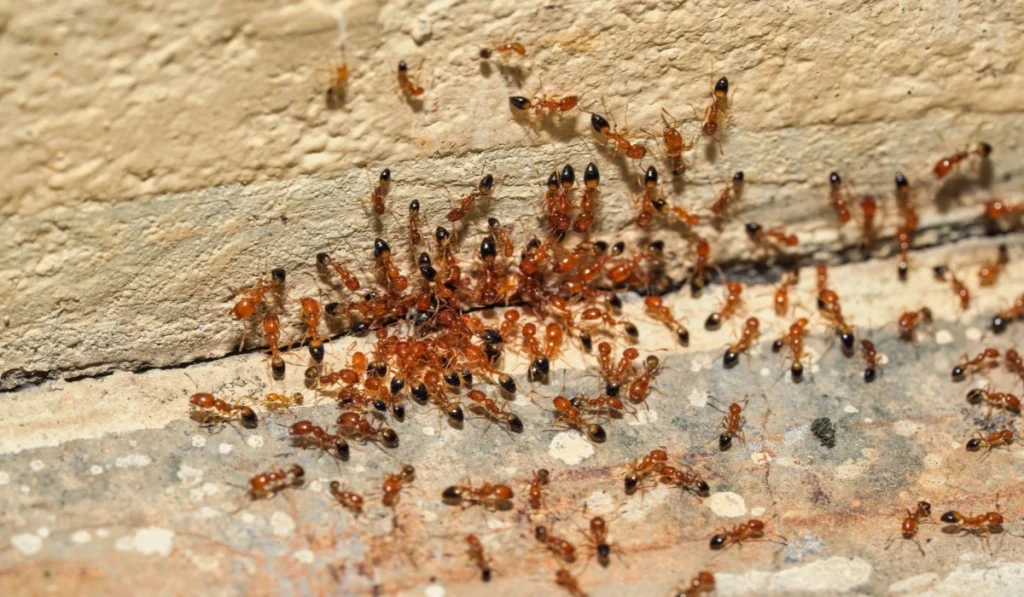
If you want to know how to get rid of fire ants in South Carolina, start with broadcast bait for widespread colonies and individual mound treatments for specific problem areas. For lawns with several colonies, combining these methods often provides better coverage than treating visible mounds alone. The order matters: workers need time to carry bait into their colonies before you treat remaining problem mounds. Successful fire ant control also requires suitable application conditions and monitoring because new colonies can establish themselves after treatment.
How to Get Rid of Fire Ants in South Carolina
For South Carolina properties with multiple fire ant mounds, Clemson Cooperative Extension recommends a two-step approach: broadcast fire ant bait first, then treat remaining nuisance mounds individually. This combines treatment across the lawn with focused attention on nests near walkways, patios, and play areas.
The sequence matters because bait relies on workers collecting food and carrying it into their colonies. Disturbing mounds or applying another treatment immediately after broadcasting bait can interfere with that process.
Step 1: Broadcast Fire Ant Bait Across the Lawn
Apply a fire ant bait labeled for broadcast use when workers are actively foraging. Spread it across the designated lawn area at the rate specified on the product label, rather than concentrating the application around visible mounds.
Foraging workers collect the bait and carry it back to their colonies. This allows the treatment to reach nests that may not have noticeable surface mounds.
Use fresh bait and follow the label’s weather requirements. Many products need dry conditions because moisture can reduce their attractiveness to ants.
Step 2: Wait 7 to 10 Days, Then Treat Problem Mounds
According to Clemson Cooperative Extension’s fire ant management recommendations, homeowners should generally wait 7 to 10 days after broadcasting bait before applying individual treatments to remaining nuisance mounds.
During this period, allow workers to collect and distribute the bait. Avoid disturbing the mounds or treating them immediately after baiting.
After the waiting period, treat active mounds that still present a problem, particularly near patios, sidewalks, and children’s play areas. Choose a product labeled for individual mound treatment and follow its application instructions.
What to Expect After Both Steps
The follow-up mound treatment doesn’t mean the broadcast bait has finished working. Some bait products take several weeks or longer to reach their full effect, depending on the active ingredient.
Continue checking the lawn instead of immediately repeating applications. New mounds may develop as previously unnoticed colonies become visible or new fire ants establish nests from surrounding areas.
The two-step approach provides broader colony control while allowing homeowners to address specific nuisance mounds. Continued monitoring remains necessary because no single application prevents every future infestation.
Which Fire Ant Treatment Works Best for Your Property?
Choose the treatment based on the number of colonies and where they occur. A few isolated mounds may be manageable with individual treatments, while numerous mounds across a lawn are better suited to broader coverage.
Speed also matters. Some mound treatments act relatively quickly, but broadcast bait provides a way to target colonies throughout a treated area. Professional service becomes useful when the infestation is extensive or previous treatments haven’t delivered satisfactory control.
| Treatment Method | Best For | Main Advantage | Main Limitation |
| Broadcast fire ant bait | Several colonies across a lawn | Workers carry bait into nests, including hidden colonies | Depends on active foraging and takes time |
| Individual mound bait | A small number of identifiable nests | Targets selected colonies | Doesn’t cover undiscovered nests |
| Contact mound treatment | Problem mounds in frequently used areas | Some products act faster than bait | Control is limited to treated locations |
| Professional fire ant program | Large properties or recurring activity | Coordinates treatment selection, coverage, and monitoring | Additional treatment may be needed over time |
Broadcast Fire Ant Bait for Widespread Colonies
Broadcast bait is spread across a designated lawn area at the rate specified on the product label. Workers collect the attractive granules while searching for food and carry them back into the colony.
Different baits work in different ways. Some contain ingredients that kill ants after they’re consumed. Others interfere with development or reproduction, gradually reducing the colony’s population.
That difference affects how long results take. Certain baits achieve their greatest effect within several weeks, while growth-regulating products can require months. A lack of immediate change in surface activity isn’t enough to judge the treatment unsuccessful.
Broadcast bait is particularly useful when mounds are scattered across the yard or when additional colonies may be present but aren’t readily visible.
Individual Mound Treatments for Problem Areas
Individual mound treatments concentrate control on nests you can identify. They make sense for isolated mounds near a driveway, garden path, or outdoor seating area.
Products vary. Some are baits placed according to label directions around the mound. Others are contact treatments applied as granules, dusts, or liquid drenches. The correct application method depends on the product, and some treatments require water while baits generally need dry conditions.
A properly applied mound treatment can control a colony, including its queen. The limitation is coverage: treating one mound does nothing to eliminate separate colonies you haven’t located.
If your lawn contains many active nests, individual treatment can quickly become more labor-intensive than broadcast management.
Professional Broadcast Programs for Recurring Problems
A professional assessment can help determine which fire ant treatment fits the property. A technician can check where colonies are concentrated, whether mounds appear in high-use areas, and how much of the lawn requires attention.
Professional fire ant programs may use broadcast bait, other labeled lawn treatments, individual mound applications, or combinations of methods. Products differ in speed, duration, and approved treatment sites.
For larger properties, correctly distributing materials across the intended treatment area is particularly important. Follow-up monitoring can identify nuisance mounds that remain active or appear later.
The benefit of professional service is a treatment plan based on the extent and location of the activity, rather than a series of separate applications to each newly discovered mound.
Why Do Fire Ant Mounds Keep Coming Back?
A returning mound doesn’t always mean the same fire ant colony survived. Previously unnoticed nests can become visible, an incompletely treated colony may remain active, or new queens may establish colonies in the area.
Fire ants build nests beneath the soil, and the mound is only the visible portion. Workers travel through underground chambers and tunnels to care for developing ants, obtain food, and protect the reproductive population.
Because ant colonies can contain large numbers of workers, killing the ants visible at the surface may leave much of the colony unaffected.
How Queens Affect Treatment Results
A fire ant queen produces eggs that sustain the colony. Workers feed and protect reproductive queens and care for developing ants.
If a treatment reaches only exposed workers, the colony may continue producing replacements. Activity may decrease temporarily before returning as the remaining population rebuilds.
This is one reason bait-based strategies are useful. They take advantage of worker foraging behavior to move treatment material into the colony instead of relying entirely on direct contact with exposed insects.
Single-Queen and Multiple-Queen Colonies
Imported fire ant populations can have colonies with a single queen or multiple reproductive queens. This affects how nests develop and how densely they occur.
Multiple-queen populations can form concentrations of neighboring nests. A homeowner may find several active mounds within a relatively small section of lawn.
The University of Georgia Cooperative Extension’s research on imported fire ant management explains how colony structure and reinfestation influence treatment results.
When several colonies occupy the same property, treating one queen or mound doesn’t control the others. Broad treatment coverage becomes more useful as the number of colonies increases.
Why New Mounds Appear After Treatment
Newly mated fire ant queens can establish colonies on previously treated land. Existing colonies from neighboring properties may also contribute to renewed activity.
For this reason, fire ants in South Carolina can remain a recurring lawn problem even after a successful treatment reduces the original population.
Watch where new mounds develop. Repeated activity along a property boundary may indicate continuing pressure from surrounding land, while mounds appearing throughout the lawn can justify reassessing treatment coverage.
When Is the Best Time to Treat Fire Ants in South Carolina?
For bait treatments, the most useful time is when workers are actively foraging. Ants must collect the material for it to reach their colonies, so weather and surface conditions matter as much as the calendar.
South Carolina’s warm climate allows fire ant activity across much of the year. Foraging can change during very hot weather, after rainfall, or when soil conditions are unfavorable.
Spring and Fall Treatment Windows
Clemson recommends broadcast bait applications in late May or early June and again in late September or early October for South Carolina home landscapes.
These windows create a practical schedule for properties with recurring fire ant activity. Spring treatment addresses active colonies as conditions become favorable, while fall treatment provides another opportunity to reduce populations.
The dates aren’t automatic application instructions. Check whether ants are foraging and whether the weather meets the bait label’s requirements before treating.
Check Foraging Activity Before Applying Bait
Clemson’s broadcast bait management guidance identifies soil surface temperatures around 70°F to 85°F as ideal for baiting. Its broader home lawn guidance notes that workers may forage across a wider temperature range.
You can check activity by placing a small piece of plain, greasy potato chip in an area where ants have been seen, away from the mound itself. Clemson recommends checking after approximately 20 to 30 minutes. If workers are collecting the food, conditions may be suitable for baiting.
Avoid disturbing nests or handling ants during the test. Collect any remaining food afterward, and follow the product label before applying treatment.
Keep Bait Dry and Fresh
Many fire ant baits contain an oil-based attractant that becomes less appealing as it deteriorates. Exposure to moisture and improper storage can reduce the chance that workers will collect the granules.
Apply bait under the dry conditions required by the label, avoiding expected rainfall or irrigation during the specified interval. Wait until dew has dried when the product requires dry turf.
Buy quantities you can use within the recommended storage period. Store unopened or remaining bait according to its label, away from heat, moisture, and contamination.
How Can You Protect Kids and Pets From Fire Ant Stings?
Fire ants defend their nests aggressively. Several workers can sting when someone steps on or disturbs a mound, making lawns, play areas, and pet spaces important places to inspect.
Stings can cause immediate burning, redness, swelling, and itching. Small pustules commonly develop afterward, while some people experience more serious allergic reactions.
Find Mounds Before Outdoor Activities
Walk through areas where children play and pets spend time. Look for raised patches of loose soil around playsets, sidewalks, patios, and lawn edges.
Not every colony forms an obvious mound, so also watch for clusters of ants moving through the grass. Don’t kick or dig into suspected nests to confirm activity.
If ants are present around frequently used spaces, keep children and pets away until the area has been assessed and the relevant treatment restrictions have been satisfied.
Responding to Fire Ant Stings
Brush ants off promptly and move away from the colony. Wash affected skin with soap and water, and avoid scratching or breaking pustules.
Difficulty breathing, throat swelling, faintness, or other signs of a severe allergic reaction require emergency medical attention.
Pets may receive multiple stings while sniffing or walking across a mound. Contact a veterinarian promptly if an animal develops substantial swelling, weakness, breathing difficulty, or other concerning symptoms.
What Should Homeowners Know Before Using DIY Fire Ant Products?
Homeowner treatments are useful for manageable fire ant problems when products are selected and applied correctly. The most significant mistakes involve choosing an unsuitable treatment area, applying bait when ants aren’t foraging, and exceeding the labeled amount.
Use products specifically labeled for fire ants and the site being treated. A material approved for an ornamental lawn isn’t necessarily approved for vegetable gardens, areas near water, or every other outdoor location.
Read instructions concerning application rates, protective equipment, children, pets, weather conditions, and reentry before starting treatment.
Why More Product Doesn’t Mean Faster Control
Bait relies on workers collecting and distributing the material. Applying a heavier layer than directed doesn’t necessarily increase uptake or speed up the active ingredient.
Some products are designed to act slowly, particularly those that interfere with reproduction and development. Reapplying them before the expected response period has passed can waste material and conflict with label restrictions.
Judge results against the product’s stated treatment timeline. If substantial activity remains, consider whether ants collected the bait, whether coverage was adequate, and whether new colonies have appeared.
Avoid Unapproved Home Remedies
Gasoline, bleach, and other household substances aren’t suitable substitutes for labeled fire ant treatments. Applying them to mounds can damage property or create exposure hazards without providing dependable control.
Boiling water also creates a scalding risk and may fail to reach the entire colony. Its apparent simplicity doesn’t make it a reliable whole-lawn management method.
For recurring infestations, properly timed baiting and labeled mound treatments provide a more consistent basis for controlling colonies.
When Should You Hire a Professional for Fire Ant Control?
Professional help is appropriate when fire ants occupy large portions of a property, repeatedly return despite correctly applied treatments, or remain active near places where people and pets can’t easily avoid them.
An extensive infestation may include hidden colonies that make mound-by-mound treatment impractical. Recurring activity may also require a different application schedule or broader treatment coverage.
Choose a pest control provider with appropriately licensed applicators and ask how the proposed service addresses the conditions on your property.
What a Professional Inspection Should Address
A useful inspection considers more than the number of visible mounds. It should identify active areas, high-use spaces, property boundaries, and locations where treatment restrictions may apply.
The treatment plan should explain whether broadcast bait, targeted mound treatment, or another labeled application is appropriate. Homeowners should also understand when to expect results and when activity will be reassessed.
ClearDefense Pest Control uses environmentally responsible products and targeted application methods based on pest behavior, habitats, and lifecycle. That approach supports treatment decisions focused on the areas and activity identified during service.
When Recurring Management Makes Sense
A successful fire ant application can suppress existing colonies without preventing new queens or nearby populations from establishing nests later.
Properties with repeated activity may benefit from planned inspections and treatment assessments rather than waiting until numerous new mounds appear.
The objective is sustained population reduction and fewer problem colonies in the places you use most. Permanent eradication across an open residential landscape isn’t a realistic promise.
Keeping Fire Ants Under Control on South Carolina Properties
The best fire ant control method depends on the extent of the infestation. Broadcast bait offers broad colony coverage, while individual treatments are useful for selected problem mounds. Both work best when applied under suitable conditions and according to their labels.
Continue checking your lawn after treatment, particularly around play areas, patios, walkways, and property boundaries. New mounds deserve attention, but they don’t automatically mean the previous treatment failed.
If colonies keep returning or have spread across your property, ClearDefense Pest Control can help evaluate your treatment options. Contact the ClearDefense team to discuss recurring fire ant activity and request a quote for your South Carolina home.