
Ants can cause costly problems when early signs are missed. Learn how many ants are in a colony, the signs, risks, and when to call ClearDefense Pest Control.
Key Takeaways
- An ant colony can include a queen, workers of various sizes, winged males and females, and immature ants, so the total count depends on the species and how long the colony has been growing.
- Some colonies have a single queen, while others August contain several hundred queens, which can make colony size and control more complex.
- Winged ants leaving a colony on mating flights are sometimes mistaken for termites, so correct identification matters before deciding on next steps.
- Recurring pest control focused on prevention can help reduce ant activity around your home over time.
How to Identify an Ant Colony
Understanding how many ants are in a colony starts with knowing what to look for. Different ant species nest in different places, vary in size, and leave distinct clues around your home. Recognizing these signs helps you gauge the scope of a problem before it gets harder to manage.
How to Tell Ant Types Apart
Not every ant species looks or behaves the same. Carpenter ant workers of the same species can vary in size, with both major and minor workers present in a single nest. Bigheaded ants are easier to spot because the major workers have heads that are relatively large compared to their bodies, and their antennae have 12 segments with clubs on the ends.
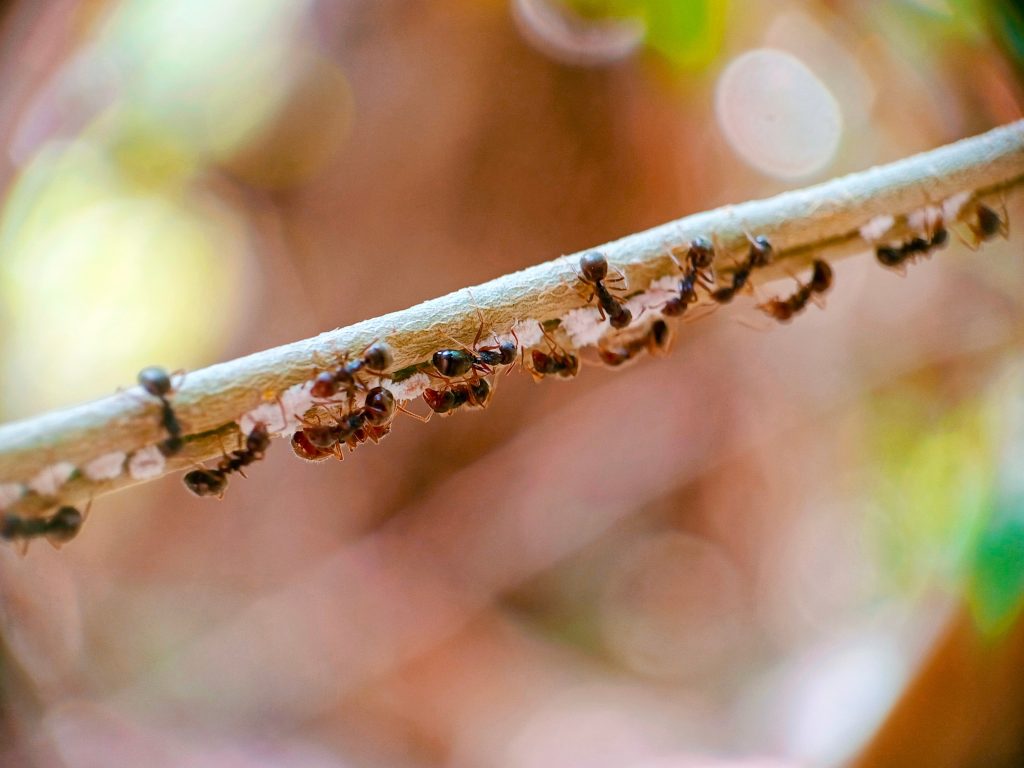
Acrobat ants nest under stones, in stumps, or in dead wood, and some species build nests in trees. According to Texas A&M AgriLife Extension, foraging acrobat ant workers tend aphids and feed on the honeydew those insects produce. Seeing ants near aphid-covered plants can point you toward a nearby nest.
Colony structure also differs by species. Some ant species have just one queen per colony, while others have multiple queens. More queens can mean faster growth, which affects how many ants are in a colony over time.
How to Spot Ant Activity Inside Your Home
Carpenter ant workers do not eat wood. They excavate smooth galleries inside it to raise their young. Piles of coarse sawdust or splintered wood near wooden structures indicate a carpenter ant nest nearby. Dead insects falling from a wooden porch August also point to a nest above.
Some species maintain more than one nest within a structure, according to Texas A&M AgriLife Extension. That means trails of ants in separate rooms could trace back to different nests rather than one central colony. Ant colonies can quickly move to new locations when disturbed, making identification trickier if you bump into a nest.
Where Ant Activity Shows Up Around Homes
Bigheaded ants prefer to nest in soil outdoors. You August notice small mounds of displaced dirt near walkways or foundation edges. Acrobat ants often nest under stones or in stumps around the yard. Check stacked firewood, old tree stumps, and landscaping timbers for signs of nesting.
Parent carpenter ant colonies sometimes establish satellite nests in nearby indoor or outdoor sites. Workers move frequently between satellite nests and the parent colony, so steady ant traffic between your yard and your home can signal connected nests.
Exterior Entry Points Ants Use
Ants follow consistent paths between outdoor nests and indoor food or water sources. Look along the foundation, around door frames, and where utility conduits meet the exterior wall. Carpenter ant satellite nests typically contain workers, pupae, and mature larvae, so finding any of these near an entry point suggests an active route into your home.
Because ant colonies can relocate quickly when disturbed, sealing one gap August simply redirect traffic to another opening. A thorough inspection of the full perimeter gives you a clearer picture of how many entry points are in play and how large the colony network August be.
Why Ant Colony Problems Develop
Several factors determine how many ants are in a colony, including where they nest, what draws them toward your home, and how they find their way inside. A single colony can put steady pressure on a house once workers locate a reliable food or water source nearby.
Outdoor Nesting Areas for Ant Colonoes
Most ant colonies start outdoors. Red imported fire ants, for example, build mounds in sunny, disturbed habitats such as yards and parks. According to Kansas State University Extension, workers forage for food, construct tunnels, care for the young, fight off enemies, and feed the queen, keeping the nest running smoothly.
The queen lays the eggs that maintain or increase colony size. Once the first generation of workers develops, she no longer needs to care for the brood herself. That frees the colony to expand outward.
Food and Shelter That Attract Ants
Many ants enter homes from outside nests as they look for food. Foraging workers seek sources such as insects, decaying fruit, and honeydew. When they find something reliable, they carry food back to the colony and share it with other ants, including the queen and brood.
Workers August also forage for water inside a home. A consistent food and water supply near your foundation can encourage foragers to keep returning.
How Ants Move Around A Colony Homes
In many species, foragers create a pheromone trail that helps others find a source of food or water. According to Kansas State University Extension, this trail system lets dozens or hundreds of workers follow the same path within hours. The result is a visible line of ants moving between the nest and your kitchen or bathroom.
Black carpenter ants are nocturnal, so you August not notice their movement during the day. They can bite but do not sting. Fire ants, on the other hand, inflict a painful sting and are not native to the United States.
Ant Trails and Entry Points Around Homes
Following an ant trail back toward its source can help you locate the nest. You can encourage foraging by setting out attractive food near where you see activity. Many foods are attractive to carpenter ants, which can make tracking them easier.
A steady stream of workers signals that the colony has mapped a dependable route to food or water inside your house. Addressing that route and the food source it leads to is the first step toward reducing ant pressure.
Risks From Ant Colonies
When you consider how many ants are in a colony, the sheer number raises real concerns for your home. Large colonies can settle into hidden structural spaces, and the pests August cause problems that go unnoticed until damage is already underway.
Health Risks Linked to Ants
While ant colonies are primarily a structural and nuisance concern, having thousands of pests moving through cracks in your home’s framing means they can reach living spaces easily. Colonies located in cracks between structural timbers give ants direct access to walls, ceilings, and rooms where your family spends time.
Property Damage From Ants
Certain ant species can tunnel into structural wood to form nesting galleries. According to Texas A&M AgriLife Extension, colonies are often located in cracks between structural timbers, and the pests August prefer moist or decaying wood, wood with dry rot, or old termite galleries.
That preference for weakened wood means a colony can settle into areas already compromised by moisture or prior pest damage. Over time, nesting galleries carved into wood can reduce its integrity. If those timbers support load-bearing walls or flooring, the concern grows with the colony size.
Food Areas and Ant Activity
A colony hidden inside structural cracks gives foraging pests a short path to kitchens and pantries. The more ants a colony holds, the more foragers you August see trailing through food preparation areas. Colonies in framing near kitchens are especially likely to send steady numbers of pests into those rooms.
Because colonies can occupy cracks between timbers, they sometimes go undetected behind walls for long stretches. By the time you spot a trail of pests near food areas, the colony August already be well established.
When to Look Closer at Ant Colonies
Repeated sightings of pests near baseboards or along walls August point to a colony nesting in structural cracks nearby. Pay attention to areas where moisture collects, such as bathrooms, utility closets, and spaces around leaking pipes.
Wood that has dry rot or old termite galleries can also attract colony activity. If your home has had previous moisture issues or termite history, those same areas could become nesting sites for ants. Spotting even a handful of pests in these zones is worth investigating further.
Professional Pest Control for Ants
Knowing how many ants are in a colony explains why DIY sprays rarely solve the problem. A colony can include multiple nests, several queens, and thousands of workers moving between your walls and the yard. Controlling the whole colony, not just the visible ants, is the goal of professional service.
How to Reduce Ant Attractants
Carpenter ants become pests when they enter homes either to forage or to establish nests. Reducing what draws them inside is your first line of defense. Keep food stored in sealed containers and clean up crumbs promptly.
Moisture matters too. Fix leaky pipes, improve drainage near the foundation, and trim branches that touch the roofline. These steps make your home less appealing to foraging workers that would otherwise recruit more colony members indoors.
Why Ant Control in A Colony Starts With Inspection
To control carpenter ants nesting indoors, you need to locate and destroy their nest. This is often challenging because nests are hidden and not easily discovered. Careful observation of worker ants helps narrow down the location.
Carpenter ants forage most actively at night. According to the Mississippi State University Extension, using a flashlight to follow foraging trails back to their source is one of the best ways to locate nest sites. Observing workers between sunset and midnight during the spring and summer months improves your chances.
Colony structure also affects how thorough an inspection needs to be. Unlike fire ants, which form one large nest, a colony of Argentine ants usually has dozens of smaller, interconnected nests. A trained eye knows to look for multiple entry points rather than a single mound.
What to Expect During Professional Ant Treatment
Spraying foraging ants on a countertop will not control a colony. According to UC IPM, spraying a nest August cause the colony to disperse, which could make control more difficult. That is why professionals focus on targeted approaches instead of broad surface sprays.
Bait-based methods work with the colony’s own behavior. Foraging ants take the bait back to the nest, where they transfer it among workers, larvae, and queens. This process reaches deeper into the colony than surface treatments can.
Colonies with multiple queens, known as polygyne colonies, August be more difficult to control because all the queens must be eliminated to prevent the colony from surviving. Professionals account for this by monitoring bait uptake over time and adjusting as needed.
What to Expect From an Ant Control Plan
ClearDefense uses a prevention-first IPM methodology built around recurring service. Because ant colonies can rebound when even one queen survives, one-time treatments often fall short. Recurring visits let your service professional track activity, check bait stations, and adapt the plan as colony pressure changes.
Every visit includes a documented Defense Report showing every product used and every finding. You will know exactly what was applied, where activity was spotted, and what the next steps look like. That kind of transparency helps you understand the progress being made against the colony over time.
How Many Ants Are in a Colony: Bottom Line
Colony size varies widely by species. Some ant colonies hold a few hundred workers, while others can grow into the tens of thousands or more. The number of queens, the nesting style, and how workers forage all shape how quickly a colony expands and how noticeable it becomes around your home. If you are seeing steady ant activity indoors, reach out to ClearDefense Pest Control for a recurring plan that addresses the source.
Frequently Asked Questions
Do All Ant Colonies Have Just One Queen?
Not always. Some species can have several hundred queens in a single colony. Species with multiple queens August spread by budding, where a portion of the colony splits off to form a new nest rather than swarming.
Why Do I Keep Seeing Ants After Cleaning Up?
Foraging workers in many species leave pheromone trails that guide the rest of the colony to a resource. Even after you clean a surface, those trails can persist and continue drawing workers indoors until the trail breaks down or the nest is addressed.
Can a Colony Have More Than One Nest?
Yes. Some species maintain dozens of smaller, interconnected nests rather than one large mound. This structure can make colony size harder to estimate and the problem harder to resolve on your own.
How Can I Tell Where the Nest Is?
Follow the worker ants. You can encourage foraging by setting out food they find attractive, then track the trail back toward the nest. Observing worker movement patterns is often the most practical way to locate where the colony is based, whether that is outdoors in soil or hidden inside a wall.