
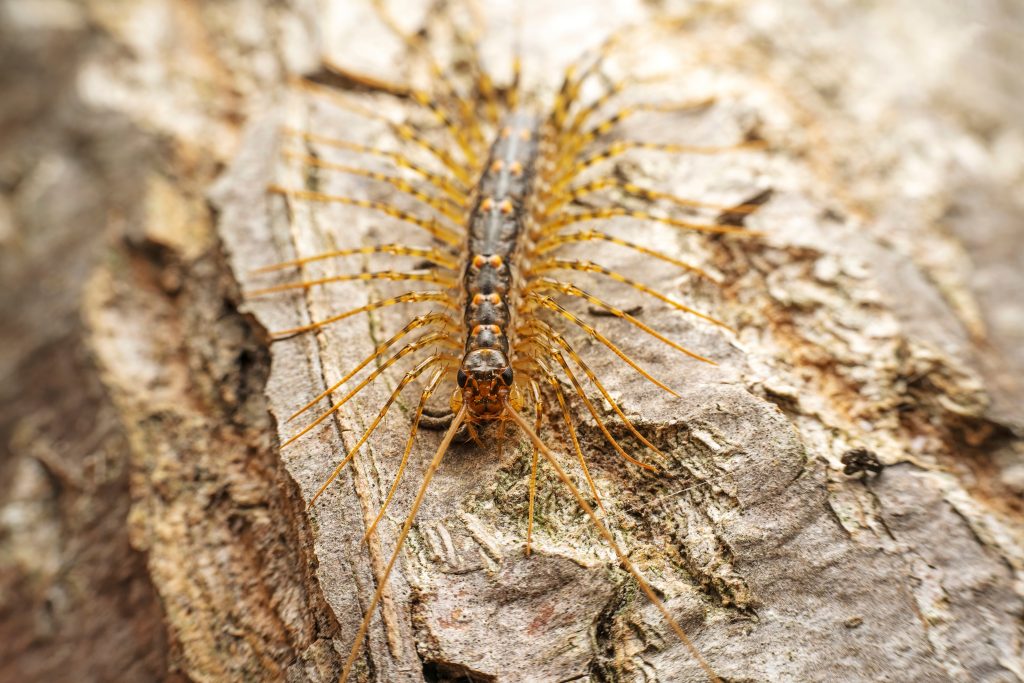
When you keep seeing centipedes in NC, check where they show up. Recurring indoor sightings often lead back to a damp area, other small pests, or an opening that gives them access to your home.
North Carolina has several kinds of centipedes, but house centipedes are the ones most likely to stay active indoors. Here is how to identify them, tell them from millipedes, understand what attracts them, and decide when a few sightings have become a problem worth addressing.
What Types of Centipedes Live in North Carolina?
The long-legged centipede running across your bathroom floor is only one type found in the state. Other North Carolina centipedes spend most of their time in soil, leaf litter, decaying wood, and sheltered areas around the yard.
The North Carolina Biodiversity Project and NC State Parks identify four of the world’s five living centipede orders in North Carolina. For homeowners, knowing the broad types is more useful than trying to identify every species.
| Centipede Type | What You May Notice | Where You May Find It |
| House centipede | Small body with very long, thin legs. Runs quickly when exposed. | Bathrooms, basements, crawl spaces, closets, garages, and other humid areas |
| Stone centipede | Flatter brown or yellowish body with shorter legs | Beneath leaves, mulch, stones, logs, and woody debris |
| Soil centipede | Long, narrow body with many short legs | Soil, leaf litter, and damp ground-level habitat |
| Bark centipede | More compact than a house centipede and variable in color | Beneath bark, wood, leaves, and other sheltered outdoor material |
What a House Centipede Looks Like
An adult house centipede has 15 pairs of legs, or 30 legs total, while its body is generally about 1 to 1.5 inches long. The thin legs extend well beyond the body, which is why the animal often looks much larger when it is running across a wall or floor.
House centipedes are fast. You may see one stop for a second after you turn on a light, then disappear beneath a cabinet, through a floor gap, or behind stored items.
They spend much of the day out of sight. Bathrooms, laundry areas, basements, closets, garages, and crawl spaces give them dark places to hide between nighttime hunting trips.
Most Other Centipedes Stay Outdoors
Stone, soil, and bark centipedes are better suited to outdoor conditions. Damp soil, fallen leaves, mulch, wood, and stones help protect them from drying out.
One can still wander into a garage or first-floor room. If you find a single centipede near an exterior door, especially after wet weather, it may simply have entered through a nearby opening.
Centipede vs. Millipede: How to Tell the Difference
You lift a flowerpot or move wet leaves and find a long animal with dozens of legs underneath. Before deciding what you are dealing with, watch how it moves and look at the body.
A centipede vs. millipede comparison becomes much easier once you know what to look for. Centipedes tend to be flatter and faster. Millipedes have rounder bodies and usually move at a slow, steady pace.
| Feature | Centipede | Millipede |
| Leg arrangement | One pair per body segment | Usually two pairs on most body segments |
| Body shape | Flattened | Rounded or cylindrical |
| Movement | Fast | Slow |
| Diet | Other small arthropods | Mostly decaying plant material and fungi |
| When disturbed | Usually runs for cover | Often curls its body |
| Indoor activity | House centipedes can remain active indoors | Most indoor sightings begin outside |
Their diets also point to different household conditions. Centipedes hunt living prey. Millipedes spend much of their time around moist, decomposing plant material.
If large numbers of millipedes appear around a foundation, wet landscaping may be the place to start looking. Recurring house centipedes can tell a different story because they are capable of staying indoors when a room provides enough humidity and prey.
Why Centipedes in NC Get Into Your House
If you are wondering why centipedes are in your house, start with the room where you found them. Three sightings beneath the same bathroom sink give you more useful information than one centipede beside an open garage.
For centipedes in NC, indoor activity usually comes down to what the house is offering. House centipedes need humid shelter, and they need other small arthropods to eat.
What Attracts Centipedes Indoors?
Check beneath sinks, around a water heater, near washing machine connections, along basement walls, and around accessible plumbing. Slow leaks, condensation, damp wood, and humid rooms can create sheltered spots that stay comfortable long after the rest of the home has dried.
Crawl spaces deserve a close look too. You do not need standing water to have a moisture problem. Damp soil, condensation, drainage issues, or a leaking pipe can keep the space humid enough for moisture-loving pests.
Outside, follow the water. Clogged gutters, short downspouts, and low areas beside the foundation can leave the soil wet for long periods.
Other Pests Can Keep House Centipedes Around
A house centipede is not looking for cereal, crumbs, or pet food. It hunts other small animals.
The Clemson Cooperative Extension lists cockroaches, silverfish, carpet beetle larvae, earwigs, spiders, flies, and crickets among the prey house centipedes eat. Clemson also notes that numerous house centipedes may point to excess moisture or a larger population of prey.
Pay attention to what else you see in the same area. Silverfish around a humid bathroom, spiders concentrated in a basement, or roach activity near plumbing can give centipedes a steady source of food.
A few isolated sightings do not automatically equal a centipede infestation. Repeated activity in the same rooms is more useful because it gives you a location to inspect.
Small Gaps Give Them a Way Inside
Walk around the outside of your house and look where different building materials meet. Door thresholds, utility penetrations, vents, foundation joints, and gaps around pipes can all give small pests a route inside.
Then look at the ground nearby. Wet leaves, thick mulch, firewood, loose boards, and stones create protected spaces where centipedes can stay close to the structure.
Sometimes the path indoors is short. A centipede sheltered in damp mulch may only need to cross a few inches before finding a worn door sweep or foundation opening.
Are Centipedes in North Carolina Dangerous?
House centipedes look intimidating, but they generally avoid people. Their venom helps them capture small prey. It is not used to chase or attack homeowners.
You should still avoid picking up a centipede with bare hands. If one is squeezed, handled, or trapped against the skin, it can bite.
Can a House Centipede Bite?
House centipedes bite, although uncommon. MedlinePlus says a bite from the common house centipede is usually not dangerous. Local pain, redness, and swelling can occur. Anyone who develops serious allergic symptoms, such as trouble breathing or throat swelling, should seek immediate medical care.
For day-to-day household encounters, the practical response is simple. Do not handle the animal directly, but there is no reason to treat a centipede running across a basement wall as an immediate medical threat.
Do Centipedes Damage Your Home?
Centipedes do not chew structural wood, drywall, clothing, carpeting, or stored food. They are predators, not structural or pantry pests.
Their presence can still be useful information. If you keep finding them in one room, inspect that area for damp materials, clutter, other pests, and openings along walls or floors.
That shifts the focus from the animal you can see to the conditions supporting the activity.
How to Keep Centipedes in NC Out of Your Home
If you want to know how to get rid of centipedes, begin where you actually see them. A targeted inspection of one damp bathroom or basement can tell you more than treating rooms where no activity has occurred.
Effective centipede control focuses on moisture, access, and the pests they hunt. You do not have to change everything around the property at once. Start with the conditions closest to the sightings.
1. Dry Out Damp Areas
Repair dripping pipes and leaking supply lines. Improve bathroom ventilation if mirrors and walls stay damp long after a shower. A dehumidifier may help in a basement that remains humid after obvious water problems have been corrected.
Check gutters and downspouts outside. Water should move away from the foundation instead of collecting beside it. If sightings cluster near a crawl space, check the space for damp soil, plumbing leaks, drainage problems, and condensation.
2. Reduce Hiding Places Near the House
Move firewood away from exterior walls. Clear heavy piles of wet leaves and remove boards, stones, or other debris that stays damp underneath.
You can keep mulch in your landscape beds, but avoid piling thick, wet material directly against siding, vents, doors, or the foundation. In garages and basements, keeping cardboard and stored belongings off the floor gives both centipedes and their prey fewer quiet hiding places.
3. Close Common Entry Routes
Check exterior doors for worn sweeps and weather stripping. Look for daylight around the edges of a closed door. Inspect accessible gaps around pipes, wires, vents, and utility equipment. Repair damaged screens and seal appropriate openings.
This step can reduce more than centipedes. Spiders, earwigs, roaches, and other prey also use small exterior gaps, so closing those routes can make the house a poorer hunting area for house centipedes.
When to Call for Centipede Control in North Carolina
One centipede by an exterior door may need nothing more than a quick inspection of the threshold. Repeated sightings in bathrooms, basements, crawl spaces, or several rooms deserve more attention, especially when you are also seeing silverfish, spiders, roaches, or other small pests.
You can handle many of the obvious fixes yourself. Repair leaks, improve drainage, clear damp debris near the foundation, close exterior gaps, and pay attention to other pests showing up in the same areas. Those steps address many of the reasons centipedes in NC move indoors or remain active once they get there.
If the sightings continue, contact ClearDefense Pest Control. We offer professional centipede control services. ClearDefense Pest Control can inspect the areas where activity is occurring and apply targeted treatment based on pest behavior, habitat, and lifecycle. That service is useful when the source is hidden, several pests are involved, or the same centipede control problem keeps returning after the obvious moisture and entry issues have been corrected.