
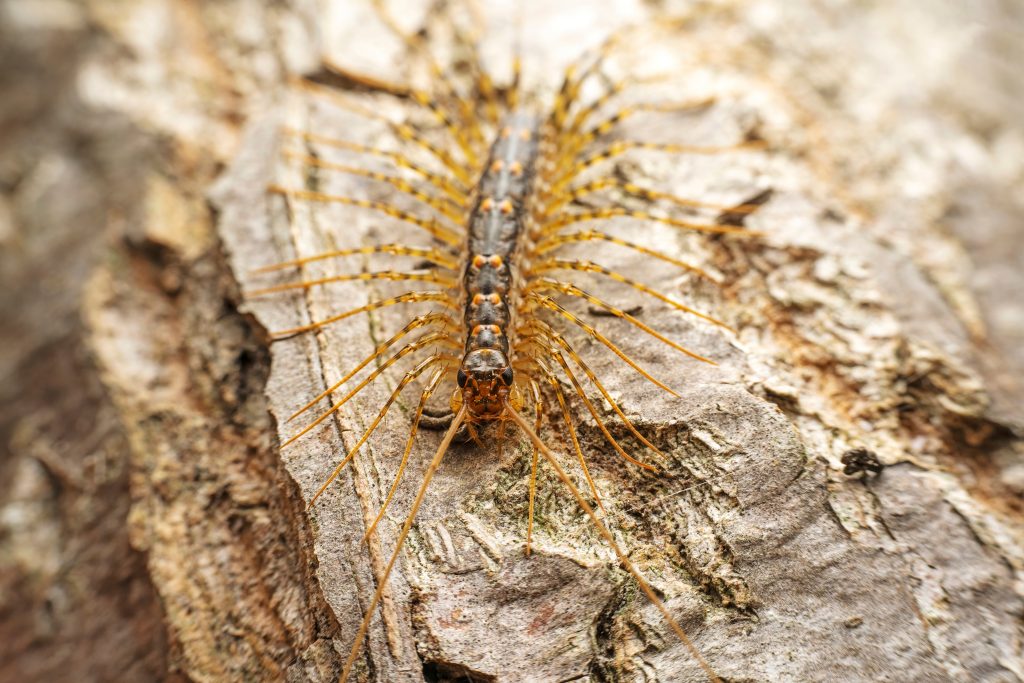
A house centipede rarely gives you time to get a good look. One moment, the bathroom floor is empty. The next, a fast bundle of legs disappears beneath the vanity or behind the toilet.
Its appearance gets your attention, but the house centipede itself may not be the main problem. This animal is a hunter. It stays where it can find small pests, damp hiding places, and enough shelter to remain active without being disturbed.
One sighting does not prove that your home has a serious infestation. A centipede can slip through a door gap or foundation crack. Repeated sightings tell you more. When house centipedes keep appearing in a basement, bathroom, closet, or utility room, they may be feeding on silverfish, spiders, roaches, carpet beetle larvae, or other household pests.
Removing the centipede handles the immediate surprise. Finding what attracted it gives you a better chance of stopping the activity for good.
How to Identify a House Centipede
A house centipede has a narrow, yellowish-brown body with dark stripes running along its back. Adults can have 15 pairs of legs, for a total of 30. The legs grow longer toward the rear, which makes the animal look much larger than its body really is.
The body can reach about one inch long without the legs and antennae. Its compact shape and long legs allow it to run quickly across floors, walls, and ceilings. Many homeowners first notice one when it darts away after a light turns on.
The Missouri Department of Conservation house centipede guide confirms the one-inch body length, three dark stripes, and maximum of 15 leg pairs. The guide also notes that small barbs on the legs help the centipede hold prey.
House Centipede vs. Millipede
House centipedes and millipedes are often confused, but their behavior makes the difference clear. A house centipede moves quickly and hunts living prey. A millipede usually crawls slowly and feeds on decaying plant material.
| Feature | House Centipede | Millipede |
| Movement | Fast and abrupt | Slow and steady |
| Body shape | Narrow with long legs | Rounded with short legs |
| Leg arrangement | One pair on each leg-bearing segment | Two pairs on many body segments |
| Food | Insects, spiders, and other arthropods | Decaying leaves and plant matter |
| Indoor behavior | Can hunt and remain active indoors | Usually wanders inside from damp soil |
The distinction matters when choosing a response. A millipede often points to wet outdoor conditions near the foundation. A house centipede can remain indoors if it finds enough prey and humidity.
What Do House Centipedes Eat?
House centipedes do not feed on wood, drywall, clothing, or crumbs. They chase living prey. Their diet can include several pests that already have reasons to remain inside a home.
The Penn State Extension house centipede resource lists silverfish, firebrats, carpet beetle larvae, cockroaches, spiders, and other small arthropods as common prey. It also explains that frequent sightings can reflect an abundant prey population.
Different prey species point to different household conditions. Silverfish often favor damp storage spaces and bathrooms. Roaches seek food, water, and tight hiding places. Carpet beetle larvae remain near fabrics, pet hair, lint, and other animal-based material.
| Possible Prey | Common Indoor Location | Evidence to Look For |
| Silverfish | Bathrooms, basements, closets, and boxes | Damaged paper, shed skins, or silver insects |
| Cockroaches | Kitchens, laundry rooms, and garages | Droppings, egg cases, or nighttime activity |
| Carpet beetle larvae | Closets, rugs, baseboards, and furniture | Shed larval skins or fabric damage |
| Spiders | Corners, utility rooms, and garages | Webs, egg sacs, or trapped insects |
| Crickets | Garages, crawl spaces, and lower floors | Chirping, droppings, or damaged stored items |
| Firebrats | Areas near furnaces, boilers, and hot pipes | Fast insects with three tail-like filaments |
| Ants | Kitchens, bathrooms, windows, and wall gaps | Trails, loose soil, or activity near food and water |
A house centipede cannot identify the hidden pest for you. Its presence only tells you that the area offers promising hunting conditions. The room still needs to be checked for droppings, shed skins, webbing, damage, or live pest activity.
How the Hunt Happens
House centipedes are nocturnal hunters. During the day, they stay behind baseboards, beneath stored items, inside cracks, or in other protected spaces. After dark, they move through the room in search of prey.
Their long legs do more than create speed. The legs help surround and restrain small insects. The front appendages then deliver venom that subdues the target.
This behavior makes the house centipede a useful predator outdoors and an occasional hunter indoors. It does not replace pest control. A centipede cannot reach every roach in a wall void or every carpet beetle larva beneath furniture.
Does a House Centipede Mean Something Worse Is Hiding Nearby?
One house centipede near an exterior door may be an accidental visitor. Several centipedes appearing around a basement drain, laundry sink, or bathroom cabinet deserve a closer look. The location and frequency of sightings matter more than the first encounter.
Signs of a house centipede infestation are often indirect. You May notice centipedes repeatedly after dark, find them in more than one room, or see them alongside the pests they eat. Silverfish around boxes, roach droppings beneath a sink, or spider activity in a utility room provide stronger evidence than the centipede alone.
A true house centipede problem also requires suitable conditions. The animal needs protected hiding places and a dependable food source. Without those, it has little reason to remain indoors.
Read the Pattern Before You React
Start by recording where and when each sighting happens. Activity in one bathroom points toward a different cause than sightings across several floors. A bathroom pattern August involve plumbing leaks or gaps around pipes. Widespread activity August involve wall voids, utility lines, and connected storage areas.
| Sighting Pattern | What It may Suggest | What to Inspect |
| One near an exterior door | Accidental entry | Door sweep, threshold, and nearby siding |
| Several in one bathroom | Moisture or prey near plumbing | Leaks, pipe gaps, cabinets, and ventilation |
| Activity around stored boxes | Shelter for centipedes or prey | Cardboard, paper, shed skins, and silverfish |
| Sightings on several floors | Movement through the structure | Utility lines, wall gaps, plumbing routes, and closets |
| Centipedes with roaches or silverfish | A confirmed food source | Breeding areas and supporting conditions |
| Activity near a basement drain | Moisture and protected hiding places | Drain area, foundation walls, pipes, and stored materials |
The centipede is a clue, not a diagnosis. Use the sighting to narrow the inspection instead of assuming that every possible prey species is present.
What Attracts House Centipedes?
What attracts house centipedes usually comes down to three things: excess moisture, quiet shelter, and prey. Bathrooms, basements, crawl spaces, laundry rooms, and utility areas can provide all three.
A slow leak beneath a sink can keep a cabinet damp long before obvious water damage appears. Condensation on cold pipes can maintain humid cracks nearby. Poor bathroom ventilation leaves flooring, walls, and hidden areas wet longer than they should be.
These conditions also help prey pests survive. Silverfish, roaches, springtails, spiders, and other arthropods often gather where moisture and shelter overlap.
Common Entry Points and Hiding Places
House centipedes can enter through cracks and gaps in the exterior. Foundation cracks, worn door sweeps, damaged screens, and gaps around pipes or cables provide easy access.
Once inside, clutter makes them harder to find. Cardboard boxes, stacked paper, stored fabric, and crowded utility rooms create protected spaces for both centipedes and prey.
Exterior conditions can increase activity near the structure. Wet leaf litter, thick mulch, loose boards, and dense plants against the foundation shelter many small arthropods. Those pests can move indoors through the same entry points used by centipedes.
Crawl-space moisture and humid ground-level rooms often deserve attention. Homeowners may also see more activity in basements, garages, and utility areas as outdoor temperatures and soil conditions change.
Are House Centipedes Dangerous?
House centipedes look threatening because they move quickly and have many long legs. They do not chew wood, damage wiring, eat clothing, or feed on the structure.
Bites are possible, but uncommon. The University of Minnesota Extension house centipede guide explains that bites to humans are rare and usually connected to careless handling.
Do not pick up a centipede with bare hands. A vacuum or container can remove an individual without direct contact. Once it is gone, inspect the area where it appeared rather than assuming the problem ended with that one animal.
Pets are also unlikely to face a serious threat from occasional house centipede activity. Still, pets should not be allowed to paw at or mouth any centipede.
How to Get Rid of House Centipedes
Long-term house centipede control starts with the conditions that allow them to stay. Fix leaking pipes, improve bathroom ventilation, and address damp crawl spaces or basement walls. A dehumidifier can help reduce humidity in rooms that remain damp after obvious leaks are repaired.
Then inspect for prey. Check beneath appliances, inside lower cabinets, along baseboards, around stored fabrics, and near drains. The control plan should match the pest you actually find. Roaches, silverfish, ants, spiders, and carpet beetles require different approaches.
Seal entry points after the inspection. Replace damaged door sweeps, close gaps around utility lines, repair screens, and seal accessible foundation cracks. This work helps reduce both centipedes and the smaller pests they hunt.
Make the Exterior Less Suitable
Move wet leaves, wood scraps, and dense ground cover away from the foundation. Keep gutters clear and direct downspouts away from the house. Avoid piling mulch against siding or foundation vents.
These changes reduce damp hiding places around the structure. They also make it harder for occasional invaders to move inside and become a food source.
Know When to Schedule a Pest Inspection
Professional pest control makes sense when sightings continue after moisture and entry issues have been corrected. It also helps when centipedes appear on several floors, another pest is visible, or the suspected hiding area is difficult to reach.
A useful pest inspection looks beyond the centipede. It checks the rooms where activity occurs, the prey that may be present, the routes pests use, and the conditions helping them survive.
Stop What the House Centipede Is Hunting
A house centipede is often the most visible part of a less obvious pest problem. Its presence can lead you toward damp spaces, hidden entry points, and small pests that have already found what they need indoors.
The right response connects those clues. Remove the visible centipede, reduce humidity, clear shelter, seal openings, and address any prey species you find.
When house centipede sightings keep returning, contact ClearDefense Pest Control for a targeted inspection and treatment plan. ClearDefense Pest Control focuses on the areas where pests live, enter, and hide, using methods based on pest behavior, habitat, and lifecycle.