

 5.064945 reviews
Termite damage in Greenville often starts unseen, inside walls, floors, and trim while the wood stays hollow and the mess spreads. We find the entry points, treat the whole colony, and keep coming back with a clear re-treat guarantee until the pressure is gone.
Local ties run deep here. Each technician is chosen carefully and lives nearby. You talk straight to your tech, not a call center. This keeps things simple and personal.
Our technicians get to know your home, your schedule, and how pests behave in your area, so every visit is consistent, thorough, and personal.
The team knows their work and stays friendly. There is a pest-free guarantee with no hidden terms. Just a clear promise that aims to deliver results you can trust.
5.0Top Rated ServiceVerified by TrustindexTrustindex verified badge is the Universal Symbol of Trust. Only the greatest companies can get the verified badge who has a review score above 4.5, based on customer reviews over the past 12 months. Read morePosted on Google
 James Thomas0 days agoTaylor was very professional and treated what we requested.Posted on Google
 Sissy Stanley0 days agoMichael was wonderful and did a great job! Very professional . Definitely great experience as always!Posted on Google
 Carola Ortiz0 days agoDre was very helpful and clear about what I could expect and what he was doing. He took care of my concerns. Cobwebs were REMOVED!Posted on Google
 Dekoven Reed0 days agoDarin did a great job!Posted on Google
 Joseph Keagy0 days agoJayme appreciate the great work and attention to detail today! We were very impressed with our latest treatment with David from Clear Defense! He remembered questions from his first visit over 5 months ago and also spent the time to ask and listen about our prior services. He really went the extra mile coming back out to make sure we wouldn't have a problem with mosquitos!Posted on Google
 Huley Brown0 days agoGreat service! I have been a customer for a long time and these folks do not disappoint. Maurice did an outstanding job ensuring no critters enter my home! The technicians continue to provide outstanding service!Posted on Google
 Carol R0 days agoYay. Julian came today and addressed all of my concerns. He was very thorough! Polite and friendly too! Thanks JulianPosted on Google
 Viv0 days agoGreat quarterly service completed by Jameson! He did a great job & paid close attention to detail to prevent pests.Posted on Google
 Kelly Shipp0 days agoExcellent service Esmond is fantastic!!Posted on Google
 Nathan Quinn0 days agoI have used Clear Defense for about five years now. Their service technicians are always polite and work quickly. Today’s technician was named Hunter, and he did a good job.Posted on Trustindex
 Lisa J87 days ago
Trustindex verifies that the original source of the review is Trustindex.
Outstanding customer service! Ryan and Josh provided exceptional customer service! Their professionalism, knowledge, and friendliness stood out and made the whole experience smooth and stress-free. They answered all my questions thoroughly and ensured I felt comfortable with the process. It's clear they are highly trained and genuinely care about helping customers.
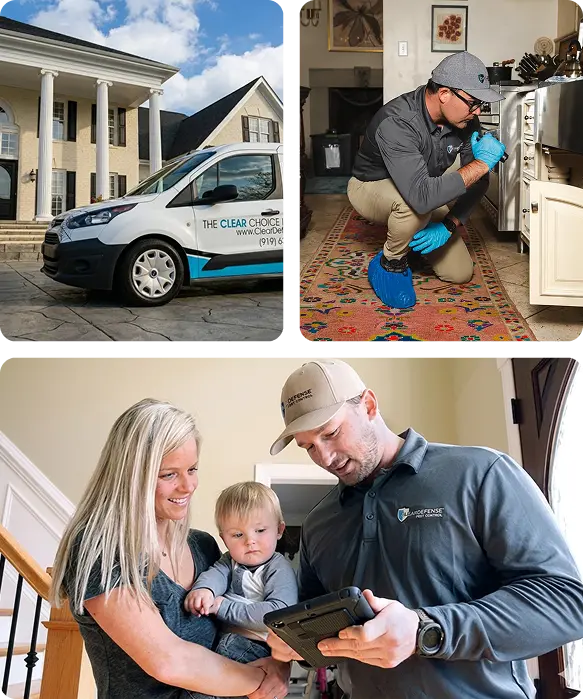
Your Greenville Termite Control Team Ready
Experienced technicians with continuous education who understand termite control in Greenville, South Carolina bring careful service, local know-how, and reliable follow-through to every visit.

Termite Control in Greenville and Nearby Areas
Greenville and nearby neighborhoods like Taylors and Mauldin face rising termite and ant activity each season as warmer days bring these pests closer to homes.


