
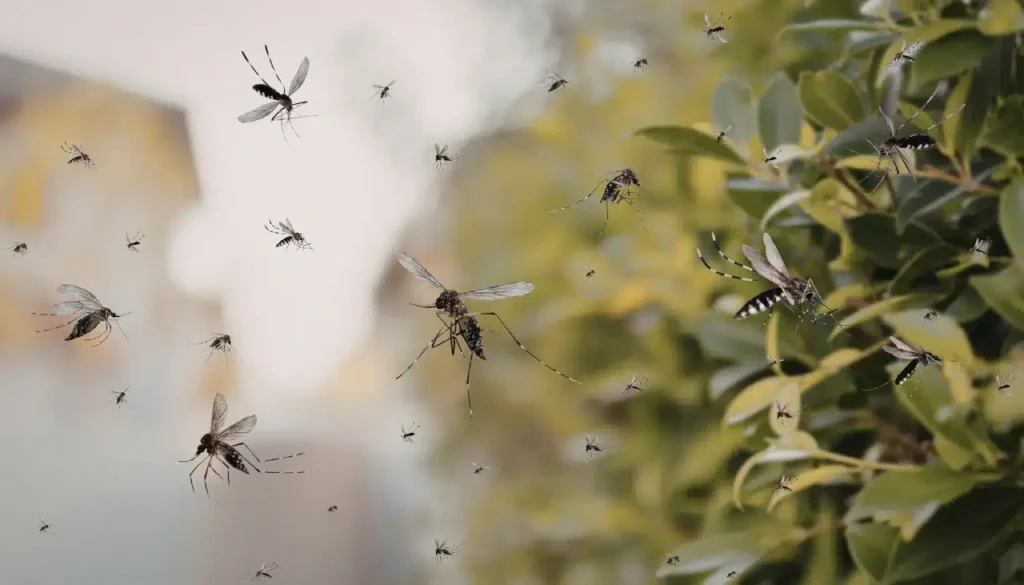
Do you step outside in Jacksonville and get mosquito bites within minutes? You are not alone in this problem. Many homeowners deal with heavy mosquito activity in their yards during warm months.
Jacksonville’s heat, humidity, and heavy rain create ideal conditions for mosquito breeding. When standing water collects around your home, mosquito populations grow quickly. The right mosquito control methods reduce mosquito numbers and help you enjoy your outdoor space again.
Here’s why mosquitoes take over and what helps most.
Key Takeaways
- Standing water is the main reason mosquitoes take over yards in Jacksonville.
- Bird baths, clogged gutters, tarps, and tall grass create breeding sites.
- Simple yard fixes combined with professional mosquito control reduce mosquito populations.
- Ongoing mosquito treatment helps protect your outdoor space all season.
Why Mosquitoes Take Over Yards
Mosquitoes need warm weather and water to survive. Jacksonville has both for much of the year.
Standing Water After Rain
Standing water is the main reason mosquito populations increase. After storms, water collects in low spots, clogged gutters, flower pots, and tarps.
Female mosquitoes lay eggs in stagnant water, creating breeding sites for mosquitoes. In just a few days, mosquito larvae hatch and grow. That small puddle can quickly become a breeding ground.
Heat and Humidity Speed Up Growth
Warm weather speeds up the growth of mosquito larvae. Warmer temperatures speed up mosquito development, depending on the species of mosquitoes.
When temperatures stay warm, mosquito activity often increases in late summer. When heat and rain continue, mosquito populations rise quickly.
People and Pets Attract Mosquitoes
Mosquitoes find people by sensing the carbon dioxide we exhale. The more people outside, the more carbon dioxide fills the air.
Cookouts, backyard parties, and kids playing can attract mosquitoes from nearby water sources. Some species of mosquitoes are very aggressive and will fly straight toward activity.
The Yard Places They Breed and Rest
Mosquitoes need water to grow and shade to rest. Knowing where they hide helps reduce mosquito breeding.
Bird Baths and Water Features
Bird baths and fountains can hold still water. If homeowners do not clean them regularly, they become breeding grounds for mosquitoes.
Mosquito dunks made with BTI (Bacillus thuringiensis israelensis) target mosquito larvae and are safe to use around beneficial insects.
Clogged Gutters and Hidden Puddles
Clogged gutters trap leaves and water, causing stagnant water along your roofline.
Buckets, toys, tarps, and planters can also collect rain. Even small water sources allow female mosquitoes to lay eggs.
Tall Grass and Shaded Areas
Adult mosquitoes hide in tall grass and thick shrubs during the day. If you do not mow often, your yard becomes a resting area for adult mosquitoes.
Thick landscaping near seating areas can increase mosquito bites because mosquitoes stay close to where people gather.
What Helps Most: Simple Yard Fixes
You may not get a mosquito-free yard overnight, but steady action lowers mosquito populations.
Remove Standing Water Weekly
Dump the water from containers once a week. Change the bird bath water often. Fix areas where water collects.
Reducing standing water disrupts mosquito breeding and lowers the number of mosquitoes on your property.
Keep Your Yard Trimmed
Mow your lawn regularly. Trim bushes and clean up yard debris.
When you mow and thin out thick plants, you remove hiding spots for adult mosquitoes.
Use Mosquito Repellent the Right Way
Personal mosquito repellent helps prevent mosquito bites. The CDC and the Environmental Protection Agency recommend insect repellents containing active ingredients such as DEET.
Apply permethrin products to clothing, not to skin. Citronella candles and natural mosquito-repellent plants like geraniums may help a little, but they do not stop heavy mosquito activity.
Be Careful With DIY Sprays and Gadgets
Bug zappers usually have little impact on mosquito populations. Many mosquito traps use propane or carbon dioxide to lure mosquitoes, but results vary.
Foggers and store-bought insecticide sprays may give short-term relief. Overuse of pesticides can harm beneficial insects and pollinators.
For more consistent results, professional mosquito control often outperforms most DIY options.
Consider Professional Mosquito Treatment
ClearDefense Pest Control provides mosquito treatment services in Jacksonville that target both adult mosquitoes and breeding sites.
Our mosquito control services focus on shaded areas, tall grass, and other problem spots. Our technicians apply mosquito treatment carefully, targeting mosquitoes while protecting beneficial insects.
Ongoing mosquito control helps reduce mosquito activity throughout the season. Results may vary based on rainfall and property conditions.
Schedule a Jacksonville Mosquito Yard Inspection
If mosquitoes are taking over your yard, professional mosquito control can help. At ClearDefense Pest Control, we offer targeted mosquito treatment in Jacksonville to reduce mosquito breeding and lower adult mosquito activity.
With routine mosquito control and professional service, many homeowners report fewer mosquito bites and less mosquito activity in their outdoor spaces.
Contact us today to schedule your Jacksonville mosquito treatment service.
FAQs
Why are there so many mosquitoes in Jacksonville?
Jacksonville has warm weather, high humidity, and frequent rain. These conditions create ideal mosquito breeding areas with standing water.
Do mosquito traps really work?
Some mosquito traps use propane or carbon dioxide to lure mosquitoes. They may reduce numbers slightly, but they typically do not eliminate large mosquito infestations on their own.
What is the safest way to prevent mosquito bites?
Use EPA-approved insect repellent with active ingredients like DEET. For better yard protection, professional mosquito control focuses on consistent, ongoing reduction, which many DIY options struggle to achieve.