
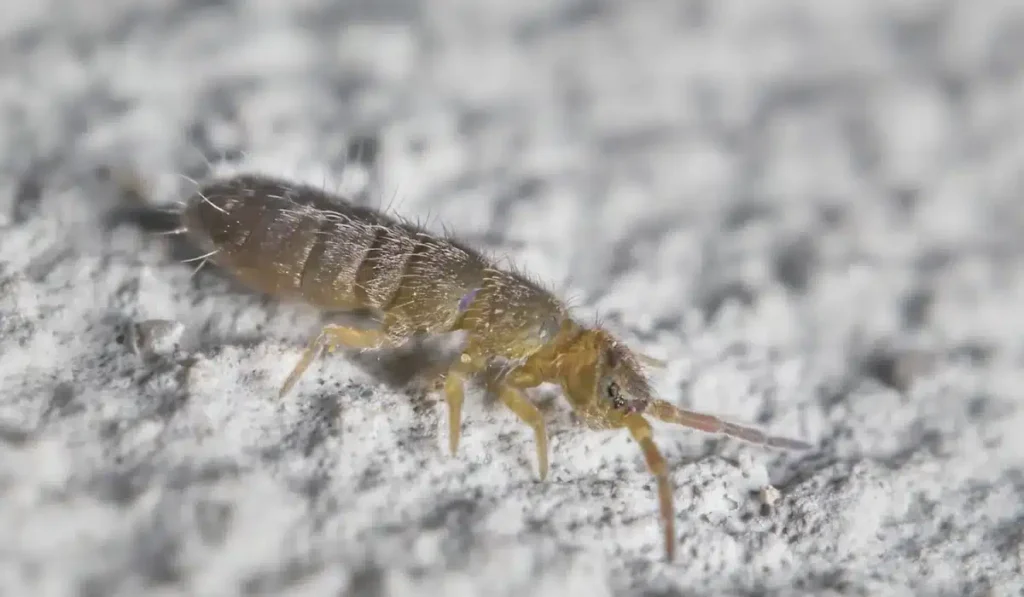
If you see tiny black bugs jumping across white snow in your Cincinnati yard, you are not alone. People often call them snow bugs, but they are usually snow fleas. Seeing these small critters during the winter months can seem odd, especially when everything else is frozen.
Snow fleas often appear on the snow surface during cold weather, especially in shaded yards or wooded areas around Cincinnati. Even though they look like fleas, they are actually springtails, a type of jumping bug that thrives in damp conditions.
So, do snow bugs bite? No, they do not bite. However, seeing them in large numbers can cause concern. Here’s what you need to know and when pest control may help.
Key Takeaways
- Snow fleas are springtails and do not bite people or pets.
- They show up on top of the snow during cold temperatures.
- They are attracted to moisture and decaying organic matter.
- Large numbers indoors can point to excess moisture issues.
- Pest control can help reduce the risk of indoor infestations year-round.
What People Call Snow Bugs
These winter pests go by several names, which can make them hard to identify.
Snow Fleas
Snow fleas are the most common name homeowners use. These black bugs appear on white snow, often in large numbers, making them easy to notice. They survive freezing temperatures thanks to a natural antifreeze, allowing them to stay active in cold weather, especially on the snow in shaded areas.
Springtails
Springtails are the correct name for snow fleas. These tiny arthropods use a forked appendage called a furcula to jump. They live in soil, leaf litter, and other areas with organic matter. In Cincinnati, you may see them in wooded areas or near mulch beds where decaying organic matter builds up.
Other Small Jumping Critters
Some people confuse snow fleas with fleas or other biting bugs. However, springtails are harmless hexapods that feed on organic material, not blood. They help the ecosystem by breaking down plant matter, though they can become a nuisance if they move indoors.
Do Snow Bugs Actually Bite
Many homeowners worry about bites when they see jumping bugs. Snow flea bites are a common concern, but they do not bite people or pets. Instead, they feed on organic material like mold, plant matter, and decaying debris.
Why They Seem Concerning
Seeing black bugs moving across the snow can be alarming, especially when many appear at once. Their jumping behavior makes them seem more active than they are, even though they pose no health concern.
Indoor Encounters
If springtails get inside, they may gather near sinks, basements, or leaky pipes. Their presence indoors often indicates excess moisture, which can support their activity.
When Winter Sightings Signal a Problem
Most outdoor sightings are normal, but certain signs point to a problem.
Large Numbers Near the Home
Seeing snow fleas near your foundation can mean moisture is building up. Areas with standing water or heavy leaf litter often attract them, increasing the chances they move closer to your home.
Moisture Issues Indoors
Springtails thrive in damp environments. Leaky pipes, poor drainage, or high humidity can create the conditions they need to survive indoors. Using a dehumidifier can help reduce moisture levels, but you still need to fix the source of the problem.
Entry Into Living Spaces
If you start seeing springtails inside bathrooms, kitchens, or basements, it shows they can live indoors under the right conditions. Pest control services can help identify entry points and address contributing factors before the issue grows.
When to Schedule a Winter Pest Inspection in Cincinnati
Winter pest activity often goes unseen, and snow fleas may point to hidden moisture issues. If you live in Cincinnati and notice repeated sightings, it may be time for a professional inspection.
A pest control technician can check for moisture problems, entry points, and factors that attract pests like springtails, ants, and spiders. General pest control services can target common household pests and help reduce future issues.
Regular service can control other pests that remain active during colder months, especially in homes where moisture persists.
Keeping Your Cincinnati Home Comfortable Year-Round
Snow fleas stand out against fresh snow, but they are typically harmless outside. When they start appearing indoors, it often shows moisture issues that need attention.
Fixing these issues early helps limit activity and makes your home less inviting to these pests. When simple adjustments are not enough, professional treatment can address the root cause and reduce recurring issues.
If snow fleas keep showing up where they shouldn’t, ClearDefense Pest Control can help address the root cause and restore balance to your home.
Contact us to schedule pest control service.
FAQs
Why do snow fleas appear on top of the snow?
Snow fleas move to the surface of the snow during cold temperatures to feed on organic matter. The contrast of black bugs on white snow makes them more visible, even though they are active year-round in the soil.
Are springtails harmful to homes?
Springtails do not damage structures, but they can become a nuisance indoors. Their presence often indicates moisture problems, such as leaky pipes or excess humidity, that you should fix.
How do I get rid of snow fleas in my house?
Start by reducing excess moisture with repairs and a dehumidifier. If springtails keep appearing, pest control can treat the infestation and help prevent them from coming back.