
You flip on the garage light at night and catch a wolf spider freezing mid-stride near the water heater or a stack of moving boxes. By the time you look again, it’s already ducked under a shelf or into a crack in the slab. That reaction isn’t random. Wolf spiders in Florida are ground hunters that move fast and steer clear of people on sight, and a sudden appearance indoors August mean prey, shelter, or an accessible entry point is drawing them in.
Around Jacksonville and the rest of Northeast Florida, that kind of sighting is common enough that most homeowners eventually run into one, whether in a garage, a laundry room, or tucked against a baseboard after a rainy week. The size and speed of these spiders make them memorable, even for people who don’t usually mind spiders.
This guide covers how to identify wolf spiders in Florida, why they wander indoors, what a bite actually means, and when repeated sightings are worth a call to a pest control professional.
Key Takeaways
- Wolf spiders are large, ground-hunting spiders identified by dark stripes, chevron markings, and a distinct three-row eye pattern.
- They live in leaf litter, mulch, and woodpiles outdoors, then move into garages, basements, and door and window edges once the weather cools.
- Bites are rare and only mildly painful for most healthy adults, since wolf spiders aren’t among Florida’s medically significant spiders.
- Frequent indoor sightings usually mean insects are getting in and the spiders are simply following the food supply.
Identifying a Wolf Spider in Florida
Florida is home to several large, ground-dwelling spiders that get lumped together at a glance, and mistaken identity is common. A wolf spider’s coloring, hair, and eye pattern settle the question fast, without needing a photo comparison app or a closer look than most people want to take.
Getting the identification right matters, since some look-alikes carry venom that can require medical attention while wolf spiders generally don’t. A quick check of size, color pattern, and eye arrangement beats either assuming the worst or brushing the sighting off entirely.
Size and Coloring
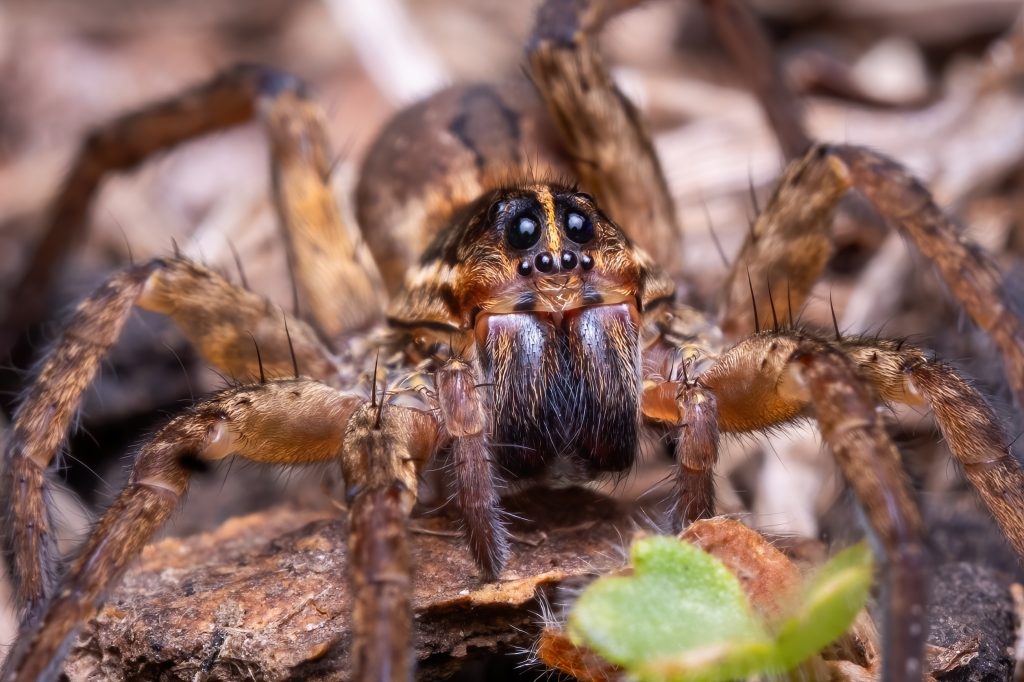
Wolf spiders are typically brown, light brown, brownish-yellow, or tan, with at least one black stripe running from eyes to abdomen and light-colored chevrons or bands across the back. Bodies are covered in short hair, which adds to their apparent size. That hair, combined with their bulk, is why they’re sometimes mistaken for tarantulas, though true tarantulas don’t live in Florida. Size varies by species.
One of the larger species found across the country includes females measuring 22 to 35 millimeters in length, with males somewhat smaller at 18 to 20 millimeters, or roughly an inch to an inch and a half before you count the legs.
Eye Pattern and Night Behavior
Eye arrangement is one of the more reliable ways to confirm you’re looking at a true wolf spider. They have eight eyes set in three rows, a pattern you can spot at a glance rather than with a magnifying glass. At night, a flashlight held at ground level will often catch the reflective shine of their eyes, a trick some homeowners use to confirm what’s moving around the yard after dark.
Wolf Spider Habits in Florida Yards and Homes
Knowing what a wolf spider looks like answers only half the question. The more useful thing to understand is why it’s in the yard, and why it sometimes ends up in the house instead.
Wolf spiders don’t wait in a web for something to happen. They patrol the ground looking for food, so their movements, including the occasional trip indoors, track wherever prey happens to be.
Where Wolf Spiders Live Outdoors
Wolf spiders favor open wooded areas and leaf litter, along with shrubs and herbaceous vegetation, though some dig burrows or hide under debris. Outdoors, that means mulch beds, woodpiles, and the edges of lawns bordering trees. Indoors, they stay close to the ground rather than climbing walls or ceilings the way some other spiders do.
Why Wolf Spiders Wander Indoors
Cooler weather can push wolf spiders into garages, basements, and the edges of windows and doors, since these spots stay warmer and drier than the yard. A wolf spider that wanders inside is following food, not settling in on purpose. It’s a hunting spider, and its typical diet includes crickets, beetles, roaches, and ants, along with other small insects that August enter through open doors or gaps under thresholds. Where those insects go, a hunting wolf spider will sometimes follow.
How Female Wolf Spiders Raise Their Young
Female wolf spiders add another layer to the “unsettling at first glance” reputation. After laying eggs, wolf spiders carry the egg sac on their spinnerets, and once the spiderlings hatch, the young ride on the mother’s back until they’re ready to disperse. Wolf spiders are the only spiders known to carry their offspring this way. It looks dramatic up close, but it’s simply how the species raises its young.
Are Wolf Spiders in Florida Dangerous?
Wolf spiders look intimidating because of their size and quick movement, and that combination triggers a strong reaction even in people who aren’t especially afraid of spiders. The real question is whether that reaction matches the actual risk.
It doesn’t. Wolf spiders aren’t aggressive toward people, they don’t seek out contact, and a bite is closer to a minor skin irritation than a medical emergency for most healthy adults. The spider that actually earns Florida’s cautious reputation looks similar enough to cause confusion, which is worth sorting out below.
What a Wolf Spider Bite Feels Like
The size of a wolf spider tends to worry people more than the actual risk warrants. Bites are uncommon and typically only happen when the spider is handled or feels trapped against the skin. Research from a major university extension program found that typical reactions include initial pain, redness, and localized swelling, with symptoms subsiding within 24 hours and no serious medical consequences noted. Anyone who is bitten and develops symptoms that feel more severe than that should contact a healthcare provider.
Telling Wolf Spiders Apart from Recluses
Wolf spiders often get blamed for something they didn’t do. Recluse spiders share a similar brown color and build, but recluse spiders are not established in most of Florida, and confirmed sightings in the state are rare, despite frequent claims otherwise. Eye count is the clearest way to tell them apart: wolf spiders have eight eyes across three rows, while recluses have only six, arranged in pairs. Recluses also have thinner, less hairy legs.
For context, among spiders native to or established in Florida, only widow spiders carry medically significant venom, a useful benchmark when weighing whether a sighting is a real medical concern.
When Wolf Spiders Signal a Bigger Problem
Most Florida homeowners will see a wolf spider from time to time, especially during the state’s warmer, wetter months when insect activity picks up across yards and gardens. A single sighting near a door or tucked in a garage corner is a spider passing through, not a problem on its own.
Repeated sightings deserve closer attention. When the same area keeps producing wolf spiders week after week, something is consistently drawing them there: a lingering insect population, a gap that’s easy to slip through, or a damp spot more comfortable than the yard outside.
One Sighting vs. a Recurring Problem
A spider that turns up once near the garage door, after a delivery box sat outside overnight, isn’t the same situation as one that keeps appearing in the same hallway every week. Recurring sightings near baseboards, garage doors, or window seals point to an ongoing insect presence nearby, since wolf spiders rarely wander far from a reliable food source. Tracking where and how often sightings happen shows whether anything around the house needs attention.
Simple Prevention Steps
Reducing clutter near the foundation, sealing obvious gaps, and cutting back mulch or vegetation touching the exterior wall all make a home less appealing to both the spiders and their prey. If sightings keep happening despite those steps, it’s worth having a professional look at what’s actually going on around the property.
ClearDefense Pest Control offers spider control that includes clearing webs and egg sacs up to 25 feet and treating key entry points and exterior edges, including eaves, overhangs, and window and door seals.
Wolf Spiders in Florida: Bottom Line
Wolf spiders in Florida are fast, large, and easy to spot, but they’re rarely the actual problem. They show up because a house is already offering the two things they’re after: insects to eat and a quiet, dry place to wait out the heat or the cold. Sealing entry points and cleaning up clutter helps, but if sightings keep repeating around the same doors, vents, or corners, that’s the signal to look closer at what’s happening around the exterior rather than treat it as bad luck.
Professional service can address spider activity, entry points, and conditions around the exterior more thoroughly than repeated spot treatments. ClearDefense Pest Control treats key exterior areas up to 30 feet, including eaves, overhangs, windows, and door seals, and documents everything used in a report you can review with your technician, at offices serving Jacksonville, Jacksonville Beach, Orange Park, Nocatee, Fleming Island, and St. Augustine. Contact us for a quote and schedule an inspection if wolf spiders keep turning up at your house.
Frequently Asked Questions
Are wolf spiders dangerous in Florida?
Not typically. Bites are uncommon and usually only happen when a spider is handled or trapped against the skin. Most healthy adults experience mild, short-lived pain, redness, and localized swelling that fades within a day. Florida’s only spiders with medically significant venom native to or established in the state are widow spiders, not wolf spiders.
Why do wolf spiders enter Florida homes?
Wolf spiders are hunters, not web builders, so they follow prey rather than waiting for it to come to them. Cooler weather, available insects, and an accessible gap around a door or window are enough to draw one indoors. Their presence indoors is typically related to available food or a dry hiding spot rather than any intent to stay.
When should I call pest control about wolf spiders?
A single sighting usually isn’t a problem on its own, since wolf spiders wander in and out fairly often. Repeated sightings in the same area, especially near baseboards, garage doors, or window seals, are a better signal that nearby pest activity is worth having a professional take a look.