

You hear chirping outside your bedroom window, then find a long-legged cricket near the crawl-space door the next morning. They may both be crickets, but they are using your property in very different ways. The main types of crickets in North Carolina homeowners encounter include field crickets, camel crickets, house crickets, and mole crickets.
You can usually narrow down what you are seeing by looking at its body shape, listening for chirping, and checking where it keeps appearing. This guide covers how North Carolina crickets differ, why some come inside, which ones can affect your lawn, and when recurring activity calls for cricket control.
Common Types of Crickets in North Carolina
North Carolina homeowners mostly run into four types of crickets: field, camel, house, and mole. Body shape, chirping, and location separate them faster than color does. The brief below breaks down what each one looks like, where it turns up, and what it actually does once it’s on your property.
Field cricket
Low riskCamel cricket also called spider or cave cricket
Low riskHouse cricket
Low riskMole cricket
High riskA single cricket near a door or in the garage usually just wandered in from the yard. Recurring activity in the same damp spot, or thinning turf with loose soil underneath, is what points toward a real conducive condition worth inspecting.
There are many cricket species across the state, but homeowners rarely need an exact species name. The useful distinction is whether the insect lives mainly outdoors, prefers damp areas under the house, or spends its time tunneling beneath turfgrass.
These types of crickets in North Carolina also behave differently once they reach a residential property. Location and sound often tell you more than color alone.
| Cricket Type | What You May Notice | Common Location | Main Concern |
| Field crickets | Dark brown or black body, long antennae, large hind legs, loud chirping | Lawns, planting beds, garages, and foundation edges | Noise and occasional indoor activity |
| Camel crickets | Humpbacked body, extremely long legs, no wings | Crawl spaces, basements, garages, and damp storage areas | Recurring activity in humid spaces |
| House crickets | Tan or yellowish-brown body, long antennae, chirping | Sheltered areas in and around buildings | Indoor nuisance activity |
| Mole crickets | Heavy body with broad front legs made for digging | Soil, turfgrass, and lawns | Tunneling and grass damage |
Field Crickets
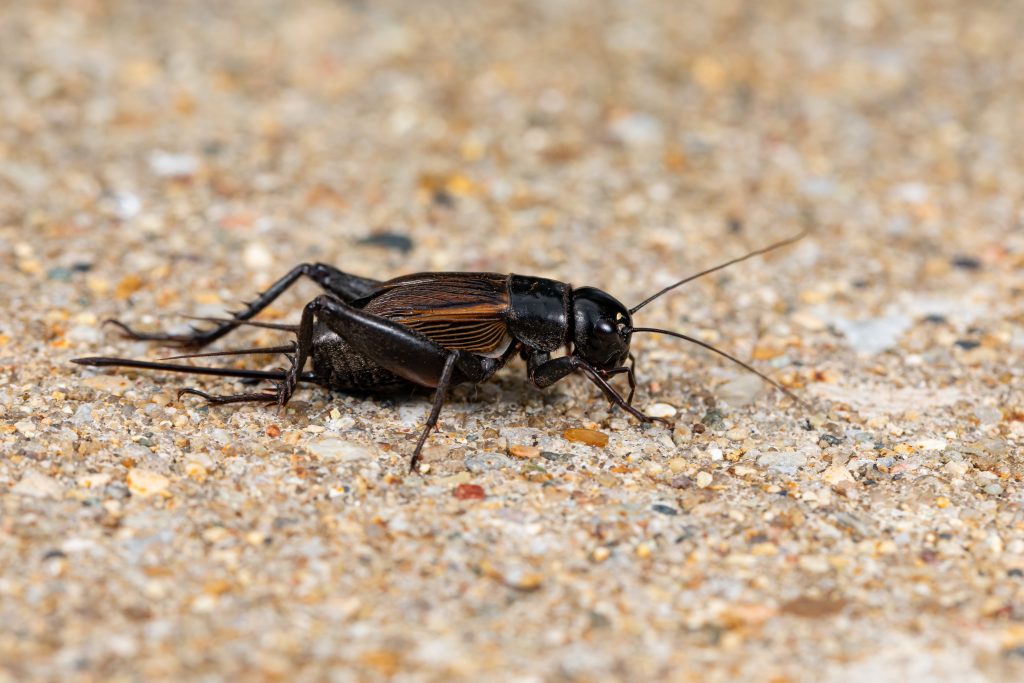
Field crickets are responsible for much of the nighttime chirping you hear from lawns, garden beds, and grassy edges. They usually have dark brown or black bodies, long antennae, and strong hind legs. Male crickets produce their calls by rubbing parts of their wings together.
North Carolina has more than one type of field cricket. According to NC State Extension, at least five field cricket species live in North Carolina. Some look nearly identical but differ in habitat, mating calls, and when they lay eggs.
Around your home, field crickets usually remain outdoors. One may hop through an open garage, gather near exterior lighting, or slip beneath a door. A single cricket in the house does not necessarily point to a cricket infestation.
Camel Crickets
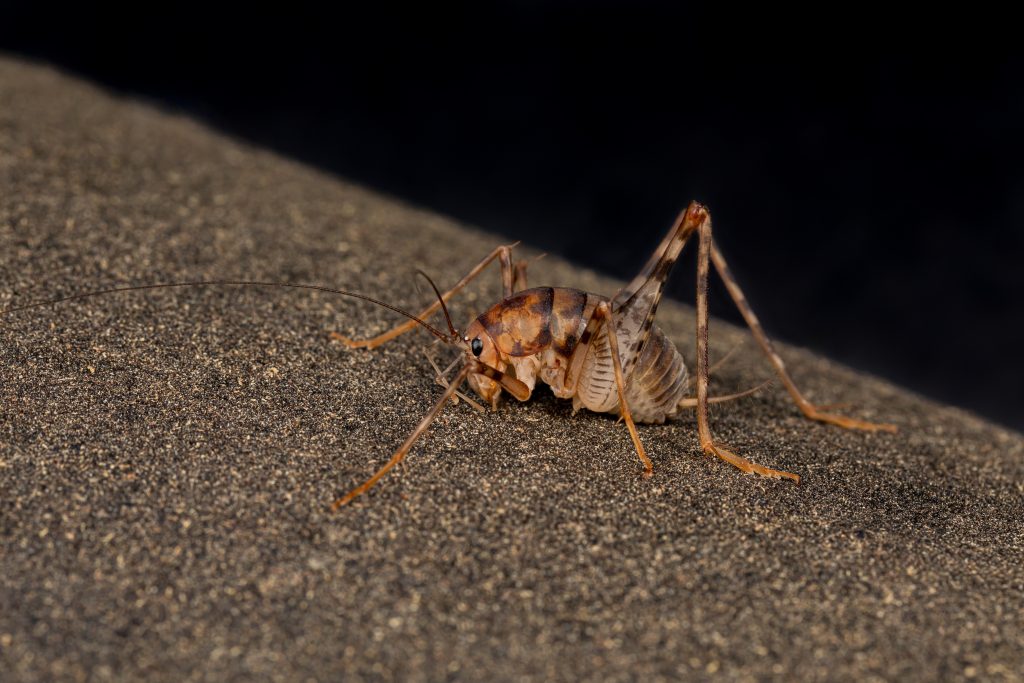
You open a crawl-space door or move a box in the basement and a brown insect with oversized legs jumps several feet across the floor. That is the kind of encounter that often involves a camel cricket.
Camel crickets have arched backs and extremely long hind legs. You may also hear them called spider crickets or cave crickets. Adult camel crickets are wingless, so they do not make the familiar chirping sound produced by field crickets.
Moisture is one of the best identification clues. NC State Extension’s camel cricket guide lists crawl spaces, basements, garages, storage buildings, bathrooms, and laundry rooms among the places where these crickets can appear. Outdoors, they shelter beneath logs, stones, firewood, and thick vegetation.
If you keep finding crickets in crawl spaces or other dark, damp areas, check the conditions there before focusing only on the insects you can see.
House Crickets

House crickets are generally tan or yellowish brown and have long antennae. They can chirp, which immediately separates them from silent camel crickets.
Color is less useful than many identification guides make it sound. Lighting inside a garage or utility room can make a dark field cricket look lighter, and field crickets sometimes wander indoors. Look at the full situation instead.
A cricket appearing once beside an exterior door may have simply entered from the yard. Repeated chirping deeper inside a building gives you more reason to inspect entry points and nearby shelter.
Mole Crickets
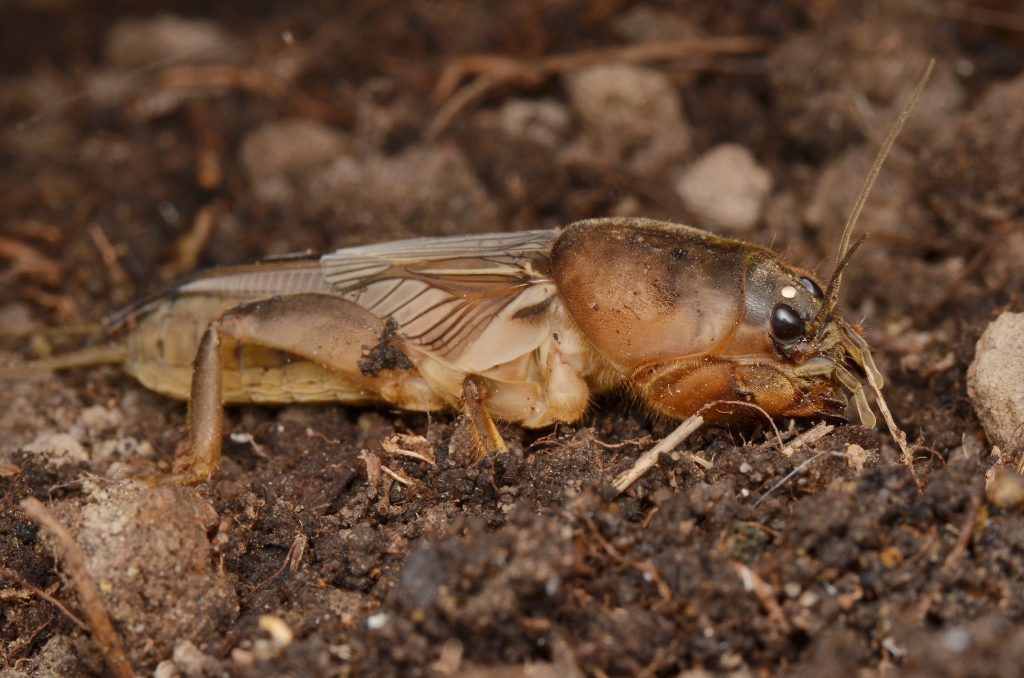
Mole crickets are built for digging. Their wide front legs resemble small shovels, and most of their activity occurs beneath the soil rather than inside a home.
They are especially relevant in southeastern North Carolina. NC State TurfFiles’ mole cricket guide identifies tawny and southern mole crickets as important turf pests and describes mole crickets as the number one insect pest of home lawns and several other managed turf settings along the North Carolina coast.
Tawny mole crickets feed heavily on grass roots and shoots. Southern mole crickets feed more on small organisms in the soil, although their tunneling can still disturb lawns. Northern mole crickets also occur in the state but generally cause less damage.
How to Identify North Carolina Crickets Around Your Home
Start with what you can observe without touching the insect. Body shape, sound, and location usually narrow the possibilities quickly.
A humpbacked cricket jumping around a Raleigh crawl space is likely a camel cricket. A dark cricket chirping from the lawn fits the field cricket group much better. Broad digging legs point toward a mole cricket.
| What You Notice | Likely Cricket | What to Check Next |
| Dark cricket chirping from grass after sunset | Field cricket | Weeds, planting beds, foundation edges, and door gaps |
| Humpbacked cricket with very long legs | Camel cricket | Crawl-space humidity and exterior shelter |
| Long-legged cricket that never chirps | Camel cricket | Basements, leaks, utility areas, and foundation openings |
| Tan cricket chirping near a building | House or field cricket | Doors, garages, windows, and outdoor lighting |
| Broad front legs made for digging | Mole cricket | Loose soil, tunnels, and thinning turf |
| Several crickets returning to one damp area | Often camel cricket activity | Moisture, drainage, and entry points |
Patterns matter more than isolated sightings. If crickets keep appearing beside the same basement wall, utility opening, or crawl-space access point, inspect that area closely for moisture and gaps.
Why Crickets Show Up Around North Carolina Homes
Crickets do not enter houses at random. Your foundation may provide shade, damp mulch may offer daytime shelter, or a worn garage seal may make it easy for insects to move indoors.
Moisture and Shelter
Camel crickets are especially drawn to humid conditions. Plumbing leaks, poor drainage, damp basement corners, and moisture beneath a house can give them a cool place to hide.
The conditions just outside the wall matter too. Mulch, vines, stacked firewood, stones, lumber, and thick shrubs can hold moisture and shade the soil. When those materials sit directly against the foundation, crickets are already close to possible entry points.
Cracks, Doors, and Exterior Lighting
Check low areas around the house first. Worn door sweeps, garage-door gaps, foundation cracks, damaged crawl-space access panels, and openings around pipes or cables can give crickets a direct path indoors.
Outdoor lighting may increase insect activity close to doors and windows after dark. Moving unnecessary lights farther from entrances or turning them off when they are not needed can reduce the number of insects gathering beside common access points.
Can Crickets Damage Your Home or Lawn?
Most crickets that wander inside are nuisance pests. Their chirping can be disruptive, and repeated activity in storage areas can become frustrating, but common household crickets do not normally damage structural wood.
Camel crickets can cause problems when large numbers remain in a damp basement or storage area. Heavy activity may leave dark droppings, and the insects can feed on stored fabrics when other food is limited.
Mole crickets create a different problem because they live in the soil. Their tunnels disturb turf roots, while tawny mole crickets also feed directly on grass roots and shoots. If sections of a lawn begin thinning while the soil feels loose or disturbed, checking below the surface can help separate mole cricket damage from irrigation or disease issues.
How to Keep Types of Crickets in North Carolina Away
Effective cricket prevention starts with the places where the insects hide and enter. Removing one cricket from the garage will not solve a recurring problem if moisture, mulch, or an open foundation gap continues to support activity.
For camel crickets, moisture control deserves particular attention. If you regularly find them in a basement or crawl space, inspect that environment before relying on repeated spot treatments.
| Area to Inspect | What to Change | Why It Helps |
| Crawl space or basement | Correct leaks and persistent humidity | Makes the area less suitable for camel crickets |
| Mulch and ground cover | Keep them at least 12 inches from the foundation* | Creates a drier strip beside the house |
| Exterior doors | Replace worn weather stripping and install snug door sweeps | Blocks ground-level entry points |
| Foundation | Seal accessible cracks and openings | Limits movement into sheltered areas |
| Utility penetrations | Close gaps around pipes, cables, and wiring | Removes overlooked entry routes |
| Shrubs and vines | Trim growth away from siding | Reduces shaded cover against the home |
| Firewood | Store stacks away from exterior walls | Moves cricket shelter farther from entrances |
| Garage and storage areas | Reduce clutter and keep items off damp floors | Removes hiding places and makes activity easier to notice |
| Exterior lighting | Limit unnecessary lights close to entrances | Reduces nighttime insect activity near doors |
*The 12-inch mulch recommendation comes from NC State’s camel cricket guidance. It works best as part of a larger approach. A clear foundation edge will not correct a humid crawl space or a damaged garage-door seal.
Look at where the cricket activity actually occurs. That specific location usually gives you the best clues about what needs to change.
When Professional Cricket Control Makes Sense
One cricket that hops through an open garage usually does not require professional pest control. Recurring activity is different. If camel crickets keep showing up in a crawl space, you hear crickets indoors night after night, or you cannot find the gaps they are using, a professional inspection can help identify the source.
ClearDefense Pest Control treats crickets as part of its general pest-control service. Technicians look at pest behavior, habitat, moisture conditions, likely entry points, and the areas where activity is concentrated before applying targeted treatment.
If the types of crickets in North Carolina around your property have gone from occasional visitors to a recurring problem, contact ClearDefense Pest Control to schedule service. Identifying the cricket and the conditions attracting it gives you a practical way to address the problem instead of treating each sighting on its own.