
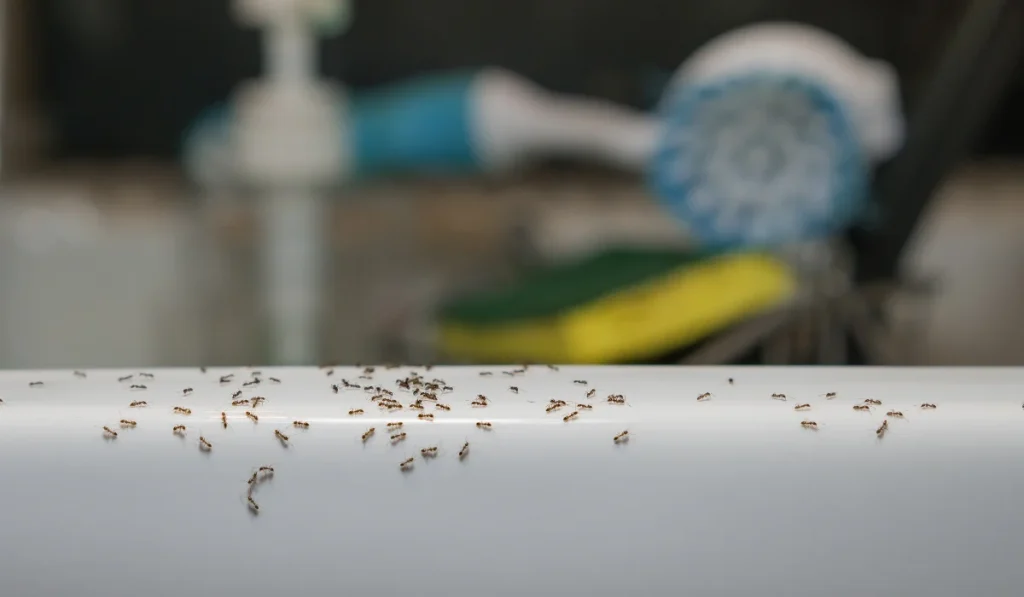
Tiny Ants in Kitchen Overnight can cause costly problems when early signs are missed. Learn the signs, risks, and when to call ClearDefense Pest Control.
Key Takeaways About Tiny Ants Appearing in Your Kitchen Overnight
- Tiny ants in your kitchen overnight August belong to several species, and correct identification matters because each type responds to different approaches.
- Some ant species can infest stored food, and certain types may pose additional concerns for your home’s structure or cleanliness.
- Removing food sources that attract ants, storing items in sealed containers, and cleaning up trails are practical first steps toward reducing ant activity.
- When tiny ants keep returning, a recurring pest control plan can address the colony rather than just the visible foragers.
How to Identify the Tiny Ants Showing Up in Your Kitchen Overnight
The first step to solving a tiny ant problem in your kitchen is knowing what you are dealing with. Different ant species look different, behave differently, and need different approaches. A closer look at the ants on your counter can tell you a lot about where they are coming from and what is drawing them inside.
How to Tell Tiny Ant Species Apart in Your Kitchen
Not all tiny ants are the same. Some ant species feed mostly on sugar or sucrose, while others prefer oils or proteins, according to Texas A&M AgriLife Extension. Knowing what they are eating helps narrow down the species.
Thief ants and Pharaoh ants, for example, prefer protein or greasy food sources year-round. If you notice tiny ants clustering around grease rather than sweet spills, you may be looking at one of those species.
Carpenter ants live in a different habitat and require different treatment than other ant species that may find their way into homes. They tend to be larger than most kitchen-invading ants, so size is one quick way to rule them in or out.
How to Spot Tiny Ant Activity Inside Your Home
Tiny ants in the kitchen often appear overnight because they forage when the house is quiet. You May flip on the light and see a line of ants moving along a countertop edge or near the sink. Paying attention to what the ants are gathered around, whether it is something sweet or something greasy, can help you identify the species.
Argentine ants, for instance, often nest in shallow spots just below the soil surface. Their colonies can be close to your foundation, making indoor appearances more likely.
Where Tiny Ants Commonly Show Up in Your Kitchen
Inside, ants tend to show up wherever food residue collects. Counters, sinks, and floors near cooking areas are common gathering spots. The type of food they target varies by species, so watch what they are drawn to.
Outside, some ant species nest just below the soil surface near the home. According to UC IPM, Argentine ants often build shallow nests in this way, keeping them close to potential indoor entry points.
Exterior Entry Points Tiny Ants Use to Reach Your Kitchen
Ants move indoors from nests near your foundation. Gaps along the base of exterior walls, around door frames, and where utility connections meet the structure can all serve as pathways. Because some species nest shallowly in soil right next to the house, the distance from nest to kitchen can be short.
Identifying which ant species you are dealing with is worth the effort. Different species need different treatment strategies, and a correct identification sets you up for the right response from the start.
Why Tiny Ant Problems Develop in Kitchens Overnight
Tiny ants in your kitchen overnight can seem to appear out of nowhere. Understanding why they show up after dark starts with knowing where they nest, what draws them inside, and how they recruit others to follow.
Outdoor Nesting Areas That Lead Tiny Ants Into Your Kitchen
Most ant colonies are established outdoors. In many species, a single queen lays eggs and maintains or increases the colony size over time. Ant colonies can grow steadily from a nearby yard, mulch bed, or foundation edge. The nest itself may be well out of sight, but foragers can travel considerable distances to reach your kitchen.
Food and Shelter That Attract Tiny Ants to Your Kitchen
Food left on counters or in open packaging is one of the strongest attractants. According to UC IPM, you should store food in clean, sealed containers, not plastic bags or open packaging. Even small crumbs or spilled beverages can draw foragers indoors.
Keeping your home clean matters. Clean up spilled foods and beverages before they draw scouts., and store food in tightly sealed containers. These steps remove the rewards that keep ants coming back night after night.
How Tiny Ants Move Through Your Home at Night
Ants August forage through your kitchen at night when foot traffic is low and food residue sits undisturbed. According to Kansas State University Extension, in many species foragers create pheromone trails that help others find a source of food or water. Once one ant locates something worth eating, those pheromone trails guide dozens more along the same path.
This is why you may see a thin line of tiny ants tracing the same route each night. The trail grows stronger as more ants follow it, pulling additional workers from the colony toward your kitchen.
Ant Trails and Entry Points to Watch For
Pheromone trails can run along edges of countertops, baseboards, and walls. Because the trails are reinforced each time a forager travels them, the same route August stay active for days. Cleaning surfaces can remove food residue along the trail, but it does not address the colony producing new foragers.
Reducing access to food is the most practical first step. Store food that attracts ants in sealed containers with a tight-fitting lid, and clean up any spills before you turn out the lights.
Risks From Tiny Ants in Your Kitchen
Finding tiny ants in your kitchen overnight is more than a nuisance. Depending on the species involved, those trails along your countertops can pose real concerns for your food supply, your home’s structure, and your family’s well-being. Here is what to watch for.
Health Risks Linked to Tiny Kitchen Ants
Most tiny ant species do not sting or bite in any meaningful way. Pharaoh ants, for example, do not sting and usually do not bite. However, according to the University of Minnesota Extension, while not common, at least one species, the Pharaoh ant, has been known to transmit some diseases, like Salmonella. That makes any ant activity near food prep areas worth taking seriously.
Property Damage Tiny Ants Can Cause
Some species go beyond the kitchen. Carpenter ants can weaken wood in structures over time. If the tiny ants you see overnight turn out to be a different species moving through walls or framing, the concern shifts from food contamination to structural integrity.
Other small ant species nest indoors in dark, narrow spaces including cardboard boxes and wall voids. That means colonies may already be established inside your home before you notice the first trail across the counter.
How Tiny Ants Affect Food Preparation Areas
Some species can infest food, and kitchens offer exactly what they are looking for. Some tiny ant species, including thief ants, prefer foods high in sugars and proteins. Other tiny species enter homes seeking sweets. Once scouts locate a reliable source, the trail grows quickly from a handful to a steady line.
Because these ants are so small (some as tiny as 1/32 inch), they can access sealed pantry shelves, countertop containers, and spaces you might assume are protected. Anything left out overnight becomes an open invitation.
When to Take a Closer Look at Tiny Ant Activity
A few ants on the counter may look minor. But nighttime activity often signals a nest nearby, possibly inside wall voids or behind appliances. Pay attention to how many ants appear and where the trail leads.
If the ants are light tan to reddish and small (about 1/12 to 1/16 inch long), you may be dealing with Pharaoh ants. Some tiny ant species have nesting habits and food preferences that require specialized baits matched to the species’ food preferences, and general approaches can make the problem harder to manage.
Professional Pest Control for Tiny Ants in Kitchen Overnight
When tiny ants in kitchen overnight become a recurring problem, a structured approach matters more than a quick fix. These ants are often similar in size to little black ants and can be mistaken for them, according to Mississippi State University Extension. Accurate identification guides the right control strategy, and a recurring service plan helps keep activity from returning.
How to Reduce Attractants for Tiny Kitchen Ants
Tiny ants follow scent trails to reach food sources in your kitchen. You can temporarily disrupt that activity by wiping trails with a mild solution of vinegar and water. This breaks the product path ants rely on to navigate.
Without their scent trail, ants lose their way to the food source and are forced either to reestablish the trail or forage elsewhere, as Mississippi State University Extension notes. Wiping down counters and floors each evening removes residue that draws scouts back after dark.
Sticky barriers or water moats containing soapy water can prevent ants from reaching plants or other items in and around your kitchen. If you use a sticky barrier, periodically stir the material with a stick to prevent ants from crossing on collected debris.
Why Tiny Ant Control Starts With a Thorough Inspection
Controlling tiny ants in your kitchen overnight begins with finding how they get inside. Walk around the outside of your home and locate potential entry points, including cracks, crevices, and spaces around windows and doors. Then check indoor entry points, paying particular attention to windows, doors, and plumbing and utility penetrations, as UF/IFAS Extension recommends.
Use an appropriate sealant to close those gaps once you find them. Sealing entry points reduces the number of pathways ants can use to reach your kitchen at night. This step is a core part of any prevention-first approach.
What to Expect During Professional Tiny Ant Treatment
ClearDefense service professionals inspect your home’s exterior and interior, checking foundation edges, plumbing penetrations, and utility entry points. They look for the same entry points you would check on your own, but with trained eyes that spot less obvious cracks and penetrations around plumbing or utility lines.
After the inspection, you receive a Defense Report documenting every product used and every finding. This transparency is part of ClearDefense’s prevention-first IPM methodology. Knowing what was applied and where gives you a clear picture of your home’s condition.
What to Expect From a Professional Ant Control Plan
ClearDefense focuses on recurring service rather than one-time treatments. A recurring plan means your home is inspected and treated on a regular schedule, so conditions that attract tiny ants to your kitchen overnight are addressed on each visit.
Between visits, trail disruption with a vinegar-and-water wipe can help reduce overnight ant activity. Keeping entry points sealed and sticky barriers maintained adds another layer of protection. Together, these steps and a recurring professional plan give your home ongoing attention where it counts.
Bottom Line on Tiny Ants in Kitchen Overnight
Finding tiny ants trailing across your kitchen counter after dark is a sign that a colony has found a reliable food source inside your home. Identifying the species matters because different ants respond to different approaches. Keeping surfaces clean, sealing entry points, and removing accessible food can all help reduce overnight activity. For ongoing ant pressure that keeps coming back, a recurring pest control plan is the most practical path forward. Contact ClearDefense Pest Control to request a quote and get a Defense Report tailored to your home.
Frequently Asked Questions About Tiny Ants in the Kitchen
Why Do Ants Show Up Only at Night?
Many ant species forage around the clock, but you may notice them more at night because the kitchen is quiet and undisturbed. Scouts lay scent trails back to the colony once they locate food. Without disruption, workers follow those trails through the overnight hours.
Does Wiping Down Counters Actually Help?
Yes. Cleaning surfaces removes the scent trails ants rely on to navigate between the colony and a food source. Without that trail, foraging ants lose their way and must either reestablish the path or search elsewhere. Consistent cleaning makes your kitchen a less reliable target.
Are These Ants a Health Concern?
Most tiny kitchen ants are a nuisance rather than a direct health threat. However, some species can get into stored food and contaminate it. Keeping pantry items in sealed containers helps limit that risk.
Why Do Store-Bought Products Sometimes Make Things Worse?
Some ant species respond better to sugar-based attractants, while others prefer protein or greasy options. Using the wrong type of bait can scatter the colony instead of drawing it in. A recurring service plan accounts for the species involved and adjusts the approach over time, which is why professional identification is a practical first step.