
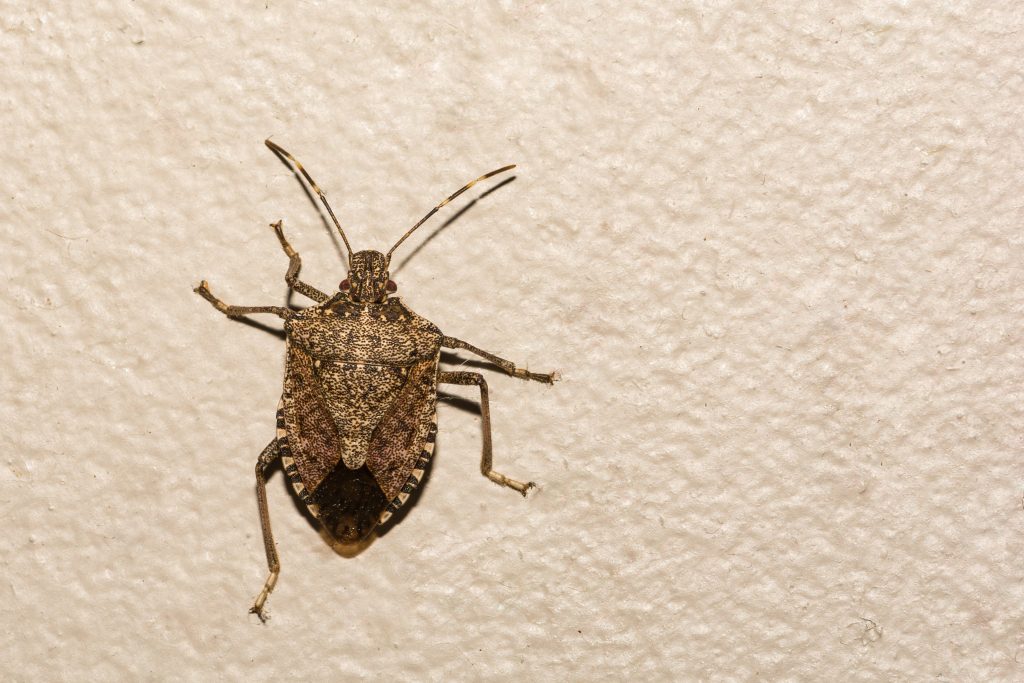
One brown marmorated stink bug on the siding is easy to overlook. A cluster around an upstairs window is a clearer warning. Those insects may be testing the edges of the frame for a route into your walls.
Brown marmorated stink bugs move toward homes in fall because they need protected winter shelter. Gaps around siding, vents, doors, and rooflines can lead into wall voids or attic spaces where the insects remain hidden for months. They may later crawl into bedrooms, hallways, or living rooms when indoor heat or winter sunlight wakes them.
This seasonal movement affects homeowners across many ClearDefense service areas, from North Carolina and Ohio to Missouri, Tennessee, Georgia, and northern Florida. Local activity varies, but the prevention strategy stays the same: find the places where the bugs gather, close practical entry points, and address exterior pressure before the insects settle inside.
How to Identify a Brown Marmorated Stink Bug
A brown marmorated stink bug has the broad, shield-shaped outline common to many stink bugs. Its surface is mottled with brown, tan, and gray, which helps it blend into bark, mulch, roof shingles, and weathered siding.
Body color alone does not confirm the species. According to the University of Minnesota Extension, the most useful markings are pale bands across the antennae and alternating light and dark patches along the outer edge of the abdomen. Adults are usually close to five-eighths of an inch long.
The pest feeds on about 200 types of plants. That broad diet helps explain why the insects can thrive in neighborhoods with gardens, mature trees, ornamental landscaping, or nearby agricultural land.
Brown Marmorated Stink Bug Identification
| Feature | What to Look For | Why It Helps |
| Body shape | Broad, flat, and shield-shaped | Separates stink bugs from most household beetles |
| Body color | Mixed brown, tan, and gray | Matches the mottled appearance of the species |
| Antennae | Clearly visible pale bands | One of the easiest identification marks |
| Abdomen edge | Alternating pale and dark patches | Helps distinguish it from similar brown bugs |
| Adult size | About five-eighths of an inch | Large enough to identify without magnification |
| Odor | Strong scent when disturbed or crushed | Confirms defensive behavior, but not the exact species |
Take a clear photo before removing the bug when identification is uncertain. Several native stink bugs look similar, and odor alone is not a reliable way to tell them apart.
Why Brown Marmorated Stink Bugs Head for Walls in Fall
Brown marmorated stink bugs spend spring and summer feeding outside. As daylight becomes shorter near the end of the growing season, adults begin leaving feeding areas and searching for sheltered places where they can remain through winter.
A house provides several useful hiding places. Narrow spaces behind trim, siding, soffits, and vents stay dry and reduce exposure to wind. On a warm fall afternoon, the bugs may collect on a sunny exterior wall and slowly move toward seams in the building.
In its brown marmorated stink bug guide, Penn State Extension reports that the first documented U.S. specimen was collected in Allentown, Pennsylvania, in September 1998. The species has since spread through much of the country and now appears as a regular fall pest in many eastern and midwestern communities.
Why Sunny Walls Attract More Activity
South-facing and west-facing walls often stay warm late in the afternoon. That warmth makes them common gathering areas after a cool night, especially on homes with light siding or broad upper walls exposed to the sun.
The gathering point can help you locate stink bug entry points. Repeated activity near the same window, gable, vent, or siding seam suggests that the insects are finding shelter nearby.
How Stink Bugs Get Into Wall Voids
Stink bugs in walls usually enter through existing openings. They do not chew through intact siding or create holes in the structure. Instead, they use gaps around window frames, utility lines, vents, soffits, doors, and roof transitions.
Two-story homes can be harder to inspect because many likely entry points sit well above eye level. A damaged screen on a gable vent may look normal from the ground. Split caulk around second-story trim can also remain unnoticed until stink bugs begin appearing indoors.
Common Stink Bug Entry Points
| Area | What to Check | Practical Response |
| Window frames | Split sealant, loose trim, or torn screens | Repair the screen and replace failed exterior sealant |
| Exterior doors | Flattened weatherstripping or visible light | Install weatherstripping or a fitted door sweep |
| Gable and attic vents | Loose screening or open corners | Secure pest-resistant screening without blocking airflow |
| Soffits and fascia | Shifted panels, rot, or open joints | Schedule a proper exterior repair |
| Siding transitions | Gaps where siding meets brick, stone, or trim | Close narrow joints with a suitable exterior material |
| Utility penetrations | Openings around pipes, cables, and service lines | Seal around the opening without damaging the line |
| Garage doors | Worn bottom seals or open corners | Replace the seal and correct uneven door closure |
| Window units | Loose side panels or gaps above the unit | Fit solid panels and seal the perimeter |
Use binoculars or a camera zoom to inspect high areas from the ground. Roof edges, high soffits, and upper-story trim should not be checked from an unstable ladder.
Are Stink Bugs in the House Dangerous?
Stink bugs in the house are nuisance pests rather than structural pests. They do not eat wood, drywall, insulation, or wiring. They also do not normally reproduce while sheltering indoors.
Brown marmorated stink bugs are not known for biting or stinging people or pets. They are not recognized as household disease carriers. Their main indoor effects are unexpected movement, unpleasant odor, and the possibility of small stains when a bug is crushed against fabric or a painted wall.
The Environmental Protection Agency (EPA) confirms that the insects do not cause structural damage or reproduce inside homes. The agency also notes that some buildings in established areas can receive very large groups, although the number varies greatly from one property to another.
Household Risk Compared With Household Nuisance
| Concern | What Homeowners Should Know |
| Structural damage | They do not eat or weaken building materials |
| Indoor breeding | They do not normally establish a breeding population indoors |
| Bites and stings | They are not known for biting or stinging people or pets |
| Disease | They are not recognized as household disease vectors |
| Odor | They can release a strong defensive smell |
| Winter sightings | Individuals may leave wall voids during warm periods |
| Surface marks | Crushing a bug may stain paint, curtains, or upholstery |
The smell comes from defensive glands. Slow removal is usually cleaner than swatting or crushing the insect.
Why Stink Bugs Appear Indoors During Winter
A stink bug that reaches a wall void may remain inactive for weeks or months. Warm air moving through the structure can wake it. Sunlight near a window can then draw the bug toward an interior room.
This is why a stink bug may appear in an upstairs bedroom long after fall activity has stopped outside. It did not hatch in that room. It likely entered through the exterior earlier in the season and moved from a hidden space when temperatures changed.
Repeated sightings across several rooms can indicate that multiple insects are sheltering in wall voids or attic spaces. The activity may continue until warmer spring conditions draw the remaining adults back toward the exterior.
How to Keep Brown Marmorated Stink Bugs Out
Stink bug prevention works best before repeated cold nights push larger numbers toward shelter. Once the insects move behind siding or into wall voids, reaching every hidden bug becomes difficult.
Start with reachable repairs. Replace torn screens, worn door sweeps, and weatherstripping that no longer touches the door. Remove loose caulk before applying new exterior sealant so the repair bonds to a clean, stable surface.
Follow the Exterior Activity
Watch where the bugs gather during warm afternoons. Their landing pattern can point toward failed trim, open siding transitions, or damaged vent screening. Inspect the same area from inside an attic when it is safe to do so.
Do not treat caulk as a repair for rotten wood, loose siding, or damaged soffits. Those problems need durable correction. Vents must also remain open to airflow, so use fitted screening rather than blocking them.
Make the Perimeter Easier to Inspect
Trim shrubs that press against the siding or hide lower wall openings. Remove deep leaf buildup from the foundation and pick up fallen fruit. These steps will not remove stink bugs from the neighborhood, but they make exterior gaps easier to see and reach.
Outdoor lighting can draw many insects close to entry doors after dark. Turn off unnecessary lights where practical or place fixtures away from frequently used entrances. Lighting changes support exclusion, but they do not replace structural repairs.
What to Do With Stink Bugs Already Indoors
Use a vacuum hose for visible bugs on floors, ceilings, curtains, and window frames. Empty the bag or canister outside soon afterward because the odor can remain inside the vacuum.
For one or two bugs, place a cup over the insect and slide a stiff piece of paper underneath. Carry the closed container outside. This method takes more patience, but it avoids crushing the bug against a finished surface.
Indoor foggers and broad room treatments do not close the original entry point. They may affect exposed bugs without reaching insects inside the walls. Effective stink bug control should address both the visible insects and the exterior conditions that allowed them to enter.
When Professional Stink Bug Control Makes Sense
A few isolated bugs may only require vacuuming and a small screen or seal repair. Professional pest control becomes more useful when large groups gather outdoors, indoor sightings continue through winter, or likely entry points sit around the roofline.
A technician can inspect areas that are difficult to view from the ground and identify patterns in how the insects are using the exterior. Properly timed exterior pest treatment can support a broader prevention plan, especially when it is paired with practical exclusion work.
ClearDefense Pest Control bases service on pest behavior, seasonal movement, and the layout of the home. Precise applications focus on areas of active pressure rather than treating every surface the same way.
Keep Brown Marmorated Stink Bugs Out of Your Walls This Fall
Brown marmorated stink bugs do not need to damage a home to become a persistent problem. Once they reach wall voids or attic spaces, individual bugs may continue appearing indoors long after the fall gathering ends.
Watch where they collect, repair reachable openings, and address damaged screens or seals before colder weather arrives. For heavy exterior activity or entry points above a safe working height, contact ClearDefense Pest Control to schedule an inspection and targeted stink bug control service.