

You walk into the garage and spot a web stretched across the corner, thick with dust and a spider sitting dead center. Or you pull a stored box off the shelf and something scurries out fast enough that you don’t get a good look. Texas spiders come in hundreds of forms, but homeowners mainly need to recognize two groups: widow spiders and recluse spiders, the two considered medically significant, and everything else that’s harmless.
Around Austin and the rest of Central Texas, warm weather through spring, summer, and fall keeps insects active outdoors, and spiders follow that food source into garages, sheds, and stacked firewood near the house. As temperatures shift or storage areas go undisturbed for weeks, Texas spiders that would otherwise stay outside start showing up indoors more often, which is usually what’s behind a sudden uptick in sightings.
This guide covers how to identify the region’s most common species, which two groups actually carry health risk, what to do if you’re bitten, and when repeated activity is worth a professional look rather than another round of clearing webs.
Key Takeaways
- Texas has two spider groups considered medically significant, widow spiders and recluse spiders, and both have distinct markings that set them apart from harmless species.
- Wolf spiders, orb weavers, and tarantulas look intimidating but aren’t dangerous, and most feed on insects that would otherwise be a bigger problem around your home.
- Spiders cluster in woodpiles, garages, closets, and stored boxes because insects are already nearby, so seeing more of them is often a sign that something nearby is worth checking.
- A bite from a widow or recluse spider calls for washing the area and prompt medical attention, while a growing indoor presence is a sign to get a professional inspection rather than just clearing webs.
Venomous Spiders in Texas
Out of the hundreds of spider species found across the state, the Texas Parks and Wildlife Department notes that only two groups are considered medically significant to people: widow spiders and recluse spiders. Everything else you run into is either harmless or beneficial, so learning to recognize these two by sight is really the main identification skill worth having.
Southern Black Widow

The female southern black widow has a shiny, jet-black body with a rounded abdomen and a red or orange hourglass mark on the underside. Males are smaller, brown, and easy to overlook. Black widows build irregular, messy webs low to the ground in woodpiles, meter boxes, outbuildings, and other undisturbed spots. They aren’t aggressive; a bite typically happens when one gets pressed against skin, not because it went looking for a fight.
Brown Recluse
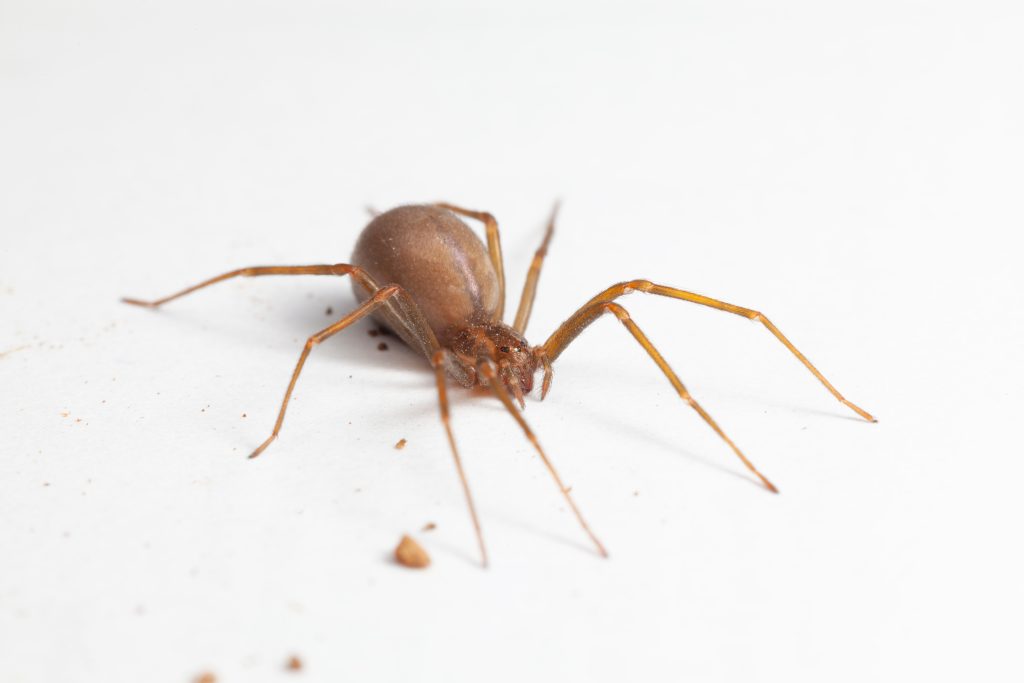
Brown recluses are tan to golden brown with a darker, violin-shaped marking on the top of the head region. One reliable identifier: while most spiders have eight eyes in two rows, recluses have six eyes arranged in three pairs. They don’t build webs to catch prey the way most spiders do. Instead, they hunt at night and hide during the day in cardboard boxes, folded clothing, closets, and other spots that go undisturbed for long stretches.
Common Harmless Spiders Around Texas Homes
Most spiders you’ll actually run into around a Texas home fall into a small handful of familiar, harmless types. Knowing what they look like makes it easier to leave them alone instead of assuming the worst.
Wolf Spiders

Wolf spiders are large, hairy, and often mistaken for something more dangerous because of their size. They don’t spin webs to catch food; they hunt on foot, mostly at night, and can be spotted by the way their eyes reflect light. They frequently enter homes through gaps under doors, but they generally pose no real threat to people.
Orb Weavers and Garden Spiders
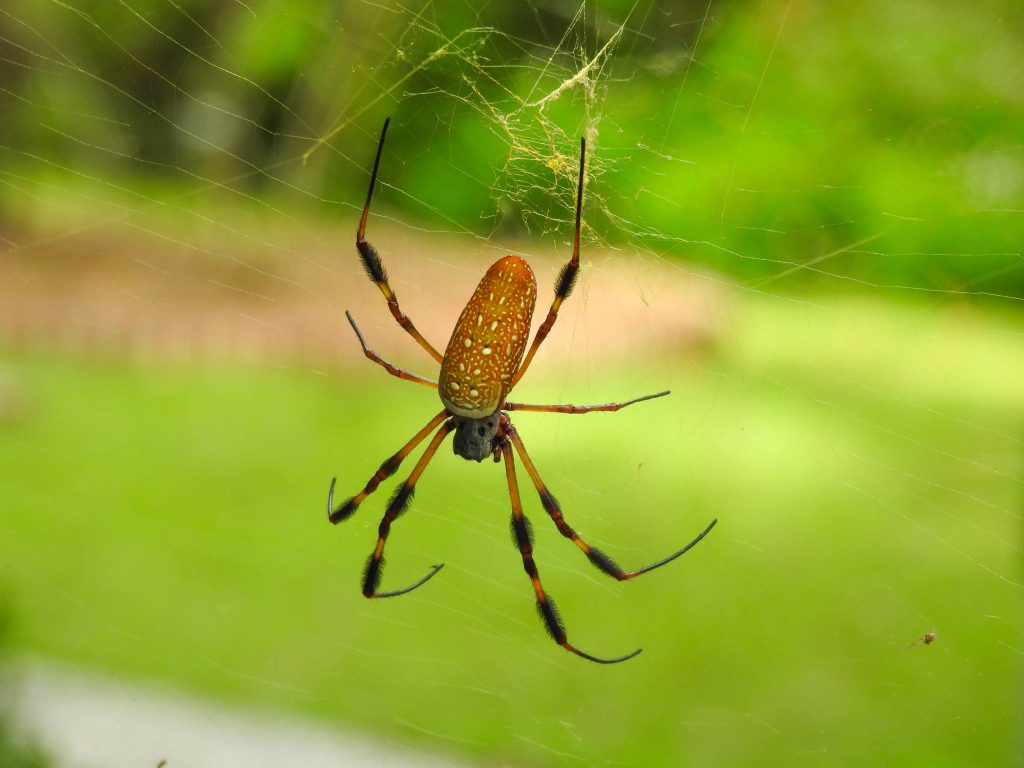
The black-and-yellow garden spider is one of the most visible spiders in Texas because of the large, wheel-shaped webs it builds in gardens, eaves, and shrubs. These webs can look dramatic, especially by late summer and fall when the spiders reach full size.
The black-and-yellow garden spider is a beneficial predator of flying insects, and it’s not aggressive toward people.
Tarantulas
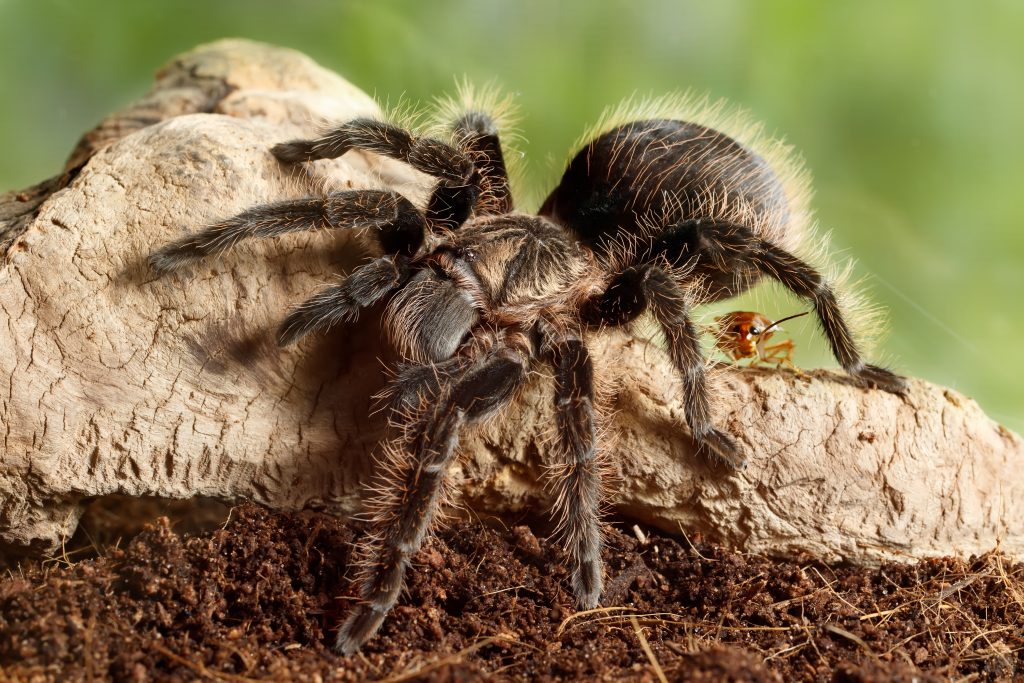
Tarantulas are the heaviest spiders in Texas, with dark brown to blackish coloring and a body around an inch and a half long. They live in burrows across grasslands and semi-open areas statewide. Their bites aren’t considered medically serious to humans, though the fine hairs they can flick off their abdomen when threatened August irritate skin or eyes. In many summers, wandering male tarantulas turn up along roadsides and driveways in noticeably higher numbers as they search for mates.
Where Spiders Hide In and Around the House
Spiders show up indoors because there’s something to eat nearby; they follow insect activity, not clutter on their own. Around Austin, exterior lighting that stays on through the evening draws flying insects to the house, and those insects draw in the spiders that feed on them. Cracks around foundations, gaps under doors, damaged screens, and uncovered vents give spiders an easy path from the yard into the structure. Knowing their favorite hiding spots, and understanding why they choose them, makes it easier to check the right places before you’re surprised by one.
Outdoor Hiding Spots
Outdoors, spiders gravitate toward anything that stays undisturbed for weeks at a stretch. Woodpiles and stacked lumber hold both physical shelter and the insects that live in the decaying wood underneath. Sheds and outbuildings offer dark corners that rarely get swept out, while eaves, window frames, and door seals give web-building species a stable anchor point near the insects that porch or security lighting tends to attract after dark.
- Woodpiles and stacked lumber
- Storage sheds and outbuildings
- Eaves, window frames, and door seals
- Meter boxes and other undisturbed exterior fixtures
Indoor Hiding Spots
Indoors, the pattern is similar: spiders settle wherever boxes, clothing, or equipment sit untouched long enough to go unnoticed. Garages and crawlspaces stay dim and see little foot traffic, which suits both web-builders and hunting species like brown recluses. Cardboard boxes are especially appealing to recluses because the material offers tight seams to hide in, and stacks of them in a closet or attic can go unmoved for months at a time.
- Garages, basements, and crawlspaces
- Closets, especially undisturbed shoes, linens, and folded clothing
- Behind furniture and inside rarely opened storage containers
- Cardboard boxes left untouched for long periods
Shaking out shoes and clothing that have been sitting for a while, and keeping firewood and debris away from the foundation, cuts down on the number of easy hiding spots.
What To Do With a Spider Bite
Most spider bites in Texas cause nothing more than local redness, mild swelling, or a brief pinprick sensation that fades within a day or two. The exception is a bite from a widow or recluse spider, where the venom can cause a more serious reaction that’s worth taking seriously from the start. Knowing the right first steps, and the warning signs that call for medical attention, helps you respond calmly instead of guessing at what a bite means.
Immediate First Aid
If you suspect a widow or recluse spider bite, the Texas Department of State Health Services recommends washing the area thoroughly with soap and water and applying an ice pack to reduce swelling and discomfort. If you can take a clear photo without approaching or handling the spider, the image may help with identification. Do not attempt to capture it, since handling a medically significant spider directly increases the chance of a second bite.
When to Seek Medical Care
Watch for spreading redness, worsening pain, fever, chills, or a wound that isn’t healing on its own. The National Capital Poison Center advises contacting a poison control center or seeking medical attention right away if you think you’ve been bitten by a widow or recluse spider, even before symptoms fully develop, since early treatment tends to ease the recovery process for both bite types.
When Spider Activity Signals a Bigger Problem
An occasional spider in the garage is normal, and it doesn’t necessarily mean anything is wrong with the property. A pattern of repeated sightings, especially indoors, is the detail worth paying attention to, since it can point to conditions that are making the home more hospitable to spiders than it should be.
Why Activity Builds Up Over Time
Exterior lighting left on through the evening attracts moths, beetles, and other flying insects, and spiders often set up nearby to take advantage of that food source. Cracks in the foundation, gaps around utility lines, torn window screens, and doors that don’t seal tightly all give spiders, and the insects they feed on, an easy way into the structure. Stored boxes and undisturbed corners inside then give them somewhere to settle once they’re in.
What a Growing Spider Count Usually Means
A steady increase in indoor spider sightings may indicate that insects, shelter, or easy access points are supporting activity around the home, though weather shifts, mating season, and seasonal moisture can all play a role as well. Clearing webs and egg sacs on sight addresses what’s visible for the moment, but it doesn’t change the conditions that are drawing spiders in, which is why sightings tend to return within a matter of weeks even after a thorough cleanup.
Texas Spiders: Bottom Line
Identifying a spider is only half the job. The harder part is figuring out why they keep showing up and closing off the entry points and food sources that draw them in, which is where most do-it-yourself efforts fall short. Of the hundreds of species found in Texas, only two groups, widow spiders and recluse spiders, are considered medically significant, and the rest are worth leaving alone once you know what you’re looking at.
If black widows, brown recluses, or a growing number of webs are becoming common around your Austin-area home, ClearDefense Pest Control can assess the activity and address the places spiders use to hide, travel, and rebuild. Our spider control service checks eaves, overhangs, window and door seals, and other entry points, clears webs and egg sacs up to 25 feet, and treats key exterior edges up to 30 feet.
Request a quote and schedule spider-control service based on the activity around your home.
Frequently Asked Questions
How can I tell a black widow from a brown recluse?
Black widows are solid black with a rounded abdomen and a red or orange hourglass underneath. Brown recluses are tan to golden brown, flatter in shape, and marked with a darker violin pattern near the head. Black widows build messy webs close to the ground, while recluses don’t rely on a web to catch food and are found wandering at night instead.
Are wolf spiders or tarantulas dangerous to people?
No. Wolf spiders and tarantulas look intimidating because of their size, but neither poses a serious health risk. Wolf spider bites are uncommon and mild, and tarantula bites in Texas are generally compared to a bee sting.
When should I call a pest control company about spiders?
A spider or two outdoors is normal. If you’re seeing black widows or brown recluses repeatedly, or if spider activity indoors keeps increasing rather than settling down, it’s worth having a professional inspect the property to find what’s actually attracting them and treat the source.