
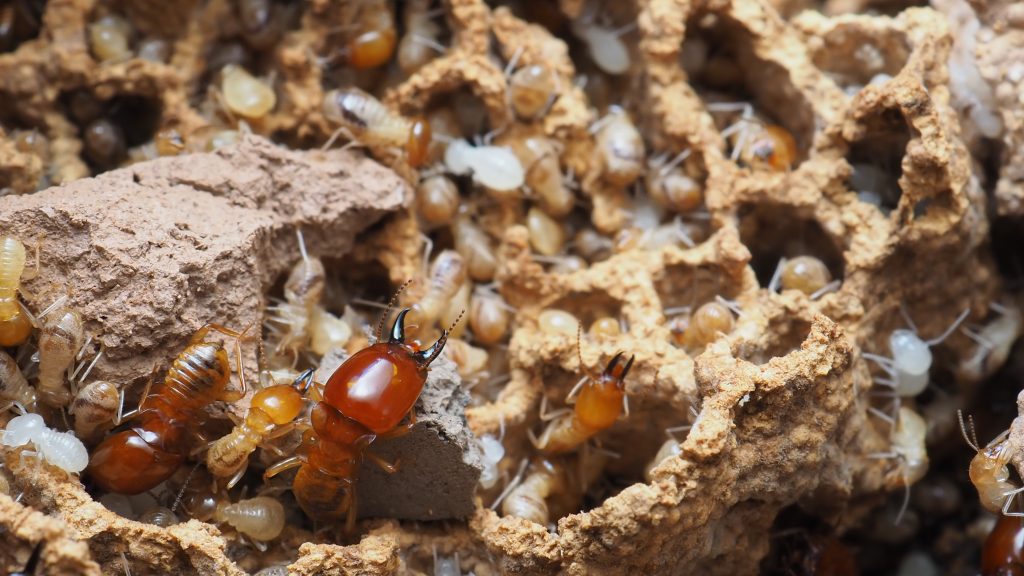
You walk your yard after a warm rain and notice a thin, muddy tube running up the side of your foundation, or you spot a scatter of papery wings collecting on a windowsill inside. Neither one means your house is falling apart, but both are signs that termites in Florida are already active nearby.
Florida has more established termite species than anywhere else in the continental U.S., and each one leaves different clues and swarms on its own schedule. This guide covers the species you’re most likely to encounter, when each one swarms, and what those signs actually mean for your home.
Key Takeaways
- Florida is home to several termite species, and each one is identified and treated differently, so knowing which one you have matters before any treatment starts.
- Native subterranean termites swarm on warm days after rain from late winter into spring, while the invasive species that have spread through Florida swarm at dusk and gather around outdoor lights.
- Mud tubes, discarded wings, and wood that sounds hollow are the clearest signs a colony is already working on your home.
- Florida’s mild winters keep colonies feeding year-round, so an inspection matters even outside of swarm season.
Termite Types Found Throughout Florida
Most termite problems in Florida trace back to one of four species, and telling them apart is the first step toward the right fix, since a treatment built for one type won’t touch a colony of another.
Native Subterranean Termites
Native subterranean termites are the most common and are found statewide. They build the classic mud tubes homeowners associate with termite damage, and their colonies can number in the hundreds of thousands.
Formosan Subterranean Termites
Formosan subterranean termites are an invasive species now established primarily in coastal cities but also spreading into central and northern Florida. Their colonies grow far larger than native subterranean colonies, and carry a noticeably higher share of soldiers than native colonies do, which is part of why pest professionals often describe them as more aggressive.
Asian Subterranean Termites
Asian subterranean termites are another invasive species, though their range is currently restricted to southern Florida. This species can infest live healthy trees and forage underground for up to a hundred feet away from their central nest before eventually reaching structures.
West Indian Drywood Termites
West Indian drywood termites behave differently from the three species above. This species establishes small nests inside a single piece of wood, and colonies are often identified by the coffee-ground-like droppings, called frass, that collect around windowsills. Because they don’t need soil contact, drywood colonies can start in furniture, attic framing, or trim without ever touching the ground.
When Do Termites Swarm in Florida
Swarming is how a mature colony reproduces, sending out winged termites to pair off and start new colonies elsewhere, and timing depends heavily on which species is involved.
Daytime Swarms After Rain
Native subterranean termites swarm during daylight hours, typically on warm days following rain, from late February into August, with activity often peaking in March and April.
Evening Swarms Near Lights
Formosan subterranean termites swarm later, generally from late April through early summer, and unlike their native relatives, they swarm at dusk and are attracted to porch lights and windows. Asian subterranean termites follow a similar evening pattern, with swarms visible at sunset starting as early as March in South Florida. Drywood termite swarms are less predictable and can occur from spring through fall.
A swarm on your property doesn’t automatically mean your house is infested. It does mean a colony has matured close enough to reach your yard, and that’s worth a closer look, especially if swarmers or their discarded wings turn up inside the home rather than just outdoors.
Signs of Termites in Florida Homes
Termites are cryptic by nature, which is part of what makes them costly. Most of a colony’s activity happens underground, inside walls, or within a single piece of wood, so visible signs often show up only after feeding has been underway for a while.
What to Look For
- Mud tubes. Pencil-width tunnels made of soil and saliva running along the foundation, crawl space piers, or slab edges. These protect subterranean termites as they travel between soil and wood.
- Discarded wings. Piles of uniform, equal-length wings near windowsills, door tracks, or light fixtures after a swarm.
- Frass. Small, gritty droppings that resemble coffee grounds or sawdust, a sign associated with drywood termites feeding inside wood.
- Hollow or damaged wood. Wood that sounds hollow when tapped, or trim and baseboards that give way easily, since termites often eat from the inside out and leave the surface looking intact.
If you spot any of these, avoid disturbing mud tubes before an inspection, since that can make it harder to tell whether a colony is still active.
Why Termite Activity Continues Year-Round in Florida
Termites are often noticed only during swarming season, but Florida’s climate keeps colonies working well beyond those few weeks each year.
Florida’s humidity and mild winters mean subterranean species rarely go dormant the way they might farther north, making termite pressure a year-round risk for properties and trees rather than a seasonal one. A single subterranean colony can also spread underground across an area the size of an acre beneath a home, which is part of why damage can be well underway before it’s ever visible above ground.
Homeowners who want to check which species have been documented in their area can look at the interactive termite distribution map maintained by the University of Florida’s Fort Lauderdale Research and Education Center.
When Professional Termite Help Makes Sense
Some signs call for a same-day inspection rather than a wait-and-see approach.
Any sign of swarmers or discarded wings indoors is worth acting on quickly, since it usually points to a colony already established at or near the structure. Mud tubes on the foundation, even without visible termites inside, are reason enough to schedule an inspection rather than wait for more obvious damage. Scraping off a mud tube or clearing away a swarm might seem like a fix, but it doesn’t reach the colony feeding underground, so if you’ve spotted any of these signs, scheduling an inspection is what actually confirms what’s active and what to do next.
ClearDefense Pest Control’s termite control service starts with an inspection of the areas termites are most likely to be active, from mud tubes and wood damage to crawl spaces and entry points around the foundation, then places targeted bait stations to work through the colony at its source.
Termites in Florida: Bottom Line
Termite species in Florida range from mud-tube-building subterranean colonies to drywood termites that stay hidden inside a single board, and telling them apart is what determines whether bait stations, soil treatment, or spot treatment actually solves the problem. Swarms, discarded wings, and mud tubes are the clues that a colony is already close, and the earlier those signs are caught, the less repair work they tend to turn into.
If you’ve noticed any of these signs around your home, booking an inspection with ClearDefense Pest Control will confirm what’s active and lay out a treatment plan built around targeted bait stations, not guesswork. Every visit includes a Defense Report listing each product used by name, active ingredient, and EPA number, so you know exactly what was done and why, and if termites return, ClearDefense returns too under its re-treat guarantee. Contact ClearDefense to get your Florida home inspected before swarm season turns into a repair bill.
Frequently Asked Questions
Does seeing termite swarmers mean my house is infested?
Not necessarily. A swarm outdoors means a mature colony is nearby, but it doesn’t confirm your structure is affected. Swarmers or discarded wings found indoors are a stronger signal that a colony has already reached the home and warrant an inspection.
What’s the difference between subterranean and drywood termites?
Subterranean termites live in the soil and travel into structures through mud tubes, so they need soil contact to survive. Drywood termites nest directly inside a single piece of wood and don’t require soil contact at all, which is why they’re often found in furniture or attic framing.
How can I tell a termite swarmer from a flying ant?
Termite swarmers have two pairs of wings of equal length and a straight, uniform body, while flying ants have a pinched waist and wings of two different sizes. If you’re not sure, a pest control professional can identify a sample.
Is termite season only in the spring in Florida?
Spring is when swarming is most visible, but Florida’s climate keeps subterranean colonies active through most of the year. Regular inspections outside of swarm season still matter, since colonies can be feeding on a structure without producing a visible swarm.