
A shield-shaped insect on a tomato plant can be easy to dismiss until the fruit develops pale spots or hard, corky tissue. Finding the same type of bug beside a window creates a different question. Is it damaging the house, or did it simply wander indoors?
Stink bugs in Florida include native species, invasive plant pests, and beneficial predators. Some feed on vegetables, fruit, seeds, and ornamental plants. Others hunt caterpillars and beetle larvae. That difference matters because treating every shield-shaped insect can remove bugs that are helping your yard.
Florida’s climate also gives stink bugs a longer active period than they have in many northern states. You may see them during much of the growing season, with activity changing according to temperature, available plants, and location. Here is how to identify the species around your property, understand the damage, and choose a practical control plan.
How to Identify Stink Bugs in Florida
Most adult stink bugs have a broad body that resembles a shield when viewed from above. They have six legs, visible antennae, and piercing mouthparts that fold beneath the body. Adults are commonly green, brown, gray, or black, though young stink bugs can have brighter markings.
Their familiar odor comes from scent glands. A stink bug August release that smell when it is disturbed, handled, or crushed. The odor is a defense against predators, not evidence that the insect is poisonous.
Body color alone is not enough for a confident identification. Florida has several brown and green species that look similar at a glance. Antenna markings, shoulder shape, size, and feeding behavior provide better clues.
| Identification clue | What to look for |
| Body shape | Broad, shield-shaped body with a narrower rear |
| Size | Many common adults measure about one-half to two-thirds of an inch |
| Antennae | Long and segmented, sometimes with pale bands |
| Mouthparts | Narrow, piercing beak held beneath the body |
| Nymphs | Wingless young that may be black, orange, spotted, or partly green |
| Eggs | Small, barrel-shaped eggs placed in organized clusters on leaves |
Southern Green Stink Bug

The southern green stink bug is an important plant-feeding species in Florida. Adults are dull to bright green and usually measure 12 to 17 millimeters long. Their color allows them to blend into beans, tomatoes, peppers, okra, fruiting shrubs, and other leafy plants.
Young southern green stink bugs look quite different from the adults. Newly hatched nymphs may appear yellowish, orange-brown, or almost black. Their color and markings change as they grow, which is why they are sometimes mistaken for small beetles.
Females lay groups of barrel-shaped eggs on the undersides of leaves. The University of Florida Institute of Food and Agricultural Sciences reports that the lifecycle generally takes 65 to 75 days. Adults survive unfavorable periods beneath bark, leaf litter, and other protected material.
Brown Stink Bug

The brown stink bug is native to North America. It ranges from yellowish-brown to gray-brown and often blends into dried leaves, tree bark, mulch, and plant stems. The shoulders August project slightly, though their shape varies.
Brown stink bugs feed on many crops and wild plants. In a Florida yard, they may move between weeds, vegetables, shrubs, and fruiting plants as food becomes available. Their muted color makes them harder to notice than green species.
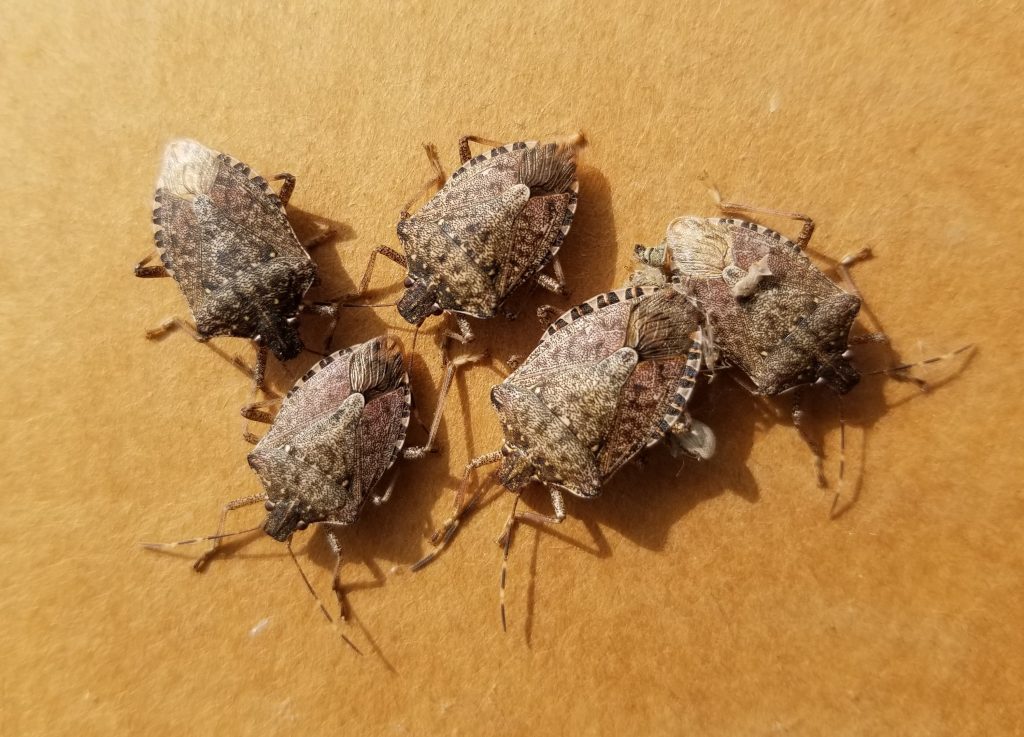
A brown insect should not automatically be identified as a brown marmorated stink bug. Native brown stink bugs lack some of the pale banding and contrasting abdominal markings associated with that invasive species.
Brown Marmorated Stink Bug

The brown marmorated stink bug has a mottled brown body with rounded shoulders. Pale bands cross the antennae, while alternating light and dark patches appear along the exposed edges of the abdomen. These markings are among the most useful identification features.
This invasive species originated in Asia and can feed on a wide range of crops and landscape plants. Adults can also gather around buildings when looking for protected shelter. They may enter through siding gaps, attic vents, window frames, and openings around utility lines.
Brown marmorated stink bugs do not feed on lumber, clothing, carpet, or stored food. Their appearance indoors is usually a shelter problem rather than a true indoor breeding problem.
Predatory Stink Bugs
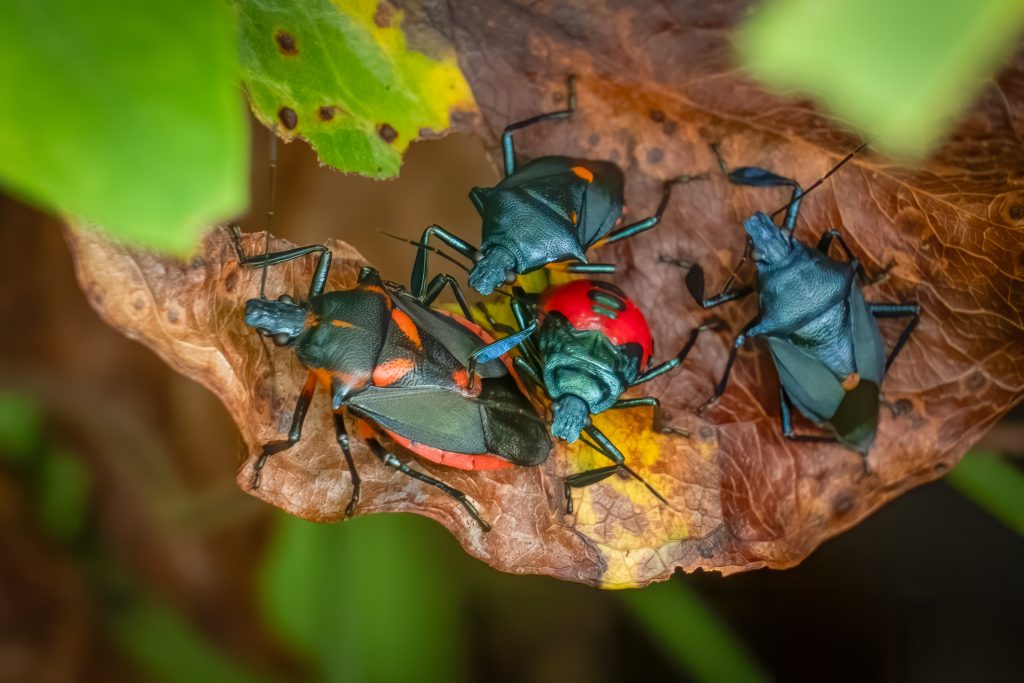
Some stink bugs should be left alone. Predatory species feed on caterpillars, beetle larvae, and other insects that damage landscape plants. They use a thicker, curved beak to capture prey rather than draw fluids from fruit or leaves.
The Florida predatory stink bug has a dark body with red or orange markings. Other predatory species may have pointed shoulders or visible spines.
| Florida stink bug | Main identification features | Role around the property |
| Southern green stink bug | Green, smooth shield shape, 12 to 17 millimeters long | Plant feeder |
| Brown stink bug | Dull brown or gray-brown body | Plant feeder |
| Brown marmorated stink bug | Banded antennae and alternating abdominal markings | Invasive plant feeder and indoor nuisance |
| Florida predatory stink bug | Dark body with red or orange markings | Beneficial predator |
When Is Stink Bug Season in Florida?
Stink bug season in Florida cannot be reduced to one statewide start and end date. Warm temperatures and a long growing period allow many species to remain active for much of the year. Their numbers rise or fall with food availability, rainfall, temperature, and plant development.
Spring growth gives overwintering adults new feeding and egg-laying sites. Activity often becomes easier to notice as vegetables and ornamental plants produce flowers, pods, seeds, or fruit. Several generations may develop during extended warm weather.
North Florida has more noticeable seasonal changes than the central and southern parts of the state. Cooler winter periods August slow movement, but adults can survive in leaf litter, beneath bark, or inside other protected spaces. They become active again when temperatures rise.
Late summer and fall can bring a different problem near homes. Some adult stink bugs begin moving toward sheltered areas as outdoor conditions change. Small gaps around soffits, vents, doors, and windows give them access to wall voids, attics, garages, and living spaces.
| Time of year | Common activity in Florida |
| Spring | Adults leave shelter, begin feeding, and lay eggs |
| Summer | Nymphs and adults feed on actively growing plants |
| Late summer and fall | Garden feeding continues, while some adults move toward buildings |
| Winter | Activity slows in cooler areas, and adults use protected shelter |
What Attracts Stink Bugs to Florida Yards?
Plant-feeding stink bugs are drawn to developing seeds, pods, fruit, flowers, and tender plant tissue. They do not chew large holes through leaves. Instead, they pierce the surface and withdraw plant fluids.
Tomatoes, peppers, beans, okra, citrus, fruit trees, ornamental shrubs, and seed-producing weeds can provide feeding sites. A stink bug August begin on unmanaged vegetation near the edge of a property, then move into a garden when vegetables start producing.
Heavy weeds and accumulated plant debris can provide both food and cover. Fallen fruit also supports pest activity close to the house. Removing those conditions does not eliminate every stink bug, but it reduces the number of places where they can feed and rest.
Buildings offer a different attraction. Cracks around windows, doors, pipes, cables, attic vents, and siding create protected spaces. Exterior lights August bring flying insects close to entry doors, but access points are what allow them to move indoors.
What Stink Bug Damage Looks Like
Stink bug feeding can be easy to miss at first. The insect inserts its narrow mouthparts into developing plant tissue, leaving a small puncture. Damage beneath the surface August become more visible as the fruit or vegetable grows.
Tomatoes and peppers may develop pale spots, dimples, hardened areas, or uneven growth. Beans and other pods August become misshapen. Fruit can show sunken spots, corky tissue, or discoloration around the feeding site.
The extent of the injury depends on the crop, the age of the fruit, and the number of bugs feeding on it. One adult on a mature plant may cause little noticeable harm. A cluster of adults and nymphs feeding on young produce can reduce the quality of a harvest.
Are Stink Bugs Dangerous Inside a Home?
Stink bugs are nuisance pests indoors. They are not known for damaging structural wood, electrical wiring, clothing, or stored food. They also do not build organized indoor colonies like ants or social wasps.
Their odor creates the most common household complaint. Crushing one against a wall, curtain, or carpet can leave both a smell and a mark. Removing it without squeezing the body is the cleaner option.
One indoor stink bug does not mean hundreds are breeding behind the drywall. It may have entered through an open door or a damaged screen. Repeated sightings, especially near the same window or upper-floor room, point to an exterior gap or shared shelter area.
How to Get Rid of Stink Bugs in a Florida Home
For one or two visible bugs, place a cup over each insect and slide a piece of firm paper underneath. A vacuum can remove bugs from ceilings, curtains, and high window frames. Empty the collection container promptly so the odor does not remain inside the machine.
Spraying every visible stink bug indoors does not solve the entry problem. More insects can appear if a gap remains open. Focus first on the part of the structure where they are entering.
Inspect window screens and replace torn mesh. Check weatherstripping around doors, then install or replace door sweeps where light is visible beneath the frame. Seal openings around pipes, cables, exterior faucets, siding, soffits, fascia, and attic vents.
Upper areas deserve attention. Stink bugs can land on second-story siding, rooflines, and vents that are difficult to inspect from the lawn. Repeated activity upstairs August point to a gap near an attic or roof opening.
The National Pesticide Information Center recommends repairing entry points and removing indoor stink bugs by hand or vacuum. It also explains that killing one stink bug does not attract additional stink bugs. Routine indoor treatment often provides limited value when the exterior opening remains uncorrected.
How to Manage Stink Bugs in a Florida Garden
Begin with identification. A cluster of southern green stink bug nymphs on developing tomatoes calls for attention. A predatory stink bug feeding on a caterpillar does not.
Inspect the undersides of leaves for barrel-shaped egg clusters. Removing a small cluster before it hatches can prevent dozens of nymphs from feeding nearby. Continue checking the plant because adults August place eggs on several leaves.
Pull heavy weeds near the garden and remove fallen or damaged produce. Harvest ripe vegetables promptly. These steps reduce food and shelter without disturbing the entire landscape.
Row covers can protect young vegetables before flowering. Remove the cover when pollinators need access and make sure insects are not trapped beneath it. If a control product is necessary, confirm that the label lists both the plant and the pest. Follow the stated application rate and timing.
Professional pest control becomes useful when stink bugs repeatedly gather on the structure, enter inaccessible areas, or continue appearing after basic exclusion work. A technician can identify where activity is concentrated and focus service on the paths pests use around the exterior.
A Clearer Plan for Controlling Stink Bugs in Florida
Stink bugs in Florida require an identification-first approach. Southern green and brown stink bugs can damage fruit and vegetables. Brown marmorated stink bugs may feed outdoors and seek shelter in buildings. Predatory species can help control other garden pests.
Regular inspections catch egg clusters and feeding damage before the population grows. Cleaning up weeds and fallen produce removes outdoor support, while repairs around windows, vents, doors, and utility openings reduce indoor sightings.
When stink bug activity keeps returning around your home, ClearDefense Pest Control can inspect the structure and focus treatment on pest behavior, hiding places, and entry routes. Pinpoint application and ongoing exterior protection address the source instead of treating each visible insect as a separate problem.