
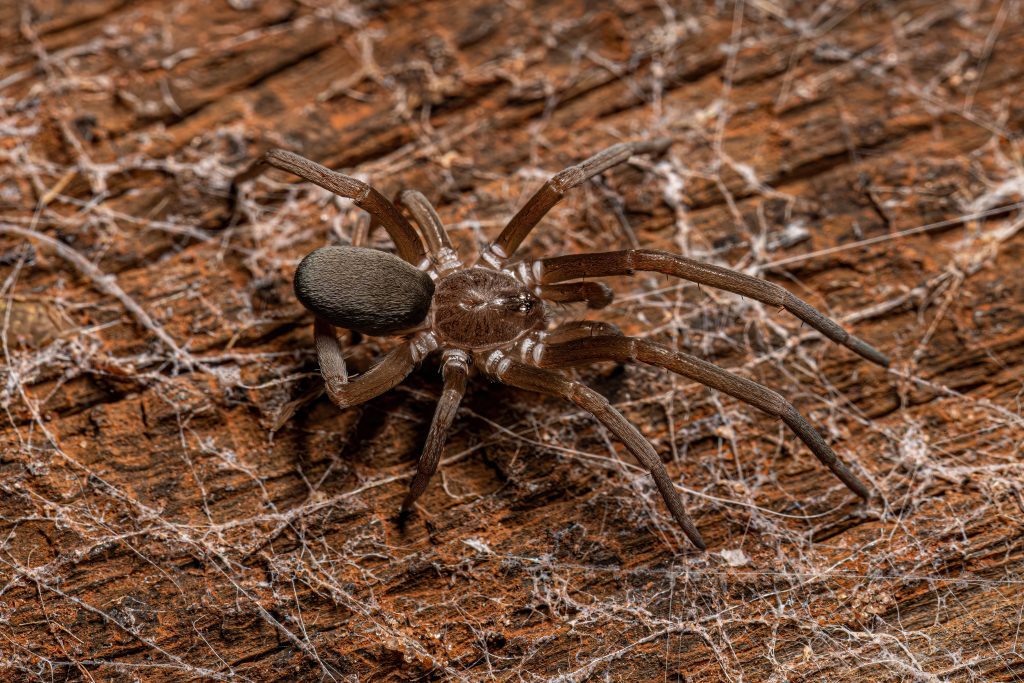
You open the garage and see a large brown spider run behind a storage bin. A day later, you notice a wide web beside the porch. Spiders of North Carolina include hundreds of species, but only a small group regularly shows up around homes, and most pose little concern to people.
Knowing what you are seeing helps you decide what to leave alone, what deserves caution, and why spiders may keep appearing inside. Here are the common species North Carolina homeowners are likely to encounter, where they hide, and what you can do when spider activity becomes a regular problem.
Common Spiders of North Carolina Around Homes
Seven spiders account for most home encounters across North Carolina. NC State Extension flags two of them for bites capable of causing serious reactions. The rest rate low homeowner concern. Match what’s in your garage, porch, or storage boxes against the profiles below before deciding what needs caution.
Black widow
High riskBrown recluse rare statewide
High riskWolf spider
Low riskSouthern house spider
Low riskYellow garden spider
Low riskJumping spider
Low riskFishing spider
Low riskBrown coloring alone doesn’t confirm a brown recluse — wolf spiders cause plenty of mistaken IDs, and recluses are native only to the far western tip of the state. When sightings keep repeating in the same room, the surrounding conditions usually explain more than the spider itself.
There are far more types of spiders in North Carolina than most homeowners ever see. According to NC State Extension, roughly 700 spider species live across the state in habitats that range from forests and gardens to houses.
You do not need to identify hundreds of species to understand what is happening around your property. Start with where the spider is, whether it built a web, how it moves, and a few visible markings.
| Spider | What You May Notice | Where You May Find It | Homeowner Concern |
| Black widow | Shiny dark female with a red or orange hourglass underneath | Crawl spaces, wood piles, utility boxes, sheltered storage | Higher |
| Brown recluse | Plain brown or gray body, six eyes arranged in three pairs | Undisturbed storage and boxes, but rare through most of NC | Higher, but rare |
| Wolf spider | Large brown or gray spider that runs quickly | Garage floors, patios, lawns, lower-level rooms | Low |
| Southern house spider | Brown body with relatively long legs | Siding, garages, sheds, structural gaps | Low |
| Yellow garden spider | Large black and yellow spider in a circular web | Shrubs, flower beds, gardens | Low |
| Jumping spider | Small, compact body with prominent front-facing eyes | Windows, siding, porch railings | Low |
| Fishing spider | Large brown or gray spider with long legs | Decks, damp areas, wooded yards | Low |
Wolf Spiders and Other Hunting Spiders
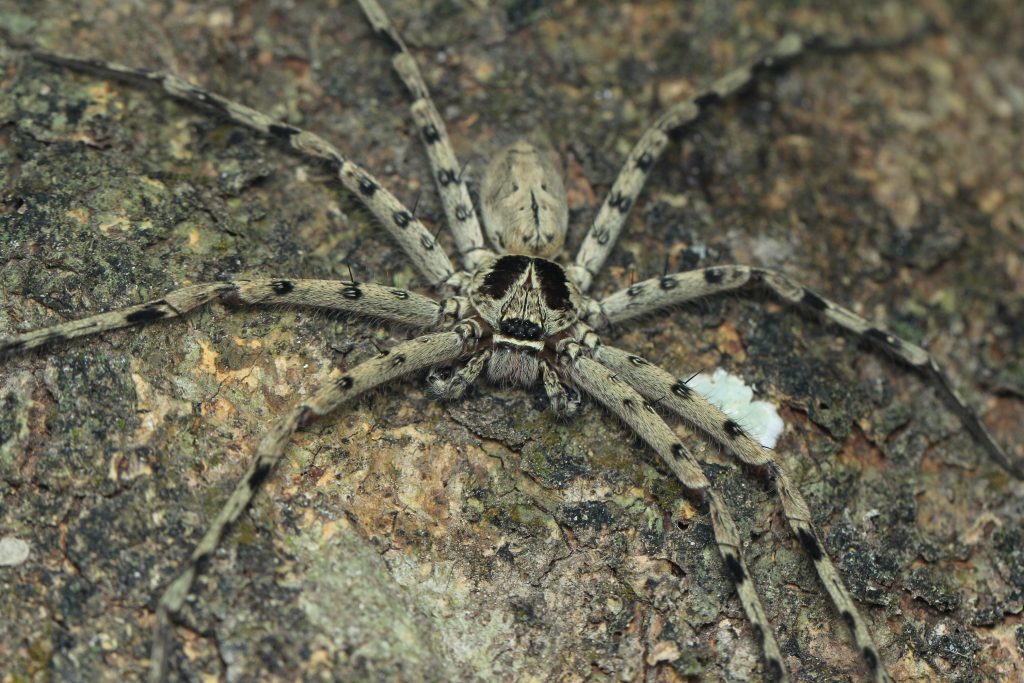
A wolf spider can get your attention quickly. It is large enough to notice from across a garage and fast enough to disappear under a cabinet before you get a close look.
Unlike web builders, wolf spiders in North Carolina hunt insects by moving across the ground. That is why you may spot one on a patio, garage floor, basement floor, or lower level of the house. Their brown coloring also causes plenty of mistaken brown recluse identifications.

Jumping spiders use a similar hunting strategy on a smaller scale. You may find them stalking insects on sunny windows, railings, fences, and siding. Their compact shape and prominent front-facing eyes make them one of the easier common spiders in North Carolina to recognize.
Garden Spiders and Web Builders

Walk past a shrub in late summer and you may see a web stretched between several branches. If a large black and yellow spider is sitting near the center, you may be looking at a yellow garden spider.
These spiders usually remain outdoors, where plants provide good supports for webs and flying insects provide food. If the web is away from a path, doorway, or play area, it usually does not require action.
Other orb-weaver spiders use porch posts, trees, fences, and outdoor furniture in much the same way. A web across the front steps is annoying. A web tucked into a shrub is simply a spider using a productive place to hunt.
Which Spiders of North Carolina Require More Caution?
Some of the largest North Carolina spiders look intimidating without presenting the greatest risk. For homeowners, spider identification matters more than size.
In its guide to spiders in and around homes, NC State Extension identifies the black widow and brown recluse as the two North Carolina spiders best known for bites capable of causing serious reactions. Most spiders people encounter around their homes do not fall into this category.
Black Widow Spiders
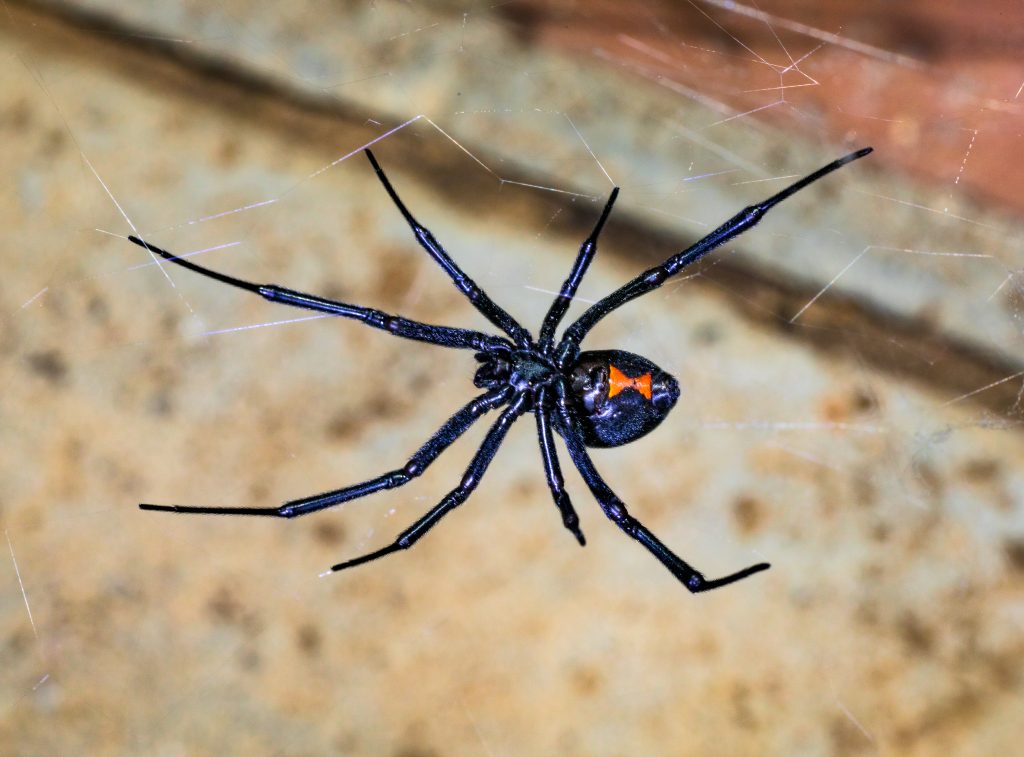
Adult female black widows are glossy and dark with a red or orange hourglass marking underneath the abdomen. Young spiders and males can have different markings, so not every black widow matches the familiar image.
An adult female has a body about one-half inch long and measures roughly 1 1/2 inches with the legs included. Black widows prefer protected areas where they are less likely to be disturbed, including crawl spaces, utility boxes, dense vegetation, wood piles, and sheltered storage.
Check before reaching into spaces you cannot see clearly. Gloves make sense when you are moving firewood, lumber, outdoor equipment, or boxes that have been sitting untouched.
Brown Recluse Spiders
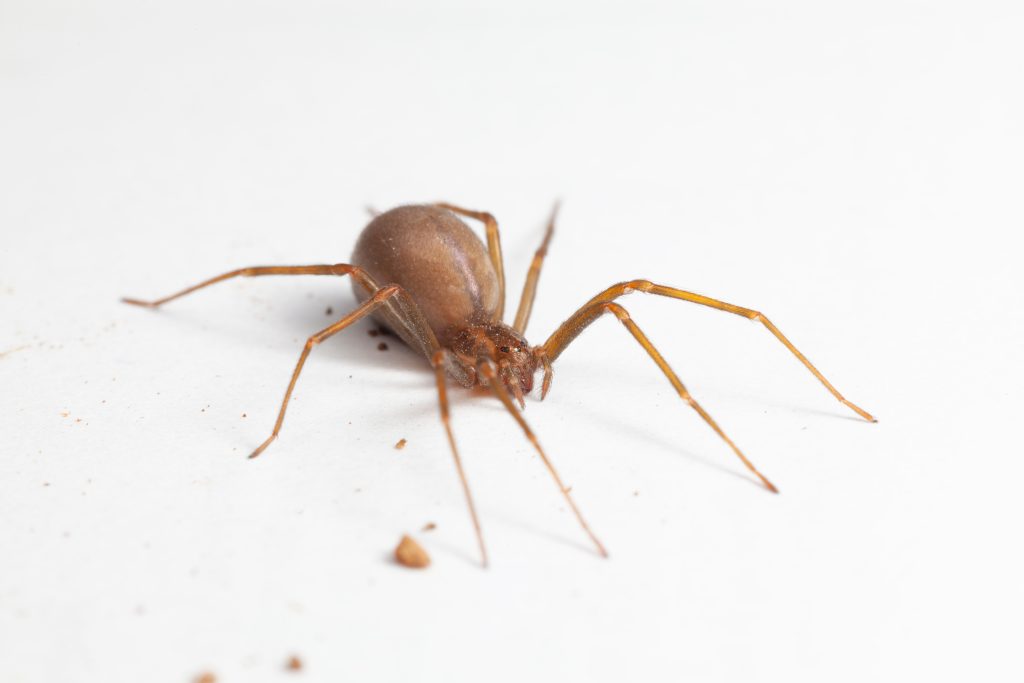
Searches for brown recluse spiders in North Carolina are common, but their actual distribution tells a different story from many online photos and neighborhood posts.
Brown recluses are native only to the far western tip of North Carolina and are extremely rare through most of the state. Wolf spiders and other hunting spiders are often confused with them.
That context matters when you find a brown spider in Raleigh, Charlotte, or much of central and eastern North Carolina. Brown coloring alone does not identify a recluse. Brown recluses have six eyes arranged in three pairs, while most spiders have eight.
| What You See | What It May Mean | What to Do |
| One wolf spider in the garage | A hunting spider may have wandered indoors | Remove it and inspect nearby gaps |
| Large web in a garden shrub | A web builder found a good hunting spot | Leave it if it is out of the way |
| Black widow near stored toys or tools | A higher-concern spider is near regular activity | Avoid direct handling |
| Brown spider in Raleigh or eastern NC | A brown recluse is uncommon there | Do not identify it by color alone |
| Fresh webs in several rooms | Spiders have access to prey, shelter, or entry routes | Inspect the surrounding conditions |
| Porch webs return within days | Insects are making the location productive | Check lighting and insect activity |
Why Spiders Show Up Inside North Carolina Homes
When you keep finding spiders in the house, look past the spider for a moment. Spiders need prey. Flies around a window, ants in the garage, silverfish in a damp room, or other small pests can give hunting spiders a reason to stay.
Porch lighting can create another good hunting location. Moths, gnats, mosquitoes, and other flying insects collect around lights after dark. Web-building spiders often set up close to that food supply.
Entry points are usually simple. A worn garage-door seal may leave a narrow line of daylight at the concrete. Torn screens, loose weather stripping, foundation gaps, and openings around plumbing or utility lines can provide routes for both spiders and the insects they hunt.
Moist areas deserve a look too. A slow leak, damp crawl space, or drainage problem can support insects that favor humid conditions. When spider sightings cluster in the same part of the house, the surroundings can tell you more than the spider itself.
What the Location Can Tell You
Repeated sightings become easier to understand when you note exactly where they happen. A spider beside the same window every week suggests different conditions from several spiders appearing around cardboard boxes in the garage.
| Where You Find Spiders | What to Check |
| Windows | Torn screens, frame gaps, flying insects |
| Exterior doors | Weather stripping, door sweeps, nearby lights |
| Garage | Door seal, cardboard storage, insects along walls |
| Crawl space | Damp areas, foundation gaps, insect activity |
| Basement | Plumbing leaks, cracks, stored materials |
| Porch or eaves | Outdoor lighting, flying insects, recurring web sites |
| Closets and storage | Clutter, boxes, undisturbed corners |
One spider may have wandered through an open door. Regular sightings across several rooms are a better reason to inspect the home for access points and other pests.
How to Keep Spiders Out of Your Home
Good spider prevention starts at the edges of the house. Stand inside the garage during daylight with the door closed. If you can see light around the bottom or sides, small pests have room to move through.
Check exterior doors and windows the same way. Repair damaged screens, replace worn weather stripping, and close practical gaps around pipes, cables, and other openings. These changes make it harder for spiders to enter and can also reduce the insects they follow.
Make Storage Areas Easier to Inspect
A stack of cardboard boxes that has not moved in months gives a spider quiet cover. Garages, sheds, attics, and closets become harder to monitor when belongings pile up against walls and corners.
Use sealed storage containers where practical and leave enough room to inspect around stored items. Before carrying firewood, garden supplies, or long-stored boxes indoors, check the surfaces and wear gloves when your hands will be going into hidden spaces.
Reduce the Insects Spiders Are Hunting
If you remove a porch web and a new one appears in the same corner a few days later, look at that spot after dark. A cluster of flying insects may explain why spiders keep choosing it.
Pay attention to ant trails, flies at windows, silverfish in damp areas, roaches near utility spaces, and mosquitoes around doors and landscaping. Spider control works better when it accounts for the prey supporting the spiders, rather than focusing only on the web or individual spider you can see.
When Professional Spider Control Makes Sense
You do not need professional service because one garden spider built a web outside. The situation is different when spiders of North Carolina keep appearing in living areas, webs return throughout the house, or you find black widows where your family regularly reaches, stores belongings, or spends time.
Professional spider control can help when the source is not obvious. ClearDefense Pest Control can inspect likely entry routes, protected hiding areas, moisture-prone spaces, and insect activity around the property. That helps explain why the spiders are there instead of treating each sighting as an isolated problem.
If spiders of North Carolina keep turning up around your home, contact ClearDefense Pest Control for an inspection and quote. Addressing where spiders enter, where they hide, and what they are feeding on gives you a practical way to reduce recurring activity instead of repeatedly removing individual spiders.