
Spiders in Missouri range from garden orb weavers to venomous brown recluse—here’s how to identify common species and protect your KC home.
Key Takeaways
- Missouri hosts dozens of spider species, but only two pose genuine medical risk: the brown recluse and the black widow.
- Most spiders in Missouri control insects like flies, mosquitoes, and grasshoppers, making them useful in yards and gardens.
- Wolf spiders, orb weavers, and jumping spiders are the species homeowners encounter most often indoors and out.
- Brown recluse bites can cause tissue damage and require medical attention; black widow bites can trigger severe systemic reactions.
- Recurring pest control that targets entry points and harborage areas is the most consistent way to reduce spider populations inside your home.
Common Spiders Found in Missouri Homes
Five spider species drive almost every home call across Missouri. Two deliver medically significant bites. The brief below classifies each by threat level. Match what you’ve spotted on size, color, and where it turned up, then act on the HIGH RISK profiles first.
Brown recluse
High riskBlack widow
High riskWolf spider
Low riskYellow garden spider
Low riskJumping spider
Low riskIf your spider doesn’t fit any of these profiles, you may be dealing with two species in the same area. Worth a real ID before you commit to a treatment plan.
Missouri sits in a geographic sweet spot for arachnids. The state’s mix of woodlands, grasslands, and suburban neighborhoods supports dozens of spider species year-round. Most spiders in Missouri present no medical risk to humans and keep insect populations in check by feeding on flies, mosquitoes, beetles, and other bugs. Understanding which species you’re dealing with helps you decide when to leave them alone and when to call for backup.
Wolf Spiders in Missouri: Fast, Bulky, Misidentified
Wolf spiders are the species Kansas City homeowners mistake for brown recluse more than any other. They’re large, brown, and ground-dwelling, which checks all the visual boxes for a nervous identification. Wolf spiders don’t spin webs to catch prey. Instead, they hunt actively, chasing down insects across floors, along baseboards, and through garage spaces. Females carry egg sacs attached to their abdomens, and once the eggs hatch, the spiderlings ride on the mother’s back until they’re large enough to disperse.
Wolf spiders enter homes in fall as temperatures drop, seeking warmth and shelter. You’ll find them along perimeter walls, under furniture, and in basements. Their body length ranges from half an inch to over an inch. They’re fast, which startles most people, but a wolf spider bite is uncommon and produces mild, localized discomfort rather than tissue damage.
Brown Recluse Spiders in Missouri: The One to Watch
The brown recluse is the most medically significant spider in Missouri, and it thrives in exactly the environments homeowners use for storage: attics, basements, closets, and boxes that don’t get disturbed for months at a time. Its venom contains a compound that destroys tissue around the bite site. Most brown recluse bites cause a slowly expanding wound, but some progress to deeper tissue damage that requires medical attention.
Identification is straightforward once you know what to look for. The brown recluse has a violin-shaped marking on its back, with the neck of the violin pointing toward the abdomen. Six eyes arranged in three pairs distinguish it from other brown spiders with eight eyes. Body length runs a quarter to three-quarters of an inch. They don’t spin webs to catch prey. They hunt at night and retreat to dark, undisturbed spaces by day. Shake out shoes left on closet floors, shake clothing that’s been stored, and wear gloves when reaching into stacked boxes.
Black Widow Spiders in Missouri: Rare but Real
Black widow spiders are present in Missouri but rarely encountered indoors. They prefer outdoor structures: wood piles, rocks, dense bushes, and the undersides of outdoor furniture. The female black widow is unmistakable. Her body is jet black with a red hourglass marking on the underside of the abdomen. Males are smaller, lighter in color, and pose far less risk. Female spiders produce egg sacs containing dozens of eggs, which she guards aggressively near the web.
Black widow venom is a neurotoxin. Bites cause intense muscle pain, cramping, and in some cases severe systemic reactions that require emergency care. Bites are rare because black widows avoid contact with humans, but anyone who spends time around wood piles, outdoor storage, or crawl spaces should check before reaching blindly into dark areas. The black widow spider’s webs are irregular and low to the ground, built near rocks and debris rather than suspended high between structures.
Garden and Orb Weaver Spiders in Missouri Yards
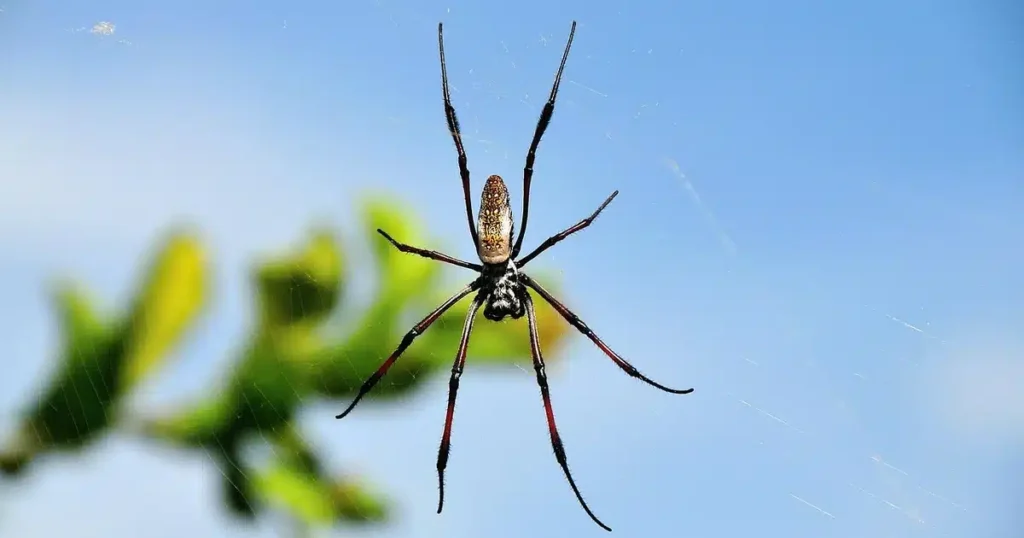
The large, patterned spiders you find suspended in webs across your garden or along your porch eaves are almost always orb weavers. These arachnids build the circular, spoke-wheel webs most people picture when they think of spider silk. Orb weavers are Missouri’s most visible beneficial spiders, catching large volumes of flies, bees, caterpillars, and grasshoppers throughout late summer and fall. They’re big, sometimes intimidating, but not a medical concern for humans.
Yellow Garden Spiders in Missouri: Bold and Beneficial
The yellow garden spider is the orb weaver species most Kansas City homeowners encounter by name. Females are striking: yellow and black patterned abdomen, long black legs, and a web that can span two feet across garden beds, tall grass, or fence lines. They build new webs or repair them overnight, which explains why you find a fresh web in the same spot every morning. Body size in females can reach nearly an inch long. They eat primarily flying insects.
Yellow garden spiders spend most of their lives outdoors and rarely enter homes. They die in late fall after laying egg sacs that overwinter and hatch the following spring. The egg sacs are papery, brownish, and suspended near the web in dense vegetation or bushes. Disturbing the web causes the spider to vibrate it rapidly as a defense display, not a sign of aggression.
Jumping Spiders in Missouri: Small, Curious, Common Indoors
Jumping spiders are the spiders most often found on sunny window sills, exterior walls, and screen doors. They’re small, compact, and covered in dense hair that gives them a fuzzy appearance. Their front two eyes are proportionally enormous relative to body size, giving them forward-facing vision that’s unusually sharp for spiders.
Unlike most species, jumping spiders actively observe their environment and will turn to face you when you approach. They don’t spin webs to catch prey. They stalk and pounce on insects directly. Body length is typically under half an inch. They pose no medical risk to humans.
Why Spiders Enter Missouri Homes Year-Round
Spiders follow their food supply. When insects move inside, spiders follow. The primary driver of indoor spider activity in Missouri homes is an abundant insect population at or near the structure. Gaps around doors, windows, utility penetrations, and foundation cracks give both insects and spiders direct access to the interior. Cluttered storage areas, cardboard boxes, and rarely disturbed corners give spiders the dark, stable harborage they need to settle in and build egg sacs.
Missouri’s seasonal pattern pushes spider activity indoors twice: in spring, when overwintering spiders become active, and in fall, when dropping temperatures drive them to seek warmth. Homes with crawl spaces, unfinished basements, or attached garages give spiders multiple entry points that standard door-and-window sealing misses. Attics are a common harborage for both brown recluse and wolf spider populations that go unnoticed for months.
Conditions in Missouri That Attract Spiders Indoors
- Gaps in exterior foundation walls and around utility penetrations
- Wood piles, leaf debris, and dense bushes adjacent to the home’s exterior
- Cardboard boxes and undisturbed storage in attics, basements, and garages
- Outdoor lighting that attracts flies and other flying insects near entry points
- Moisture in crawl spaces and basements that sustains the insect prey spiders eat
- Interior clutter that creates harborage for ground-dwelling species like wolf spiders and brown recluse
When to Call Pest Control for Spiders in Missouri
DIY spider control has a ceiling. Vacuuming webs, sealing individual cracks, and placing sticky traps reduce what you can see. They don’t address the insect prey population driving spider activity, the entry points creating access, or egg sacs in areas you can’t inspect. Recurring professional pest control targets the full system: exterior perimeter, entry points, interior harborage zones, and the insect populations spiders depend on.
If you find brown recluse consistently in living spaces, or if you’ve confirmed black widow activity near entry points or play areas, a single treatment won’t resolve the underlying conditions. ClearDefense’s quarterly general pest control service covers spiders along with the full list of insects that sustain them, including flies, beetles, crickets, and ants. Each service produces a Defense Report documenting what was found, what was applied, and where, so you know exactly what happened at your home on every visit.
According to the EPA’s integrated pest management framework, effective pest control prioritizes prevention and habitat modification over reactive treatment. ClearDefense’s approach mirrors that standard: technicians identify and document conducive conditions on every visit rather than simply applying product and leaving.
Signs That Warrant Professional Attention in Missouri Homes
- Multiple brown recluse sightings in bedrooms, closets, or living areas
- Confirmed black widow activity near entryways, garages, or crawl space vents
- Egg sacs appearing regularly in multiple rooms, indicating an established population
- Spider activity that increases rather than decreases after DIY treatment
- High general insect activity indoors sustaining the spider food supply
Bottom Line on Spiders in Missouri Homes
Most spiders in Missouri are more useful than they are threatening. They eat flies, grasshoppers, and other insects that would otherwise go unchecked. The two species that matter from a medical standpoint are the brown recluse and the black widow. Both prefer undisturbed, low-traffic areas. Both can be managed through consistent perimeter control, habitat modification, and targeted interior treatment that addresses the insect populations sustaining them.
If spiders in your Kansas City home are a recurring problem rather than an occasional sighting, the issue is structural, not seasonal. Gaps, moisture, clutter, and insect prey are the actual problem. A quarterly pest control plan that documents findings and treats the full perimeter is the most consistent path to keeping Missouri spider species where they belong: outside.
Frequently Asked Questions
Are there tarantulas in Missouri?
Yes. The Missouri tarantula, a species of the genus Aphonopelma, is native to the southwestern corner of the state. They’re large, slow-moving, and rarely encountered near residential areas. Tarantulas in Missouri are not considered a medical concern. Males wander in fall searching for females, which is the most common time residents spot them on roads or in fields.
What should I do after a brown recluse bite?
Seek medical attention promptly. Brown recluse bites don’t always produce immediate pain, but the venom can cause progressive tissue damage over days. Clean the bite site, apply ice to slow venom spread, and note the time of the bite before going to an urgent care clinic or emergency room. Capture or photograph the spider if it’s possible to do so without additional risk.
Do spiders in Missouri spin webs indoors?
Some do, some don’t. Cellar spiders and cobweb spiders build webs in corners, basements, and attics. Orb weavers build outdoors. Wolf spiders, jumping spiders, and brown recluse hunt without webs. Finding webs in interior corners or along ceiling edges typically indicates cellar spiders, which are not medically significant but signal that flying insect activity is present to sustain them.
How does ClearDefense’s recurring plan address spiders?
Spiders are covered under ClearDefense’s standard quarterly general pest control plan. Technicians treat the exterior perimeter, address entry points, and document findings in a Defense Report after every visit. Because spiders follow insects, the plan also targets the bugs they eat, including flies, ants, beetles, and crickets, reducing the food supply that sustains spider populations over time.