
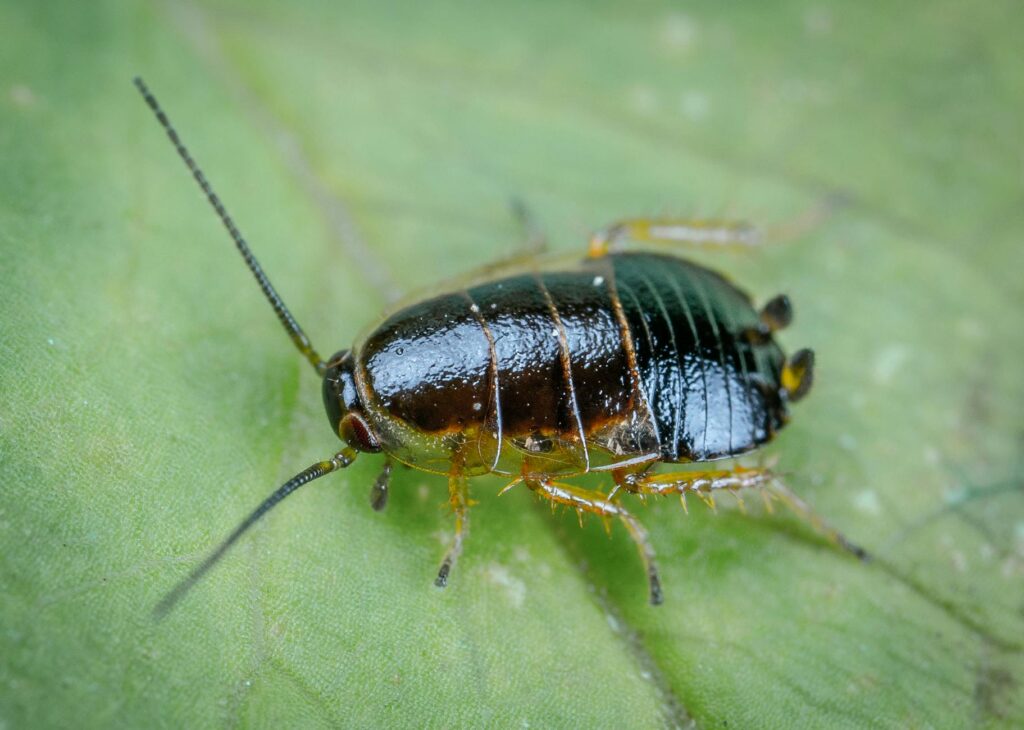
You walk into the bathroom late at night and notice a small roach near the sink, bathtub, or baseboards. A second later, it disappears behind the vanity or under a cabinet. Small roaches in bathrooms usually point to hidden moisture, access to water, and dark spaces where roaches can stay active without being noticed.
Bathrooms give roaches easy access to leaking pipes, damp surfaces, and condensation around drains or plumbing lines. Once they settle behind walls or under cabinets, the infestation can spread into nearby rooms and other parts of the home.
This guide explains why small roaches appear in bathrooms, the risks they create indoors, and when it makes sense to contact ClearDefense for professional cockroach control.
Key Takeaways About Small Roaches in the Bathroom
- Small roaches in your bathroom are drawn to moisture and hidden spaces where they can stay concealed during the day.
- Identifying which type of cockroach you have is the first step toward choosing the right approach, since species can vary in appearance and habits.
- Reducing moisture, sealing entry points, and keeping surfaces clean can make your bathroom less inviting to roaches.
- Recurring professional pest control helps address roach activity over time rather than relying on a single treatment.
How to Identify Small Roaches in Your Bathroom
Several roach species can show up in bathrooms. Telling them apart matters because each type responds to different management approaches. Knowing what to look for and where to look helps you confirm what you are dealing with before deciding on the next steps.
How to Tell Small Roach Species Apart
Common pest cockroach species include the German cockroach, brownbanded cockroach, oriental cockroach, American cockroach, and Turkestan cockroach. Size, color, and wing structure vary between them, so a close look at the roach itself is the fastest way to narrow things down.
Oriental cockroaches stand out because of the wing differences between sexes. According to the University of Georgia pest guide, males have short wings that do not fully cover the abdomen, while females have only small wingpads and cannot fly. That wingless or nearly wingless look can help you separate orientals from other dark-colored species you might find near drains or fixtures.
How to Spot Small Roach Activity Inside Your Bathroom
Roaches are often active at night, so you may not see live ones during the day. Droppings near baseboards, small dark smear marks along grout lines, or shed skins behind the toilet are common signs of activity. Even one sighting usually means others are nearby.
Sticky traps are a practical way to confirm what species you are dealing with. Place them along bathroom walls or near plumbing access panels. Cockroach sticky traps help catch roaches so you can examine and identify them at your own pace.
Where Small Roach Activity Shows Up Around Your Home
Bathrooms provide moisture, which is what draws many roach species indoors. You May notice activity around sink cabinets, behind toilets, and near tub surrounds. These areas tend to stay damp and undisturbed, making them appealing to small roaches looking for shelter.
Check under vanities and along the back edges of cabinetry. If you place sticky traps in these spots, you can gauge how much activity is present and confirm which species is involved.
Entry Points Small Roaches Use to Reach Your Bathroom
Roaches can enter through gaps around plumbing pipes where they pass through exterior walls. Bathroom plumbing penetrations are a frequent pathway because the openings are often unsealed and lead directly to damp interior spaces.
Gaps around dryer vents, foundation cracks near hose bibs, and spaces where utility lines enter the home can also serve as access points. Sealing these openings with caulk or foam is a straightforward step that reduces the chance of roaches reaching your bathroom from outside.
Why Small Roach Problems Develop in the Bathroom
Bathrooms give roaches exactly what they look for: moisture, darkness, and tight hiding spots. Understanding why these conditions draw small roaches in can help you recognize the problem early and address the conditions that keep them coming back.
Outdoor Nesting Areas for Small Roaches Near Your Home
Small roaches often start outdoors before working their way inside. They prefer damp, dark, cool habitats and are often found in crawl spaces, garages, trash cans, wood piles, and indoor or outdoor drains. These spots sit close to most homes and provide the shelter roaches need during daylight hours.
Sewers and water meter boxes also serve as daytime hiding areas. Roaches rest in these warm, dark, moist locations until nightfall, then move toward the nearest reliable water source, which is often your bathroom.
Food and Shelter That Attract Small Roaches to Bathrooms
Bathrooms stay humid, and that persistent moisture is a primary draw. Roaches seek concealment during the day and also when disturbed at night, so the cracks around bathroom plumbing, vanities, and baseboards make ideal harborage. The darker and damper the space, the more appealing it becomes.
Crawl spaces beneath bathrooms can hold standing moisture from plumbing condensation or slow leaks. That damp environment beneath the floor creates conditions that roaches favor, keeping them close enough to move into living areas repeatedly.
How Small Roaches Move Through Your Home and Bathroom
During the day, roaches hide in warm, dark, moist areas like cracks, sewers, and crawl spaces. At night, they become active and travel toward water. Bathrooms with dripping faucets or condensation around pipes give roaches a reason to keep returning from nearby harborage spots.
Roaches are fast-moving and seek concealment quickly when disturbed. That speed allows them to cover ground between outdoor nesting areas and indoor bathrooms without being noticed, especially in the overnight hours when your home is quiet.
Common Indoor Trails and Access Points
Plumbing penetrations are one of the most direct paths small roaches use to reach your bathroom. Drain lines, supply-line openings, and gaps around vent pipes all connect the damp spaces roaches already occupy, like crawl spaces and sewers, directly to the room.
Cracks along baseboards, around toilet flanges, and behind wall-mounted fixtures provide additional access. Because roaches are flattened insects, even narrow gaps give them enough room to pass through and settle into the moist areas behind your bathroom walls.
Risks From Small Roaches in Bathrooms
Small roaches in your bathroom are more than an unpleasant surprise. They point to conditions that can affect your living space in ways you may not expect. Understanding what these pests put at risk helps you decide how seriously to take even a handful of sightings.
Health Risks Linked to Small Roaches in Bathrooms
Roaches are drawn to the same spaces where your family handles personal hygiene. A bathroom with consistent moisture gives them reason to stay. Because they move through drains, walls, and crawl spaces, they can carry debris from unsanitary areas into the spots where you brush your teeth or bathe.
Some household insects are just nuisances, while others can cause real problems. Roaches fall somewhere along that spectrum depending on how many are present and where they travel inside your home.
Property Damage From Small Roaches in Bathrooms
Certain insects that live in walls and crawl spaces can cause real damage over time, according to the University of Minnesota Extension. Small roaches that settle into bathroom walls or vanity cabinets may not chew through structural wood the way some pests do, but they generally infest places where people live. Letting activity go unchecked allows populations to spread into adjoining rooms.
That spread means the issue moves beyond one bathroom. Once roaches establish themselves in wall voids or beneath fixtures, they become harder to monitor and harder to address.
Food Areas and Small Roach Activity
A home with small roaches in the bathroom often has conditions that support activity elsewhere. These pests look for feeding opportunities throughout your house. Placing cockroach sticky traps on the floor along the edges of walls, in cupboards, and under appliances can reveal whether roaches are also feeding in your kitchen or pantry areas.
Traps placed in undisturbed locations, such as under furniture and appliances, help you understand the full scope of the problem rather than assuming it stays confined to one room.
When to Look Closer at Small Roach Activity in Bathrooms
If you spot even a few small roaches in your bathroom, it is worth checking other rooms. Sticky traps placed along walls and under beds can confirm whether activity has spread beyond the bathroom, as Texas A&M AgriLife Extension recommends.
Monitoring traps work best when positioned in areas where roaches could be feeding. Check them every few days and note how many you catch. A rising count tells you the population is larger than what you see during the day.
Professional Pest Control for Small Roaches in Bathrooms
Small roaches in bathroom spaces can be persistent because the room offers exactly what they look for: moisture, warmth, and tight hiding spots. Reducing what draws them in and pairing that effort with a structured control plan gives you the best chance of lowering activity over time.
How to Reduce Attractants for Small Roaches in Bathrooms
Start with the basics. Fix dripping faucets, dry out standing water around tubs and sinks, and keep counters clear of soap residue or toothpaste. Small roaches forage close to where they hide, so removing moisture and food traces near cracks and crevices makes the bathroom less inviting.
Seal gaps around pipes, baseboards, and cabinet edges. These tight openings serve as both entry points and hiding spaces. Caulk alone will not solve the problem, but it reduces the number of routes roaches use to move between walls and living areas.
Why Roach Control Starts With Inspection
Knowing where roaches are active matters more than guessing. Most cockroach sticky traps available at home and garden stores work well for monitoring, according to UC IPM. Place them along bathroom walls, near plumbing penetrations, and inside vanity cabinets to see where activity is concentrated.
Sticky traps also help confirm whether you are dealing with small roaches or another species entirely. Accurate identification shapes the entire approach. A ClearDefense service professional can review trap results and identify activity patterns during a thorough inspection.
What Happens During Professional Small Roach Treatment
Bait placement is a core part of professional small roach control. Baits are placed in cracks and crevices where roaches travel and hide. The UC IPM notes that baits do not attract cockroaches over long distances, so placement near hiding spaces or along foraging paths is critical.
This is where professional experience matters. A trained service professional knows how to read the signs of roach movement and position products precisely. ClearDefense provides a documented Defense Report after every visit, showing every product used and every finding at your home.
Ongoing Small Roach Control Plans and Follow-Up Visits
One visit rarely resolves a roach issue. ClearDefense Pest Control focuses on recurring service rather than one-time treatments. A prevention-first IPM approach means each visit builds on the last, adjusting bait placements, resealing entry points, and monitoring sticky traps for changes in activity.
Your Defense Report tracks progress over time. If small roaches in bathroom areas shift to a new location, your service professional adapts the plan accordingly. Consistent follow-through is what separates a temporary fix from a structured control strategy.
Between visits, keep reducing moisture and sealing gaps on your own. Professional control paired with your day-to-day habits creates the conditions that make your bathroom far less appealing to roaches.
Bottom Line on Small Roaches in Bathroom
Identifying the species you are dealing with is the first step toward reducing their activity. Lowering moisture, sealing entry points, and keeping surfaces clean all help make bathrooms less inviting. Because roaches are nocturnal and tend to stay hidden, a few sightings can point to a larger presence behind walls or under fixtures. A recurring pest control plan addresses the conditions that keep drawing them back.
If you are seeing small roaches regularly, reach out to ClearDefense Pest Control for a recurring service plan tailored to your home.
Frequently Asked Questions
Why do I keep seeing roaches near the sink and tub?
Bathrooms offer the warmth, darkness, and moisture that roaches prefer. Drains, leaky pipes, and damp cabinet interiors all create conditions where roaches can find water and shelter during the day.
How can I tell which roach species I have?
Sticky traps placed along baseboards and near plumbing fixtures can help you catch specimens for a closer look. Size, color, and wing length vary between species, so a trapped sample gives you a clearer starting point for the right approach.
Will cleaning my bathroom get rid of cockroaches?
Reducing moisture and wiping down surfaces removes some of what attracts roaches. However, cleaning alone may not address the full picture. Roaches can shelter in wall voids, under cabinets, and around plumbing that routine cleaning does not reach.
Why is recurring service better than a one-time treatment?
Roaches reproduce quickly and hide in hard-to-reach areas. A single treatment August reduce visible activity for a short time, but recurring service keeps pressure on the population and addresses new activity before it builds. ClearDefense provides documented Defense Reports with each visit, so you know exactly what was found and what was applied.