
A scratching sound above the bedroom can be easy to dismiss. The house may be settling, a branch may be brushing the roof, or something may have shifted in the attic. When the noise returns after dark, especially with quick footsteps or gnawing sounds, roof rats may be moving above the ceiling.
Roof rats in Jacksonville often stay out of sight. They climb trees, fences, utility lines, and exterior walls, then enter through gaps near the roof. Once inside, they may nest in insulation, wall voids, soffits, or quiet corners filled with stored boxes.
Jacksonville homes can offer several things these rodents look for. Mature trees provide overhead routes. Fallen fruit, bird seed, pet food, and unsecured trash provide meals. A damaged vent or separated fascia board can give them the opening they need.
Finding the source takes more than placing a trap in the attic. You need to recognize the signs, trace likely travel routes, identify entry points, and remove the conditions that encourage rats to stay.
Why Roof Rats Are Found Around Jacksonville Homes
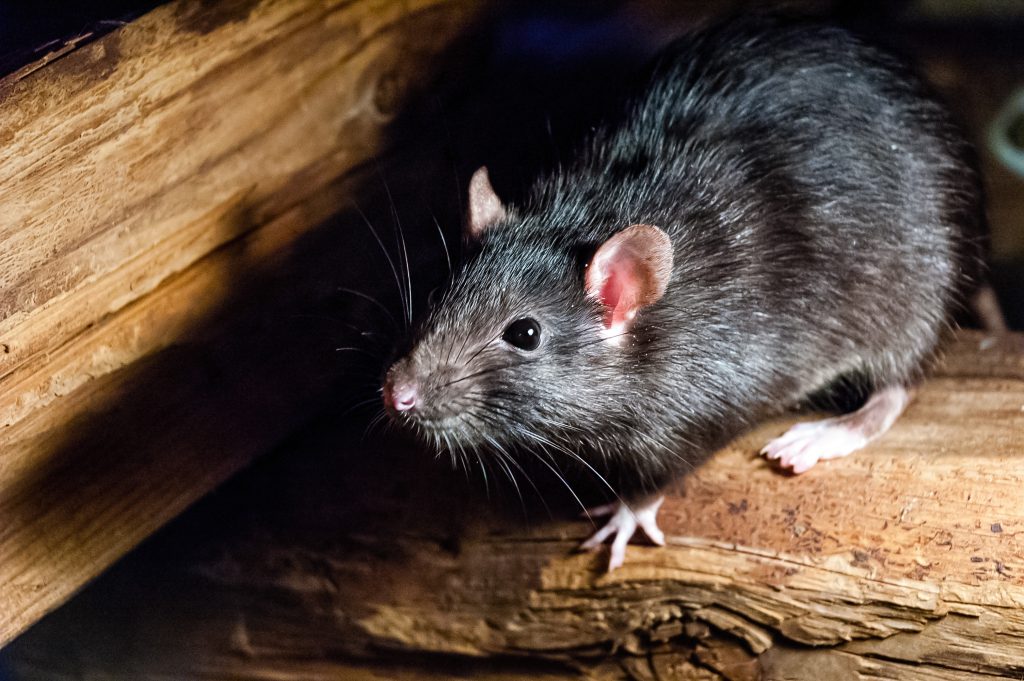
Roof rats are slender rodents with pointed noses, large ears, and tails that are usually longer than their bodies. They are also called black rats, palm rats, fruit rats, and ship rats.
Their body shape helps them move across narrow surfaces and elevated routes. Unlike Norway rats, which usually remain closer to ground level, roof rats often nest in attics, trees, upper walls, and overhead storage areas.
The University of Florida Institute of Food and Agricultural Sciences identifies the roof rat as Florida’s primary suburban pest rat. UF/IFAS also reports that roof rats can jump about three feet vertically and more than four feet horizontally. A tree limb does not have to touch the roof for a rat to reach the house.
This climbing ability matters in Jacksonville neighborhoods with live oaks, palms, citrus trees, fences, pergolas, and dense landscaping. Those features do not create an infestation by themselves, but they can connect feeding areas to a vulnerable roofline.
Roof Rats vs. Norway rats
| Feature | Roof rat | Norway rat |
| Body shape | Slender with a pointed nose | Stockier with a blunt nose |
| Tail | Usually longer than the head and body | Usually shorter than the head and body |
| Common nesting areas | Attics, trees, soffits, upper walls | Burrows, crawl spaces, foundations, lower levels |
| Movement | Strong climber that favors elevated routes | Strong burrower that usually stays near the ground |
| Common indoor clue | Nighttime movement above ceilings | Activity near lower walls, garages, or crawl spaces |
Seeing a rat briefly may not provide enough time for identification. Its location and movement can be more useful. A rodent running along a fence or disappearing into an attic vent is more consistent with roof rat behavior than a rat entering a ground-level burrow.
Signs of Roof Rats in Jacksonville Homes
Most homeowners hear or find evidence before they see a live roof rat. One clue may have another explanation, but several signs in connected areas point to an active rodent problem.
Noises After Sunset
Roof rats are most active at night. You May hear scratching, quick footsteps, gnawing, or light thumping above a ceiling after the house becomes quiet. The noise August shift from one room to another as a rat follows rafters, pipes, or ductwork.
Pay attention to timing. Squirrels tend to make noise during daylight hours, while roof rat activity is more likely to begin after sunset. Birds can also enter attic spaces, but their movement often includes fluttering or pecking rather than steady running and gnawing.
Droppings and Travel Marks
Roof rat droppings may appear along attic edges, behind garage storage, inside cabinets, or near stored food. Fresh droppings usually look dark and firm. Older droppings become dull, dry, and easier to crumble.
You may also notice dark rub marks on pipes, beams, walls, or the edges of small openings. Rats often follow the same route each night. Oils and dirt from their fur can leave a visible mark where their bodies repeatedly contact a surface.
Gnaw Marks and Damaged Materials
Rats need to gnaw because their front teeth continue growing. Fresh damage August expose lighter wood beneath a painted or weathered surface. You may also find tooth marks on plastic containers, cardboard boxes, flexible tubing, or stored belongings.
Attic insulation can become flattened, torn, or moved. Shredded paper, fabric, insulation, and plant material may indicate nesting activity. Chewed wiring should be taken seriously because damaged insulation can expose electrical conductors.
Food Disturbance
Roof rats August leave the attic to search for food in a garage, pantry, outdoor kitchen, or pet-feeding area. Small holes in packaging, spilled seed, gnawed fruit, and scattered crumbs can mark a feeding location.
A clean kitchen does not rule out roof rats. They may feed outdoors and use the house mainly for shelter. Fallen citrus, nuts, bird seed, and pet food can support activity without leaving obvious evidence in the main living area.
What Common Signs August Tell You
| Sign | Where you may find it | What it may indicate |
| Scratching after dark | Attic, ceiling, upper wall | Nighttime movement through elevated spaces |
| Dark droppings | Attic edges, garage, pantry | A feeding area, nesting site, or repeated route |
| Greasy rub marks | Pipes, beams, wall openings | A path rats use regularly |
| Shredded material | Insulation, boxes, hidden corners | Possible nesting activity |
| Gnawed packaging | Garage, pantry, outdoor storage | Access to a food source |
| Chewed wood or wiring | Attic, soffit, utility area | Active gnawing or an enlarged entry point |
| Musky odor | Enclosed attic or wall area | Established activity, urine, or a dead rodent |
Common Roof Rat Entry Points
Roof rats rarely enter through a large, obvious opening. More often, they take advantage of a small construction gap, damaged screen, or weakened section of wood near an elevated travel route.
A complete exterior inspection should move from the ground upward. Start with food and shelter around the yard, then inspect fences, trees, utility lines, upper walls, eaves, soffits, and roof intersections.
Roof Vents, Soffits, and Fascia
Attic vents need airflow, but they also need intact screening. A loose cover, torn screen, or gap around the frame August provide access. Ridge vents and exhaust vents should also be checked for lifted sections or missing barriers.
Fascia and soffit damage can be difficult to see from the ground. Look for separated boards, dark staining, gnawed edges, or gaps where two roof sections meet. Moisture-damaged wood deserves attention because it may become easier for rats to enlarge.
Roof Returns and Building Joints
Roof returns are the boxed areas where an eave meets an exterior wall. Small openings can form where trim, roofing, siding, and framing come together. Rats August investigate these protected corners because they offer cover from rain and predators.
Other vulnerable joints include dormers, additions, chimney flashing, and places where a lower roof meets a taller wall. Even a well-maintained house may have a concealed opening at one of these transitions.
Utility and Mechanical Penetrations
Air-conditioning lines, plumbing pipes, electrical conduit, exhaust ducts, and cable lines pass through the exterior shell of a house. Sealant around these penetrations can shrink, crack, or pull away over time.
Upper-level penetrations are easy to miss during a ground-level inspection. A utility line may help a rat reach the wall, while the gap around the line provides access to a wall void or attic.
Garage Doors and Attached Spaces
A worn garage door seal August leave a gap near the lower corners. Roof rats can enter the garage, feed on stored items, and move upward through framing or utility openings.
Check the door seal with the garage closed. Daylight visible along the bottom or sides signals a gap. Storage piled against the walls can hide droppings and gnaw marks, so leave enough clearance to inspect the perimeter.
Raised Homes and Damaged Exterior Wood
Jacksonville has homes with crawl spaces, raised foundations, porches, and additions. Damaged lattice, foundation vents, access doors, and deteriorated wood can allow rats beneath the structure.
Once under a house, rats August follow plumbing or framing into wall cavities. Ground-level entry does not always lead to ground-level nesting. A rat can enter low and climb inside the structure until it reaches the attic.
Entry Points and Practical Corrections
| Vulnerable area | What to inspect | Practical correction |
| Attic and exhaust vents | Torn screens, lifted covers, edge gaps | Repair with durable, gnaw-resistant screening |
| Soffits and fascia | Rot, separation, tooth marks | Replace damaged wood and close adjoining gaps |
| Roof intersections | Open joints, loose flashing | Repair the joint with suitable exterior materials |
| HVAC and utility lines | Cracked sealant, oversized openings | Close the space with durable materials suited to the penetration |
| Garage door | Worn seal, daylight at corners | Replace the lower or side weather seal |
| Tree canopy | Branches within jumping distance | Prune branches back from the structure |
| Fences and trellises | Direct routes toward eaves | Break the connection where practical |
| Raised foundations | Damaged screens, lattice, or access doors | Repair openings and inspect the space beneath the home |
Do not permanently close a confirmed entry point while rats may still be inside. Trapping rodents in an attic or wall can lead to additional gnawing as they search for another exit. It can also leave a dead animal in an inaccessible space.
What Attracts Roof Rats to a Jacksonville Property
Roof rats settle where food, water, and shelter are dependable. A property does not have to be dirty. A few overlooked outdoor conditions August provide enough support.
Bird feeders are common food sources because seed falls beneath them. Rats may also chew through bags of seed stored in a garage. Outdoor pet bowls, chicken feed, unsecured trash, compost, and grill residue can provide regular meals.
Fruit trees deserve attention. Pick ripe fruit when possible, and remove fallen fruit before it sits overnight. Roof rats may feed on citrus, avocados, nuts, and other plant material found around residential yards.
Water can come from leaking hose connections, damaged irrigation, pet bowls, clogged drainage areas, and containers that hold rain. Dense shrubs, thick vines, wood piles, cardboard, and crowded storage provide cover close to those resources.
The goal is not to strip the yard of every plant. Instead, create visibility around the house, reduce predictable food sources, and remove sheltered pathways that lead toward the roof.
How to Prevent Roof Rats in Jacksonville
Effective roof rat prevention combines access control with property maintenance. Sealing one hole will not provide lasting results if nearby trees still lead to another weak section of the roof.
Trim branches away from the house, including branches that stop several feet short of the roof. Roof rats can jump across open space. Cut vines back from siding, eaves, and fences, and keep palm fronds from resting near the structure.
Inspect vents, soffits, fascia, roof joints, and utility penetrations after storms or exterior work. A roofing repair, cable installation, or new HVAC line can leave an opening that was not present during the last inspection.
Use metal screening, flashing, hardware cloth, or another gnaw-resistant material where appropriate. Exposed foam alone is not a dependable rodent barrier because rats August chew through it.
The U.S. Environmental Protection Agency recommends sealing holes inside and outside the home while removing food, water, and nesting sites. The agency also advises using tight-fitting trash lids, managing compost carefully, and reducing food residue beneath bird feeders.
Store pet food, bird seed, and dry goods in sturdy containers with secure lids. Bring pet bowls inside after feeding, wipe down outdoor cooking areas, and keep garage storage off the floor when possible.
Monitoring should continue after repairs. Look for fresh droppings, new rub marks, disturbed traps, or renewed noise. An opening may have been missed, or a second route may be present on another side of the roof.
When Professional Roof Rat Control Makes Sense
Professional help is a practical next step when noises continue, signs appear in several rooms, or the suspected entry point is on a steep or second-story roof. It is also useful when you cannot tell whether the sounds come from rats, squirrels, or another animal.
A rodent inspection should evaluate the attic, roofline, utility penetrations, garage, landscaping, and likely feeding areas. Trap placement works best when it follows established travel routes rather than relying on random locations.
Indoor bait requires careful judgment. A rat that consumes bait August die inside a wall or another inaccessible area. This can create odor and make removal difficult. Traps and bait stations must also be positioned where children and pets cannot reach them.
Long-term control depends on timing. Active rats need to be addressed before final exclusion work is completed. The property should then be monitored to confirm that sounds, droppings, and other signs have stopped.
Protecting Your Jacksonville Home From Roof Rats
Roof rats in Jacksonville can remain hidden for weeks because they travel after dark and prefer spaces above everyday living areas. Scratching noises, droppings, gnaw marks, disturbed insulation, and damaged food packages provide clues about where they are moving.
The strongest prevention plan addresses the whole property. Reduce food and water sources, trim elevated pathways, inspect the roofline, repair entry points with durable materials, and monitor vulnerable areas after the work is complete.
ClearDefense Pest Control helps Jacksonville homeowners identify rodent activity and the conditions that support it. A professional inspection can locate difficult entry points and provide a focused plan to remove current activity while reducing the chance that roof rats return.