
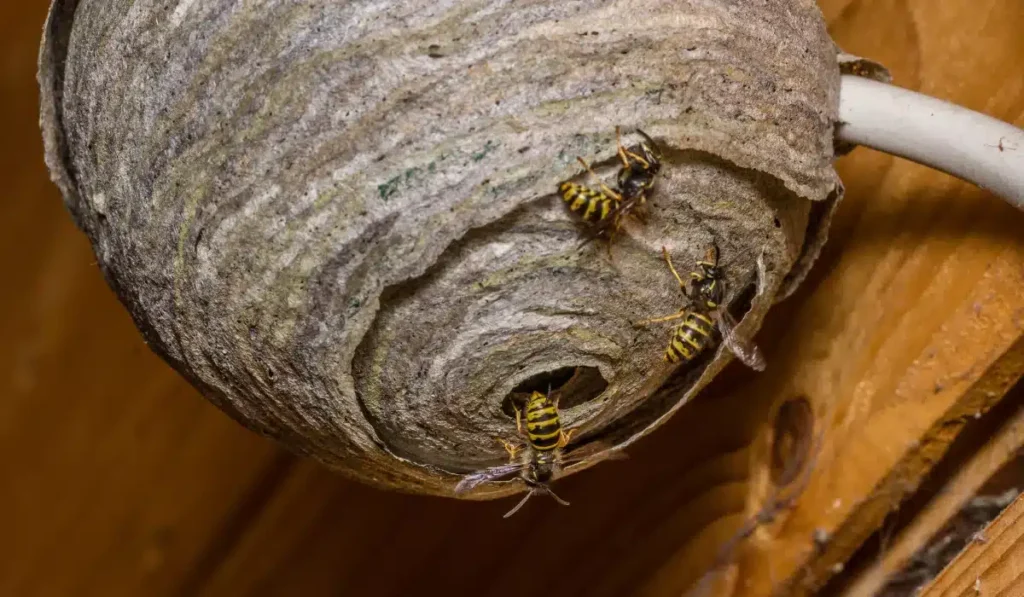
In Kansas City, wasp nests often start showing up in the spring. As temperatures rise in areas like Overland Park and Lee’s Summit, queen wasps search for sheltered areas to build nests and start new colonies.
Early action makes a big difference. A single nest can grow into a large wasp infestation by late summer, especially with social wasps like paper wasps, yellow jackets, and hornets. As colonies grow, the risk of wasp stings increases around entryways, patios, and garages.
Learning how to prevent wasp nests helps you avoid bigger problems and reduce the need for professional pest control.
Key Takeaways
- Early spring is the best time for wasp prevention before queen wasps build nests.
- Common nesting sites include eaves, overhangs, garages, and sheltered areas.
- Food sources like sugary drinks and pet food attract wasps to your property.
- Professional pest control helps prevent wasp infestation and reduces the need for nest removal.
Prevent Wasp Nests Before They Start
Stopping nests early is one of the best ways to avoid a growing infestation. Pest control uses prevention methods that reduce nesting opportunities before a wasp colony develops.
Inspect for Early Nesting Activity
In early spring, queen wasps build new nests in quiet areas, while some solitary wasps start smaller nesting sites around your home. These paper wasp nests are small and easy to miss.
Routine inspections around eaves, overhangs, and garages help catch nests early. Removing a new nest can reduce the chance of a larger wasp colony forming later in the season.
Seal Entry Points and Crevices
Wasps look for small openings to start building, and some species also act as pollinators. Cracks, crevices, and gaps around siding or trim create ideal nesting sites.
Pest control services may include finding and sealing entry points to limit access and reduce conditions that attract other pests.
Reduce Attractants Around Your Home
Food sources drive wasp activity. Sugary drinks, open trash bins, and pet food left outside can quickly attract stinging insects.
Keeping these areas clean and covered helps reduce the chance of wasps staying nearby and building nests, especially during outdoor gatherings in Kansas City.
Spring Areas Wasps Target First
Wasps choose nesting sites based on protection and easy access. In Kansas City homes, certain areas are more likely to attract early nesting activity.
Eaves and Roof Overhangs
Eaves are one of the most common places for paper wasps to build nests. These areas provide shade and protection from the weather.
Because they are out of sight, many homeowners miss early wasp nests forming here.
Garages and Storage Spaces
Garages are another common nesting site, especially when homeowners do not use them often. Wasps prefer quiet, undisturbed areas where they can build nests without disruption.
Stored items and clutter create more sheltered spaces for nesting.
Decks, Patios, and Outdoor Fixtures
Decks and patios give wasps easy access to food sources and shelter. Overhangs, railings, and light fixtures are common spots for paper wasp nests.
Outdoor activity and exposed food can increase wasp activity in these areas.
Hidden Structural Areas
Wasps may also target hidden areas such as crevices, gaps in siding, or spaces behind shutters. These spots offer protection and make nests harder to detect.
Some types of wasps, including yellow jackets, August build nests underground or near foundations, where they are easy to miss.
Mistakes That Attract Nesting Wasps
Certain habits make your property more appealing to wasps. Avoiding these mistakes helps reduce the chance of a wasp infestation.
Leaving Food Sources Exposed
Open trash, pet food, and sugary drinks attract wasps and support the growth of their colonies. Managing these food sources helps limit wasp activity.
Ignoring Early Nest Signs
Small nests are easy to miss in early spring, but paper wasp nests can grow quickly as larvae develop.
Addressing a new nest early is easier than dealing with a mature wasp colony later.
Relying Only on DIY Solutions
Many DIY approaches, including wasp traps or essential oils, offer limited control and may not address the source of a wasp infestation.
Professional pest control focuses on targeted treatments designed to reduce nesting activity over time.
Disturbing Active Nests
Trying to get rid of wasps by knocking down a nest can trigger aggressive behavior. These wasps August respond quickly and sting repeatedly.
Safe nest removal requires proper equipment and training, which is why working with a trained exterminator is a safer option.
Get a Wasp Prevention Inspection in Kansas City, MO
If you want to prevent wasp nests from becoming a problem, a professional inspection is a good starting point.
Pest control professionals evaluate your property for nesting sites, entry points, and conditions that attract wasps, including eaves, garages, and sheltered areas where queen wasps build nests.
ClearDefense Pest Control provides residential and commercial pest control services built for long-term wasp prevention, with treatments adjusted based on wasp activity.
If you are noticing increased wasp activity around your Kansas City home or business, now is a good time to act.
Contact us today to schedule a pest control service to help prevent wasp nests from forming.
FAQs
When should you start wasp prevention in Kansas City?
Wasp prevention should begin in early spring when queen wasps start building nests. Addressing the problem early helps prevent a larger infestation during late summer.
What attracts wasps to your home?
Wasps are attracted to food sources like sugary drinks, trash, and pet food. Sheltered areas like eaves, garages, and overhangs also make ideal nesting sites.
Do wasp traps help prevent nests?
Wasp traps can reduce some activity, but they may not stop wasps from building nests on their own. A complete pest control approach focuses on prevention, inspection, and targeted treatments.