
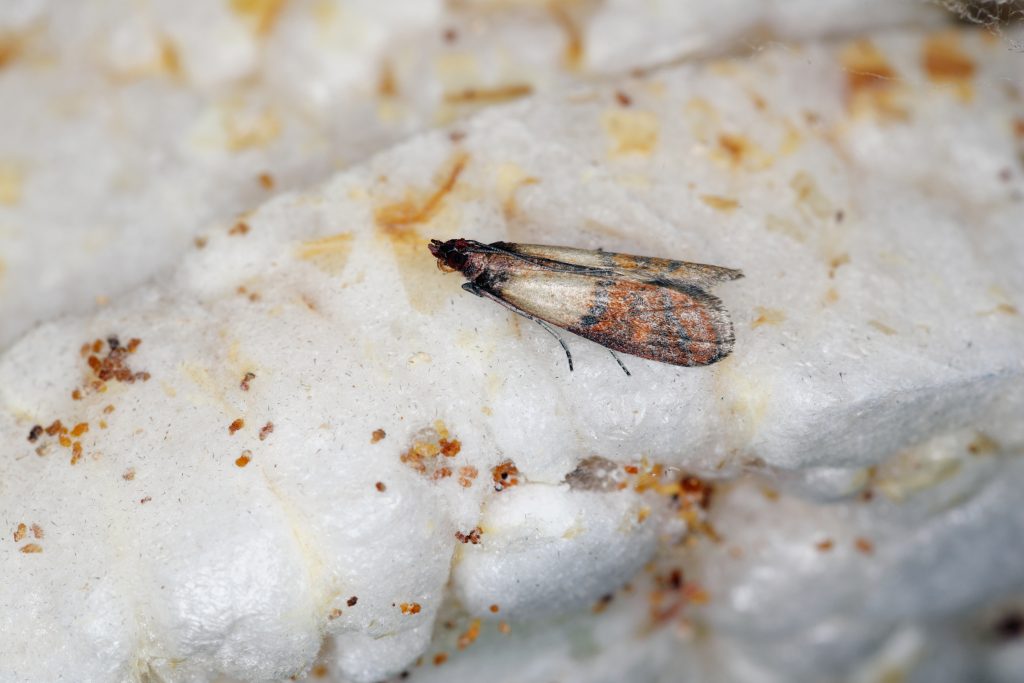
A small brown moth rises from the pantry when you pull out a cereal box. A few evenings later, another one circles the kitchen light. Then a bag of rice pours in clumps because thin strands of silk have caught the grains together.
Pantry moths often reach the kitchen inside groceries, pet food, birdseed, or other dry products. The package may look untouched when you buy it. Eggs and young pantry moth larvae can remain hidden along seams, beneath food, or inside folds that are difficult to inspect at the store.
Once the package enters a warm home, a pantry moth infestation has steady temperatures and a dependable food source. Larvae feed where they hatch, then crawl away when they are ready to form cocoons. This movement explains why a caterpillar may appear near the ceiling while the original source sits on a lower shelf.
Getting rid of pantry moths depends on finding that source. Swatting adults or setting out a trap August reduce what you see, but neither action removes eggs inside food or larvae feeding in another package.
Where Pantry Moths Come From
Pantry moths can enter the food supply during processing, shipping, warehouse storage, retail display, or household storage. An infestation does not mean the kitchen is dirty. It often begins with one product that contained eggs or larvae before it reached the pantry.
Flour and cereal receive most of the attention, but the source is often less obvious. An open bag of dog treats, birdseed in the garage, or nuts left from holiday baking can support the same pest. These products tend to sit longer than everyday foods, which gives larvae time to feed and mature unnoticed.
Original packaging is not always a reliable barrier. Folded paper liners, thin bags, and cardboard boxes may have gaps around seams and closures. A product can also contain eggs before sealing, so unopened food still deserves inspection when moth activity appears nearby.
Foods Most Likely to Hide Pantry Moths
| Food Group | Common Examples | What to Look For |
| Grains and cereals | Flour, rice, oatmeal, pasta, cornmeal, breakfast cereal | Webbing, clumps, larvae, or fine debris |
| Baking ingredients | Nuts, chocolate, cake mix, dried coconut, powdered milk | Silk near seams, folds, or package corners |
| Dried foods | Beans, dried fruit, herbs, spices, soup mixes | Food stuck together or small caterpillars |
| Animal food | Dry pet food, treats, birdseed, fish food | Webbing along the bag lining or near the top |
| Snacks | Crackers, granola, trail mix, candy | Tiny holes, silk threads, or movement |
| Natural decorations | Seed crafts, dried flowers, wreaths | Cocoons or webbing between plant material |
The National Pesticide Information Center pantry moth guide lists grains, beans, nuts, flour, dried fruit, birdseed, dry animal food, spices, chocolate, and candy among common food sources. It also recommends checking for webbing, insect waste, and damage in thin packaging.
How the Pantry Moth Life Cycle Speeds Up an Infestation
The pantry moth life cycle has four stages: egg, larva, pupa, and adult. A single home can contain every stage at the same time. That overlap is why adult moths August keep appearing after one contaminated package has been discarded.
Females place pantry moth eggs close to suitable food. Once the eggs hatch, larvae begin feeding and spinning silk. The silk catches crumbs, shed skins, and waste, creating the webbed or clumped material homeowners often notice inside cereal, flour, nuts, or pet food.
Pantry moth larvae cause the actual food damage. Adult moths do not eat stored food. Their brief adult stage centers on mating and placing another generation near a food source.
According to the Colorado State University Extension, one female August lay about 200 to 400 eggs. Development generally takes at least one month, although food quality and temperature affect the timing. Warm indoor conditions and accessible dry food can allow another generation to begin before the first infestation is fully discovered.
What Happens During Each Stage
| Stage | Where It may Be Found | What Is Happening |
| Egg | Food surfaces, bag seams, package folds, and shelf cracks | Development begins near a usable food source |
| Larva | Inside cereal, flour, nuts, pet food, and other dry goods | The caterpillar feeds, grows, and produces silk |
| Pupa | Cabinet corners, shelf joints, trim, and ceiling edges | The mature larva changes into an adult inside a cocoon |
| Adult | Pantries, kitchens, nearby rooms, and lighted areas | The moth mates and searches for places to lay eggs |
Mature larvae frequently leave the package where they fed. They May cross a shelf, climb a wall, or settle along the ceiling before forming a cocoon. The visible adult August therefore appear several feet from the food that started the problem.
Signs of a Pantry Moth Infestation
Adult pantry moths are small, narrow-winged insects. Their folded wings usually appear pale gray or tan near the body and reddish-brown or copper toward the tips. They often rest on walls during the day and become easier to notice when they move through a lighted kitchen.
The larvae resemble small, pale caterpillars with darker heads. Their bodies may look cream, yellowish, greenish, or faintly pink depending on what they have eaten. A larva crawling on a wall is usually searching for a protected pupation site rather than another meal.
Silk webbing inside food provides stronger evidence than one flying moth. The webbing August stretch across the top of a package or pull loose food into clumps. Other signs include shed skins, fine debris, holes in lightweight packaging, or cocoons around cabinet hardware.
What Each Sign Tells You
| Sign | Likely Meaning | Where to Inspect Next |
| Moths near the pantry | An adult developed from a nearby source | Grains, baking supplies, pet food, and birdseed |
| Fine webbing in food | Larvae are feeding or recently fed there | The entire package and neighboring products |
| Flour or grain in clumps | Silk has bound loose food together | Seams, corners, and the package bottom |
| Caterpillars on walls | Mature larvae have left the food | Upper cabinets, trim, shelf supports, and ceilings |
| Cocoons in cracks | Larvae have entered the pupal stage | Peg holes, hinges, liners, and cabinet joints |
| Moths after cleaning | Another food source may remain | Garage storage, pet areas, and rarely opened cabinets |
The University of Minnesota Extension pantry pest resource notes that pantry pests August leave infested food and appear on walls, ceilings, dishes, or windowsills. It also explains that these insects often contaminate more food than they consume.
How to Get Rid of Pantry Moths at the Source
Start by removing dry food from the affected cabinet. Work one shelf at a time so inspected products do not become mixed with unchecked packages. Bright light and a clean counter make larvae, silk, and package damage easier to spot.
Check the top, bottom, and folded edges of every package. Look beneath cardboard flaps and around resealable closures. When a product seems questionable, pour a small amount onto a white tray or baking sheet and watch for webbing or movement.
Do not stop after finding one infested item. The first package may have started the problem, but larvae may already have reached another open product nearby. Inspect foods in adjoining drawers, utility rooms, garages, and pet-feeding areas.
Search Beyond the Main Pantry
Tea, spices, dry soup mixes, baking chocolate, pet treats, birdseed, and decorative seed products are easy to overlook. Large food bags stored in a garage deserve special attention when the top has been rolled down instead of sealed inside a rigid container.
Look beneath removable shelf liners and behind appliances if dry food has spilled nearby. Pantry moth larvae do not need a full package to survive. Flour dust, cereal crumbs, or seeds collected in a protected gap can keep a small population active.
Remove Infested Food Carefully
Place confirmed infested food in a sturdy bag and seal it before carrying it through the house. Move the bag directly to an outdoor trash container. Leaving contaminated food in an indoor wastebasket gives larvae time to crawl away.
Food that contains webbing, larvae, or widespread debris should be discarded. Avoid trying to pick out the visible insects and save the rest. Silk, waste, and shed material may remain throughout the product even when only one larva is visible.
Clean Pantry Shelves and Protected Cracks
Once questionable food has been removed, vacuum the empty pantry with a crevice attachment. Focus on shelf joints, peg holes, hinges, trim, cabinet corners, and the spaces beneath removable liners. A quick pass across the flat shelf surface will not reach the locations mature larvae prefer.
Empty the vacuum outdoors after cleaning. Wash solid shelf surfaces with warm water and soap, then let them dry before returning food. Cleaning removes crumbs and loose material, but it cannot replace a thorough package inspection.
Avoid placing mothballs in a kitchen, pantry, or food-preparation area. Do not spray products over food-storage surfaces unless the label specifically permits that use and every direction is followed. Finding and removing the source matters more than adding a strong odor or coating the cabinet.
Store Dry Food in Airtight Containers
Move clean flour, cereal, rice, nuts, pet food, and other vulnerable products into airtight containers. Glass, metal, and thick plastic offer better protection than lightweight bags or folded cardboard. Tight lids also prevent larvae from moving between products.
Clear containers make pantry moth prevention easier because webbing and movement remain visible. Mark each container with the purchase date and use older products first. Long-forgotten food creates more time for an unnoticed infestation to develop.
Wash and dry containers before refilling them. Pouring a fresh bag over old crumbs August preserve eggs, larvae, or food residue from the previous product. Starting with an empty, clean container makes future inspection more reliable.
Do Pantry Moth Traps Work?
Pantry moth traps can confirm that adult moths remain active. They may also help narrow the search when one side of the kitchen produces more captures than another. Their main role is monitoring, not complete pantry moth control.
Most pheromone traps attract male moths. They do not remove pantry moth eggs, feeding larvae, pupae, or every female. A trap August reduce some mating activity, but it cannot clean contaminated food.
Use trap results as information after the pantry has been inspected and cleaned. Continued captures suggest that another package or pupation site remains. Adding more traps without searching for the source usually delays the work that actually ends the infestation.
Pantry Moth Prevention After Grocery Trips
Inspect vulnerable dry food while unpacking groceries. Damaged seams, small holes, webbing, or unexplained clumps deserve a closer look before the package enters the pantry. Keep suspicious products away from other food until they can be returned or discarded.
Buy bulk food only when your household can use it within a practical period. Large bags often stay open longer and are difficult to inspect from top to bottom. Smaller packages move through storage faster and leave fewer forgotten corners.
Clean flour, cereal, seeds, and pet food as soon as they spill. Check beneath storage bins and behind countertop appliances where loose food can collect. Even a small amount in a quiet gap can feed larvae after the main package is gone.
Store birdseed and large pet-food bags inside sturdy containers with secure lids. Keeping them in a garage August free kitchen space, but it does not remove the need for routine inspection. Pantry moths can develop anywhere dry food remains accessible.
When Pantry Moths Keep Coming Back
An adult moth may appear after cleanup because it completed development inside a cocoon that formed earlier. One isolated sighting does not always mean the pantry moth infestation is starting again. Repeated moths, new webbing, or fresh larvae provide stronger evidence that a source remains.
The missed item may be in a cabinet beside the pantry, beneath a fixed appliance, near a pet-feeding station, or inside a large bag in the garage. Cocoons may also sit in trim, hardware openings, and ceiling joints that are difficult to examine from floor level.
ClearDefense Pest Control approaches pest activity by looking at behavior, habitat, and life cycle. For pantry moths, that means tracing where larvae fed, where they traveled, and where they may have formed cocoons. A focused inspection can help locate what routine shelf cleaning missed.
Stop Pantry Moths Before They Reach More Groceries
Pantry moths can enter through an ordinary bag of food and spread before the first adult crosses the kitchen. The most reliable response combines source removal, detailed cleaning, protected storage, and continued monitoring.
Inspect dry food, pet products, birdseed, natural decorations, and storage outside the main pantry. Discard contaminated products, vacuum protected spaces, and move safe food into containers with tight lids. Each step addresses a different stage of the infestation.
When pantry moths continue appearing after a complete cleanout, contact ClearDefense Pest Control for help finding the hidden source and deciding what to do next.