
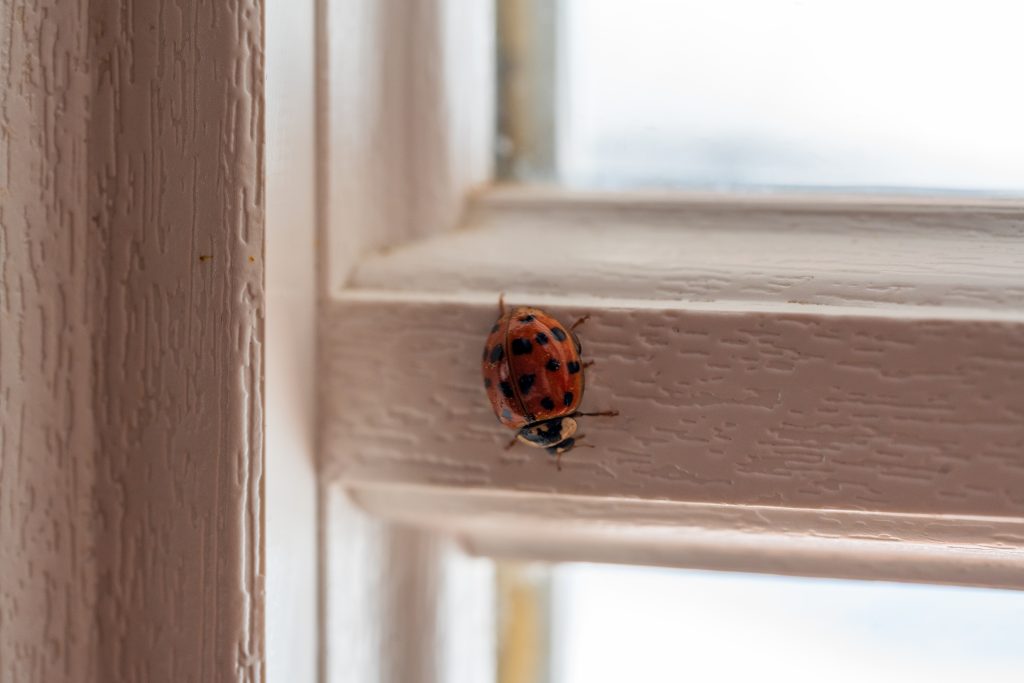
One ladybug on a rose bush is easy to overlook. A moving patch of red and orange beetles across an upstairs window deserves a closer look. That fall gathering August consist of multicolored Asian lady beetles searching for a protected place to spend the winter.
A ladybug can be helpful outdoors, but large groups near windows create a different problem. Asian lady beetles August collect by the hundreds, slip through small exterior gaps, and reappear in bedrooms or living rooms whenever winter sunlight warms the walls.
A quick glance at body color will not identify them. Asian lady beetles come in several shades, and their spots vary. The markings behind the head, the size of the gathering, and the time of year offer better evidence.
Is That Ladybug an Asian Lady Beetle?
Ladybug is a familiar name for many species of lady beetles. They share the rounded body shape people recognize, but their colors, spots, and behavior differ. The multicolored Asian lady beetle stands out because it often gathers on homes during fall.
An adult is roughly one-third of an inch long. Its shell may be yellow, orange, red, or dark. Some have many spots, some have only a few, and others appear spotless. That variation makes simple rules such as “orange means Asian lady beetle” unreliable.
Look Behind the Head
The most useful visual clue is the pale area just behind the head. It often contains a black mark shaped like a W. The mark can be thick, thin, broken, or partly hidden, so a close phone photo August reveal more than looking at a moving beetle.
| Feature | Multicolored Asian Lady Beetle | What the Feature Tells You |
| Length | About one-third of an inch | Size helps rule out larger beetles, but does not confirm the species |
| Color | Yellow, orange, red, or occasionally dark | Color alone is not reliable |
| Spots | Up to 19, fewer than 19, or none | Counting spots August mislead you |
| Marking behind the head | Often a black W on a pale background | This is one of the better visual clues |
| Fall behavior | August cover sunny walls and windows in large groups | Mass gathering strongly supports the identification |
| Indoor behavior | Collects near windows and other sources of light | The beetles are trying to leave shelter, not feed on the room |
This table is a homeowner’s field guide, not a complete species key. Several lady beetles look similar. When dozens arrive on the same warm wall in fall, their behavior often says more than a single insect’s color.
Why Ladybugs Gather on Windows in the Fall
Ladybugs on windows in fall are usually responding to weather, not food. Asian lady beetles spend the warmer months in gardens, trees, crop fields, and landscaped areas where prey is available. As temperatures fall, they stop searching for food and begin looking for protected winter shelter.
A house offers plenty of possible hiding places. Beetles land on siding, window trim, porch columns, roof edges, and other exposed surfaces. They then crawl along seams until they find an opening around a frame, vent, soffit, utility line, or loose section of exterior trim.
Sunlight Directs the Crowd
The heaviest activity often appears on walls warmed by afternoon sun. South-facing and west-facing windows may attract more beetles because those surfaces remain warm later in the day. Upper floors can also receive strong sunlight while offering access to soffits, attic vents, and roofline gaps.
A cool night followed by a clear, mild afternoon can bring a sudden wave of activity. Homeowners may see only a few beetles in the morning and find a window covered by late afternoon.
| What Happens Outside | Why It Matters | What You may See |
| Nights become colder | Beetles begin searching for winter shelter | More insects flying near the house |
| Afternoon sun warms one wall | The warm surface attracts landing beetles | Clusters around bright windows and siding |
| Beetles locate an exterior seam | The gap provides access to protected voids | Insects disappearing beneath trim |
| Indoor heat reaches the wall | Warmth stirs beetles during winter | Activity near ceilings or window glass |
| Spring temperatures rise | Surviving beetles try to return outdoors | Beetles collecting inside sunny windows |
The University of Minnesota Extension describes them as fall invaders that gather around buildings while searching for protected winter sites. The guidance favors preventing entry rather than trying to control beetles after they are established indoors.
The timing changes from year to year. A string of cooler nights followed by bright afternoons often starts the movement. That pattern matters more than a specific calendar date.
Are Asian Lady Beetles Harmful?
Asian lady beetles are nuisance pests inside homes. They do not tunnel through wood or feed on drywall, clothing, furniture, or pantry products. Their presence can still become disruptive when a large group settles in wall spaces or an attic.
When disturbed, the beetles August release a yellowish defensive fluid from their leg joints. The fluid has a noticeable odor and can mark curtains, upholstery, painted walls, and pale fabrics. Crushing a beetle increases the chance of staining the surface beneath it.
Can Asian Lady Beetles Bite?
Asian lady beetles cannot sting. They can pinch exposed skin, and the sensation may feel like a small bite. The same University of Minnesota Extension resource notes that some people August experience an allergic reaction to the beetles.
A few beetles on a window do not create an emergency. The practical concern is repeated activity, especially when Asian lady beetles in the house appear in several rooms or collect in areas where staining would be difficult to clean.
Why They Are Helpful Outdoors
The same insect causing trouble at a bedroom window can provide useful pest control in the yard. Asian lady beetle adults and larvae eat aphids and other soft-bodied insects that damage plants.
The USDA Agricultural Research Service overview explains that both life stages search plants for aphids and similar prey. That feeding habit is useful in gardens, orchards, and crop fields.
The goal is not to clear every ladybug from the landscape. It is to prevent large groups from moving into the structure when the season changes.
How to Get Rid of Ladybugs Already Inside
A vacuum with a hose attachment is the simplest way to collect visible beetles. Move slowly along window trim, ceilings, and curtain folds so the insects do not scatter. Empty the canister outside as soon as you finish, or remove and seal the vacuum bag before placing it in an outdoor trash container.
For easier disposal, fit a section of thin stocking inside the vacuum hose and secure it carefully. The fabric catches the beetles before they enter the machine. Remove it outdoors after vacuuming.
Do not press the insects into the wall with a tissue or sweep them forcefully across fabric. Both methods can trigger the yellow defensive fluid. A small beetle is easier to vacuum than a stain is to remove.
Spraying visible indoor beetles rarely addresses the source. The insects you see may have traveled from an attic, wall space, or gap around a window assembly. Record where ladybugs in the house appear instead. That information can point to an exterior opening that needs attention before the next fall migration.
How to Keep Asian Lady Beetles Away From Windows
Exterior repairs matter most before fall activity begins. Once beetles have moved into protected voids, reaching them becomes difficult. Late summer is a better time to inspect window frames, doors, roof edges, and utility openings.
Begin on the side of the home that receives the strongest afternoon sun. Look for split caulk, loose trim, torn screens, worn door seals, and spaces where siding meets brick or stone. On a two-story home, binoculars or a ground-level camera can help reveal gaps without unsafe ladder work.
Check These Common Entry Areas
| Area | What to Inspect | Useful Correction |
| Windows | Failed caulk, loose trim, torn screens | Recaulk suitable seams and repair screens |
| Exterior doors | Worn weatherstripping or light beneath the door | Replace seals and adjust the door sweep |
| Siding joints | Open seams and separated materials | Seal gaps with a product made for the surface |
| Soffits and vents | Loose edges or damaged screening | Repair screens without blocking airflow |
| Utility penetrations | Spaces around pipes, cables, and service lines | Seal the perimeter with an appropriate exterior material |
| Garage doors | Gaps along the bottom or sides | Replace damaged gaskets and weather seals |
| Upper roofline | Open flashing, fascia gaps, and loose trim | Arrange a professional inspection when access is unsafe |
Repairs and treatment serve different purposes. Sealing blocks access. A carefully timed exterior application can reduce the number of beetles moving across likely entry areas before they settle inside.
Random indoor treatment after the beetles have disappeared into wall spaces offers less value. Any service should begin with an inspection of the sunny elevations, upper windows, roof transitions, and other places where activity is concentrated.
When Professional Ladybug Control Is Worth Calling For
A handful of beetles near one accessible window may require little more than vacuuming and a caulk repair. Professional help makes more sense when beetles cover several elevations, gather around second-story windows, or continue surfacing in multiple rooms during winter.
A technician can trace indoor activity back to probable exterior entry areas. The inspection August uncover deteriorated window seals, loose vent screens, siding gaps, or roofline openings that are easy to miss from the ground.
ClearDefense Pest Control bases service on pest behavior, harborage areas, and the conditions around the home. Technicians document their findings and place products and materials where activity calls for them rather than treating every surface the same way. The company’s micro-crystallized formula is designed to release treatment product gradually, supporting continued exterior protection between visits.
No exterior application can repair damaged trim or a torn screen. The most complete response pairs precise treatment with practical exclusion work.
Keep Fall Ladybugs on the Right Side of the Window
When beetles begin gathering, first determine whether you are seeing isolated garden visitors or a seasonal movement toward the house. Large groups, varied coloring, and a W-shaped mark behind the head point toward multicolored Asian lady beetles.
Vacuum any beetles that reach living areas. Then inspect the exterior surfaces where the gathering began. A repaired window seam or vent screen can prevent the same route from filling again next fall.
Heavy activity around upper windows, attic vents, or several sides of the home calls for a closer inspection. Contact ClearDefense Pest Control to identify likely entry areas and plan targeted exterior service before the beetles settle inside.