
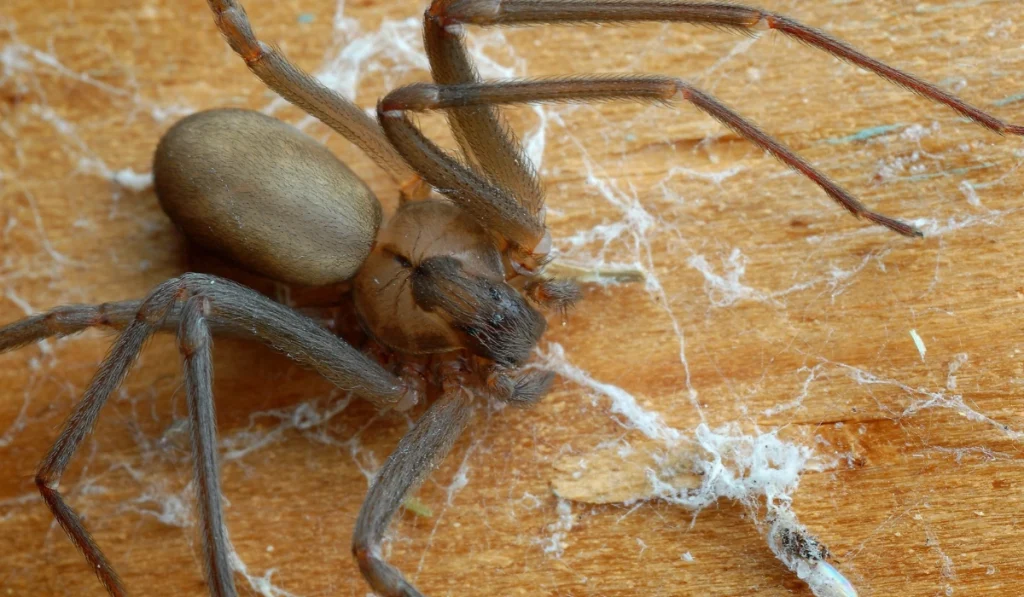
Brown recluse spiders are rare in North Carolina. Their native range reaches only the far western tip of the state, although individual spiders occasionally arrive elsewhere through transported belongings. Many suspected sightings in Raleigh, Charlotte, and surrounding communities involve other brown spiders, including wolf spiders and cellar spiders. Here’s what homeowners should know about identifying a North Carolina brown recluse spider, understanding bite risks, and deciding when professional help is necessary.
Are Brown Recluse Spiders Found in North Carolina?
Yes, but brown recluse spiders (Loxosceles reclusa) are not widespread across North Carolina. Their native distribution covers much of the central United States and reaches the state’s far western tip. They are extremely uncommon elsewhere in North Carolina.
NC State Extension’s information on spiders confirms this limited native range. Reports from other parts of the state often involve different spider species.
Can Brown Recluses Appear in Raleigh or Charlotte?
Brown recluses are not native to Raleigh or Charlotte, but individual spiders can occasionally be transported into these areas inside moving boxes, furniture, or stored belongings. Under certain conditions, transported spiders may survive and establish an isolated indoor population.
A suspicious spider found in a central or eastern North Carolina home deserves accurate identification, especially if similar spiders appear repeatedly. An isolated sighting, though, does not establish an infestation or indicate that brown recluses are common in the area.
How Can You Identify a Brown Recluse Spider?
Brown recluse identification depends on several physical features considered together. A true recluse typically has a plain tan-to-brown body, a darker violin-shaped marking on the cephalothorax, and slender legs without obvious bands or prominent spines.
The strongest distinguishing feature is its eye arrangement. Brown recluses have six eyes arranged in three pairs, while most spiders commonly found around homes have eight.
The Violin Marking and Body Color
The violin-shaped marking appears on the cephalothorax, the front section of the body where the legs attach. Its narrow end points toward the abdomen.
The marking can be difficult to see, and similar dark patterns occur on unrelated spiders. Brown coloring or a violin-like shape alone is insufficient for identification.
Adult brown recluses typically measure approximately three-eighths of an inch in body length, excluding the legs. Their abdomens are generally uniform rather than striped or mottled.
The Six-Eye Pattern
Brown recluses have one pair of eyes toward the front of the head and another pair on each side. This arrangement is more useful for species identification than the violin marking.
The eyes are too small to examine reliably without magnification. Homeowners should not attempt to handle a live spider to count them.
The University of California, Riverside’s brown recluse identification guidance emphasizes examining multiple characteristics rather than relying on one visual clue.
What Spiders Are Mistaken for Brown Recluses in North Carolina?
Several common North Carolina spiders resemble brown recluses at first glance. Poor lighting, brief sightings, and unclear photographs make identification more difficult.
The following comparison highlights the characteristics that separate brown recluses from frequent look-alikes.
| Spider | Typical Appearance | Distinguishing Characteristics |
| Brown recluse | Plain tan-to-brown body with slender legs | Six eyes in three pairs, relatively uniform abdomen and legs |
| Wolf spider | Sturdy, hairy body with brown or gray patterns | Eight eyes, distinct markings, and active ground-hunting behavior |
| Cellar spider | Small body with exceptionally long, thin legs | Usually hangs in loose, irregular webs |
| Southern house spider | Brownish body with relatively long legs | Different eye arrangement; commonly occupies cracks and crevices |
Wolf Spiders
Wolf spiders are familiar brown recluse look-alikes in North Carolina. Their bodies are generally sturdier and hairier, often with noticeable stripes or mottled markings.
They hunt insects by moving across the ground rather than catching prey in conventional webs. Homeowners may encounter wolf spiders in North Carolina on garage floors, patios, and lower-level rooms.
Wolf spiders may bite if trapped against the skin or handled, but their bites are generally not medically dangerous to healthy adults.
Cellar Spiders
Cellar spiders have small bodies and exceptionally long, delicate legs. They commonly remain in loose webs in basements, garages, crawl spaces, and ceiling corners.
Some have markings that resemble a violin, but their body proportions and web-building behavior distinguish them from brown recluses.
Cellar spiders are generally harmless to people and feed on small insects and other spiders found indoors.
Southern House Spiders
Male southern house spiders have brownish bodies and long legs that can resemble those of a recluse when viewed briefly. They may wander through buildings while searching for mates.
These spiders commonly occupy cracks and crevices around structures. Females usually remain near their web retreats, while males are more likely to be noticed moving across walls or floors.
Their appearance differs from a true brown recluse when examined closely, making qualified identification useful when a photograph is unclear.
Where Do Brown Recluse Spiders Hide?
When brown recluses are present, they generally shelter in dry, quiet spaces where they experience little disturbance. Potential indoor hiding places include closets, storage rooms, attics, garages, and areas behind stacked belongings.
Brown recluses are generally more active at night. They may remain concealed during the day in protected spaces, sometimes using small silk retreats.
Why Are Stored Shoes and Clothing a Concern?
Brown recluses generally avoid people. Bites most often occur through accidental contact when a spider becomes trapped against someone’s skin.
This can happen when a person puts on a shoe containing a spider, handles folded clothing, or reaches into a stored box without looking.
Inspect seldom-used shoes, gloves, and clothing before wearing them. Keep stored belongings organized, especially when items have been transported from another state.
Are Brown Recluse Spider Bites Dangerous?
Brown recluse venom can cause localized skin injury, but not every bite produces a serious wound. Some bites cause relatively mild symptoms, while others may result in blistering or tissue damage.
A suspected spider bite does not confirm that a brown recluse was responsible. The wound may have another cause, particularly in places where this species is uncommon.
What Symptoms Can Develop After a Bite?
A brown recluse bite may cause little discomfort initially. Redness, tenderness, swelling, or itching can develop later.
Some bites produce blisters, and more serious cases may involve damaged skin that breaks down into an open wound. Severe reactions are less common, and symptoms vary between individuals.
A wound’s appearance cannot reliably identify the spider responsible. Photographs of suspected spider bites should not be used as a substitute for medical evaluation.
Why Are Brown Recluse Bites Often Misdiagnosed?
Bacterial skin infections, inflammatory conditions, and other medical problems can resemble wounds attributed to spiders.
Misdiagnosis is a concern when someone develops an unexplained skin lesion without witnessing a bite. Assuming the cause may delay treatment for a different condition.
If a wound becomes painful, swollen, or progressively worse, seek medical care and explain whether a spider was actually seen.
When Should You Seek Medical Attention?
Gently wash a suspected bite with soap and water and keep the area clean. Contact a healthcare professional if pain or swelling increases, blisters form, or the skin begins to break down.
Fever, chills, significant nausea or vomiting, or severe muscle aches require prompt medical assessment.
NC Poison Control’s brown recluse guidance provides information about suspected bites and appropriate first aid. You can also call 1-800-222-1222 for advice about a suspected exposure.
Do not delay medical care while attempting to capture or identify a spider.
What Should You Do if You Find a Suspected Brown Recluse?
Avoid touching the spider and keep children and pets away from the area. If it is safe to do so, take a clear photograph showing its body and legs.
A single sighting does not establish an infestation. Because brown recluses are rare across most of North Carolina, confirmation is more useful than assuming every unfamiliar brown spider presents the same risk.
When Should You Request Professional Identification?
A cooperative extension specialist, qualified entomologist, or pest-control professional experienced in spider identification may be able to assess a photograph or safely collected specimen.
Provide details about where the spider was found, particularly if furniture or stored belongings recently arrived from another state.
If similar spiders appear repeatedly, note their locations and the dates of sightings. That information can help a professional assess whether further inspection is necessary.
How Can You Prevent Brown Recluse and Other Spider Problems?
Spider prevention is useful regardless of which species is present. Reducing indoor shelter, limiting accessible entry points, and addressing insect activity can make your property less attractive to unwanted spiders.
Concentrate on garages, closets, crawl spaces, and storage rooms, where spiders can remain unnoticed for extended periods.
Organize Storage and Remove Hiding Places
Replace loose cardboard boxes with sealed storage containers when practical. Keep shelving accessible so you can inspect and clean behind stored items.
Vacuum corners, beneath furniture, and along baseboards to remove webs and debris. Check clothing, shoes, and gloves that have remained unused for extended periods.
Reducing clutter that attracts pests indoors also makes spider activity easier to notice and helps you reach areas that need regular cleaning.
Seal Entry Points and Reduce Insect Activity
Inspect door sweeps, window screens, foundation openings, and spaces where utility lines enter your home. Repair damaged screens and seal accessible gaps.
Keep outdoor storage organized and remove unnecessary debris near exterior walls. Sheltered spaces and available insect prey can encourage spiders to remain around buildings.
Addressing the conditions that attract spiders indoors can help reduce recurring activity in garages, basements, and other areas.
When Is Professional Spider Control Useful?
Professional assistance may be appropriate when spiders appear repeatedly, activity occurs in difficult-to-access locations, or a suspected recluse has not been reliably identified.
An inspection can identify entry points, sheltered areas, and insect activity that may be contributing to the problem.
ClearDefense Pest Control uses targeted treatments based on pest behavior and property conditions. Addressing the species actually present helps determine suitable treatment locations and prevention measures.
Protect Your North Carolina Home From Unwanted Spiders
Brown recluse spiders are uncommon throughout most of North Carolina. Many suspected sightings involve other spiders that share their brown coloring, making accurate identification the first step before deciding how to respond.
Organized storage, regular inspections, sealed entry points, and reduced insect activity can help limit unwanted spiders. If you develop concerning bite symptoms, seek medical care rather than relying on the appearance of a wound.
For recurring spider problems, ClearDefense Pest Control offers property-specific inspections and targeted pest-control services. Its team can assess likely hiding places and recommend treatment based on the conditions found.
If spiders continue appearing around your home, contact ClearDefense Pest Control to request a free quote and discuss spider-control options in North Carolina.