

Beetles can turn up almost anywhere around a North Carolina home. You may find them feeding on landscape plants, moving across the lawn, gathering near windows, or hiding in carpets and stored fabrics. NC beetles include harmless outdoor species, beneficial predators, and pests that can damage plants, turf, or household materials.
The right response depends on what you found and where you found it. This guide covers common beetles in North Carolina, the features that help with beetle identification, the damage worth checking for, and the point when professional beetle control becomes the better option.
Common NC Beetles Around Homes and Yards
North Carolina beetles vary widely by habitat, season, and region. The Beetles of North Carolina database currently contains 312 species with records and 5,472 individual records. Those figures represent records entered in the developing database, not a final count of every beetle species living in the state.
For a homeowner, identifying hundreds of species is unnecessary. A smaller group accounts for many of the beetles you are likely to notice on shrubs, over the lawn, beside a door, or inside a closet.
| Beetle | What to Look For | Where You May Find It | Main Concern |
| Japanese beetle | Metallic green body, copper-colored wing covers, and small white tufts | Roses, shrubs, flowers, fruiting plants, and lawns | Plant feeding and turf damage from grubs |
| Green June beetle | Large metallic green beetle close to 1 inch long | Lawns, driveways, gardens, and fruiting plants | Soil disturbance from larvae and some adult feeding |
| Carpet beetle | Tiny rounded adults or small, hairy larvae | Closets, carpet edges, stored fabrics, and windows | Damage to animal-based natural materials |
| Multicolored Asian lady beetle | Yellow, orange, or reddish body with variable spots | Gardens, siding, windows, and indoor rooms | Seasonal movement into houses |
| Ground beetle | Dark, flattened body with quick movement | Mulch, patios, garages, under stones, and near doors | Usually an outdoor visitor rather than a household pest |
Japanese Beetles

A Japanese beetle is only about half an inch long, but several feeding together can make their presence obvious. Adults have a shiny green body, copper-colored wing covers, and white hair tufts along the sides of the abdomen.
The NC State Extension turf pest guide reports that Japanese beetles feed on more than 300 host plants and begin emerging around mid-May in North Carolina. Adults eat foliage, flowers, and fruit. Their beetle larvae develop underground as white grubs and feed on grass roots.
Check leaves for a thin, lace-like pattern. Japanese beetles often remove softer leaf tissue while leaving the veins behind, especially when several adults feed on the same plant.
Green June Beetles

Green June beetles are much larger. Adults can approach an inch in length and have a broad metallic green body, often with lighter coloring around the margins.
You may notice them flying low over a sunny lawn during summer. Their large larvae live underground and move through the soil, sometimes leaving loose areas or small openings near the surface.
Seeing several adults above the grass can look alarming, but that alone does not confirm turf damage. Check for thinning grass, disturbed soil, or repeated activity in the same part of the yard before assuming you have a serious beetle problem.
Carpet Beetles

Of the types of beetles in North Carolina homes, carpet beetles create one of the more distinctive indoor problems. Adults are tiny and may first catch your eye near a bright window, while their hairy larvae stay closer to the materials they feed on.
Larvae can feed on wool, feathers, fur, felt, and other animal-based materials. A stored rug, box of seasonal clothing, or quiet closet corner can support activity long before you notice an adult walking across the sill.
Check beneath furniture, along carpet edges, around baseboards, and inside closets. Shed larval skins beside damaged material are a stronger sign of an active beetle infestation than one adult beetle by itself.
Multicolored Asian Lady Beetles

Multicolored Asian lady beetles can be yellow, orange, or red, and their number of black spots varies. Some adults have few or no visible spots. Outdoors, they feed on aphids and other small insects, so finding them on plants during warm weather is not usually a reason for concern.
Their behavior changes in fall. The NC State Extension guide to multicolored Asian lady beetles explains that adults often gather on sunny walls and other exterior surfaces before moving into protected spaces. Once inside, they commonly turn up near windows as they move toward light.
If you regularly see them indoors during cooler weather, check window frames, screens, door seals, and exterior gaps. Avoid crushing them on curtains or painted surfaces because their body fluids can leave stains.
Ground Beetles
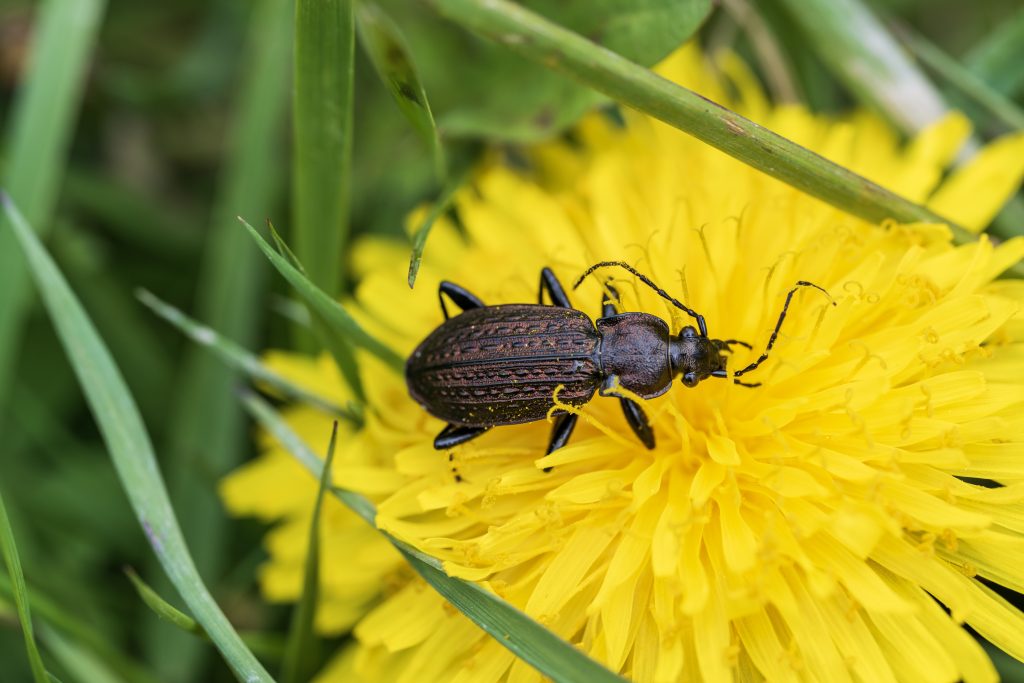
Ground beetles are usually dark, quick-moving insects that spend most of their time outdoors. You may uncover one beneath mulch, a stone, or a log, or spot one moving across a driveway or patio after dark.
Many ground beetles prey on other small insects and invertebrates. That makes them useful members of the outdoor environment rather than pests that need routine control.
A ground beetle on a garage floor or near an exterior door usually wandered inside. If they appear frequently, check gaps around doors and other low entry points instead of assuming they are reproducing inside the house.
Japanese Beetles vs. Green June Beetles in North Carolina
Two of the most noticeable beetles in North Carolina share a metallic green color, but they are easier to separate once you compare them side by side. Size gives you the fastest clue. A green June beetle can be close to twice the length of a Japanese beetle.
Their behavior helps too. Japanese beetles often stay directly on leaves, flowers, and fruit while feeding. Green June beetles tend to draw attention as they fly over lawns or move through open sunny areas.
| Feature | Japanese Beetle | Green June Beetle |
| Adult size | About 1/2 inch | About 1 inch |
| Color | Metallic green with copper-colored wing covers | Metallic green with lighter yellow or gold margins |
| Where adults stand out | Leaves, flowers, fruit, and ornamentals | Lawns, gardens, fruiting plants, and sunny areas |
| Larval form | C-shaped white grub | Larger, more elongated grub |
| Typical turf issue | Root feeding | Soil disturbance and larval activity |
| Risk to people | Does not sting | Does not sting |
A small green beetle feeding among damaged rose leaves fits the Japanese beetle profile more closely. A heavy-bodied green beetle moving across or above the lawn during summer is more likely to be a green June beetle.
Correct beetle identification keeps you from treating the wrong problem. The adult you see above ground may also be only one stage of a life cycle that continues beneath the soil.
Why Beetles Show Up Inside North Carolina Homes
Finding beetles in the house does not always mean they are breeding there. Many North Carolina beetles normally live outdoors and enter through worn door seals, damaged screens, garage openings, utility gaps, or small cracks around windows.
Where the beetles keep appearing can point you toward the source. A ground beetle near a back door may have slipped in overnight, while carpet beetle larvae beside the same rug on multiple occasions suggest an indoor food source.
When Indoor Sightings Point to a Bigger Problem
Several carpet beetle adults appearing in the same upstairs room should lead you toward nearby closets, rugs, upholstered furniture, or accumulated organic material. The source may be only a few feet from the window where you found the adult.
Vacuuming visible beetles removes what you can see, but it will not solve a carpet beetle infestation if larvae remain beneath furniture or among stored fabrics. Finding shed skins or damaged natural fibers makes a closer inspection worthwhile.
Beetles emerging directly from structural wood require a different evaluation. Wood-boring beetles have different habits and treatment needs from the household and outdoor species covered here.
What Beetle Damage Looks Like
Beetle damage changes with the species and life stage. What happens to a rose bush bears little resemblance to what happens inside a closet, and underground beetle larvae can damage turf without an adult beetle in sight.
Start with what has changed. Damaged leaves, thinning turf, shed skins, disturbed soil, or holes in stored natural materials can narrow the possibilities much faster than color alone.
Damage in Lawns and Landscapes
Japanese beetle feeding can leave leaves with only the veins and thin sections of tissue remaining. Roses and ornamental plants make this damage easy to spot because several adults may gather on the same flowers or leaves.
Below the lawn, Japanese beetle grubs feed on roots. Heavier root damage can leave turf yellow, thin, or easier to lift away from the soil. Finding one or two grubs does not prove they caused a brown patch, so compare what is underground with the condition of the grass above it.
Green June beetle larvae leave different clues. Their movement near the surface can create loose soil and small openings. If the surrounding grass still looks healthy, scattered holes alone are less concerning than widespread turf decline.
Damage Inside the House
Carpet beetle larvae often work out of sight. You may move a wool blanket, felt decoration, or stored rug and find irregular areas where the fibers have been eaten.
Look nearby for small hairy larvae and empty shed skins. Those signs tell you more than an adult beetle on a window because adults can travel away from the place where the larvae developed.
Start your search close to the damaged item. Check floor edges, nearby furniture, closet shelves, vents, and other quiet spots in the room before moving through the rest of the house.
How to Reduce Problems With NC Beetles
Preventing problems with NC beetles starts with the source. An insect entering through a patio door requires a different fix from carpet beetle larvae feeding in a closet or Japanese beetle grubs damaging the lawn.
You can often reduce activity by closing entry points, improving storage, and checking whether outdoor beetles are causing real damage before treating them.
| Area to Check | What You Can Do | Why It Helps |
| Doors and windows | Replace worn seals, repair screens, and close visible gaps | Reduces accidental and seasonal beetle entry |
| Exterior lights | Turn off unnecessary lights near entrances during heavy beetle activity | Makes doors and windows less attractive to flying beetles |
| Carpet edges and closets | Vacuum thoroughly and inspect quiet areas | Removes debris and helps reveal carpet beetle larvae |
| Stored fabrics | Clean items before storage and protect vulnerable materials | Limits accessible food for carpet beetles |
| Lawns | Check roots, turf condition, and soil before treating for grubs | Separates actual beetle damage from harmless grub presence |
| Landscape plants | Look for active feeding on leaves, flowers, and fruit | Confirms whether adult beetles are causing a plant problem |
Some common beetles in North Carolina are better left outdoors. Ground beetles hunt other small insects, and lady beetles feed on aphids during the growing season. Neither becomes a pest simply because you notice one in a flower bed.
Focus on evidence rather than unfamiliar appearance. Repeated sightings, damaged material, active larvae, declining turf, or a clear indoor source give you a much better reason to consider beetle control.
When Professional Beetle Control Makes Sense
Many isolated beetle sightings need little more than removal, cleaning, or a repaired door seal. Professional service makes more sense when beetles return to the same area, larvae continue damaging fabrics, turf is visibly declining, or you cannot find the source of the activity.
A professional beetle inspection can separate an outdoor beetle wandering inside from an infestation developing within the home. It can also identify whether lawn or landscape damage actually matches the beetle you are seeing. That keeps treatment focused on the affected areas rather than applying products where there is no evidence of a problem.
ClearDefense Pest Control provides targeted service for carpet beetles and outdoor beetle problems. If NC beetles continue showing up around your home, lawn, or landscape, contact ClearDefense to identify the source and determine whether professional treatment is the right next step.