
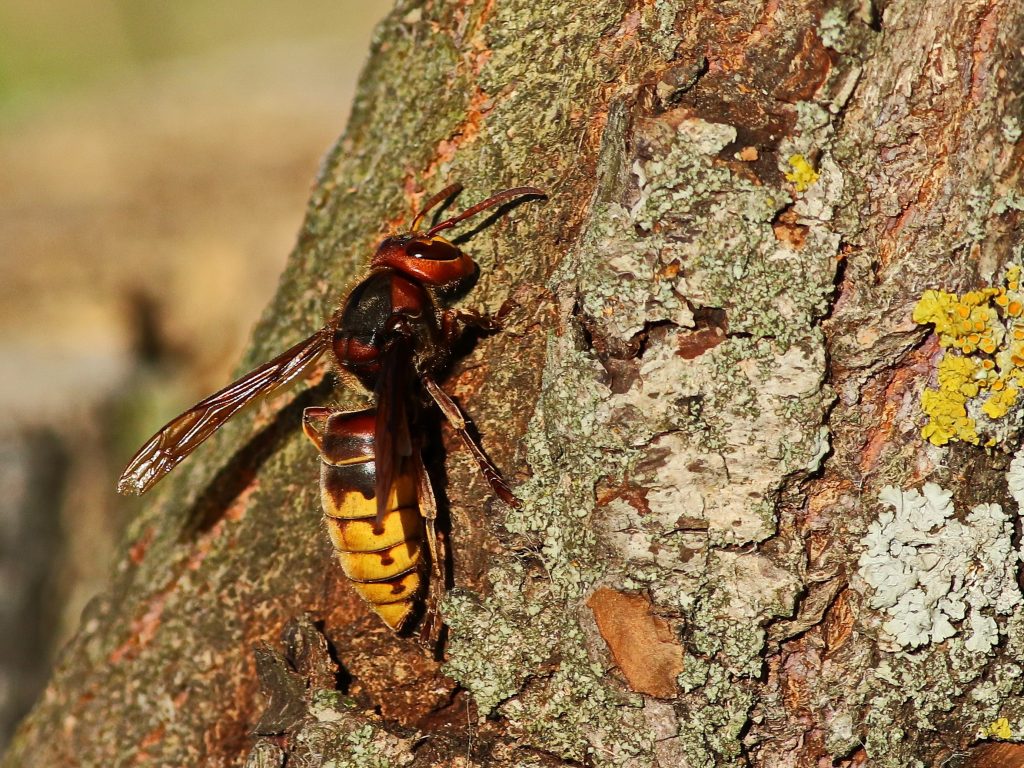
No murder hornet has ever been confirmed in South Carolina. These large insects, also known as northern giant hornets or Asian giant hornets, were discovered in Washington State in 2019 and declared eradicated from the United States in December 2024.
Still, finding a huge wasp around your porch, garage, or backyard can raise questions. Several hornets in South Carolina resemble murder hornets, and a different invasive species, the yellow-legged hornet, has been confirmed in the state. Knowing what these insects look like, where they nest, and how they behave can help you decide what to do when you spot one.
Key Takeaways
- True murder hornets have never been confirmed in South Carolina. Federal officials declared the species eradicated from the United States in December 2024, following three years without confirmed detections.
- Several local insects resemble murder hornets. European hornets, eastern cicada killers, and bald-faced hornets are among the insects homeowners may confuse with northern giant hornets.
- Yellow-legged hornets are a confirmed invasive species in South Carolina. Suspected sightings should be reported to state authorities, while common wasp and hornet problems around homes can be assessed by pest control professionals.
Are Murder Hornets in South Carolina?
The northern giant hornet, more commonly known as the murder hornet, first appeared in the United States near Blaine, Washington, in late 2019. Its discovery attracted attention because these insects can attack honey bee colonies, using their powerful jaws to kill bees and take food back to their nests.
Inspectors responded by setting traps, monitoring sightings, and tracking captured hornets to their colonies. Some insects were fitted with small radio transmitters, allowing teams to follow them through wooded areas where nests were difficult to locate.
According to the U.S. Department of Agriculture, authorities eliminated four nests between 2020 and 2021. On December 18, 2024, officials announced the species had been eradicated after three consecutive years without confirmed detections.
| Northern Giant Hornet History | Verified Information |
| First confirmed U.S. detection | Washington State, 2019 |
| Confirmed nests eradicated | 4 between 2020 and 2021 |
| Last confirmed U.S. detection | 2021 |
| Eradication declared | December 18, 2024 |
| Confirmed South Carolina sightings | None |
Why Did Murder Hornets Get So Much Attention?
Murder hornets earned their nickname because of their size, powerful stings, and ability to destroy honey bee colonies. They’re the largest hornets in the world, and their hunting behavior can be particularly destructive to European honey bees.
That reputation doesn’t mean they actively hunt people. Northern giant hornets generally avoid humans unless threatened, especially near a nest. Their primary threat in areas where they become established is to honey bee colonies and the agricultural activities that depend on pollination.
How to Identify a Murder Hornet
Northern giant hornets measure approximately 1.5 to 2 inches long. Their broad orange-yellow heads, dark thoraxes, and thick abdomens make them look different from the slimmer paper wasps commonly seen around homes.
The abdomen has alternating dark and orange-yellow bands. Large jaws and prominent eyes give the head a distinctive appearance, particularly when viewed from the front. Still, size alone isn’t reliable for murder hornet identification. Some cicada killer wasps grow just as large, while European hornets share similar colors.
Murder Hornets vs. Common Lookalikes
The insects most likely to cause confusion have different markings, nesting habits, and behavior.
| Insect | Approximate Adult Length | Identifying Features |
| Northern giant hornet | 1.5 to 2 inches | Large orange head, dark thorax, banded abdomen |
| European hornet | 1 to 1.3 inches | Reddish-brown head and thorax, yellow abdomen with dark markings |
| Eastern cicada killer | 1.5 to 2.2 inches | Rust-colored thorax, black abdomen with yellow patches |
| Bald-faced hornet | 0.4 to 0.7 inches | Black body with white markings |
| Yellow-legged hornet | 0.7 to 1 inch | Dark body, yellow-tipped legs, orange-yellow abdominal markings |
Adult measurements vary by sex and caste. For homeowners, a clear photograph taken from a safe distance is more useful than trying to estimate an insect’s length while it’s flying.
Which Hornets in South Carolina Look Like Murder Hornets?
South Carolina’s warm summers and wooded residential areas provide suitable nesting conditions for several wasp and hornet species. You may see them around garden beds, garages, decks, or trees near your home.
Most don’t create problems simply by flying through your yard. The greater concern is an active nest close to a doorway, outdoor seating area, or other frequently used space.
European Hornets
European hornets are large social insects with reddish-brown coloring and yellow abdominal markings. They establish colonies in sheltered places, including hollow trees and cavities inside buildings.
Unlike many wasps, they can remain active after sunset. If large hornets repeatedly gather around your porch lights, European hornets may be responsible. They generally avoid people away from their nests but can sting when defending a colony.
Eastern Cicada Killer Wasps
Cicada killers are among the largest wasps you’re likely to encounter in South Carolina. During summer, females dig burrows in lawns, sandy soil, and garden beds.
These wasps hunt cicadas and carry them underground to feed their developing young. Unlike colony-forming hornets, cicada killers live and nest independently, although several females may choose the same favorable area.
Males sometimes fly toward people who enter their territory, but they can’t sting. Females can sting, although they rarely do so unless handled or threatened.
Bald-Faced Hornets
Bald-faced hornets are actually a type of yellowjacket. Their black bodies and white facial markings make them easy to distinguish from orange-headed northern giant hornets.
They build enclosed paper nests that can grow considerably during summer. These nests often hang from tree branches or appear beneath roof overhangs.
Bald-faced hornets defend their colonies aggressively. A nest near a second-story window, patio, or garage entrance should be left undisturbed until it can be assessed safely.
Are Yellow-Legged Hornets in South Carolina?
Yellow-legged hornets are a separate invasive species confirmed in South Carolina. They were first detected in the United States near Savannah, Georgia, in August 2023, before inspectors began finding them across the state border.
These hornets have mostly dark bodies, yellow coloring near the ends of their legs, and orange-yellow abdominal markings. They’re substantially smaller than northern giant hornets.
What South Carolina Inspectors Found
Clemson University’s Hornet Herald surveillance reports document extensive trapping and monitoring in the Lowcountry during 2024.
| South Carolina Surveillance Activity | 2024 Results |
| Traps placed in Beaufort and Jasper counties | 796 |
| Trap-service visits completed | 4,998 |
| Yellow-legged hornets captured | 4,219 |
| Nests located in Beaufort County | 16 |
| Citizen reports from South Carolina and surrounding states | 820 |
These figures describe historical monitoring activity rather than the current population. Surveillance has since extended beyond the earliest detection areas, including response efforts following confirmed activity in York County.
Why Are Yellow-Legged Hornets a Concern?
Yellow-legged hornets prey on honey bees and other insects. They sometimes hover outside beehives, catching returning workers before they reach the entrance.
Persistent hunting can interfere with food collection and place stress on colonies. This creates concerns for beekeepers and agricultural operations that depend on honey bee pollination.
Yellow-legged hornets also construct large paper nests in trees and sheltered structures. The USDA states that mature nests can contain up to 6,000 workers and reach roughly the size of a beach ball. These figures describe potential colony size, not the typical number of hornets in a South Carolina nest. State and federal agencies continue working to locate and remove confirmed invasive colonies.
What Should You Do If You Find a Large Hornet or Nest?
A single hornet passing through your yard isn’t the same as an active colony. The first thing to observe is whether insects repeatedly travel to the same opening or nesting location.
For example, several wasps entering a gap beneath your roofline may indicate a nest inside a wall cavity. Repeated activity around a tree hollow or garage soffit deserves attention, particularly if children or pets regularly use the area.
If you suspect you’ve found a yellow-legged hornet, take photographs only when it’s safe, and don’t attempt to capture the insect or disturb a suspected invasive nest. Authorized response teams handle the identification and removal of confirmed yellow-legged hornet colonies.
When Professional Hornet Removal Is Necessary
Even common wasps and hornets can create problems when they establish nests near entrances, decks, or other occupied areas. Nests hidden inside siding or located high beneath eaves are especially difficult to handle without proper equipment.
Trying to knock down a nest or spray an unidentified colony can provoke defensive behavior. A professional can inspect the nesting location, identify the insect, and determine which treatment approach fits the situation. For recurring wasp and hornet problems, ongoing exterior service can also help technicians identify nesting activity before colonies become harder to reach.
Keeping Your Home Protected From Hornets and Wasps
A suspected murder hornet in South Carolina is far more likely to be a familiar local insect. Recognizing the differences helps you avoid unnecessary concern while taking legitimate nesting problems seriously. Suspected invasive yellow-legged hornets belong with state reporting authorities, while established wasp and hornet colonies around a home may need professional attention.
Keeping outdoor trash covered, cleaning up after meals on the patio, and checking eaves for early nesting activity can help reduce common wasp problems. If you notice insects repeatedly entering a roofline or wall opening, avoid disturbing the area until the nest has been identified.
For homeowners in its established service areas, ClearDefense Pest Control offers targeted wasp and hornet control services based on insect behavior and nesting locations. Our technicians inspect areas such as eaves and exterior entry points, apply treatments where needed, and provide ongoing service for recurring pest concerns. Contact ClearDefense Pest Control to confirm availability in your area and request a quote.
Frequently Asked Questions
Have murder hornets ever been found in South Carolina?
No confirmed northern giant hornet sightings have occurred in South Carolina. The species was previously detected in Washington State, where authorities eliminated four nests before declaring it eradicated from the United States in December 2024. Large hornets seen locally are more likely to be European hornets, cicada killers, or other established insects.
What is the difference between a murder hornet and a yellow-legged hornet?
Northern giant hornets are larger, reaching about two inches, with broad orange heads and strongly banded abdomens. Yellow-legged hornets are smaller, generally around an inch or less, with darker bodies and yellow-tipped legs. Yellow-legged hornets have been confirmed in South Carolina, while northern giant hornets have not.
Are murder hornet stings deadly?
Northern giant hornets can deliver extremely painful stings, and multiple stings can cause serious medical complications. Severe allergic reactions are also possible, as with other stinging insects. They don’t ordinarily pursue people without provocation. If a sting causes breathing difficulty, throat swelling, or fainting, call 911 immediately.
What should I do if I find a hornet nest near my house?
Keep children and pets away from the nest, and avoid spraying, blocking, or knocking it down. Watch the insects from a safe distance to identify where they’re entering and leaving. Report suspected invasive hornets to state authorities. For common wasp or hornet nests near occupied areas, contact a qualified pest control professional.