
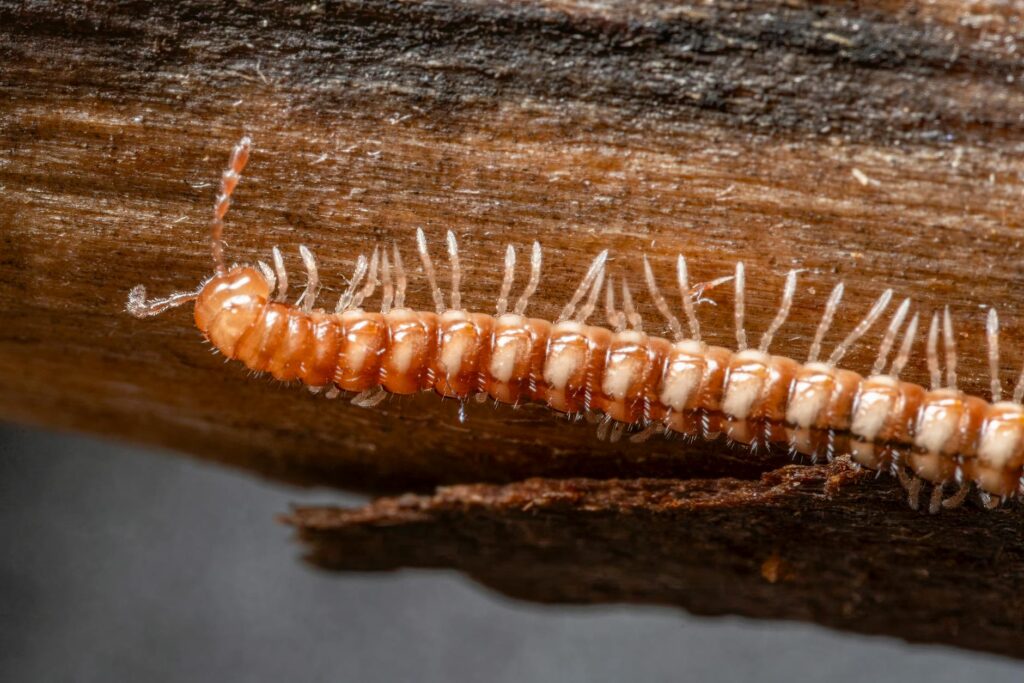
You walk across the patio or driveway after dark and notice clusters of millipedes moving along the concrete, mulch, or foundation. By morning, even more appear near garage doors, basement entrances, or damp corners around the home. Seeing millipedes in large numbers in your yard usually means excess moisture and organic debris are creating sheltered areas where these pests can gather and spread.
Wet mulch, leaf piles, dense ground cover, and damp soil can all support millipede activity near your property. As outdoor populations increase, millipedes often move toward lower-level entry points and shaded areas around the home.
Learn the signs, risks, and when to call ClearDefense Pest Control to avoid costly problems.
Key Takeaways About Millipede Swarms in Your Yard
- Millipedes are outdoor organisms that feed on decaying biological matter, and large populations in your yard usually point to moisture and biological debris buildup.
- They pose no real threat to people, but when conditions shift, they can migrate toward your home and enter through gaps around the foundation.
- Prevention starts outside: reducing moisture sources, managing biological debris near your home, and sealing entry points can help limit indoor encounters.
- A recurring pest control plan focused on outdoor conditions is the most practical way to address millipedes in large numbers before they reach your living space.
How to Identify Millipedes When They Swarm Your Yard
Millipedes are slender, brownish, hard-shelled creatures that typically measure one to two inches long. Unlike insects, which have three clearly defined body sections and three pairs of legs, millipedes have numerous body segments and numerous legs. The quickest way to confirm you are looking at a millipede is to count the legs on a single body segment. Millipedes carry two pairs of legs per body segment, a trait that sets them apart from nearly every other crawling pest you might find in your yard.
How to Tell Different Millipede Species Apart
When dozens or hundreds of these creatures show up at once, homeowners sometimes wonder whether they are looking at millipedes, centipedes, or some type of insect. Centipedes are elongated and flattened, bearing only one pair of legs per body segment. Millipedes have a rounder cross-section and two pairs of legs per body segment. That leg count is the most reliable way to tell the two apart, even at a glance.
Insects have three pairs of legs in total. If the creature you find has far more legs than six, arranged in pairs along many body segments, you are dealing with a millipede or centipede rather than an insect.
How to Spot Millipede Activity Inside Your Home
Millipedes are outdoor creatures that invade homes from the yard. They are usually occasional invaders, but they may invade in large numbers. When they do move indoors, you may notice clusters of slow-moving, curled-up bodies along baseboards, in corners, or near entry-level doors. Because they do not survive long inside, you may also find dried-out remains in these same areas.
Where Millipede Activity Shows Up Around Your Home
Outdoors, millipedes prefer moist environments. They are often found in soil, leaf litter, or under rocks or wood. In the spring, as temperatures rise, millipedes may become more active. That increased activity is often when homeowners first notice large numbers in the yard, particularly in flower beds, mulch lines, and areas where biological debris collects against the foundation.
Exterior Entry Points Millipedes Use Around Your Home
Because millipedes invade homes from outdoors, they follow moisture gradients toward the structure. Ground-level gaps where the foundation meets siding or where utility conduits pass through walls can serve as pathways. Keeping an eye on areas where leaf litter or soil sits directly against exterior walls helps you spot early movement before large numbers make their way inside.
Why Millipedes Appear in Large Numbers in Your Yard
Millipedes sometimes leave their natural habitats, crawl across lawns and sidewalks, and invade homes in large numbers. Understanding what draws them to your yard and how they reach your foundation can help you stay ahead of the problem.
Outdoor Nesting Areas That Attract Millipedes
Millipedes thrive in damp, sheltered spots close to the soil surface. Flower beds with thick mulch, areas of heavy leaf litter, and grass thatch all create the kind of moist cover they prefer. Millipedes feed on decaying biological matter such as leaf litter, grass thatch, and flower bed mulch.
Outdoors, they are beneficial because they recycle decaying biological matter. The trouble starts when their population grows, and conditions push them toward your home.
Food and Shelter That Attract Millipedes to Your Yard
Decaying biological matter is the primary food source. Yards with deep mulch layers, accumulated leaf debris, and dense ground cover offer both food and the moisture millipedes need. Excessive moisture in garden areas is a key driver.
To discourage millipedes in garden areas, reducing mulch and other biological matter and avoiding excessive moisture can help lower their numbers. Maintaining low moisture around your foundation also reduces the conditions that support large populations.
How Millipedes Move Around Your Home
Large amounts of rainfall can trigger mass migrations of millipedes from the soil. After heavy rain, you may see them moving across driveways, patios, and walkways in surprising numbers. These migrations happen when the soil becomes saturated, and millipedes are forced to the surface.
At any one time or place, usually just one type of moisture-loving pest is the main problem. When millipedes are the ones migrating, the sheer volume can be alarming.
Trails and Entry Points Millipedes Use in Your Yard
Millipedes may find their way into basements or crawl spaces. Although they typically do not reproduce inside, large numbers may enter homes. Any gap where soil meets your foundation is a potential entry point.
Soil and wood in direct contact with a structure create conditions that attract moisture-dependent pests. Keeping a clear gap between biological material and your home’s exterior reduces access for millipedes traveling from the yard.
Risks From Large Millipede Infestations
When millipedes show up in large numbers in your yard, the main concern is nuisance. They are not dangerous pests, but a population surge can push them toward your foundation, crawl space, and living areas. Understanding the actual risks helps you decide how urgently to respond.
Health Risks Linked to Millipede Infestations
Millipedes are not known to bite or sting. None of the selected evidence links them to disease transmission or allergic reactions. They pose no real threat to people. The concern with millipedes in large numbers in your yard is almost entirely about where they end up, not what they do to your health.
That said, other moisture-loving pests often share the same habitat. Spiders, for example, are predatory and feed on millipedes, pillbugs, centipedes, and other small creatures. A yard full of millipedes may attract these secondary pests closer to your home.
Property Damage From Large Millipede Infestations
Millipedes feed on decaying wood, vegetable matter, tender plant roots, and green leaves. Depending on the species, they may live two to five years. A persistent population can nibble at young plants and biological mulch over multiple seasons.
The bigger property concern is moisture. Poor ventilation in crawl spaces creates humid conditions that attract a range of pests. Dead air pockets beneath buildings can give rise to conditions conducive to termite activity, powderpost beetles, carpenter ants, and wood decay. Millipede crowds are a signal that excess moisture exists around your foundation.
Millipede Activity Near Food Storage Areas
Millipedes thrive in dark, moist areas where decaying biological matter collects. In cases of severe and perennial infestation, soils with high biological content immediately surrounding the foundation may need to be replaced. Cracks around doors and basement windows can give these pests a direct path indoors.
Sealing those openings with caulking compound and repairing foundation walls helps keep them out of your kitchen, pantry area, and other indoor spaces where you do not want crawling pests underfoot.
When to Take a Closer Look at Millipede Activity
Large millipede numbers often point to conditions that benefit other pests too. Springtails, for example, occupy the same moist soil and feed on decaying biological matter. If you notice millipedes alongside mud tunnels on your foundation or around pipe openings, those tunnels may indicate a separate and more damaging pest issue entirely.
Take millipedes in large numbers in your yard as a prompt to check moisture levels, drainage, and foundation condition. Addressing those root conditions reduces the habitat that draws multiple types of pests to your property.
Professional Pest Control for Yard Millipede Infestations
When millipedes appear in large numbers in your yard, the right approach combines prevention, inspection, and ongoing outdoor control. Millipede infestations are usually short-lived, but repeated waves can be frustrating. A structured plan helps reduce the conditions that draw them in.
How to Reduce Attractants for Millipedes in Your Yard
Millipedes do not conserve moisture well, so they depend on damp, biologically rich spots in your yard. Reducing those conditions is the foundation of any control plan. Excessive flower bed mulch, accumulations of leaf litter, and heavy lawn thatch all create the kind of habitat they need.
Pull mulch back from your foundation walls. Thin out leaf litter that has built up along beds and fence lines. If your lawn has a thick thatch layer, consider dethatching. Removing wet biological matter from drain saucers near your home can also help limit moisture sources close to entry points.
Prolonged wet weather during warmer months often results in increased movement of garden millipedes (Oxidus gracilis), according to Mississippi State University Extension. Keeping your yard well-drained before and during those stretches goes a long way.
Why Millipede Control Starts With a Professional Inspection
Millipedes can find their way into basements or crawl spaces through cracks, gaps around pipes, and unsealed weep holes. An inspection of the foundation perimeter, crawl space vents, and weep holes identifies where millipedes are congregating and how they are getting inside.
ClearDefense service professionals look for moisture buildup, biological debris against the foundation, and unsealed entry points like weep holes. Every visit includes a documented Defense Report showing findings and every product used, so you know exactly what was done.
Because millipedes dehydrate and die within a day or two indoors, the real priority is outdoor conditions. Indoor sprays only control them temporarily and do not provide a long-term solution, as Kansas State University Extension notes. Inspection keeps the focus where it belongs: outside.
What to Expect During Professional Millipede Treatment
ClearDefense focuses on control actions outdoors, where millipede infestation activity actually starts. Keeping mulch away from building foundations and screening or sealing weep holes and other entry points are core steps in the process.
Indoor treatment is usually unnecessary because millipedes get dehydrated and die once inside. If you spot them indoors, a vacuum is the simplest approach. The outdoor perimeter is where recurring treatment makes the biggest difference.
Reducing overall moisture and biological debris around the home also helps limit conditions that support other pests in your yard.
What to Expect From a Millipede Control Plan
ClearDefense Pest Control provides recurring pest control, not one-time visits. That matters for millipede control because a single application does not address the ongoing moisture and habitat conditions that drive a millipede infestation back season after season.
With each scheduled visit, your service professional reassesses the yard for new biological buildup, drainage changes, and any fresh entry points. The Defense Report documents every finding and product used, giving you a clear record of what is happening at your property over time.
This prevention-first approach means your yard gets less hospitable to millipedes with every visit, rather than relying on short-term fixes that wear off between seasons.
Managing Large Millipede Populations: Bottom Line
Millipedes in large numbers in your yard can be alarming, but these creatures pose no real threat to people or your home. They thrive on decaying biological matter outdoors and do not survive long once inside. The key is managing moisture and biological debris around your property to reduce conditions that draw them in. A recurring pest control plan helps keep activity low over time. If you are seeing repeated waves of millipedes, reach out to ClearDefense Pest Control for a quote on a recurring service plan tailored to your property.
Frequently Asked Questions
Why are there so many millipedes in my yard at once?
Large amounts of rainfall can trigger mass movements of millipedes from the soil. When conditions become too wet, they may leave their usual habitats and crawl across lawns, sidewalks, and toward homes in noticeable numbers. These surges are typically short-lived.
Are millipedes harmful to people or pets?
Millipedes are not a medical concern. They do not bite or sting, and they do not damage household structures. They are considered nuisance invaders when they wander indoors.
Do I need to treat inside my home?
Millipedes do not conserve moisture well, so they tend to dry out and die within hours indoors. In most cases, vacuuming them up is enough for indoor control. Focusing efforts outdoors, where they actually live and breed, is usually the better approach.
What can I do to prevent large millipede gatherings?
Reducing moisture and biological debris near your foundation goes a long way. Keep mulch pulled back from exterior walls and seal entry points such as weep holes and gaps around doors. A recurring pest control service can also help keep the number of insects and other pests around your property under control, which reduces the conditions that support millipede activity.