
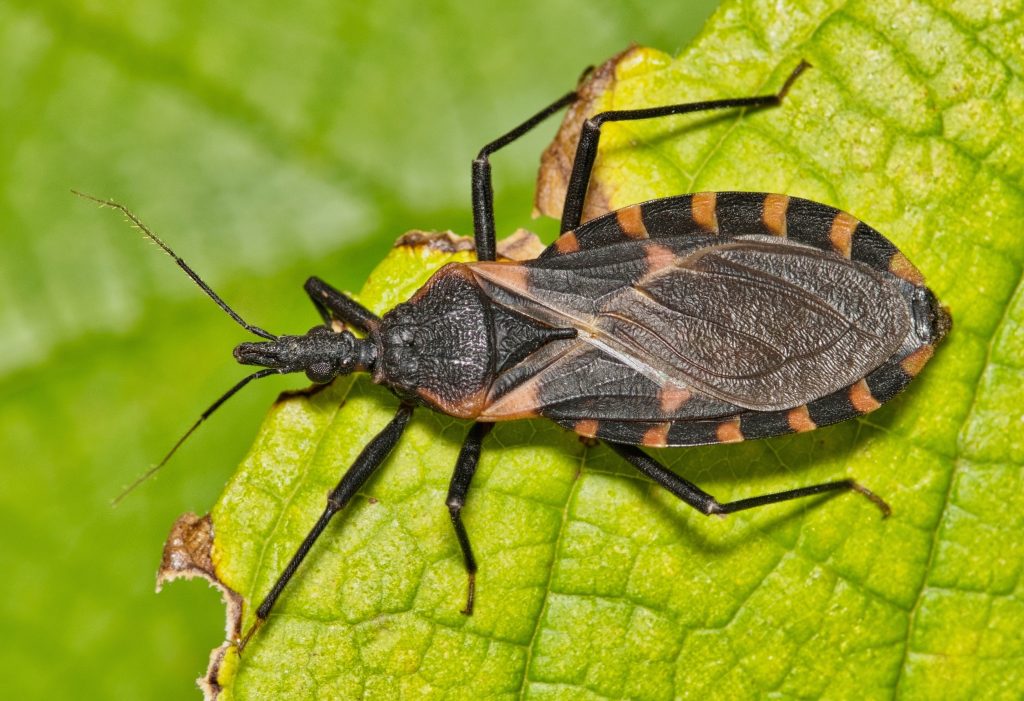
You notice a dark, flat insect near a bedroom window. It has long legs, orange markings, and a narrow head. A quick online search brings up alarming photos of kissing bugs and warnings about Chagas disease.
Kissing bugs in Ohio are real, but they are not common household pests. Ohio also has several insects that look similar from a distance. Wheel bugs, boxelder bugs, western conifer seed bugs, and stink bugs are all mistaken for kissing bugs.
Correct identification matters because the risks are not the same. A true kissing bug feeds on blood and August carry the parasite associated with Chagas disease. A look-alike August feed on plants or other insects and pose little concern inside your home.
This guide explains how to recognize a kissing bug in Ohio, how disease transmission works, and what to do when you find a suspicious insect.
Are There Kissing Bugs in Ohio?
Ohio has a native kissing bug. You August also hear it called the bloodsucking conenose or eastern bloodsucking conenose. The insect belongs to a group of blood-feeding bugs known as triatomines.
Confirmed specimens have been found in Ohio, including parts of Butler, Hamilton, and Warren counties. These reports establish that the species lives in the state, especially in southern Ohio. They do not mean that kissing bugs are spreading through every Ohio neighborhood.
The Ohio State University Buckeye Yard and Garden Line identifies Triatoma sanguisuga as Ohio’s native kissing bug and notes that reports frequently turn out to be other insects. Ohio specimens August occasionally enter homes, but most residents will never encounter one.
Kissing bugs spend much of their time around animals rather than people. They August shelter beneath bark, inside hollow trees, around rodent nests, beneath porches, or near outdoor pet housing. Adults can fly and August approach exterior lights at night.
How to Identify an Ohio Kissing Bug
An adult Ohio kissing bug is usually longer than one inch. It has a flattened, dark brown or black body with reddish, orange, or yellowish markings along the exposed edges of its abdomen.
Its head provides another useful clue. A kissing bug has a long, narrow head that tapers toward the front. The shape looks different from the short, broad head of a stink bug. Long antennae and slender legs extend from the body.
The insect’s wings lie flat across its back. The edges of the abdomen remain visible beyond the wings, which makes the colored markings easy to see from above. Young kissing bugs do not have fully formed wings, but they retain the narrow head and patterned abdomen.
| Identification feature | What to look for |
| Adult size | Usually longer than one inch |
| Body shape | Flat and elongated rather than round |
| Main color | Dark brown to nearly black |
| Side markings | Separate red, orange, or yellowish patches |
| Head | Long, narrow, and cone-shaped |
| Legs | Long and slim without widened sections |
| Wings | Folded flat across the back in adults |
Color alone is not enough to confirm an identification. Many Ohio insects combine black, brown, red, or orange markings. Look at the head, legs, body shape, and abdominal pattern together.
Take clear photos from above and from the side. Do not hold the insect in your bare hand to get a better angle. Kissing bugs and some of their look-alikes can bite when trapped or handled.
Bugs That Look Like Kissing Bugs in Ohio
Most suspected kissing bugs in Ohio are other insects. Some share the same dark coloring, long legs, or reddish markings. A closer look usually reveals a clear difference.
Wheel Bugs
Wheel bugs create many false alarms. They have narrow heads and long bodies because they belong to the assassin bug family. Adult wheel bugs also have a raised, gear-shaped crest on their backs. Kissing bugs do not have this structure.
Western Conifer Seed Bug
Western conifer seed bugs often enter homes during cooler weather. Their hind legs have flattened, leaf-shaped sections. The legs of a kissing bug remain narrow from top to bottom.
Boxelder Bugs
Boxelder bugs have dark bodies with red lines, but they are smaller and often gather in large groups on sunny walls. A kissing bug is more likely to appear alone. Stink bugs have broad, shield-shaped bodies that do not match the longer outline of a kissing bug.
| Insect | Typical appearance | Key difference |
| Kissing bug | Dark, flat body with colored abdominal edges | Long, cone-shaped head |
| Wheel bug | Gray or brown body with long legs | Raised wheel-shaped crest |
| Western conifer seed bug | Long brown body | Leaf-like sections on hind legs |
| Boxelder bug | Black body with thin red lines | Smaller and often found in groups |
| Stink bug | Brown or gray shield-shaped body | Broad body and short head |
Wheel bugs are useful predators that feed on other insects, but they should still be left alone. Their defensive bite can be painful. Western conifer seed bugs, boxelder bugs, and stink bugs are mainly nuisance invaders when they move indoors.
Do Kissing Bugs Bite People?
Kissing bugs feed on the blood of mammals, birds, and reptiles. When one enters a home, it August feed on a sleeping person or pet. The nickname comes from reports of bites around the mouth or face, although the insect can feed on any exposed skin.
A bite August leave redness, itching, or mild swelling. Some people have no obvious skin reaction. Others August develop a stronger allergic response. A red mark cannot identify the insect that caused it because mosquito, flea, mite, and other insect bites can look similar.
Kissing bugs do not actively chase people. They feed when they find a resting host, usually at night. Indoor bites are more likely when bugs have access to bedrooms, pet bedding, or areas connected to animal nests.
Wash a suspected bite with soap and water. Do not scratch the area. Seek medical help for trouble breathing, extensive swelling, dizziness, or another severe reaction.
Can Ohio Kissing Bugs Spread Chagas Disease?
Chagas disease is caused by the parasite Trypanosoma cruzi. Some kissing bugs can carry the parasite after feeding on an infected animal or person. Not every bug is infected, and finding one does not confirm exposure.
The parasite is not normally transmitted through the bite itself. An infected bug August leave feces on the skin while or after feeding. Infection can occur when a person rubs the contaminated material into the bite, another break in the skin, an eye, or the mouth.
| Event | What it means |
| A kissing bug is found | The insect August need expert identification |
| A person is bitten | A bite alone does not confirm parasite transmission |
| The bug carries T. cruzi | Transmission is possible but has not necessarily occurred |
| Infected feces enter skin, eye, or mouth | This creates a route for infection |
| A blood test is positive | A healthcare provider can diagnose the infection |
The Centers for Disease Control and Prevention estimates that about 8 million people worldwide have Chagas disease, including about 280,000 people in the United States. Many do not know they are infected because the early stage can produce mild symptoms or no symptoms.
Early symptoms August include fever, fatigue, body aches, headache, rash, nausea, appetite loss, or swelling around one eye. Most infected people never develop serious disease. About 20 to 30 percent of people with chronic infection develop cardiac disease, and some develop digestive complications.
Most Chagas infections diagnosed in the United States were acquired in areas of Latin America where the disease is more established. Local transmission can occur in the United States, but the presence of a kissing bug does not mean that Chagas disease is common in Ohio.
How Serious Is the Risk in Ohio?
The health risk for the average Ohio homeowner remains low. Several events must occur for transmission. The bug must carry T. cruzi, feed on a person, leave infected feces nearby, and have that material enter broken skin, the eye, or the mouth.
Ohio’s native kissing bugs are also uncommon. They usually live around wildlife, animal nests, and sheltered outdoor locations. Unlike household pests that reproduce readily in kitchens or bathrooms, kissing bugs do not commonly establish large indoor populations in Ohio homes.
An infectious disease specialist writing for Ohio State Health and Discovery explains that kissing bugs occur in the United States, but an individual’s likelihood of being affected remains low. The source also notes that disease activity in the United States is concentrated mainly in southern areas.
Low risk does not mean a suspected insect should be ignored. It means your next step should be careful identification rather than panic. A preserved specimen can often resolve the question more reliably than a bite mark or blurry photo.
What to Do if You Find a Suspected Kissing Bug
Do not crush the bug with your hand or wipe it across a surface. Crushing can destroy the features needed for identification. It August also bring you into contact with material from the insect.
Place a cup, jar, or other container over the bug. Slide a piece of stiff paper beneath the opening, turn the container upright, and close it securely. Wear disposable gloves when practical and wash your hands afterward.
Take photos of the insect from several angles. Record the date, room, and exact place where you found it. Details such as a nearby bed, pet shelter, porch light, woodpile, or rodent nest August help with identification.
Contact a local extension office, health department, or pest professional for help. A healthcare provider should evaluate any suspected exposure involving the eyes, mouth, or broken skin. Medical testing decisions depend on the insect identification and the circumstances of the exposure.
How to Keep Kissing Bugs Out of an Ohio Home
Prevention starts with the exterior. Inspect the foundation, siding, windows, doors, roofline, and utility openings for gaps. Replace torn screens, repair worn weatherstripping, and install a tight door sweep where light shows beneath an exterior door.
Check attached garages and upper floors as well. Gaps around garage doors, attic vents, soffits, and second-story windows can provide entry points. Bugs attracted to exterior lights August find these openings after dark.
Move firewood, lumber, brush, and leaf piles away from the foundation. These materials create sheltered spaces for insects and rodents. Keep the area beneath decks and porches free of clutter where practical.
Outdoor pet shelters need regular attention. Clean bedding, store pet food in sealed containers, and inspect kennels for insects or rodent activity. Keep animal housing away from dense vegetation and stacked wood.
Use exterior lighting only where it is needed. Position fixtures away from frequently opened doors when possible. Sealing the nearby structure matters more than changing a bulb, but reducing insect activity near entrances can help.
When to Call a Pest Control Professional
One questionable insect does not always indicate an infestation. A professional inspection becomes more useful when you find repeated specimens, notice bugs near sleeping areas, or see evidence of rodents or animal nesting close to the house.
The inspection should focus on identification first. Treatment decisions depend on the species, where it was found, and what conditions August be supporting activity. Entry gaps, woodpiles, rodent nests, pet areas, and exterior lighting August all contribute to the problem.
ClearDefense Pest Control uses pest behavior, habitat, and lifecycle to guide treatment around the home. Pinpoint applications help address active areas without treating more space than necessary. Preventive service can also target common entry points and conditions that allow unwanted insects to move indoors.
Protecting Your Ohio Home From Kissing Bugs
Kissing bugs in Ohio are uncommon, but the native bloodsucking conenose does occur in the state. Its long, cone-shaped head and colored abdominal edges help separate it from wheel bugs, boxelder bugs, stink bugs, and western conifer seed bugs.
The risk of Chagas disease depends on a specific transmission process. A bug must carry the parasite, and contaminated feces must enter the body. A sighting or bite does not confirm infection.
Preserve a suspected specimen, avoid direct contact, and request a reliable identification. If kissing bugs or similar pests keep appearing around your property, contact ClearDefense Pest Control to schedule an inspection and identify the conditions bringing them close to your home.